 26°C
26°C

Best Cities for Doing Business in the Dominican Republic
Choosing where to establish a business in the Dominican Republic can significantly influence long-term success. While the country offers opportunities across multiple sectors, each city has its own economic strengths, infrastructure, workforce, logistics, and investment environment. Understanding these differences helps entrepreneurs, investors, and expanding companies select the location that best matches their industry, growth strategy, and operational needs.


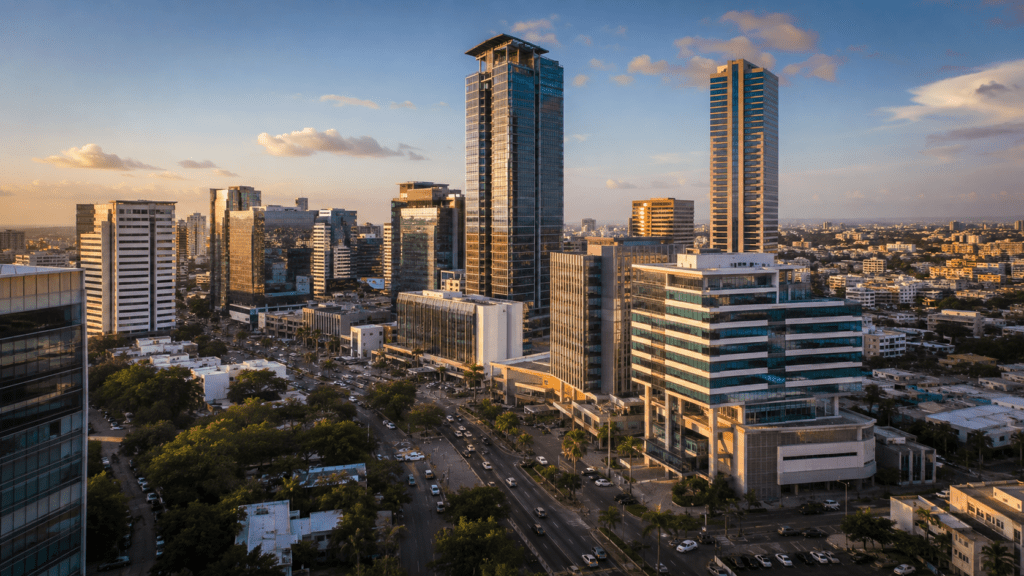
The Dominican Republic has become one of the Caribbean’s leading destinations for investment, entrepreneurship, and international business. Its strategic location between North and South America, expanding infrastructure, diversified economy, and growing consumer market have attracted multinational corporations, regional businesses, startups, and foreign investors alike.
However, the country does not offer a one-size-fits-all business environment. A city that is ideal for tourism may not be the best choice for manufacturing, while a logistics hub may offer advantages that a technology company does not necessarily need. Selecting the right location requires understanding how each city contributes to the national economy and which industries have developed there over time.
Why Location Matters When Starting a Business
Business success depends on far more than rental costs or office availability. Companies should evaluate several factors before deciding where to establish operations.
- Access to customers and suppliers
- Availability of skilled labor
- Transportation infrastructure
- International connectivity
- Port and airport access
- Commercial real estate availability
- Business support services
- Industry clusters
- Quality of life for employees and executives
- Future growth potential
The Dominican Republic has developed several regional economic centers, each serving different industries and markets.
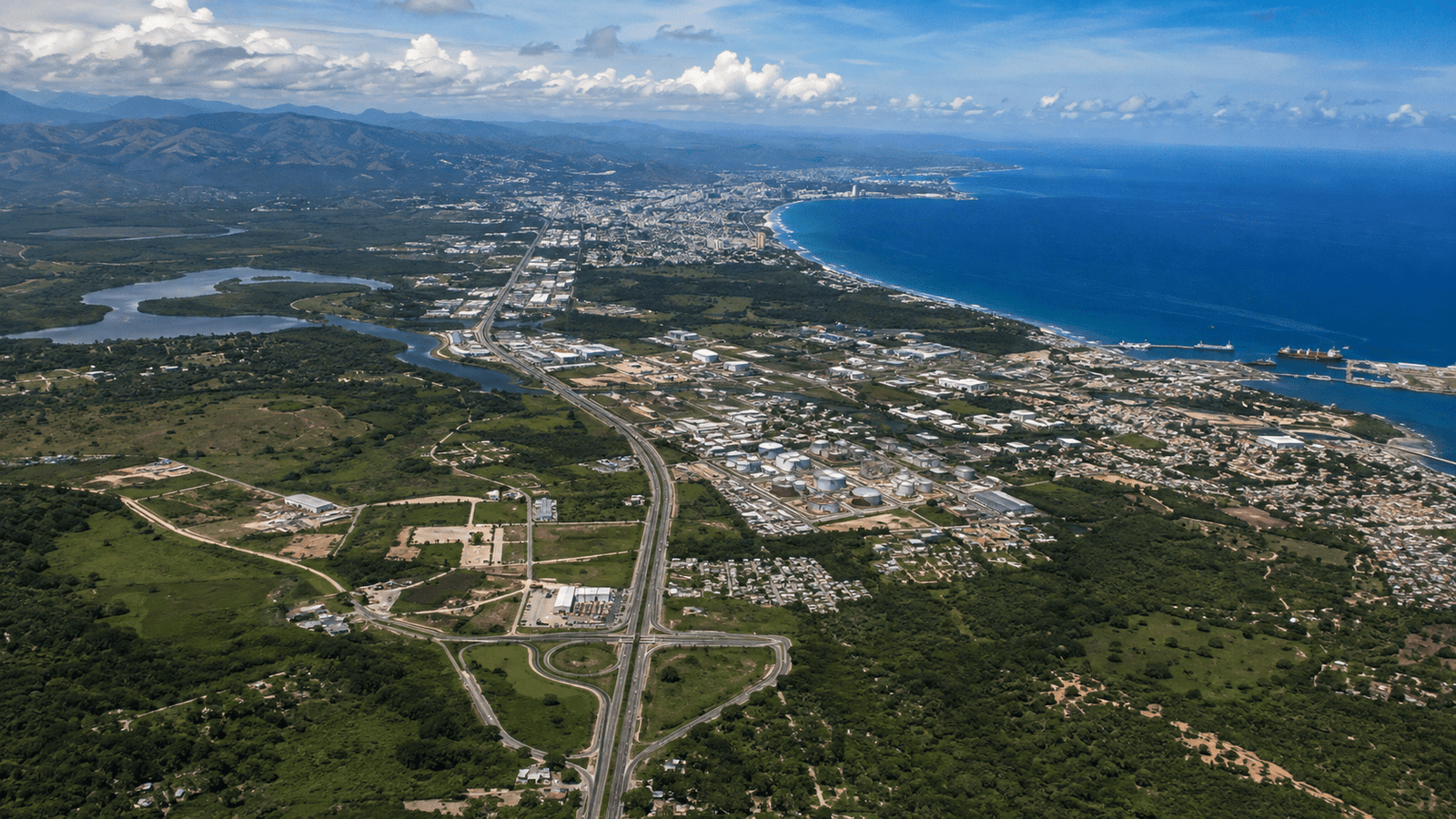
Santo Domingo: The Country’s Business Capital
Santo Domingo remains the undisputed commercial and financial center of the Dominican Republic. Home to the national government, major banks, corporate headquarters, law firms, consulting companies, and multinational offices, the capital generates a significant share of the country’s economic activity.
Most large Dominican companies operate from Santo Domingo, making it the preferred destination for businesses that require direct access to decision-makers, regulators, financial institutions, or corporate clients.
Key Advantages
- Largest concentration of consumers
- Headquarters of major financial institutions
- Extensive professional services sector
- Modern office developments
- International business community
- Excellent telecommunications infrastructure
- Multiple universities supplying qualified professionals
Industries That Thrive
- Financial services
- Technology companies
- Professional services
- Corporate headquarters
- Healthcare
- Education
- Retail
- E-commerce
- Construction
Potential Challenges
As the country’s largest metropolitan area, Santo Domingo also experiences heavier traffic congestion, higher commercial rents in premium districts, and greater competition across most industries. These factors may increase operating costs but are often offset by stronger market access and business opportunities.
Santiago de los Caballeros: Northern Economic Powerhouse
Santiago is widely regarded as the Dominican Republic’s second economic engine. Located in the fertile Cibao Valley, it has evolved from an agricultural center into one of the country’s strongest manufacturing, industrial, healthcare, education, and commercial hubs.
The city combines a highly developed business ecosystem with lower operating costs than Santo Domingo, making it attractive to both domestic entrepreneurs and international investors.
Key Advantages
- Strong industrial base
- Large skilled workforce
- Competitive commercial property costs
- Well-developed healthcare sector
- Growing technology ecosystem
- Excellent regional connectivity
Industries That Thrive
- Manufacturing
- Medical devices
- Agribusiness
- Education
- Wholesale distribution
- Business services
- Healthcare
Santiago also benefits from proximity to agricultural production, making it particularly attractive for food processing, logistics, packaging, and export-oriented industries.
Punta Cana: Tourism and International Investment Hub
Punta Cana has grown far beyond its reputation as a beach destination. Today it represents one of the Caribbean’s fastest-growing tourism economies, attracting billions of dollars in hotel development, real estate, aviation, hospitality, and supporting services.
The area serves millions of international visitors annually through Punta Cana International Airport, one of the busiest airports in the Caribbean.
Key Advantages
- Large international visitor market
- Modern tourism infrastructure
- Strong foreign investment
- Rapid population growth
- Expanding residential communities
- International workforce
Best Business Opportunities
- Hospitality
- Restaurants
- Luxury real estate
- Vacation property management
- Healthcare services
- Retail aimed at tourists
- Transportation services
- Construction
Businesses that rely primarily on tourism demand may find Punta Cana especially attractive, although seasonality and higher commercial property prices should be considered during planning.
La Romana: Tourism Meets Industry
La Romana occupies a unique position within the Dominican economy by combining internationally recognized tourism with an established industrial and manufacturing base.
The city benefits from cruise tourism, luxury residential developments, nearby golf communities, an international airport, and one of the country’s important port facilities.
Business Strengths
- Tourism
- Cruise industry
- Manufacturing
- Medical services
- Luxury residential development
- Marine services
Companies that serve both international visitors and export-oriented industries often find La Romana an attractive compromise between Santo Domingo and Punta Cana.
San Pedro de Macorís: Manufacturing and Free Zone Opportunities
Located east of Santo Domingo, San Pedro de Macorís has historically been associated with sugar production but has diversified considerably through manufacturing, logistics, and free zone operations.
Its strategic position along the country’s main highway corridor allows efficient access to both Santo Domingo and the eastern tourism region.
Advantages
- Industrial tradition
- Competitive labor costs
- Growing manufacturing sector
- Access to ports
- Proximity to the capital
- Established free zone operations
The city is particularly attractive for export manufacturing and companies requiring efficient domestic distribution.
Puerto Plata: Northern Tourism and Logistics Center
Puerto Plata has long been one of the Dominican Republic’s principal tourism destinations. While tourism remains central to the local economy, the city has diversified into logistics, shipping, retail, and services that support the broader northern region.
Its international airport, cruise terminals, and proximity to agricultural production create opportunities beyond traditional hospitality businesses.
Key Industries
- Tourism
- Cruise services
- Retail
- Transportation
- Agricultural exports
- Logistics
- Marine activities
Compared with Punta Cana, Puerto Plata generally offers lower operating costs while serving a different tourism market with strong connections to North America and Europe.
Emerging Business Cities Worth Considering
Although Santo Domingo, Santiago, and Punta Cana dominate most investment discussions, several smaller cities are becoming increasingly attractive for specialized industries, regional expansion, and lower-cost operations.
San Francisco de Macorís
Known as one of the country’s agricultural capitals, San Francisco de Macorís plays a central role in cocoa production and agricultural commerce. Businesses involved in agribusiness, food processing, agricultural technology, logistics, and export services may find significant opportunities in the region.
La Vega
Located in the heart of the Cibao Valley, La Vega benefits from excellent highway connections and a diversified economy supported by agriculture, commerce, food production, and manufacturing. Its strategic location makes it suitable for regional distribution centers serving much of the Dominican Republic.
Moca
Moca has developed a reputation for agricultural production, food industries, furniture manufacturing, and entrepreneurship. Small and medium-sized businesses often choose the city because of its skilled workforce and proximity to both Santiago and the country’s agricultural heartland.
Barahona
Situated in the southwest, Barahona remains less industrialized than other major cities but offers long-term opportunities linked to ecotourism, renewable energy, mining support services, and agricultural exports. As infrastructure continues to improve, the region may become increasingly attractive for investors seeking emerging markets rather than established business centers.
Comparing the Dominican Republic’s Main Business Cities
| City | Main Strengths | Best For | Business Environment |
|---|---|---|---|
| Santo Domingo | Finance, corporate services, government, technology | Large companies, headquarters, professional services | Most developed and diversified |
| Santiago | Manufacturing, healthcare, education, commerce | Industry, regional headquarters, exports | Strong industrial ecosystem |
| Punta Cana | Tourism, hospitality, luxury real estate | Tourism-related businesses | Fast-growing international market |
| La Romana | Tourism, manufacturing, cruise industry | Mixed tourism and industrial operations | Diversified regional economy |
| San Pedro de Macorís | Manufacturing, logistics, free zones | Export-oriented businesses | Competitive operating costs |
| Puerto Plata | Tourism, logistics, shipping | Hospitality and northern regional services | Balanced tourism economy |
The Role of Free Zones in Business Location Decisions
One of the Dominican Republic’s major competitive advantages is its network of free trade zones (known locally as zonas francas). These special economic areas provide incentives for export-oriented companies and have helped position the country as a regional manufacturing and services hub.
Free zones operate in several cities, including Santo Domingo, Santiago, San Pedro de Macorís, La Romana, Puerto Plata, and other industrial centers. Businesses involved in manufacturing, medical devices, electronics, textiles, business process outsourcing (BPO), and logistics often evaluate proximity to these parks when selecting a location.
The availability of experienced labor, established supply chains, and supporting infrastructure within these industrial parks can significantly reduce operational complexity for export-focused companies.
Infrastructure and Connectivity
Infrastructure varies across the country, but the Dominican Republic has invested heavily in transportation networks that support commerce.
Businesses that depend on imports or exports should consider access to:
- International airports
- Commercial seaports
- Major highways
- Distribution centers
- Reliable telecommunications
- Electricity infrastructure
Santo Domingo offers the country’s broadest transportation network, while Santiago provides efficient access to the northern region. Punta Cana excels in international passenger connectivity, whereas cities such as San Pedro de Macorís and La Romana benefit from proximity to both ports and major highway corridors.
Finding the Right Workforce
Access to qualified employees is another critical factor when selecting a business location.
Santo Domingo and Santiago have the largest concentration of universities, technical institutes, and professional training centers, supplying graduates in engineering, finance, law, healthcare, technology, marketing, and business administration.
Tourism destinations such as Punta Cana and Puerto Plata provide experienced hospitality professionals, multilingual staff, and service-sector specialists, while manufacturing cities have developed labor pools with expertise in industrial production and logistics.
Cost Considerations
Operating costs vary considerably between cities.
Businesses should compare:
- Commercial rent
- Industrial land prices
- Office space availability
- Labor costs
- Transportation expenses
- Utility costs
- Local demand
Although Santo Domingo generally has the highest commercial property costs, it also offers the country’s largest customer base and broadest professional services market. Secondary cities often provide lower operating expenses while maintaining strong access to regional markets.
Which City Is Best for Different Types of Businesses?
| Business Type | Recommended Cities |
|---|---|
| Corporate headquarters | Santo Domingo |
| Financial services | Santo Domingo |
| Technology companies | Santo Domingo, Santiago |
| Manufacturing | Santiago, San Pedro de Macorís |
| Medical device production | Santiago |
| Hospitality | Punta Cana, Puerto Plata, La Romana |
| Luxury real estate services | Punta Cana, La Romana |
| Agribusiness | Santiago, San Francisco de Macorís, La Vega |
| Export logistics | Santo Domingo, San Pedro de Macorís, Santiago |
| Business Process Outsourcing (BPO) | Santo Domingo, Santiago |
Frequently Asked Questions
Can foreigners establish businesses in the Dominican Republic?
Yes. Foreign individuals and companies can establish businesses in the Dominican Republic in most economic sectors, subject to the country’s corporate and investment regulations.
Is Santo Domingo always the best choice?
Not necessarily. While Santo Domingo offers the country’s largest economy and most developed business ecosystem, companies focused on tourism, manufacturing, agriculture, or exports may find other cities better suited to their operational needs.
Which city has the fastest economic growth?
Punta Cana has experienced some of the country’s fastest growth in tourism, real estate, and supporting services, while Santiago continues expanding as a major industrial and commercial center.
Are free zones available outside Santo Domingo?
Yes. Numerous industrial free zones operate throughout the Dominican Republic, particularly around Santiago, San Pedro de Macorís, La Romana, Puerto Plata, and several other cities.
Final Thoughts
No single city is the best location for every business in the Dominican Republic. The ideal choice depends on your industry, target customers, workforce requirements, logistics, and long-term growth strategy.
Santo Domingo remains the country’s primary financial and corporate center, making it the preferred destination for headquarters, professional services, and technology firms. Santiago combines industrial strength with competitive operating costs and a highly skilled workforce, while Punta Cana leads opportunities tied to tourism, hospitality, luxury real estate, and international services.
Other cities—including La Romana, San Pedro de Macorís, Puerto Plata, La Vega, and San Francisco de Macorís—offer specialized advantages that may better match specific business models. Evaluating each location’s infrastructure, labor market, transportation links, and economic profile before investing can help businesses position themselves for sustainable growth in one of the Caribbean’s most dynamic economies.