 25°C
25°C

Top Industries in the Dominican Republic: A Detailed Guide
The Dominican Republic entered the second half of 2026 with a broad-based economic expansion, as mining, construction, free-zone manufacturing and services all recorded growth while tourism continued to generate billions of dollars in foreign-exchange earnings. The latest figures from the Central Bank show that the economy expanded 6.4% year over year in June, while first-half exports reached US$8.75 billion and tourism revenue totaled US$6.72 billion, underscoring how far the country’s economic base extends beyond its globally recognized resort industry.


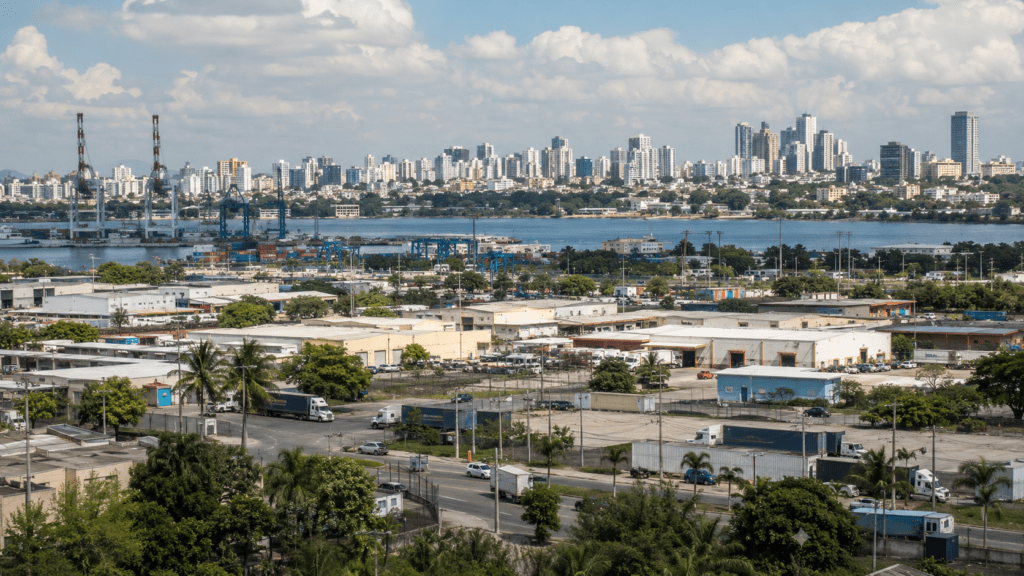
The Dominican Republic is often identified internationally with beaches, resorts and tourism, but that picture captures only part of the country’s economy. Behind the visitor industry is a diversified network of manufacturing companies, mines, construction projects, farms, logistics operators, banks, technology businesses and professional services.
That diversification has become increasingly visible in official economic data. The Central Bank reported that real economic activity increased 6.4% year over year in June 2026, with particularly strong performances from mining, construction, free-zone manufacturing and services. Local manufacturing and agriculture also expanded, while hotels, bars and restaurants benefited from continued growth in international arrivals.
The figures provide a useful starting point for understanding the country’s leading industries. But they also reveal an important distinction: there is no single definition of the “top” industry. Tourism dominates some measures, manufacturing and mining are particularly important for merchandise exports, construction has a major role in domestic investment, and services account for a broad range of economic activity.
The Dominican Republic’s Economy Is More Diversified Than Tourism Alone
The country’s economic structure has changed significantly over the past several decades. Tourism has become a major source of foreign exchange, while the free-zone system has developed into an export platform for increasingly sophisticated manufactured goods. Mining remains important because of gold production, and construction has expanded alongside tourism, infrastructure and real estate investment.
Agriculture continues to provide food, raw materials and export products, while financial services, transportation, telecommunications and professional activities support virtually every other part of the economy.
The World Bank describes the Dominican Republic as one of Latin America’s stronger long-term growth performers and notes that future growth is expected to be supported by private investment, construction and exports, particularly tourism and gold mining. It also identifies logistics and financial services as areas with potential to strengthen the country’s competitiveness.
| Industry | What It Includes | Why It Matters |
|---|---|---|
| Tourism | Hotels, resorts, restaurants, travel, cruises and recreation | Major source of foreign exchange, investment and service-sector activity |
| Manufacturing and Free Zones | Medical devices, pharmaceuticals, tobacco, textiles, electronics and other products | Major export and formal employment platform |
| Mining | Gold and other mineral extraction | High-value exports and foreign investment |
| Construction and Real Estate | Housing, hotels, commercial projects and infrastructure | Important source of domestic investment and economic activity |
| Agriculture and Agro-Industry | Cocoa, tobacco, bananas, rice, livestock, food processing and other products | Food supply, employment and agricultural exports |
| Logistics and Transportation | Ports, airports, freight, warehousing and distribution | Connects exporters, manufacturers and consumers with international markets |
| Financial and Professional Services | Banking, insurance, accounting, legal, consulting and business services | Provides infrastructure for investment and business activity |
| Telecommunications and Digital Services | Mobile networks, internet and information services | Essential infrastructure for the modern service economy |
1. Tourism Remains the Country’s Most Visible Economic Industry
Tourism remains one of the Dominican Republic’s defining industries. The country has developed a large visitor economy around destinations including Punta Cana, La Romana, Puerto Plata, Samaná and Santo Domingo, combining resort tourism with cruises, cultural attractions, nature-based activities, golf, business events and other forms of travel.
The industry’s economic importance extends far beyond hotels. Tourism creates demand for restaurants, transportation, construction, agriculture, entertainment, retail, telecommunications, financial services and professional activities. A hotel room, for example, is connected to a much wider supply chain involving food producers, laundries, maintenance companies, transportation providers and construction contractors.
The latest numbers underline the scale of the sector. During the first six months of 2026, tourism generated US$6.716 billion in foreign-exchange earnings, up 15.3% from the same period in 2025. International visitor arrivals exceeded 6.5 million during the period, according to the Central Bank.

In June alone, the hotels, bars and restaurants category grew 4.6% year over year. The country received 816,512 tourists during the month, 6.0% more than in June 2025. The first-half total of international visitors reached 4.96 million under the Central Bank’s reported measure for the period, representing 10.0% growth.
The distinction between different tourism statistics is important for readers and researchers. Government agencies publish figures using different categories, including tourists, cruise passengers, residents and non-residents. The Dominican Ministry of Tourism’s Statistical Tourism Intelligence System, known as SITUR, provides downloadable datasets covering air arrivals, maritime arrivals, hotel activity and aviation statistics.
Where Is Tourism Concentrated?
La Altagracia Province, home to Punta Cana and Bávaro, is the country’s dominant resort destination and a major gateway for international visitors. Puerto Plata is another established tourism center, while La Romana and Samaná serve different combinations of resort, cruise, cultural and nature-based tourism.
Santo Domingo plays a different role. As the national capital and the country’s largest metropolitan area, it combines business travel, urban tourism, history, gastronomy, conventions and cultural attractions. The Colonial City is particularly significant because of its historic architecture and UNESCO World Heritage status.
The tourism industry is also becoming more diverse. ProDominicana identifies opportunities in hotels and resorts, ecotourism, adventure tourism, cultural tourism and health tourism. This means that the sector should not be understood simply as an all-inclusive beach-resort business.
2. Manufacturing and Free Trade Zones Are Major Export Engines
Manufacturing is one of the most important parts of the Dominican Republic’s productive economy, particularly through the country’s free-zone regime.
The free zones have evolved substantially from their historic concentration in apparel and textiles. Modern operations include medical devices, pharmaceuticals, tobacco products, electrical and electronic goods, logistics, technology services and other specialized activities.
That shift is significant because it places the Dominican Republic closer to higher-value segments of international supply chains. Medical-device manufacturing, for example, requires different production capabilities, quality controls and technical skills from traditional garment manufacturing.
The National Council of Export Free Zones, or CNZFE, reported 200,231 direct jobs, US$8.6046 billion in exports and 858 operating companies in the sector for 2025.
The sector continued to expand in 2026. Between January and April, free-zone exports reached US$2.8033 billion, an increase of 4.3% compared with the same period of 2025. Medical and pharmaceutical products led the principal categories at US$966 million, followed by tobacco and derivatives at US$461.2 million and electrical and electronic products at US$415.2 million.
Why Are Free Zones Important?
Free zones provide a framework designed to attract export-oriented production. Companies operating under the regime can manufacture goods or provide qualifying services for international markets while benefiting from specific legal and fiscal arrangements.
The importance of the sector is not limited to the value of exports. Manufacturing creates demand for industrial parks, warehouses, logistics, electricity, transportation, professional services and technical labor.
CNZFE data also show that the sector has become an important employment platform. Direct employment reached a record 200,134 positions in October 2025, up from 119,974 at the low point recorded during the pandemic in April 2020.
For international companies evaluating the Dominican Republic, this makes free-zone manufacturing particularly relevant to discussions about nearshoring and supply-chain diversification.
3. Mining Gives the Economy a High-Value Export Sector
Mining occupies a different position from tourism and manufacturing. It is more capital-intensive, depends on finite natural resources and is highly sensitive to international commodity prices. Nevertheless, it is one of the country’s most important sources of high-value merchandise exports.
Gold is the dominant example. During January-June 2026, Dominican gold exports reached US$1.592 billion, an increase of 68.8% from the same period a year earlier. The Central Bank attributed the increase to higher production and elevated international gold prices.
The country’s best-known large-scale gold operation is Pueblo Viejo, located in Sánchez Ramírez Province. The mine is operated by Pueblo Viejo Dominicana Corporation, a joint venture in which Barrick holds a 60% interest and Newmont 40%.
Mining also has a significant investment footprint. The Central Bank reported that mining represented 12.4% of foreign direct investment inflows during the first half of 2026.
Why Mining Matters Beyond Gold
The economic effects of mining extend beyond the mine itself. Large operations require engineering, transportation, energy, maintenance, professional services and other suppliers. They also generate government revenues and export earnings.
At the same time, mining carries distinctive risks and constraints. Mineral deposits are finite, international prices fluctuate and large projects require long-term capital and environmental management. These characteristics make mining an important component of economic diversification, but not a replacement for industries such as manufacturing, tourism or agriculture.
4. Construction and Real Estate Are Closely Linked to Investment
Construction has become one of the strongest domestic economic activities in the Dominican Republic, with links to tourism, housing, infrastructure, commercial development and industrial investment.
The Central Bank reported 14.9% year-over-year growth in construction in June 2026. The sector accounted for approximately 30% of the growth recorded by the Monthly Indicator of Economic Activity that month.
The performance was associated largely with increased execution of private investment projects and greater public capital spending.
Real estate is closely connected to this activity. Tourism development creates demand for hotels, resorts and related infrastructure, while population growth and urbanization create demand for residential and commercial properties.
ProDominicana identifies residential, commercial, industrial and tourism-oriented real estate as investment areas. Its investment information also highlights the connection between the real estate sector, tourism and broader economic growth.
Why Construction Has a Wider Economic Effect
A construction project does not generate activity only for the contractor. It can require cement, steel, electrical equipment, plumbing materials, machinery, engineering, architecture, transportation, financial services and legal work.
That makes construction an industry with significant links to the domestic economy. Its performance can therefore influence economic activity even when the underlying project is designed for another sector, such as tourism or manufacturing.
5. Agriculture Remains a Core Productive Industry
Agriculture is sometimes overlooked when the Dominican economy is discussed internationally because tourism and free-zone manufacturing are more visible to foreign visitors and investors. Yet farming and livestock remain essential to domestic food supply and to the country’s export economy.
The agricultural base includes cocoa, coffee, tobacco, bananas, rice, sugar, plantains, fruits, vegetables and livestock products. Geography plays an important role, with different regions specializing in different crops according to climate, soil and elevation.
The Dominican Republic also has a notable position in organic agriculture. The Food and Agriculture Organization of the United Nations identifies the country as the world’s largest producer of organic bananas, with production concentrated in several provinces including Valverde, Monte Cristi, Azua and Barahona.
Agriculture also connects directly with manufacturing. Cocoa can be processed into higher-value food products; tobacco supplies the cigar industry; milk supports dairy production; and fruits and vegetables feed restaurants, hotels and food-processing companies.
The Central Bank reported that the agropecuary sector grew 1.6% year over year in June 2026.
The Difference Between Agriculture and Agro-Industry
Agriculture refers primarily to the production of crops, livestock and related primary activities. Agro-industry goes further by processing agricultural products into goods that can be stored, transported or sold at higher value.
This distinction matters when analyzing the Dominican economy because the country’s agricultural supply chains increasingly overlap with manufacturing, exports, tourism and food services.
6. Logistics Is Becoming More Important to the Economic Model
The Dominican Republic’s geographic position gives logistics strategic importance. The country is located in the Caribbean between North American, Central American and South American markets, with established ports, airports, highways, industrial parks and distribution networks.
Logistics is particularly important for an economy with significant tourism and export manufacturing. Factories need raw materials to enter the country and finished products to reach international buyers. Hotels need food and equipment. Retailers require imported merchandise. Agricultural exporters need transportation and, for some products, temperature-controlled logistics.
The growth of free zones has reinforced this role. CNZFE announcements in 2025 and 2026 included new companies involved in logistics services, warehousing and other activities associated with supply-chain management.
The World Bank has also identified logistics as an area with potential to improve the Dominican Republic’s attractiveness to competitive investors.
Why Logistics Matters for Nearshoring
Nearshoring involves moving production or business operations closer to the final market they serve. For manufacturers serving the United States, geographic proximity can make the Caribbean attractive compared with more distant production locations.
But proximity alone is not enough. Companies also need reliable transportation, customs procedures, industrial infrastructure, skilled workers and predictable access to suppliers.

That is why logistics and manufacturing increasingly need to be viewed as connected industries rather than separate economic categories.
7. Financial Services Support the Entire Economy
Banking, insurance, payments and other financial activities form the financial infrastructure behind the country’s businesses and households.
Manufacturers need working capital. Construction companies require financing. Tourism businesses use banking and payment systems. Farmers need credit. Consumers depend on financial institutions for mortgages, loans, savings and payments.
The financial sector also has a direct relationship with investment. Foreign and domestic companies require banking services to establish operations, finance projects and conduct transactions.
The Central Bank reported that financial intermediation, insurance and related activities grew 13.1% year over year in June 2026. The increase included a 9.1% expansion in credit to the private sector in domestic and foreign currency, equivalent to RD$217 billion more than in June 2025.
8. Professional Services Are Growing Alongside Economic Complexity
As an economy becomes more diversified, it requires more specialized services. Lawyers, accountants, engineers, consultants, architects, auditors, human-resources specialists and other professionals support companies operating across tourism, manufacturing, mining, construction and logistics.
The Central Bank reported 8.7% year-over-year growth in professional services in June 2026.
This category is important because professional services are often less visible than hotels or factories, yet they are essential to the operation of modern companies. A foreign manufacturer entering the Dominican Republic, for example, may need legal incorporation, tax services, engineering, environmental consulting, recruiting and financial services before production begins.
9. Telecommunications and Information Services Are Essential Infrastructure
Telecommunications increasingly function as basic infrastructure for almost every industry. Mobile networks, broadband, data services and digital communications allow companies to coordinate operations, sell products, process payments and communicate with international customers.
The Dominican Republic’s national statistical office, ONE, maintains dedicated economic information for the information and communications sector, including employment, remuneration, costs, revenues and other business indicators.
Digital services also increasingly overlap with the free-zone economy. CNZFE has reported approvals involving software development, technology solutions and call-center services, alongside traditional manufacturing activities.
This illustrates an important change in the country’s economic structure: the export economy is not limited to physical products. Services can also be delivered internationally from the Dominican Republic.
10. Renewable Energy and Technology Are Emerging Investment Areas
Not every important industry is already among the country’s largest by output. Some sectors matter because they are strategically positioned for future investment and diversification.
ProDominicana lists renewable energy, technology and semiconductors among the sectors it promotes as investment opportunities, alongside tourism, manufacturing, agriculture, biomedicine, film and real estate.
Renewable energy has particular strategic importance because electricity costs and reliability affect virtually every productive activity. Increasing the role of renewable sources can therefore influence manufacturing competitiveness, tourism operations, commercial activity and household costs.
Technology and semiconductors represent a different opportunity. Their development would move part of the economy toward more knowledge-intensive activities and could complement the country’s existing manufacturing and logistics capabilities.
What the Latest Economic Numbers Say About the Industry Mix
The strongest evidence of diversification comes from the way different sectors are contributing simultaneously to economic activity.
In June 2026, the Central Bank reported annual growth of 18.1% in mining, 14.9% in construction and 5.8% in free-zone manufacturing. Services as a whole grew 5.2%, with financial services up 13.1%, professional services 8.7%, education 8.9%, transportation and storage 5.7%, health 4.9%, and hotels, bars and restaurants 4.6%.
Local manufacturing grew 2.5% and agriculture 1.6%.
These numbers matter because they show that the Dominican economy’s major industries do not all move in the same direction or depend on the same economic drivers. Mining is affected heavily by commodity markets; tourism depends on international travel; construction responds to investment; agriculture depends partly on weather and production conditions; and financial services respond to credit and domestic economic activity.
Exports Reveal Another Side of the Dominican Economy
Export statistics provide a different way to rank industries. During January-June 2026, total merchandise exports reached US$8.746 billion, up 16.6% from the same period of 2025.
Free-zone exports contributed US$4.360 billion, an annual increase of 3.2%. Gold exports reached US$1.592 billion, up 68.8%.
For the full year 2025, ProDominicana reported record merchandise exports of US$15.931 billion, an annual increase of 14.4%. It also reported record foreign direct investment of US$5.032 billion, up 11.3% year over year.
These figures help explain why manufacturing and mining deserve prominent positions in any analysis of the country’s leading industries even though international visitors may encounter tourism more frequently.
Foreign Investment Is Concentrated Across Several Industries
Foreign direct investment provides another useful measure of which industries international companies consider strategically important.
During the first half of 2026, the Central Bank reported that energy represented 27.8% of foreign direct investment inflows, tourism 20.1%, real estate development 12.4% and mining 12.4%.
The distribution is significant because it shows that international capital is not concentrated exclusively in hotels or tourism-related real estate. Energy and mining also attract substantial investment, while manufacturing, logistics and other activities contribute to the broader investment ecosystem.
The Central Bank said it expected foreign direct investment flows for the full year 2026 to exceed US$5.3 billion.
How the Top Industries Work Together
The strongest feature of the Dominican economic model may be the connections between sectors rather than the size of any individual industry.
- Tourism supports agriculture: hotels and restaurants create demand for food and beverages.
- Tourism supports construction: new hotels and tourism infrastructure require buildings, engineering and materials.
- Manufacturing supports logistics: factories need ports, airports, warehouses and freight services.
- Mining supports professional services: large-scale operations require engineering, finance, transportation and specialized contractors.
- Construction supports manufacturing: industrial and commercial projects create demand for building materials and equipment.
- Financial services support every sector: businesses depend on credit, payments, insurance and investment services.
- Telecommunications support every modern business: digital connectivity is necessary for production, commerce and international coordination.
This interconnected structure is important for investors and researchers because a company entering one industry may create opportunities in several others.
A Practical Guide to Understanding the Dominican Republic’s Industries
If You Are Studying the Economy
Start with the Central Bank’s economic activity data rather than relying on tourism figures alone. The Monthly Indicator of Economic Activity provides information on the performance of major sectors, allowing readers to distinguish between changes in tourism, manufacturing, construction, mining, agriculture and services.
For structural information about companies and economic activity, the National Statistics Office, ONE, publishes sector-specific economic surveys. These include studies covering manufacturing, accommodation and food services, information and communications and other areas.
If You Are Researching Exports
Focus on three complementary sources. Central Bank data provide macroeconomic export figures; ProDominicana provides information on export performance and international markets; and CNZFE provides detailed information about the free-zone export sector.
Do not treat “exports” and “foreign-exchange earnings” as identical concepts. Merchandise exports represent goods sold internationally, while tourism revenue comes from services consumed by visitors in the Dominican Republic.
If You Are Evaluating Investment Opportunities
Begin by distinguishing between an industry with strong current activity and an industry with a strategic investment opportunity. A large existing sector is not automatically the best fit for every investor.
ProDominicana identifies tourism, renewable energy, technology, manufacturing, semiconductors, agriculture, biomedicine, film and real estate among the country’s investment sectors. The agency provides sector-specific information about opportunities and procedures.
Investors should then examine the relevant regulatory framework, land-use requirements, environmental approvals, tax treatment, labor requirements, infrastructure and market access before making a decision.
If You Are Considering Manufacturing
Free zones deserve particular attention because they are specifically designed around export-oriented activity. The key questions include the type of product, target market, required certifications, labor profile, supply-chain needs and location of the industrial facility.
The country’s manufacturing opportunities extend beyond traditional textiles. Medical devices, pharmaceuticals, electronics, food and beverages and other higher-value activities form part of the modern manufacturing landscape.
If You Are Considering Tourism
Do not evaluate the entire country as a single tourism market. Demand, infrastructure and visitor profiles differ by destination.
Punta Cana and the wider La Altagracia region are strongly associated with resort tourism. Santo Domingo has a more urban, business and cultural profile. Puerto Plata combines resort, cruise and heritage tourism, while Samaná is particularly relevant to nature-oriented and experiential tourism.
The Ministry of Tourism’s SITUR platform is a useful starting point for comparing visitor arrivals, hotel activity, aviation and maritime tourism data.
If You Are Researching Agriculture
Identify the product first. The economics of cocoa, bananas, tobacco, rice, coffee and livestock are not interchangeable. Production conditions, processing requirements, export markets and logistics differ considerably.
Then examine the entire value chain rather than the farm alone. Processing, packaging, cold storage, transportation and export services can determine how much economic value is retained after agricultural production.
What Are the Main Advantages of the Dominican Republic’s Industry Mix?
The first advantage is diversification. Tourism is important, but the country also has substantial manufacturing, mining, construction, agriculture and service activities.
The second is geographic connectivity. The country’s location and transportation infrastructure support tourism and international trade, while free zones provide a platform for companies serving external markets.
The third is the depth of the service economy. Banks, professional firms, telecommunications companies and logistics providers support the productive sectors and make it easier for companies to operate across different industries.
The fourth is the country’s established experience with foreign investment. ProDominicana reported more than 700 companies with foreign direct investment and a cumulative FDI stock exceeding US$60 billion.
What Are the Main Risks and Constraints?
Economic diversification does not remove external risks.
- Tourism is exposed to changes in international travel demand, airline capacity, global economic conditions and climate-related risks.
- Manufacturing competes with other countries for international production contracts and investment.
- Mining depends on mineral prices, reserves, capital requirements and environmental management.
- Agriculture remains vulnerable to weather, water availability, pests and international commodity prices.
- Construction can be sensitive to interest rates, financing conditions and the investment cycle.
- Logistics depends on infrastructure, customs efficiency and international trade conditions.
- Technology requires skilled workers, reliable connectivity and continued investment in digital infrastructure.
The World Bank has also highlighted productivity, human capital, competitiveness, innovation, public-sector efficiency and resilience to climate shocks as important long-term challenges for the Dominican Republic.
Which Industries Are Most Important for the Future?
The answer depends on the measure being used. Tourism is likely to remain central because of its scale, infrastructure and ability to generate foreign exchange. Manufacturing has significant potential for further diversification, particularly in medical devices, pharmaceuticals, electronics and other higher-value activities.
Logistics could become increasingly important as companies seek to reorganize supply chains and locate production closer to major consumer markets. Renewable energy can influence the competitiveness of almost every other industry by changing the country’s energy mix and infrastructure.
Technology, biomedicine and semiconductors represent longer-term opportunities because they could increase the share of knowledge-intensive activities in the economy.
That does not mean these sectors will replace tourism or manufacturing. The more likely development is a broader economic structure in which traditional strengths support the emergence of newer industries.
Frequently Asked Questions
What are the top industries in the Dominican Republic?
The leading industries include tourism, free-zone manufacturing, mining, construction and real estate, agriculture and agro-industry, logistics, financial services, professional services and telecommunications.
Is tourism the biggest industry in the Dominican Republic?
Tourism is one of the country’s most important industries, particularly when measured by foreign-exchange earnings, visitor activity and investment. However, it is not the only major economic sector. Manufacturing, mining, construction and services make substantial contributions under other measures.
What does the Dominican Republic export?
Major exports include manufactured products from free zones, gold, tobacco products, agricultural goods and other manufactured and processed products. Free-zone exports alone reached US$4.36 billion during the first half of 2026.
How important are free zones to the Dominican economy?
They are extremely important to the export economy. CNZFE reported 200,231 direct jobs and US$8.6046 billion in exports for 2025. The sector includes manufacturing and services and has diversified significantly beyond textiles.
What are the main manufacturing industries?
Important activities include medical devices, pharmaceuticals, tobacco, textiles, electrical and electronic products, food and beverages and other specialized manufacturing.
Is mining important in the Dominican Republic?
Yes. Gold is a particularly important export. Gold exports reached US$1.592 billion in the first half of 2026, according to the Central Bank.
What agricultural products are important?
The country produces cocoa, tobacco, bananas, coffee, rice, sugar, plantains, fruits, vegetables and livestock products. The Dominican Republic is also a major producer of organic bananas.
Which sectors are promoted for investment?
ProDominicana identifies tourism, renewable energy, technology, manufacturing, semiconductors, agriculture, biomedicine, film and real estate among its investment sectors.
Where can I find official economic data?
The Central Bank provides macroeconomic and sectoral data, the National Statistics Office publishes economic surveys and statistical bulletins, the Ministry of Tourism provides tourism statistics through SITUR, CNZFE reports on free zones, and ProDominicana provides information on exports and investment.
Conclusion
The Dominican Republic’s economic story is no longer adequately described by tourism alone. Tourism remains a powerful source of foreign exchange and investment, but it operates alongside a substantial export-manufacturing sector, a high-value mining industry, an active construction market, a diverse agricultural base and a growing network of logistics, financial, professional and digital services.
The latest data reinforce that broader picture. Economic activity expanded 6.4% year over year in June 2026, with mining, construction, free-zone manufacturing and services among the leading contributors. First-half merchandise exports reached US$8.75 billion, while tourism generated US$6.72 billion in foreign-exchange earnings and foreign direct investment reached roughly US$3.28 billion.
For international readers, businesses and investors, the most useful way to understand the Dominican economy is therefore as an interconnected system. Tourism creates demand for construction and agriculture; manufacturing creates demand for logistics and professional services; mining generates export revenues; financial and digital infrastructure supports almost every sector; and emerging areas such as renewable energy, technology and biomedicine offer potential avenues for further diversification.
The result is an economy whose major industries increasingly reinforce one another, giving the Dominican Republic a broader productive base than its reputation as a Caribbean tourism destination might initially suggest.