 27°C
27°C

Is the Dominican Republic a Good Place to Do Business? A Complete Guide for Foreign Investors and Entrepreneurs
The Dominican Republic has become one of the Caribbean's leading business destinations thanks to its strategic location, diversified economy, modern infrastructure, and strong foreign investment. While it offers significant opportunities, investors should also understand its regulatory environment and potential challenges. This guide provides an objective overview of the country's business climate, key growth sectors, tax incentives, labor market, logistics, and investment risks.


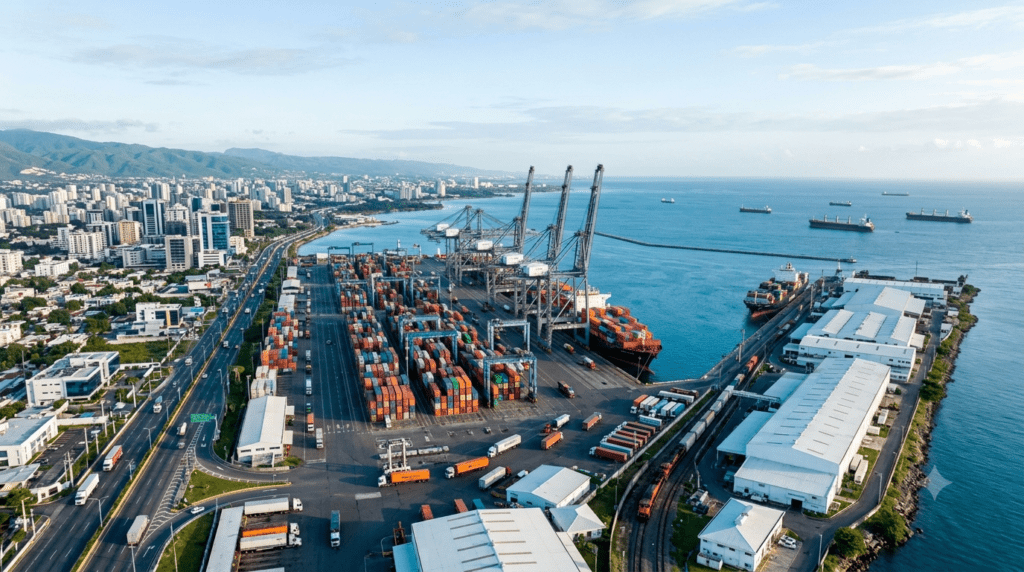
The Dominican Republic has developed into one of the largest and most diversified economies in the Caribbean and Central American region. Over the past three decades, it has consistently attracted foreign investment across sectors including tourism, manufacturing, logistics, mining, renewable energy, financial services, technology, agribusiness, and real estate.
For international companies, the country’s appeal extends beyond its domestic market. The Dominican Republic serves as a manufacturing, logistics, and distribution platform with preferential access to the United States and several international markets through trade agreements such as the Dominican Republic–Central America Free Trade Agreement (CAFTA-DR).
However, no investment destination is without challenges. While the country offers competitive operating costs, political stability, and modern infrastructure compared with many neighboring economies, businesses must also navigate administrative procedures, regulatory compliance, taxation, labor regulations, and a judicial system that can sometimes move slowly in commercial disputes.
Understanding both sides of the equation is essential before making investment decisions.
Why the Dominican Republic Attracts International Business
Several structural factors explain why multinational corporations, regional companies, and entrepreneurs continue to expand their operations in the Dominican Republic.
Unlike many Caribbean economies that depend heavily on a single industry, the Dominican economy is diversified. Tourism remains an important contributor to economic activity, but manufacturing, free zones, mining, telecommunications, financial services, agriculture, construction, and business process outsourcing also play significant roles.
This diversification has helped the country demonstrate resilience during periods of international economic uncertainty.
Foreign investors are generally attracted by a combination of:
- Strategic geographic location between North, Central, and South America.
- Access to major international shipping routes.
- One of the largest consumer markets in the Caribbean.
- Competitive labor costs compared with many developed economies.
- Modern airports and seaports supporting international trade.
- A well-established Free Zone regime for export-oriented industries.
- Relatively stable macroeconomic policies.
- Growing domestic consumption supported by a steadily expanding middle class.
These characteristics have made the country particularly attractive for companies seeking to diversify supply chains closer to North America, a trend often described as nearshoring.
Economic Overview
The Dominican Republic is widely recognized as one of Latin America’s strongest-performing economies over the long term. According to the World Bank and the International Monetary Fund, the country has experienced sustained economic growth for decades, supported by domestic demand, tourism, exports, investment, and remittances.
Economic growth has not followed a perfectly linear path. Like virtually every economy worldwide, the Dominican Republic experienced a significant slowdown during the COVID-19 pandemic. Nevertheless, it recorded one of the region’s fastest recoveries as tourism, exports, manufacturing, and domestic consumption rebounded.
The economy today is considerably more diversified than it was several decades ago. Manufacturing exports, logistics services, financial activities, telecommunications, renewable energy, and technology-related investments have become increasingly important contributors to national output.
This diversification reduces dependence on any single industry and generally strengthens economic resilience.
Strategic Geographic Location
Location is one of the Dominican Republic’s most significant competitive advantages.
The country occupies the eastern two-thirds of the island of Hispaniola, placing it within relatively short shipping and flight times of major markets across the Americas.
Businesses exporting to the United States benefit from shipping times that are generally much shorter than those from many Asian manufacturing centers. This proximity has become increasingly valuable as global companies seek to reduce transportation costs, shorten delivery schedules, and diversify supply chains.
Major ports such as Caucedo and Haina have expanded their logistics capabilities, while eight international airports connect the country with North America, Europe, Latin America, and the Caribbean.
For industries dependent on international logistics, these transportation networks represent an important competitive advantage.
Access to International Markets
Another important factor influencing investment decisions is the Dominican Republic’s participation in international trade agreements.
The country’s most significant agreement is CAFTA-DR, which facilitates trade between the Dominican Republic, the United States, Costa Rica, El Salvador, Guatemala, Honduras, and Nicaragua.
For many export-oriented manufacturers, preferential access to the U.S. market is one of the country’s greatest attractions.
The Dominican Republic also participates in other regional and bilateral agreements that facilitate commercial relations with additional international markets.
While trade agreements do not eliminate every regulatory requirement, they can reduce tariffs and improve market access for qualifying goods.
Foreign Direct Investment Continues to Grow
Foreign direct investment (FDI) has become one of the strongest indicators of investor confidence in the Dominican economy.
According to the Central Bank of the Dominican Republic, annual FDI inflows have reached record levels in recent years, with investment distributed across tourism, energy, real estate, mining, telecommunications, manufacturing, logistics, and financial services.
Rather than depending on a single country, investment originates from multiple jurisdictions, including the United States, Canada, Spain, Mexico, and several European nations.
This diversity helps reduce dependence on individual investors or specific economic regions.
Large multinational corporations continue expanding existing operations while new companies establish manufacturing facilities, hotel developments, renewable energy projects, distribution centers, and service operations throughout the country.
The Importance of Free Zones
One of the Dominican Republic’s most successful economic development models is its network of Free Zones (Zonas Francas).
These are specially designated industrial areas where qualifying companies that primarily produce goods or services for export may benefit from a range of fiscal incentives established under Dominican law.
Although individual projects remain subject to regulatory approval and compliance requirements, Free Zone companies may qualify for exemptions from certain taxes, customs duties, and import tariffs on eligible goods used in their operations.
Free Zones have played a major role in transforming the Dominican Republic into a regional manufacturing platform.
Today they support industries such as:
- Medical devices.
- Pharmaceutical manufacturing.
- Electronics.
- Textiles and apparel.
- Jewelry production.
- Tobacco manufacturing.
- Business process outsourcing (BPO).
- Call centers.
- Software development.
- Shared service centers.
Medical device manufacturing deserves particular attention. The Dominican Republic has become one of the world’s leading exporters of certain categories of medical devices, with numerous multinational companies operating advanced production facilities inside Free Zones.
Can Foreigners Own a Business in the Dominican Republic?
In general, yes.
The Dominican Republic does not impose broad restrictions preventing foreign individuals or foreign companies from owning businesses. Foreign investors generally enjoy legal treatment similar to that provided to domestic investors, subject to sector-specific regulations and compliance with Dominican law.
Businesses may operate through various legal structures depending on their size, ownership model, investment objectives, and commercial activities.
Many foreign companies establish Dominican subsidiaries, while others create joint ventures with local partners or operate through branches of existing foreign corporations.
Choosing the appropriate legal structure should always involve qualified legal and tax advice, particularly for investments involving regulated industries, real estate, financial services, telecommunications, or large commercial projects.
How Easy Is It to Start a Business?
Starting a business in the Dominican Republic has become more streamlined than it was in previous decades, although the process still involves several administrative steps. Investors should expect to complete company registration, obtain a tax identification number, register with the commercial registry, and comply with labor and social security requirements before beginning operations.
Most foreign investors choose to work with a local attorney or corporate services provider to ensure compliance with Dominican corporate law and to avoid delays caused by incomplete documentation.
The exact registration process varies depending on the legal structure selected and the type of economic activity. Businesses operating in regulated sectors—including banking, insurance, telecommunications, energy, mining, and certain healthcare activities—must also obtain industry-specific licenses or approvals.
While the legal framework for establishing companies is well defined, administrative procedures may require coordination with multiple government agencies. As a result, planning adequate time for incorporation is advisable.
Corporate Structures Available to Investors
Dominican corporate legislation provides several legal structures suitable for domestic and foreign investors. The most commonly used include:
- Sociedad de Responsabilidad Limitada (SRL), generally used for small and medium-sized businesses.
- Sociedad Anónima (SA), typically chosen by larger corporations with more complex ownership structures.
- Sociedad Anónima Simplificada (SAS), designed to offer greater operational flexibility while maintaining many corporate governance standards.
- Foreign branches established by companies already incorporated abroad.
The appropriate structure depends on factors such as ownership, governance requirements, financing plans, shareholder arrangements, liability considerations, and long-term business objectives.
The Dominican Tax Environment
The Dominican Republic operates a modern tax system administered by the Dirección General de Impuestos Internos (DGII), the country’s Internal Revenue Directorate.
Businesses operating in the country may be subject to several taxes depending on their activities, legal structure, revenue, and applicable incentive regimes.
Among the principal taxes affecting businesses are:
- Corporate income tax.
- Value Added Tax (known locally as ITBIS).
- Withholding taxes.
- Payroll-related social security contributions.
- Municipal taxes applicable to certain activities.
Companies operating under approved incentive regimes—such as Free Zones or certain tourism and renewable energy projects—may qualify for exemptions or preferential tax treatment established by law.
Because tax legislation evolves over time, investors should rely on current professional tax advice before making financial projections or structuring investments.

Free Zone Incentives Compared with the General Tax Regime
One of the most important distinctions for investors is whether their business qualifies to operate within the Free Zone system.
Companies outside Free Zones generally operate under the standard Dominican tax framework, while approved Free Zone companies may benefit from significant fiscal incentives intended to promote exports, manufacturing, and internationally traded services.
The incentives available depend on the nature of the project and compliance with the applicable legal requirements.
| Feature | General Regime | Free Zone Regime |
|---|---|---|
| Primary Market | Domestic economy | Mainly export markets |
| Corporate Tax | Standard rules apply | Eligible projects may receive exemptions established by law |
| Import Duties | Generally applicable | Eligible imports may receive exemptions |
| Target Industries | All sectors | Manufacturing, logistics, BPO, technology and export services |
Businesses should carefully evaluate whether their commercial model qualifies for Free Zone status before making investment decisions.
Labor Costs and Workforce Availability
Labor availability is frequently cited as one of the Dominican Republic’s competitive advantages.
The country has a relatively young workforce and continues to expand its pool of university graduates, technical professionals, bilingual employees, and skilled manufacturing workers.
International companies operating in customer service, shared services, software development, medical manufacturing, and tourism often find an adequate labor supply, particularly in Santo Domingo, Santiago, Punta Cana, La Romana, and other major urban centers.
Average labor costs remain competitive compared with many North American and European markets, although wages vary considerably depending on industry, location, education, and technical specialization.
Employers must also comply with Dominican labor legislation governing employment contracts, working hours, employee benefits, social security contributions, severance obligations, occupational safety, and labor dispute procedures.
Infrastructure Supporting Business Operations
Infrastructure has improved substantially over recent decades and continues to receive significant public and private investment.
Businesses benefit from an extensive network of highways connecting the country’s principal economic centers, multiple international airports serving passenger and cargo traffic, and modern container ports that support regional and global trade.
The Port of Caucedo has developed into one of the Caribbean’s principal logistics hubs, while the Port of Haina remains an important gateway for commercial imports and exports.
Telecommunications infrastructure has also expanded considerably, with widespread fiber-optic connectivity, competitive mobile services, and increasing availability of high-speed internet supporting digital businesses and business process outsourcing operations.
Electricity reliability has historically represented a challenge for some businesses, although generation capacity, transmission infrastructure, and renewable energy investment have improved significantly in recent years. Nevertheless, many industrial facilities continue to maintain backup power systems as part of normal business continuity planning.
The Financial System
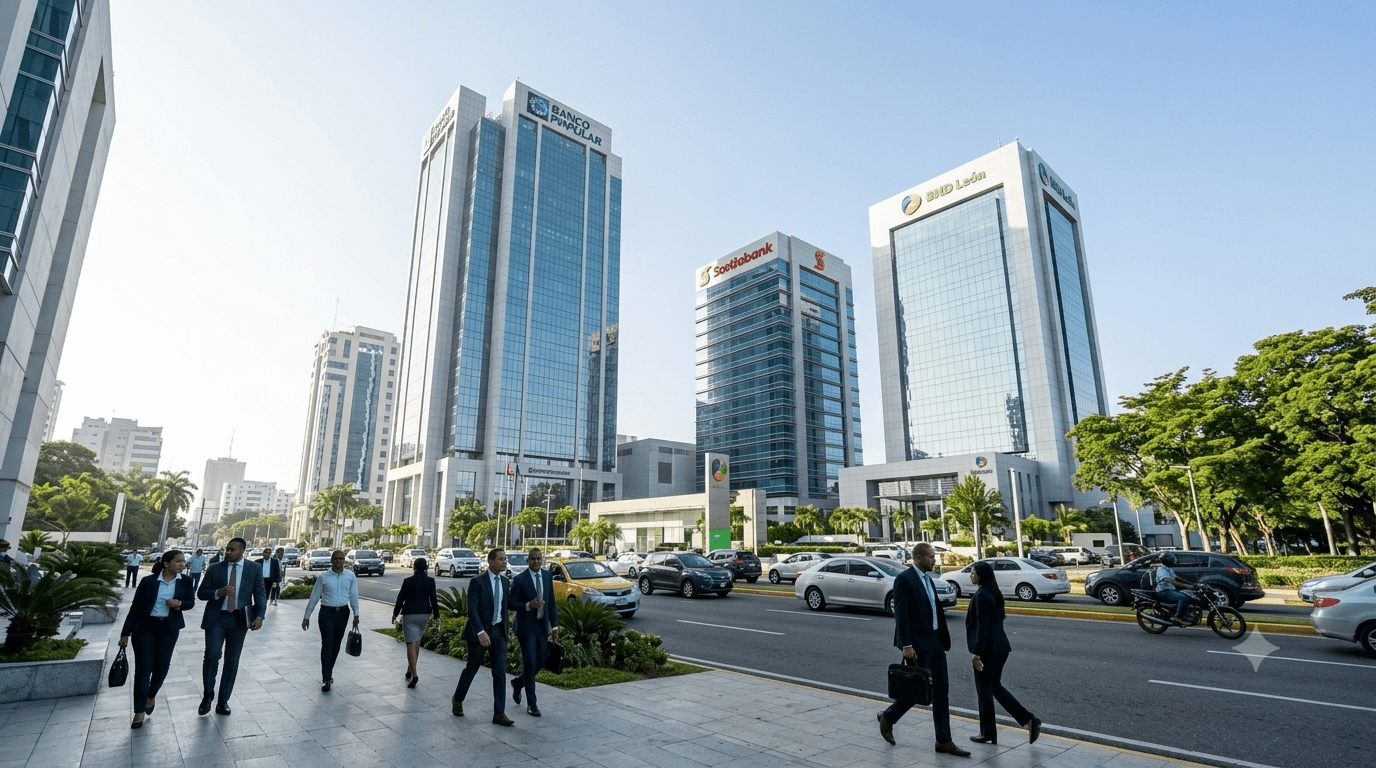
The Dominican Republic has one of the Caribbean’s largest banking sectors.
Commercial banks, savings institutions, international financial services, insurance companies, investment firms, and microfinance organizations provide financing for businesses of various sizes.
The banking sector operates under the supervision of the Superintendency of Banks and the Central Bank of the Dominican Republic, institutions responsible for financial regulation and monetary policy.
Foreign investors generally have access to corporate banking services, foreign currency accounts, trade finance, electronic payment systems, and commercial lending, although lending decisions remain subject to each institution’s internal risk assessments.
Political Stability and Macroeconomic Management
Political stability is an important consideration for long-term investors.
The Dominican Republic has maintained democratic institutions for decades and has experienced regular transitions of government through elections.
Although political debate and policy differences naturally occur, the country’s overall economic model has remained broadly supportive of private investment and international trade across successive administrations.
Macroeconomic management by the Central Bank has generally focused on maintaining monetary stability, controlling inflation, and preserving confidence in the financial system. These factors contribute to a relatively predictable environment for businesses compared with some other emerging markets.
Key Challenges Businesses Should Consider
Despite its many advantages, the Dominican Republic also presents challenges that investors should evaluate carefully.
Administrative procedures can sometimes require more time than businesses initially anticipate, particularly when multiple government agencies are involved.
Commercial dispute resolution through the judicial system may also be slower than in some developed jurisdictions, making well-drafted contracts and appropriate legal advice particularly important.
Transparency International and several international organizations continue to identify corruption as an area requiring continued institutional improvement, although successive governments have introduced reforms intended to strengthen transparency, procurement oversight, and public administration.
Businesses should also consider:
- Regulatory compliance requirements.
- Changes in tax legislation over time.
- Exchange rate considerations for companies operating in multiple currencies.
- Infrastructure differences between urban and rural regions.
- Sector-specific licensing requirements.
- The importance of local legal and accounting expertise.
None of these challenges necessarily prevent successful investment, but they reinforce the importance of careful planning and thorough due diligence before entering the Dominican market.
The Industries Offering the Greatest Business Opportunities
Although opportunities exist across many sectors of the economy, some industries have attracted significantly more domestic and foreign investment because of the Dominican Republic’s competitive advantages, natural resources, strategic location, or government incentive programs.
Tourism and Hospitality
Tourism remains one of the country’s largest economic sectors and a major source of foreign exchange. While resort development continues to expand in destinations such as Punta Cana, Cap Cana, La Romana, Puerto Plata, Miches, and Samaná, investment opportunities increasingly extend beyond hotels to include residential tourism, marinas, medical tourism, ecotourism, entertainment, and tourism-related services.
Manufacturing
The Dominican Republic has established itself as one of the Caribbean’s leading manufacturing centers, particularly for export-oriented production. Medical devices, pharmaceuticals, electronics, tobacco products, textiles, and precision manufacturing represent some of the country’s strongest industrial sectors.
Many international manufacturers choose the Dominican Republic because it combines competitive labor costs with proximity to the United States, reducing shipping times compared with Asian production centers.
Business Process Outsourcing (BPO)
The country has become an important regional hub for call centers, shared services, finance, customer support, information technology, and back-office operations.
A growing bilingual workforce, expanding telecommunications infrastructure, and geographic proximity to North American clients have contributed to continued investment in outsourcing operations.
Renewable Energy
Renewable energy has become one of the fastest-growing investment sectors in recent years. Solar, wind, and other renewable projects continue to attract both domestic and international investors as the country seeks to diversify its energy matrix and reduce dependence on imported fossil fuels.
Logistics and Distribution
The Dominican Republic’s strategic location has also strengthened its position as a logistics platform serving the Caribbean and the Americas.
Modern container terminals, expanding warehousing capacity, airport cargo facilities, and improvements in transportation infrastructure support companies involved in regional distribution, e-commerce fulfillment, and international supply chain management.
Nearshoring Is Creating New Opportunities
Global supply chain disruptions have accelerated interest in nearshoring, a strategy through which companies relocate manufacturing or service operations closer to their primary markets.
The Dominican Republic has benefited from this trend because it offers several characteristics sought by international businesses:
- Short shipping times to the United States.
- Established export infrastructure.
- Free Zone incentives.
- Political stability.
- Experience hosting multinational manufacturers.
- A skilled workforce in export-oriented industries.
Although Mexico remains the largest nearshoring destination in the Americas, the Dominican Republic has positioned itself as an attractive alternative for companies seeking operations within the Caribbean basin.
How Does the Dominican Republic Compare with Other Caribbean Countries?
Compared with many neighboring Caribbean economies, the Dominican Republic offers several structural advantages for investors.
| Factor | Dominican Republic | Many Smaller Caribbean Economies |
|---|---|---|
| Domestic Market Size | Large | Limited |
| Economic Diversification | High | Often tourism-dependent |
| Manufacturing Base | Well established | Generally smaller |
| Free Zone Network | Extensive | More limited |
| International Logistics | Advanced | Varies considerably |
This does not necessarily make the Dominican Republic the best choice for every investment. Smaller jurisdictions may offer advantages in specific industries or tax structures. The most appropriate location depends on each company’s business model, target markets, operational requirements, and long-term strategy.
Who Is Most Likely to Benefit from Investing?
The Dominican Republic may be particularly attractive for businesses that:
- Export products to North America.
- Require competitive manufacturing costs.
- Operate international customer support or BPO services.
- Need regional logistics or distribution centers.
- Invest in tourism or hospitality.
- Develop renewable energy projects.
- Serve the growing domestic consumer market.
Entrepreneurs seeking rapid access to one of the Caribbean’s largest economies may also find opportunities in technology, healthcare services, professional services, retail, education, and food production.
Who Should Exercise Additional Caution?
Not every investment project is equally suited to the Dominican market.
Companies operating in highly regulated industries should expect additional licensing requirements and longer approval processes. Businesses unfamiliar with local regulations may also underestimate the importance of obtaining experienced legal, accounting, tax, and labor advice before beginning operations.
Likewise, investors expecting administrative procedures comparable to those of the world’s most streamlined business environments may encounter delays that require flexibility and careful planning.
Conducting comprehensive due diligence before acquiring assets, entering commercial agreements, or establishing local partnerships remains an essential part of risk management.
Practical Considerations Before Investing
Before making significant business commitments, investors should evaluate several practical issues beyond the general investment climate.
- Determine whether the project qualifies for any incentive regime.
- Review industry-specific regulations and licensing requirements.
- Understand applicable labor obligations.
- Evaluate infrastructure needs, including electricity and logistics.
- Obtain independent legal, tax, and accounting advice.
- Conduct commercial and regulatory due diligence.
- Assess currency exposure and financing options.
- Develop realistic implementation timelines.
Careful preparation significantly reduces operational risks and improves the likelihood of a successful market entry.
Is the Dominican Republic a Good Place to Do Business?
For many companies, the answer is yes—but success depends on the nature of the investment and the quality of the preparation.
The Dominican Republic combines many characteristics sought by international investors: one of the largest economies in the Caribbean, sustained long-term economic growth, strong foreign direct investment, strategic geographic location, modern logistics infrastructure, an established Free Zone system, competitive labor costs, and preferential access to important export markets.
These strengths have helped the country become a leading destination for manufacturing, tourism, logistics, renewable energy, business services, and international trade.
At the same time, investors should approach the market with realistic expectations. Administrative procedures, regulatory compliance, commercial dispute resolution, and institutional challenges require careful planning and experienced local advice.
Rather than viewing the Dominican Republic as either an easy or a difficult place to do business, it is more accurate to see it as a mature emerging market. Companies that understand the regulatory environment, conduct thorough due diligence, and adopt a long-term strategy are generally better positioned to take advantage of the country’s economic opportunities while managing its operational risks effectively.