 23°C
23°C

Dominican Brands That Became International
The Dominican Republic has produced more than export commodities: several businesses created brands that became recognizable well beyond the Caribbean. From La Aurora cigars and Ron Barceló to Brugal, Rica, Presidente and the Puntacana name, these companies followed different paths to international recognition. Some remain closely identified with Dominican ownership and production, while others have changed ownership but retain their Dominican origins, manufacturing base or cultural identity. Together, they illustrate how local products, tourism and national identity can become global commercial assets.


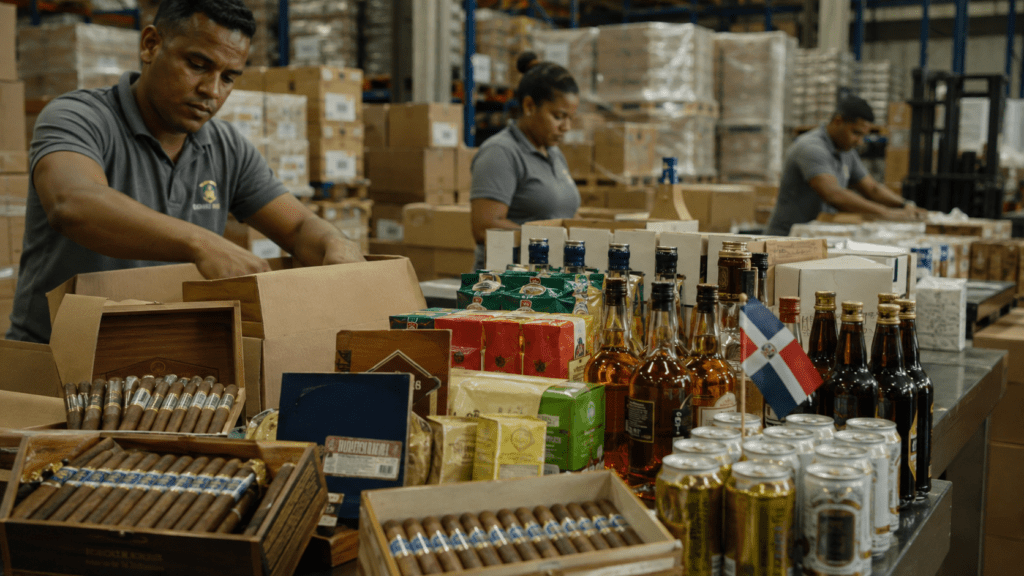
The Dominican Republic is often associated internationally with beaches, baseball, merengue, bachata, cigars and rum. Less visible, but equally important, is the group of businesses that turned those traditions and other locally developed products into brands with international reach.
Not every company in this group followed the same route. Some began as family businesses and expanded through exports. Others built a distinctive product around a Dominican raw material or manufacturing tradition. Tourism companies followed another model, turning a geographic name into an internationally recognized destination brand.
There is also an important distinction between Dominican origin and Dominican ownership. A brand can be created and developed in the Dominican Republic and later become part of a foreign-owned group while continuing to be strongly associated with the country. That distinction is particularly relevant in the rum and beer industries.
La Aurora: From a Santiago Cigar Factory to a Global Brand
Few examples illustrate the internationalization of a Dominican business as clearly as La Aurora. Founded in Santiago de los Caballeros in 1903 by Eduardo León Jimenes, the company began as a family tobacco business and developed into one of the Dominican Republic’s best-known premium cigar manufacturers.
The company’s international ambitions were present from its beginnings. La Aurora says its founder wanted to create a cigar brand with a worldwide dimension. International exports resumed in 1963, marking an important stage in the company’s transformation from a local manufacturer into an exporter.
The scale of that expansion is now substantial. La Aurora reports that its brands are present in more than 90 countries and on five continents. Its portfolio includes La Aurora, León Jimenes, Príncipes and Family Reserve.
The company’s story also demonstrates why Dominican cigars have become an important international category. The product is not simply sold as a manufactured good; it carries associations with tobacco cultivation, hand craftsmanship, aging and the long history of cigar production in the Cibao region.
La Aurora has reinforced that identity through what it calls La Aurora Cigar World, combining cigar production with factory visits, education and other experiences. That approach connects an export product with the place where it is made, giving the brand a cultural dimension in addition to its commercial one.
Ron Barceló: Turning Dominican Rum Into an Export Brand
Ron Barceló is another major example of a Dominican-origin brand that built an international business around one of the country’s most established agricultural and industrial traditions: sugarcane and rum.
The history of Barceló & Co. dates to 1929, when Julián Barceló arrived in Santo Domingo and founded the business. The brand later went through a significant international expansion, including a transfer of export rights to Spanish business partners and the eventual formation of Ron Barceló S.R.L. The production operation remained in the Dominican Republic, in San Pedro de Macorís.
That history is important because it shows that internationalization does not always mean moving production abroad. In Barceló’s case, the Dominican production base remained central to the identity of the product while distribution and commercial development expanded internationally.
According to the Asociación Dominicana de Productores de Ron, Ron Barceló is now sold in more than 50 countries and is described by the association as the Dominican Republic’s most international rum brand. Industry coverage has reported an even broader presence, with the brand available in more than 90 countries.
The company’s international positioning has also been supported by product diversification, premium expressions and investment in production technology and sustainability. The result is a brand that competes not only on the traditional image of Caribbean rum, but also in premium spirits markets.
Brugal: A Dominican Rum Brand With Global Recognition
Brugal belongs in any discussion of Dominican brands with international reach, although its history requires an important qualification. Its founder, Andrés Brugal Montaner, was born in Spain and later moved to the Dominican Republic, where he established Brugal in 1888. The business subsequently developed into a distinctly Dominican rum institution.
That evolution makes Brugal an example of how the Dominican business environment has absorbed outside influences while developing its own commercial and cultural identity. The company became deeply connected to Dominican rum production, and its products continue to be crafted in the Dominican Republic.
Brugal’s internationalization accelerated through generations of master rum makers and the development of products aimed at premium consumers. Brugal 1888, for example, is produced in the Dominican Republic and uses a double-aging process involving bourbon and sherry casks.
The brand’s international character is also reflected in its marketing. Its current global communication connects Dominican rum with cities such as Madrid, Paris and Miami, presenting the product as a Dominican expression designed for an international audience.
Ownership is another part of the story. Brugal announced its association with Scottish spirits producer Edrington in 2008, illustrating how a Dominican-origin brand can become part of a larger international spirits structure while maintaining its Dominican production and heritage.
Rica: A Dominican Food Company That Expanded Through Exports
Internationalization is not limited to premium products. Grupo Rica provides a different example: a Dominican food company that expanded its consumer brands through exports of dairy products, juices and other foods.
The company has built a broad portfolio that includes milk, yogurt, cheese, butter, juices, fruit beverages, coconut water, plant-based beverages and other food products. Grupo Rica reports that its products are exported to more than 20 countries.
Its expansion into foreign markets was gradual. The company’s own history records its entry into the United States in 2009 with juice products, followed by expansion into markets including Aruba, Cuba, Guyana, Saint Lucia and Turks and Caicos.
This model differs from that of luxury cigars or aged rum. Rica’s internationalization depends heavily on food manufacturing, logistics, regulatory compliance and the ability to maintain consistent quality across different markets.
That makes Rica particularly relevant as a business case. It demonstrates that a Dominican company does not need to rely exclusively on a tourism image or a traditional Caribbean product to expand internationally. A familiar domestic food brand can also become an export business when its production and distribution systems are capable of serving demanding foreign markets.
Presidente: A Dominican Beer Brand With International Visibility
Presidente is one of the clearest examples of a Dominican consumer brand whose identity became associated with the country far beyond its original market.
The beer was developed by Cervecería Nacional Dominicana and became one of the country’s most recognizable consumer brands. Its Dominican identity has remained central to its image, particularly among Dominicans abroad and international consumers who associate the brand with Caribbean culture.
Presidente’s international trajectory is somewhat different from that of a privately controlled Dominican company. Cervecería Nacional Dominicana became part of AB InBev, one of the world’s largest brewing groups. AB InBev’s reporting identifies Presidente among the leading local brands in its Middle Americas business and lists the Dominican Republic among the countries in that regional operation.
This distinction matters. Calling Presidente an internationally recognized Dominican brand is accurate in terms of its origin and cultural identity, but it would be misleading to describe its current corporate structure as an independent Dominican-owned multinational.
The brand nevertheless illustrates an important commercial principle: a product can become an international ambassador for its country of origin even after its corporate ownership changes. In the case of Presidente, the Dominican name and cultural associations remain fundamental to how consumers understand the beer.
Puntacana: When a Place Became a Dominican International Brand
The most unusual example is Puntacana, because the international brand is closely tied to a geographic name rather than a packaged consumer product.
Grupo Puntacana traces the development of the destination to the early 1970s, when Dominican businessman and hotelier Frank R. Rainieri and American investor Theodore W. Kheel established a partnership to develop a tourism and real estate community in the eastern Dominican Republic.
Over time, the name Punta Cana became much more than the name of a resort. It became one of the Dominican Republic’s most recognizable destination brands. Grupo Puntacana itself describes Punta Cana as the country’s most recognizable brand internationally.
The business model expanded beyond hotel rooms. Puntacana developed a resort community, residential properties, golf courses, environmental initiatives, restaurants and Punta Cana International Airport. The airport helped transform an isolated area into a major international tourism gateway.
The brand’s reach is also visible through international partnerships. Grupo Puntacana has worked with companies such as Marriott International and Rosewood Hotels & Resorts on new developments, while the Corales Puntacana Championship has become an international sporting event broadcast across numerous countries.
Puntacana therefore demonstrates a different route to international recognition: instead of exporting a physical product, the company built an ecosystem that made a Dominican location itself part of the global tourism vocabulary.
What These Dominican Brands Have in Common
Although rum, cigars, dairy products, beer and tourism are very different industries, the strongest examples share several characteristics.
- A clear connection to the Dominican Republic: The brands are associated with local production, culture, geography, raw materials or history.
- A product that can travel: Whether the product is a cigar, bottle of rum, packaged food or tourism experience, the underlying proposition can be understood outside the domestic market.
- Long-term investment: International brands rarely emerge from a single export agreement. They require production, distribution, quality control and sustained brand development.
- Adaptation without losing identity: Successful brands can adjust packaging, products and marketing to international consumers without abandoning the characteristics that distinguish them.
- Strong distribution: International recognition depends on more than demand. Products must reach consumers consistently through reliable commercial networks.
There is also a broader lesson in the different ownership structures. A brand can remain culturally Dominican even when its corporate ownership becomes international. Conversely, a company can remain locally owned while building a significant export operation. These are separate dimensions of internationalization and should not be confused.
From Local Business to International Brand
The Dominican examples suggest that international expansion does not require every company to follow the same formula. La Aurora used the country’s tobacco tradition to build a premium export brand. Barceló and Brugal transformed rum into internationally marketed spirits. Rica demonstrated that everyday food products can cross borders through industrial scale and distribution. Presidente became a recognizable beer brand strongly associated with Dominican identity, while Puntacana turned a geographic destination into an international tourism brand.
The common factor is not simply the product itself. It is the ability to connect a commercial proposition with something distinctive enough to remain recognizable in another market. For Dominican companies, that distinction can come from craftsmanship, agricultural resources, cultural identity, geographic location or a combination of all four.
Why International Dominican Brands Matter
International brands can influence how a country is perceived abroad. A cigar, bottle of rum, food product or tourism destination can become an informal introduction to the Dominican Republic for someone who has never visited the country.
The economic effect also extends beyond the individual company. Export-oriented businesses create demand for manufacturing, agriculture, logistics, professional services and distribution. Tourism brands can generate additional activity in transportation, hospitality, construction, retail and entertainment.
For that reason, the story of Dominican international brands is broader than a list of successful companies. It is also a story about how a relatively small Caribbean economy has developed products and businesses capable of competing for attention in markets far larger than its domestic consumer base.