 24°C
24°C

How Is Electricity Generated in the Dominican Republic? The Energy Mix Explained
The Dominican Republic is generating more electricity than ever, but the country's power system still relies heavily on fossil fuels. Natural gas and coal remain major sources of generation, while solar, wind and hydropower are expanding rapidly and reshaping the country's energy mix. Here is how the Dominican Republic generates its electricity, which sources produce the most power and how the system is changing.


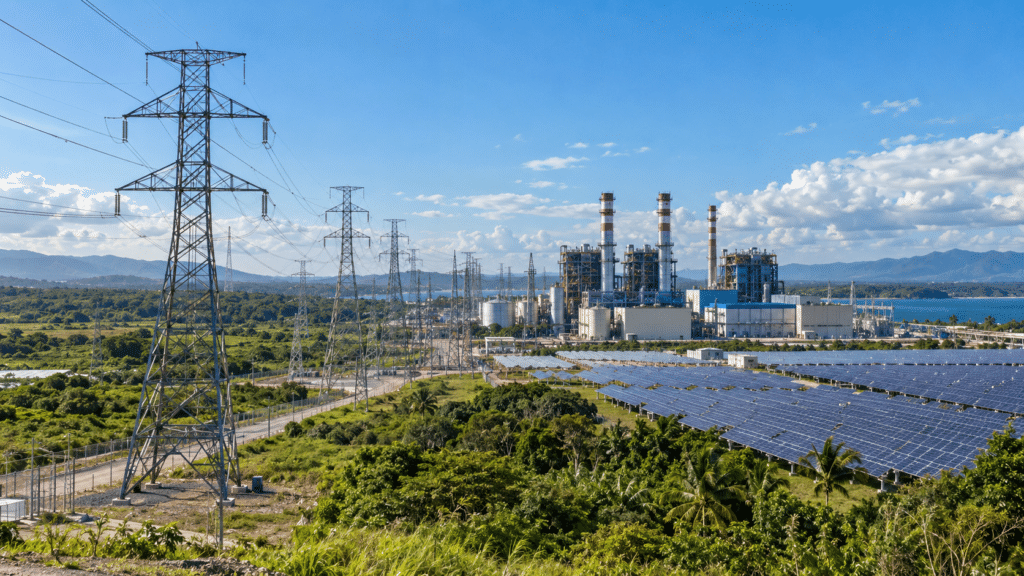
Electricity generation in the Dominican Republic is based on a diverse mix of natural gas, coal, petroleum products, hydropower, solar energy, wind power and biomass. Fossil fuels continue to supply most of the country’s electricity, but renewable generation has expanded rapidly, particularly solar and wind.
This changing mix is reshaping the Dominican Republic’s electricity sector. Natural gas has become a major source of dispatchable generation, while large-scale solar projects have rapidly increased renewable capacity. Wind and hydropower also contribute to the system, while battery storage is becoming increasingly important as the country integrates more variable renewable energy.
Understanding how electricity is generated in the Dominican Republic requires looking at both installed capacity and actual electricity production. These are not the same thing: installed capacity indicates how much electricity a plant can produce at a given moment, while generation measures how much electricity it actually produces over time.
What Are the Main Sources of Electricity in the Dominican Republic?
The Dominican Republic generates electricity from seven principal sources:
- Natural gas
- Coal
- Petroleum products
- Solar power
- Hydropower
- Wind power
- Biomass
The country’s electricity system remains predominantly thermal, meaning fossil-fuel plants account for most generation. However, renewable energy has been gaining ground steadily.
In 2025, renewable sources accounted for approximately 25% of electricity generation, according to the Dominican Republic’s National Energy Commission (CNE), marking a significant increase compared with previous years.
Natural Gas
Natural gas is one of the most important sources of electricity in the Dominican Republic.
Gas-fired power plants provide large amounts of dispatchable electricity, meaning they can generate power when it is needed rather than depending directly on weather conditions.
In April 2025, natural-gas plants represented approximately 1,770 MW of installed capacity in the interconnected electricity system, making natural gas the largest individual generation technology by installed capacity at that time.
Natural gas also accounted for approximately 41% of electricity generation in 2024, according to government data.
The growing importance of natural gas reflects the Dominican Republic’s efforts to diversify its thermal generation fleet. Gas-fired plants can also complement solar and wind generation because they can provide electricity when renewable output is low.
Coal
Coal remains an important component of electricity generation in the Dominican Republic.
The country had approximately 1,064 MW of coal-fired capacity in April 2025, making coal one of the largest sources of installed generation capacity.
Coal supplied approximately 30% of electricity generation in 2024, according to government statistics.
The continued importance of coal means that the Dominican electricity system remains dependent on fossil fuels even as renewable generation expands.
Petroleum-Based Generation
Petroleum products are another source of electricity, although their relative importance has declined as natural gas and renewable energy have expanded.
The Dominican Republic has generating units using fuels such as Fuel Oil No. 6 and Fuel Oil No. 2.
In April 2025, approximately 965 MW of Fuel Oil No. 6 capacity and 100 MW of Fuel Oil No. 2 capacity were included in the country’s installed generation fleet.
Petroleum products represented approximately 13% of electricity generation in 2024.
Oil-fired plants remain useful because they provide dispatchable electricity, but their economics are particularly sensitive to international fuel prices.
Solar Power
Solar energy is the fastest-growing part of the Dominican Republic’s electricity mix.
The country’s geographic location provides strong solar resources, making photovoltaic generation particularly attractive for both utility-scale projects and distributed generation.
By June 2025, solar capacity in the interconnected system had reached approximately 1,178 MW, according to the Ministry of Energy and Mines.
This represented a major increase from earlier years and made solar one of the largest individual categories of installed generation capacity in the country.
Solar generation is particularly important during daylight hours, but its output varies throughout the day and falls to zero at night. This makes solar highly complementary to flexible thermal generation and energy storage.
Wind Power
Wind energy has also become an established part of the country’s electricity system.
The Dominican Republic had approximately 433 MW of installed wind capacity in April 2025.
Wind farms are concentrated in areas with favorable wind conditions, particularly in parts of the country’s north and southwest.
Unlike conventional thermal generation, wind turbines produce electricity according to wind availability. As wind capacity increases, the electricity system therefore needs sufficient flexibility and transmission infrastructure to accommodate fluctuations in production.
Hydroelectric Power
Hydropower is one of the Dominican Republic’s longest-established renewable electricity sources.
The country had approximately 623 MW of installed hydroelectric capacity in April 2025.
Hydroelectric plants have an additional advantage over solar and wind because some facilities can adjust generation according to system requirements, although their output ultimately depends on water availability and rainfall.
Hydropower therefore serves both as a renewable source of electricity and as an important component of the country’s electricity system flexibility.
Biomass
Biomass makes a relatively small contribution to Dominican electricity generation.
Approximately 30 MW of biomass capacity was installed in the interconnected system in April 2025.
Biomass generation can make use of agricultural residues and other organic materials, including waste associated with the country’s agricultural and sugar industries.
Its contribution remains much smaller than those of natural gas, coal, solar, wind and hydropower.
Dominican Republic Electricity Generation Capacity
Installed capacity has expanded considerably as the country has added both conventional and renewable generating facilities.
The Ministry of Energy and Mines reported approximately 6,163 MW of nominal installed capacity in June 2025.
| Source | Installed capacity |
|---|---|
| Natural gas | 1,770 MW |
| Solar | 1,178 MW |
| Coal | 1,064 MW |
| Fuel Oil No. 6 | 965 MW |
| Hydropower | 623 MW |
| Wind | 433 MW |
| Fuel Oil No. 2 | 100 MW |
| Biomass | 30 MW |
| Total | 6,163 MW |
The figures demonstrate an important change in the country’s electricity system: solar had already become the second-largest individual category of installed capacity, behind natural gas.
Installed Capacity Is Not the Same as Electricity Generation
A key distinction when examining the Dominican Republic’s energy mix is the difference between capacity and generation.
For example, a solar project can have 100 MW of installed capacity but cannot produce 100 MW continuously because solar radiation changes during the day.
A natural-gas or coal plant, by contrast, can operate for substantially longer periods when fuel is available.
Consequently, renewable energy can represent a large share of installed capacity without producing the same percentage of annual electricity.
This explains why fossil fuels continue to account for a larger share of actual electricity generation than their share of installed capacity might suggest.
How the Energy Mix Has Changed
The Dominican Republic’s electricity mix has changed significantly over the past decade.
Natural gas has gained importance within thermal generation, while oil-based generation has become relatively less dominant.
At the same time, solar and wind have expanded rapidly.
Renewable generation accounted for approximately 12.9% of net generation in the first quarter of 2019, rising to 19.5% in the first quarter of 2024 and 22.1% in the first quarter of 2025, according to the Ministry of Energy and Mines.
The full-year figure subsequently reached approximately 25% in 2025, according to the CNE.

This represents a clear long-term increase in the contribution of renewable energy.
Solar Is Driving Renewable Growth
Solar power is particularly important to the country’s energy transition.
The Dominican Republic has attracted substantial investment in utility-scale photovoltaic projects, while distributed solar installations have also expanded.
The government reported that 697 MW of renewable generation capacity was incorporated into the interconnected system during 2025 as part of 16 strategic generation projects. Solar and wind accounted for most of this renewable expansion.
The growth of solar is changing the electricity system’s operating profile. More electricity is now available from renewable sources during periods of strong solar radiation, reducing the amount of electricity that must be generated by thermal plants at those times.
Why Natural Gas Remains Important
The expansion of renewable energy does not mean that thermal generation is disappearing.
Solar and wind production is variable, while electricity demand continues throughout the day and night.
Natural-gas plants can therefore provide an important balancing function. They can generate electricity when solar production falls and when renewable resources are insufficient to meet demand.
This is one reason the Dominican Republic is simultaneously developing renewable generation and additional thermal capacity.
The country’s transition is therefore better understood as diversification of the electricity mix, rather than an immediate replacement of fossil fuels.
The Role of Energy Storage
Energy storage is becoming increasingly important as the Dominican Republic adds solar and wind capacity.
Battery storage can absorb electricity when renewable production is high and release it when production falls or demand increases.
The government has announced new battery-storage projects and plans for additional storage capacity as part of the expansion of renewable generation.
The country is also developing plans for pumped-storage hydropower, which could provide another mechanism for storing electricity and balancing the grid.
Storage could become increasingly important as solar generation grows because it can help shift some daytime solar production toward evening periods when electricity demand remains high but photovoltaic generation has fallen.
The Dominican Republic’s Electricity Mix in Perspective
The country’s electricity system is undergoing a transition between two different structures.
The traditional system was heavily dependent on thermal generation, particularly petroleum products and coal. Natural gas subsequently became a major component of the thermal fleet.
The emerging system combines:
- Natural gas for dispatchable thermal generation.
- Coal for large-scale conventional generation.
- Solar for rapidly expanding renewable production.
- Wind for additional renewable generation.
- Hydropower for renewable generation and system flexibility.
- Oil-fired plants for additional thermal capacity.
- Biomass for a smaller renewable contribution.
- Battery and pumped storage to help manage increasing renewable penetration.
This combination allows the Dominican Republic to increase renewable generation while maintaining conventional sources capable of supplying electricity when renewable output is insufficient.
What Is the Future of Electricity Generation in the Dominican Republic?
The main trend is clear: renewable electricity is becoming a larger part of the Dominican Republic’s generation mix.
The Ministry of Energy and Mines has projected that non-conventional renewable capacity could reach approximately 2,600 MW by 2028, compared with 555 MW in 2020.
Achieving this expansion will require more than simply constructing solar and wind farms. The country will also need adequate transmission infrastructure, energy storage and flexible generation to manage the variability of renewable resources.
Electricity demand is also expected to continue increasing as the Dominican economy grows and more households, businesses and industries become increasingly dependent on electricity.
The challenge for the country’s power sector is therefore twofold: increase generation capacity while making the system more flexible and reliable.
Frequently Asked Questions
How is most electricity generated in the Dominican Republic?
Most electricity is generated using fossil fuels, particularly natural gas and coal. Renewable sources, led by solar, wind and hydropower, are becoming increasingly important.
What is the largest source of electricity in the Dominican Republic?
Natural gas is one of the country’s largest sources of both installed capacity and electricity generation. In 2024, it accounted for approximately 41% of electricity generation according to government data.
Is the Dominican Republic using renewable energy?
Yes. Solar, wind, hydropower and biomass are all used to generate electricity. Renewable sources accounted for approximately 25% of electricity generation in 2025, according to the CNE.
Is solar energy growing in the Dominican Republic?
Yes. Solar has experienced particularly rapid growth and reached approximately 1.18 GW of installed capacity in the interconnected system by June 2025.
Does the Dominican Republic still use coal?
Yes. Coal remains an important source of electricity generation and represented approximately 30% of generation in 2024.
Does the Dominican Republic use oil to generate electricity?
Yes. Petroleum products, including fuel oil, continue to be used for electricity generation, although their share has declined relative to natural gas and renewable energy.
The Bottom Line
Electricity generation in the Dominican Republic is becoming more diversified.
Natural gas and coal remain central to the country’s electricity production, while petroleum-based generation continues to provide additional thermal capacity. At the same time, solar and wind power are expanding rapidly, and hydropower remains an established renewable resource.
The most significant change is the growing contribution of renewable energy. With renewables reaching approximately one-quarter of electricity generation in 2025, the Dominican Republic is moving toward a more diversified power system in which solar, wind, hydro, natural gas, conventional thermal generation and energy storage increasingly operate together.
The country’s electricity transition will ultimately depend not only on how much new renewable capacity is built, but also on whether the transmission network, storage systems and flexible generation capacity develop quickly enough to integrate it reliably.