 28°C

Retail Industry in the Dominican Republic: Market Structure, Trends and Investment Opportunities
The retail industry in the Dominican Republic combines expanding supermarket chains, established neighborhood stores, shopping malls, specialty retailers and international and domestic franchises. Its development reflects changing consumer preferences, competition over prices and product selection, and the gradual modernization of distribution. For retailers, suppliers and investors, understanding how traditional and modern channels coexist is essential to identifying opportunities in this diverse consumer market.


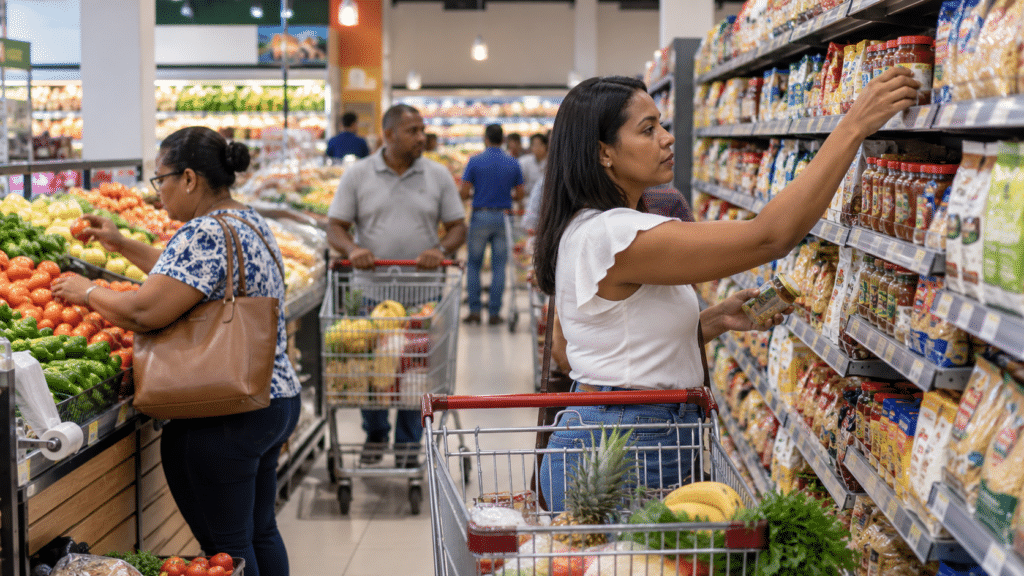
The retail industry in the Dominican Republic is a major component of the country’s commercial economy, connecting domestic producers, importers, distributors and international brands with consumers across the island. It ranges from neighborhood convenience stores and traditional markets to supermarkets, hypermarkets, shopping malls, specialty shops and franchise networks.
This diversity makes the market different from retail environments in which large chains dominate most consumer purchases. Modern retailers have expanded their presence, particularly in urban areas, but traditional outlets remain important for everyday shopping and product distribution. Retailers must therefore understand not only what consumers buy, but also where they shop, how frequently they make purchases and how they balance price, convenience and brand preference.
The sector also creates opportunities beyond store ownership. Importers, wholesalers, manufacturers, logistics companies, payment providers, commercial property operators and other suppliers depend on retail distribution. While e-commerce is influencing purchasing habits and retailers’ channel strategies, the main focus of this overview is physical retail and the broader distribution of goods to consumers.
How the Retail Market Is Structured
Retail in the Dominican Republic operates through several overlapping formats. Each serves different shopping needs and requires a distinct approach to location, inventory, pricing, staffing and customer service.
Supermarket chains sell food, beverages, household products, personal care items and other everyday goods through standardized stores. Larger operators benefit from centralized purchasing, distribution networks, supplier relationships and the ability to manage product assortments across multiple locations.
Hypermarkets and large-format stores combine grocery shopping with broader ranges of household goods, personal products, clothing, electronics or other merchandise. Their size allows them to offer extensive selection, but they also require substantial floor space, inventory investment and efficient logistics.
Independent supermarkets serve local communities and may compete through neighborhood familiarity, convenient locations, selected product ranges and relationships with customers and suppliers. Some operate several stores, while others remain single-location businesses.
Colmados and other traditional retailers are neighborhood stores that sell everyday essentials, often in small quantities and close to where consumers live. They remain an important part of Dominican commercial life, particularly for frequent purchases and customers who value proximity.
Specialty retailers concentrate on specific product categories, including clothing, footwear, electronics, furniture, home improvement, beauty products, sporting goods and other consumer merchandise. Their competitiveness often depends on product knowledge, assortment, service and the ability to differentiate themselves from general merchandise stores.
Franchises and branded retail networks allow operators to use an established brand and business format. In consumer retail, this includes apparel, furniture, personal care and other store-based concepts. Franchising is also present in restaurants and services, although those businesses do not all belong to retail trade in the narrower sense.
Public markets and independent vendors provide access to fresh produce, food products and other goods. These channels remain relevant to local commerce and can connect consumers with small producers and traders.
The distinction between these formats matters commercially. A supermarket chain competes on selection, purchasing power, store coverage and operational efficiency, while a colmado may compete through proximity and the ability to serve immediate needs. Neither format can be evaluated using exactly the same business assumptions.
Traditional Trade and Modern Retail
One of the defining characteristics of the Dominican retail market is the coexistence of traditional and modern distribution channels. Traditional outlets include colmados, small grocery warehouses known as almacenes and public markets. Modern retail includes supermarket chains, independent supermarkets and convenience stores operating through more standardized formats.
A 2025 report from the U.S. Department of Agriculture’s Foreign Agricultural Service describes modern retail as accounting for approximately 20% to 25% of total retail sales, while traditional outlets remain responsible for a substantial share of food retail. These estimates concern the retail landscape discussed in the report and should not be treated as a precise measure of every category of consumer merchandise.
The two channels serve different shopping occasions. Consumers may visit a supermarket for a larger household purchase, a wider product assortment or promotional prices, then use a nearby colmado for an item needed immediately. Independent supermarkets can also compete for routine shopping, particularly outside the largest metropolitan areas.
Traditional retail is important to manufacturers and distributors because it provides access to communities that may be less convenient or economical to serve exclusively through large chains. Suppliers may need different package sizes, delivery schedules, sales representatives and credit arrangements to serve small outlets efficiently.
Modern retailers, by contrast, often place greater emphasis on centralized procurement, standardized product data, promotional calendars, distribution centers and formal supplier requirements. Their scale can create opportunities for brands that can deliver consistent volumes, but competition for shelf space may be intense.
For companies entering the Dominican market, the key decision is not simply whether to choose traditional or modern retail. It is how to allocate products, pricing, distribution resources and promotional investment across channels that serve different consumer needs.
Supermarkets, Hypermarkets and Retail Chain Expansion
Supermarkets and larger retail chains have expanded their presence over the past two decades, particularly in Santo Domingo, Santiago and other urban centers. The growth of modern stores reflects demand for broader assortments, organized shopping environments and the convenience of purchasing multiple product categories in one location.
Large chains can use their purchasing scale to negotiate with suppliers, coordinate promotions, introduce private-label products and distribute inventory across multiple stores. Centralized systems can also improve stock visibility and support more consistent pricing, although the benefits depend on the quality of execution.
Expansion requires careful site selection. Retailers need to consider population density, household purchasing power, road access, parking, public transportation, nearby competitors, commercial rents and the size of the potential catchment area. A location with high traffic may still underperform if occupancy costs are excessive or the surrounding customer base does not match the store’s positioning.
Store format is another strategic decision. A large supermarket can support a broad assortment and attract customers making substantial household purchases. A smaller neighborhood store may offer better convenience and lower facility costs. A retailer expanding into a new city or district should evaluate whether the local market can support its intended format rather than simply replicating an existing store.
Expansion also increases operational complexity. Retailers must coordinate hiring, staff training, inventory replenishment, supplier deliveries, security, maintenance and store-level performance. A chain can grow its sales footprint while weakening its finances if new locations take too long to reach sustainable sales volumes.
Competition between chains is therefore not only about opening more stores. It also concerns how effectively each retailer manages its existing network, identifies underserved areas, controls operating costs and delivers a consistent customer experience.
Specialty Stores and Shopping Malls
Specialty retail occupies an important position between general merchandise retailers and highly localized shops. These businesses concentrate on categories in which product selection, advice, brand positioning or after-sales support can influence purchasing decisions.
Clothing and footwear stores compete through design, price, brand recognition, assortment and the availability of sizes. Electronics retailers may differentiate themselves through product expertise, warranties, installation and technical support. Furniture and home improvement businesses depend on product display, delivery arrangements, financing options where available and the ability to serve customers furnishing or renovating a home.
Other specialty categories include cosmetics, sporting goods, children’s products, pet supplies, optical products and hobby merchandise. Their performance depends on category-specific demand and the ability to secure products at competitive costs.
Shopping malls and organized commercial centers provide locations for retailers seeking concentrated consumer traffic. They can help brands reach shoppers through a combination of stores, restaurants, entertainment and services. For retailers, the benefits need to be weighed against rent, common-area charges, fit-out costs, operating hours and the commercial terms of the lease.
Retailers outside major malls may face lower occupancy costs but need to generate their own traffic through location, reputation, advertising and convenience. The right choice depends on the target customer and the role of the store in the wider distribution strategy.
For investors in commercial property, retail performance depends on the quality of tenants, accessibility, surrounding development, parking and the ability to maintain occupancy. A shopping center’s prospects cannot be judged solely by the number of people passing through it; tenant sales, rental sustainability and operating expenses are also important.
Franchises and International Retail Brands
Franchising provides a route into the Dominican consumer market for established international concepts and domestic brands. A franchisee generally operates under a brand’s commercial system, subject to the terms of the franchise agreement, while the franchisor provides some combination of brand rights, operating standards, training, product specifications and marketing support.
The Dominican market includes international and locally developed franchise concepts across several industries. In retail, branded apparel, furniture, beauty and other specialty formats can benefit from consumer recognition and a standardized store concept. The broader franchise sector also includes restaurants, education and services, so franchise-market estimates should not be interpreted as retail-only figures.
Franchising can reduce the need to develop a brand and operating system from the beginning, but it does not eliminate business risk. Franchisees may face initial fees, store construction expenses, equipment costs, inventory requirements, royalties, advertising contributions and restrictions on suppliers or product selection.
International brands also need to adapt to local conditions. Pricing must reflect consumer purchasing power and the full cost of importing or distributing products. Product assortment may need to account for local preferences, climate, store size and demand patterns. A format that performs well in another country may require changes before it becomes commercially viable in the Dominican Republic.
Before entering a franchise agreement, investors should examine the territory granted, renewal conditions, supply obligations, performance requirements, termination clauses, ownership of local assets and the franchisor’s track record. They should also model the economics of an individual location rather than assuming that international brand recognition guarantees adequate sales.
The U.S. Department of Commerce’s overview of distribution and sales channels in the Dominican Republic provides additional context on the country’s franchise and retail environment.
Consumer Habits and Purchasing Decisions
Retail performance depends on how households manage their budgets and divide purchases between different store formats. Price sensitivity, product availability, convenience, trust and familiarity all influence where consumers shop and which brands they choose.
Shopping frequency varies by product category. Fresh food and basic household items may require frequent purchases, while clothing, furniture and electronics are usually bought less often. Retailers that understand these different purchase cycles can design more appropriate assortments, promotions and inventory policies.
Value and affordability are important in a market where households must allocate spending across food, housing, transport and other expenses. Promotions, multipacks, smaller package sizes and private-label alternatives can appeal to different customer groups, although their commercial value depends on margins and inventory turnover.
Convenience and proximity support the continued relevance of neighborhood stores. Consumers may be willing to pay a different price for an item when a nearby outlet saves travel time or allows them to purchase only what they need immediately.
Product selection and availability influence decisions in supermarkets and specialty stores. Customers may prefer a retailer that reliably stocks familiar products, offers a suitable range of brands or carries specialized items that are difficult to find elsewhere.
Brand preference and trust matter in categories where consumers associate a brand with quality, durability or a particular lifestyle. Retailers need to balance branded products with alternatives that meet the needs of more price-conscious shoppers.
Shopping missions also shape channel choice. A planned household stock-up, a quick purchase near home and a search for a specialized product are different activities. Retailers that attempt to serve all three without a clear operating model may struggle to deliver the right combination of price, range and convenience.
Consumer behavior should be measured rather than inferred from national averages alone. Preferences can vary by location, household composition, income, product category and access to different retail formats. Retailers benefit from studying local sales data and customer feedback before making major decisions about store positioning or assortment.
Private Labels and Product Differentiation
Private-label products have become an important competitive tool for modern retailers. These products are sold under a retailer’s own brand or a brand controlled by the retailer, rather than under the name of an independent manufacturer familiar to consumers.
Research published by Worldpanel by Numerator in January 2025 highlighted the growing relevance of private labels in Dominican consumer goods. Its analysis reported a 27% market share for private labels in the market it measured. That figure reflects the study’s specific coverage and should not be treated as a universal share across all retail categories.
Private labels can allow retailers to offer differentiated products, control aspects of product positioning and create alternatives to national or international brands. They may also support customer loyalty when shoppers associate the retailer’s own products with dependable quality and value.
For manufacturers, private-label contracts can provide access to large retail networks and predictable production volumes. However, supplying a retailer’s brand may involve strict cost targets, quality requirements, packaging specifications and delivery schedules. It may also create a different competitive relationship with the manufacturer’s own branded products.
Successful private-label programs require more than choosing a low-cost supplier. Retailers need product testing, quality control, reliable sourcing, suitable packaging, inventory planning and clear positioning. A product that damages customer trust can undermine the wider store brand.
Differentiation remains important for branded manufacturers. They may compete through innovation, product performance, marketing, package sizes or distinctive customer benefits. Retailers must balance these products with private labels while managing shelf space, category profitability and consumer expectations.

Distribution, Imports and Supplier Relationships
The Dominican retail market depends on domestic production and imported goods. Retailers and distributors source products through local manufacturers, importers, wholesalers, regional suppliers and international brands. The appropriate sourcing strategy varies according to the product’s origin, shelf life, storage requirements and regulatory treatment.
Imported merchandise can broaden product choice and provide access to international brands, but it also introduces costs and uncertainties. Businesses need to account for freight, insurance, customs procedures, duties where applicable, taxes, storage, currency movements and the time required to replenish inventory.
Food retailers face additional considerations involving sanitary requirements, product registration where applicable, labeling, shelf life and cold-chain management. The exact obligations depend on the type of product and its classification. Importers should verify current requirements before shipping goods rather than relying on assumptions based on another market.
For retailers, supplier management is a central part of profitability. Purchase price matters, but so do delivery reliability, product quality, minimum order quantities, payment terms, returns, promotional support and the ability to respond to unexpected demand.
Large chains may have the volume and infrastructure to negotiate directly with manufacturers or international suppliers. Smaller stores often rely more heavily on wholesalers and distributors, which can simplify procurement but may reduce control over assortment and cost.
Distributors that can serve many small outlets efficiently may occupy a valuable position in the supply chain. Their performance depends on route planning, sales coverage, order accuracy, credit management, warehouse productivity and the ability to maintain sufficient stock without tying up excessive working capital.
Retail Employment and Operational Skills
Retail supports employment in store operations, sales, purchasing, warehousing, transport, inventory management, merchandising, customer service, finance, loss prevention and management. Larger chains also need personnel for information technology, data analysis, marketing, human resources and network expansion.
Retail employment varies considerably by format. A small neighborhood shop may operate with a limited team, while a hypermarket requires staff across multiple departments, checkout operations, receiving, security and management. Distribution centers and delivery networks create additional jobs outside the stores themselves.
Skills requirements are changing as retailers adopt more advanced inventory systems, digital payments, demand forecasting and centralized management. Employees need to understand both customer-facing operations and the procedures that protect inventory accuracy, food safety where relevant and cash controls.
Labor costs, staff turnover, training and scheduling directly affect store economics. Retailers must match staffing levels to customer traffic while maintaining service quality and operational controls. Understaffing can lead to poor service, stock-handling errors and security problems; excessive staffing can erode margins.
Formalization is also relevant to the sector. The commercial landscape includes businesses of very different sizes and levels of operational maturity. Companies expanding into organized retail should account for applicable labor, tax, social security and business registration requirements, as well as the management systems needed to support growth.
Investment Requirements and Retail Profitability
Retail investment requirements depend on the size of the operation, product category, location and distribution model. Opening a small specialty shop is financially different from establishing a supermarket chain, importing goods at scale or developing a large commercial center.
Typical costs for a physical store include rent or property acquisition, renovation, shelving, refrigeration where required, point-of-sale systems, security, initial inventory, staff, utilities and marketing. Larger formats add substantial requirements for storage, loading areas, parking, distribution and ongoing maintenance.
Inventory is one of the most important financial considerations. Retailers must purchase or secure products before all sales revenue is collected, and slow-moving stock ties up capital. Perishable products introduce the risk of spoilage, while fashion and seasonal goods can lose value if they remain unsold beyond the relevant selling period.
Gross margin alone does not determine profitability. A store with a high margin may have low sales volume or high occupancy costs, while a high-volume supermarket may operate with comparatively tight margins and depend on efficient purchasing, inventory turnover and expense control.
Investors should evaluate several indicators before opening a store or expanding an existing network:
Sales per square meter. This helps assess how effectively a retail space generates revenue relative to its size.
Gross margin and product mix. Different categories contribute different margins and may require different levels of handling, storage and service.
Inventory turnover. Faster turnover can reduce the capital tied up in stock, but excessive inventory reductions may lead to shortages and lost sales.
Like-for-like sales. Comparing established stores over time can help separate underlying performance from growth created by opening additional locations.
Occupancy and labor costs. Rent, service charges, wages and related expenses must remain sustainable relative to sales.
Shrinkage and waste. Theft, damage, administrative errors and expired products can materially reduce profitability, particularly in high-volume or perishable categories.
Working capital and supplier terms. Payment schedules, inventory requirements and customer payment methods affect the cash available to operate and expand the business.
Expansion plans should incorporate realistic assumptions about store ramp-up, seasonal demand, supplier pricing, exchange-rate exposure where relevant and the cost of maintaining inventory. A growing store network is not necessarily a financially successful one if new locations consume cash faster than they generate returns.
Physical Retail and the Influence of E-Commerce
Online purchasing is changing how consumers discover products, compare prices and interact with retailers in the Dominican Republic. Even businesses that generate most of their revenue through physical stores may be affected by customers checking product availability online, comparing offers before visiting a location or expecting digital communication from a retailer.
For traditional retailers, the implications vary. Some customers continue to prioritize proximity and immediate availability, while others value the ability to research products before purchasing. Larger chains may use digital channels to support store visits, communicate promotions or make product information easier to access.
Retailers should distinguish between the strategic role of digital tools and the economics of running an online sales operation. Maintaining accurate product information, coordinating stock visibility and communicating with customers can affect physical store performance. Online storefronts, digital acquisition strategies, marketplace operations, fulfillment models and the broader economics of e-commerce belong to the separate E-commerce & Digital Business segment.
Physical stores retain advantages for products that consumers want to inspect, try, compare in person or take home immediately. Specialty retailers may also provide advice, demonstrations, installation and after-sales service that are difficult to reproduce through product listings alone.
The most effective channel strategy depends on the retailer’s category and customer base. Digital activity should complement a clear retail proposition rather than become a substitute for understanding product demand, store economics and service expectations.
Technology and the Transformation of Retail
Retail modernization increasingly involves the use of technology to improve purchasing, inventory control, customer service and financial management. Point-of-sale systems, barcode scanning, stock-management software and integrated accounting tools help retailers maintain more accurate records and monitor store performance.
For larger operators, centralized inventory systems can provide visibility across locations, helping managers move stock between stores and respond to differences in demand. Sales data can also support decisions about product assortment, replenishment, promotions and supplier negotiations.
Digital payments are another part of this transition. Card payments and other electronic methods can make checkout more convenient, but retailers need reliable payment processing, reconciliation procedures, fraud controls and systems that continue to function during technical disruptions.
Technology adoption is not limited to major chains. Smaller retailers can use affordable software to manage inventory, track expenses, organize supplier orders and monitor sales. The value of a system depends on whether it solves a specific operational problem and whether employees can use it consistently.
Implementation can fail when retailers purchase complex systems without adapting workflows or training staff. Data quality, connectivity, maintenance, cybersecurity and vendor support should be considered alongside the initial price. Businesses should measure whether technology reduces errors, improves availability, saves time or strengthens financial control.
Growth Opportunities for Retailers and Suppliers
The Dominican retail market offers opportunities across store formats and supporting services, but the strongest business case will depend on the target customer, product category and location.
Specialized neighborhood retail. Stores focused on a clear category or local need may compete through convenience, product expertise and carefully selected inventory rather than attempting to match the assortment of a large supermarket.
Regional expansion. Retailers with a proven operating model can assess opportunities in cities and districts where consumer demand supports additional locations. Expansion should be based on local purchasing power, competition, accessibility and realistic store-level economics.
Private-label supply. Manufacturers and importers may find opportunities to supply products under retailers’ own brands. They need to demonstrate consistent quality, competitive costs, production capacity and reliable delivery.
Distribution to traditional outlets. Wholesalers and logistics companies can serve the continuing needs of colmados and other small retailers. Efficient route planning, appropriate order sizes and dependable replenishment can help suppliers compete in a fragmented market.
Retail technology and services. Inventory management, point-of-sale systems, security, refrigeration maintenance, payment solutions and business analytics can help retailers improve operational performance. Suppliers that provide implementation and ongoing support may build longer-term customer relationships.
Franchise investment. Investors can evaluate established concepts where brand recognition and operating systems provide a credible advantage. The decision requires careful analysis of franchise terms, location economics, supply obligations and the capital needed to operate until the business reaches a sustainable level of sales.
Product categories with defined customer needs. Specialty merchandise, household goods, personal care products and other categories may offer openings for retailers with a distinctive assortment or service model. Opportunities should be validated through local research rather than assumed from general consumption trends.
For suppliers and investors, the critical distinction is between a large addressable market and a profitable entry point. A category may generate substantial sales nationally while offering limited returns to a new business because of competition, import costs, distribution complexity or low customer loyalty.
Risks and Challenges in the Retail Sector
Retailers face pressure from competition, cost inflation, shifts in consumer spending and the need to maintain product availability. Price competition can reduce margins, while aggressive discounting may train customers to delay purchases until promotions appear.
Supply-chain disruption is another risk. Delays in imports, higher freight costs, changes in supplier terms and currency movements can affect product availability and replacement costs. Businesses with excessive dependence on a narrow group of suppliers or imported products may be particularly exposed.
Inventory management presents a separate challenge. Too much stock increases storage and financing costs, while too little creates lost sales and frustrates customers. Retailers handling food or other time-sensitive products must also manage expiration, spoilage and appropriate storage conditions.
Store expansion can magnify existing weaknesses. Opening new locations before establishing reliable systems for procurement, staff training, inventory control and financial reporting can produce inconsistent performance across the network.
Traditional and modern retailers also face different structural pressures. Small stores may have limited purchasing power and less access to sophisticated systems, while large chains must manage complex operations, substantial fixed costs and demanding supplier relationships.
Regulatory compliance should be incorporated into the operating model. Depending on the merchandise, retailers and importers may need to comply with product-specific labeling, sanitary, consumer protection, tax, labor and commercial requirements. Businesses should verify the rules relevant to their products and activities before launching or expanding operations.
Evaluating the Outlook for the Dominican Retail Industry
The retail industry in the Dominican Republic is shaped by the interaction of modern chains, independent supermarkets, neighborhood stores, specialty retailers and franchise networks. Modern formats continue to develop, but traditional outlets remain important to everyday consumption and the distribution of goods across communities.
Competition is increasingly influenced by more than store count. Purchasing efficiency, private-label strategies, inventory control, location selection, customer service and the use of operational technology all affect a retailer’s ability to maintain margins and build customer loyalty.
For investors, expansion opportunities may exist in new locations, specialized formats, franchise concepts and services that improve the efficiency of existing retailers. Manufacturers and distributors can also benefit from understanding how product positioning and logistics need to change across traditional and modern channels.
The most durable retail businesses are those that match their format to a clearly defined customer need and understand the economics behind each sale. In a market where consumer habits and distribution channels continue to evolve, local knowledge, operational discipline and a realistic assessment of competition are essential to sustainable growth.