 24°C
24°C

Dominican Republic Food Prices Rise by as Much as 62.75% Between April and September
Prices for several everyday foods in the Dominican Republic increased sharply between April and September 2026, with local pumpkin rising 62.75%, according to consumer price comparisons published by ProConsumidor, the country's consumer protection agency. However, lemons, garlic and other staples became cheaper, highlighting the uneven impact of food price changes on household budgets.


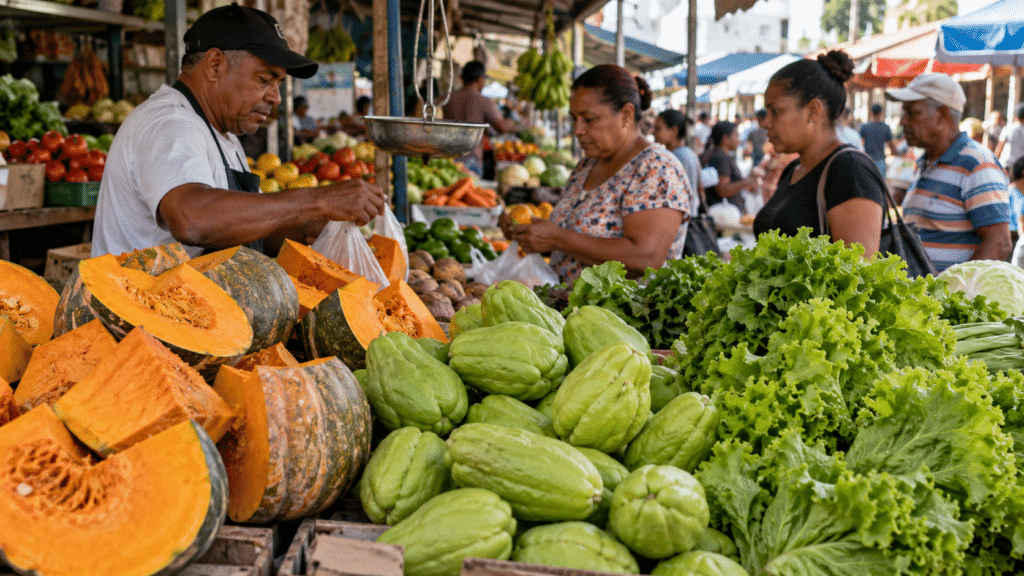
Several commonly purchased foods became significantly more expensive in the Dominican Republic between April and September 2026, with local pumpkin, chayote and lettuce recording some of the largest increases. The figures highlight the pressure that changing grocery prices can place on household budgets, even as other essential products become more affordable.
The comparison, based on prices recorded by the National Institute for Consumer Protection (ProConsumidor) in April and on September 9, 2026, was reported by Dominican media outlet elDinero. ProConsumidor publishes regular price surveys to help consumers compare food costs and monitor changes in the market.
Pumpkin, Chayote and Lettuce Lead Food Price Increases
Local pumpkin, known as auyama criolla in the Dominican Republic, registered the steepest increase among the products highlighted in the comparison. Its price rose from RD$36.43 per pound in April to RD$59.29 in September, an increase of 62.75%. At the exchange-rate equivalents provided in the original report, the price increased from approximately $0.57 to $0.93 per pound.
Chayote, locally known as tayota, also became considerably more expensive. Its price increased from RD$21.43 to RD$32.14 per unit, representing a rise of approximately 50%. Lettuce prices climbed as well, with the price per pound increasing from RD$38.57 to RD$47.86, a gain of approximately 24.1%.
These vegetables are commonly used in Dominican home cooking, making their price movements relevant to families purchasing fresh ingredients for everyday meals. The impact on individual households will depend on shopping habits, quantities purchased and the availability of alternative products.
Meat, Canned Fish and Tropical Fruit Also Become More Expensive
The price comparison identified increases in several other food products. A 106-gram can of Brunswick sardines rose from RD$48.62 to RD$56.33, while fresh pork chops increased from RD$134.29 to RD$152.91 per pound.
Chinola, the passion fruit widely consumed in the Dominican Republic, also recorded an increase. A dozen rose from RD$204.29 to RD$232.86. Meanwhile, yam prices increased by 11.52%, and white yautía, a tropical root vegetable used in traditional dishes, rose by 9.09%.
The figures show that price increases were not limited to fresh vegetables. Meat, canned fish and fruit also became more expensive during the period, potentially affecting different parts of the household food budget.
Several Essential Products Became Cheaper
Not all food prices moved upward. The price of a dozen local lemons fell from RD$150 to RD$100, a decline of 33.33%. Select-grade garlic also became less expensive, dropping from RD$88.30 to RD$61.75 per pound.
Other products reported to have declined in price included evaporated milk, soybean oil, red onions, salad tomatoes and fresh chicken. These reductions could help offset some of the increases in other grocery items, although the overall effect will vary according to each household’s consumption patterns.
The contrasting movements underline why consumers should not assume that every food category follows the same price trend. Comparing prices across stores and adjusting shopping choices may help households manage their grocery spending when particular products become more expensive.
Food Prices and Inflation in the Dominican Republic
The reported changes occurred against a broader inflationary backdrop. According to the Central Bank of the Dominican Republic, annual inflation reached 5.13% in August 2026, while cumulative inflation for the first eight months of the year stood at 2.60%.
Individual food products can experience price changes well above or below the overall inflation rate. The increase of 62.75% recorded for local pumpkin, for example, was substantially higher than the annual inflation figure. These measures are not directly equivalent, however: the pumpkin comparison covers a specific product between two dates, while the inflation rate measures changes across a broader basket of goods and services over a year.
Consumers seeking a broader understanding of household expenses can also consult this guide to the cost of living in the Dominican Republic, which explains how everyday expenses vary depending on location and lifestyle.
For updated food price information, consumers can consult ProConsumidor’s food price surveys, which publish comparisons of commonly purchased products. These reports can help shoppers track price movements and compare the cost of essential items over time.
What the Price Changes Mean for Household Budgets
The September comparison illustrates how changes in a relatively small number of frequently purchased products can affect grocery bills. When vegetables, meat and fruit rise in price simultaneously, families may face higher costs even if other items become cheaper.
At the same time, the declines recorded for lemons, garlic, chicken and other products show that the pressure is not uniform across the food market. The practical impact depends on the mix of products each household buys and the prices available at its usual shopping locations.
The figures provide a snapshot of the market rather than a guarantee of prices across every supermarket, grocery store or traditional market in the country. Continued monitoring of official price surveys will be important for determining whether the increases persist, moderate or reverse in the months ahead.