 22°C
22°C

Dominican Republic Toll Roads Move Toward Cashless Payments
Drivers in the Dominican Republic are being urged to adopt Paso Rápido as RD Vial prepares a gradual transition away from cash payments at toll plazas, with dedicated electronic lanes expected to expand as part of a broader modernization plan.


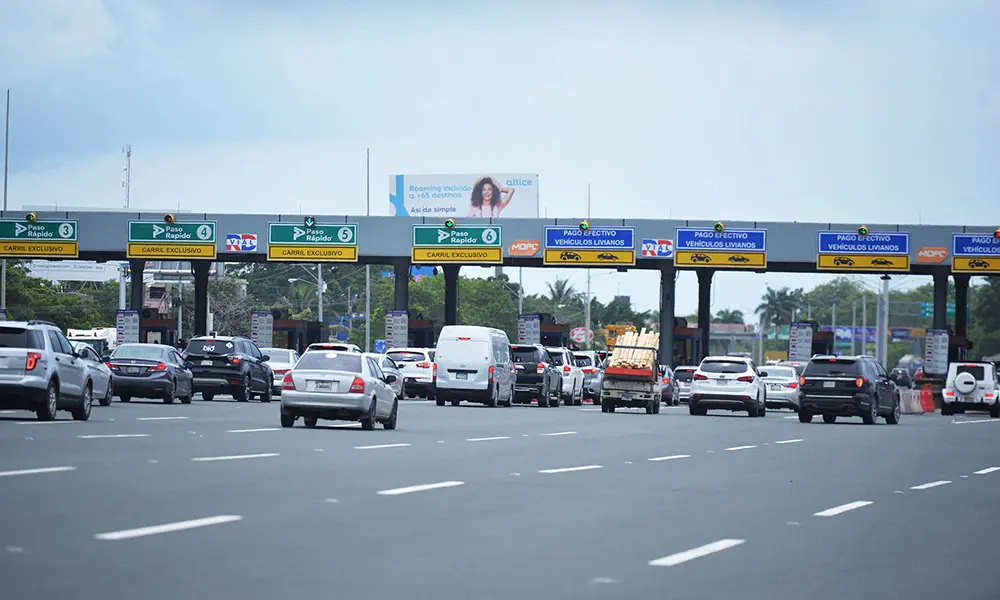
Cash payments at toll plazas across the Dominican Republic could gradually disappear as the Fideicomiso RD Vial moves to expand electronic toll collection through its Paso Rápido system. Signs already displayed at some toll lanes warn drivers that cash lanes will eventually be removed and encourage motorists to obtain the electronic device.
RD Vial Director General Hostos Rizik Lugo said the transition is being developed as a short-, medium- and long-term modernization project. The initial focus is to increase the number of motorists using Paso Rápido before progressively reducing the number of booths dedicated to cash transactions.
Cash Lanes Would Be Gradually Replaced
Rizik Lugo said the plan includes partially removing existing toll booths and converting the space into lanes reserved for Paso Rápido users. The longer-term objective is to create express lanes that allow vehicles equipped with the electronic device to pass through more efficiently.
The official said RD Vial is already working on an electronic toll plaza that will operate on a pilot basis. More details about the pilot and the broader modernization strategy are expected to be presented by the institution in the coming weeks.
The transition is not expected to happen immediately across every toll station. Instead, RD Vial is seeking to increase adoption of the electronic system first, allowing the infrastructure and operating model to develop before cash collection is progressively reduced.
How Paso Rápido Works
Paso Rápido is an electronic device that communicates with equipment installed at toll stations, verifies the user’s available balance and automatically processes the applicable toll. RD Vial’s Paso Rápido service allows users to manage their devices, check balances, make recharges and review their toll transactions.
The system is designed to reduce the need for drivers to stop and handle cash at toll plazas. RD Vial has expanded the technology across its network in recent years, including stations where electronic payment has been made available across all lanes.
The government institution reported that Paso Rápido accounted for 46.8% of toll revenue in 2024, equivalent to about RD$4.23 billion. That increasing adoption provides the basis for RD Vial’s effort to move toward a predominantly electronic collection model.
Drivers Encouraged to Get Paso Rápido
Rizik Lugo urged motorists who regularly use the country’s toll roads to begin using the system. RD Vial has been distributing Paso Rápido devices free of charge at selected toll stations and plans to expand that distribution as it seeks to accelerate adoption.
The electronic system can be used at toll stations operated by RD Vial, while users can manage their accounts through the Paso Rápido platform. The service is intended to make toll payments faster and reduce waiting times, particularly on heavily traveled road corridors.
For drivers who rely on cash, the proposed change means that obtaining and maintaining a funded Paso Rápido account will eventually become increasingly important for routine travel on the country’s major highways. However, the precise timetable for eliminating cash lanes at individual toll plazas has not yet been announced.
A Broader Modernization of the Toll Network
The move toward electronic collection forms part of a broader modernization of the Dominican Republic’s road infrastructure. RD Vial manages the country’s principal toll network, with revenue used to support road infrastructure, maintenance and related services.
RD Vial reported that toll revenue reached RD$12.37 billion in 2025, up 36.8% from the previous year. The increase reflected higher traffic volumes, among other factors, while the growing use of electronic payments has accompanied the modernization of toll operations.
As the transition advances, the main change for motorists will be a shift from traditional cash collection toward automated payment. The pace of that change will depend on the rollout of new infrastructure, the distribution of electronic devices and the adoption of Paso Rápido by drivers throughout the country.