 23°C
23°C

Urus Oncology 2026 Advances Precision Care For Urologic Cancers
The second edition of Urus Oncology brought together 200 participants in Santo Domingo for a two-day scientific meeting focused on precision diagnosis, personalized treatment and multidisciplinary care for urologic cancers.


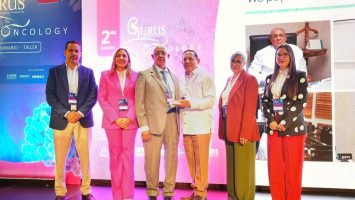
Urus Oncology 2026 brought together 200 participants in Santo Domingo for a two-day medical seminar focused on the increasingly individualized management of urologic cancers. The meeting brought six international specialists and 22 Dominican professionals together to examine advances in diagnosis, treatment selection and technologies that can help physicians tailor care to individual patients.
Held at the JW Marriott Santo Domingo, the second edition centered on a principle that is becoming increasingly important in modern oncology: patients with the same type of cancer may require different treatment strategies depending on tumor characteristics, clinical risk and their individual circumstances and priorities.
Precision Diagnosis Takes Center Stage
Much of the first day focused on how physicians can move beyond traditional indicators when evaluating urologic cancers. In prostate cancer, specialists discussed the use of PSA alongside other tools, including PSA density, the Prostate Health Index (PHI), risk calculators, magnetic resonance imaging and biomarkers.
The discussions also examined the growing role of genomics, biomarkers and artificial intelligence in medical imaging and pathology. These technologies are contributing to a broader shift toward more detailed assessments of cancer risk and may help clinicians determine which patients require additional investigation or more intensive treatment.
Speakers emphasized that decisions such as whether to perform a biopsy should not be based on a single universal formula. Instead, clinical risk, imaging findings and individual patient characteristics need to be considered together when determining the most appropriate course of action.
Treatment Decisions Extend Beyond Tumor Control
The seminar also addressed the consequences that cancer treatment can have after the immediate disease-management phase. Discussions examined when physicians should monitor a tumor, intervene, preserve an organ or intensify or modify treatment, with decisions guided by both oncological risk and the patient’s circumstances.
For penile cancer, for example, the specialists considered the balance between cancer control and preservation of the organ, sexual function, body image and quality of life. Similar considerations were discussed in kidney, bladder and upper urinary tract cancers, where carefully selected patients may be candidates for surveillance or organ-preserving approaches in certain clinical situations.
For patients with high-risk prostate cancer, the meeting explored how surgery, radiation therapy, hormonal treatment, treatment intensification and lymph-node assessment can be integrated according to the patient’s risk profile and tumor characteristics.
Bladder cancer was another focus, with specialists emphasizing the importance of timely intervention in situations where delays could reduce opportunities for treatment with curative intent.
International And Dominican Expertise
The scientific program included six international specialists whose areas of expertise covered bladder and upper urinary tract cancers, robotic surgery, prostate cancer, genomics, advanced imaging, functional preservation, penile cancer and radiation therapy.
The international faculty included Seth P. Lerner, Jay D. Raman, Zeyad Schwen, Víctor McPherson, Marcos Tobias-Machado and Pablo Andrada. Their participation added perspectives from different areas of uro-oncology to a program designed around multidisciplinary decision-making.
The event also recognized the contributions of Dominican physicians to the development of urologic medicine. A living tribute was presented to Dr. Bolívar Rodríguez Rosario for his career, service and contributions to uro-oncology, while a posthumous tribute honored Dr. Francisco Clodomiro Genao. The latter recognition was received on his behalf by Dr. Rafael Bolívar Gil.
Urus Oncology’s focus on precision medicine reflects a broader evolution in cancer care, in which diagnosis, imaging, molecular information and patient preferences increasingly influence treatment decisions. For the Dominican medical community, the meeting provided a forum for exchanging expertise and discussing how these approaches can be incorporated into clinical practice.