 28°C
28°C

Dominican Republic Approves RD$2.04 Trillion 2027 Budget
The Dominican government approved a RD$2.04 trillion draft budget for 2027, with increased capital spending and funding priorities that include education, health, infrastructure, social protection and security.


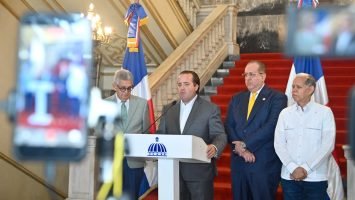
The Dominican government has approved a RD$2.0368 trillion draft General State Budget for 2027, setting out planned revenues, spending and investment priorities ahead of its submission to the National Congress. The proposal was approved during the 60th Council of Ministers meeting, chaired by President Luis Abinader and Vice President Raquel Peña.
The budget must be submitted to Congress before October 1, where lawmakers will consider it through the country’s legislative process. The administration said the proposal continues the framework established by its 2027 Budget Policy and is aligned with the strategic objectives of Meta RD 2036 and the government’s 10 priority targets.
Capital Spending to Rise Faster Than Current Expenditure
The proposed budget includes RD$1.5106 trillion in government revenue, equivalent to 15.7% of gross domestic product, and establishes a spending ceiling of RD$1.8379 trillion, or 19.2% of GDP.
The fiscal framework is based on projected real economic growth of 4.75% in 2027 and average inflation of about 4.5%. Finance and Economy Minister Magín Díaz said the proposal seeks to preserve capital expenditure while maintaining what the government describes as a reasonable fiscal deficit.
According to Budget Director José Rijo Presbot, capital expenditure is expected to increase 19.7% compared with the initial 2026 budget, while current expenditure would rise 12.3%. The difference reflects the government’s stated emphasis on public investment and infrastructure alongside ongoing spending.
Education, Health and Infrastructure Remain Key Areas
Education remains funded at the equivalent of 4% of GDP. Planned allocations include the Horizonte 2034 Ten-Year Education Plan, technical and vocational training, and continued expansion of the school transportation system.
Health and social protection programs are also included among the main spending priorities. The proposal provides for the continuation and completion of strategic hospitals, expanded primary care services, a larger National Emergency Network and ongoing social programs.
Infrastructure plans include highways, integrated transportation systems, drinking water and sanitation projects, and housing improvements. Specific projects identified in the proposal include the Santiago de los Caballeros Monorail, universal sanitation initiatives in tourist and coastal communities, and increased capacity for Santo Domingo Metro Line 2.
The draft also provides additional resources for the judiciary, citizen and border security, and the country’s prison system. These allocations place public services, infrastructure and institutional capacity among the central areas of government spending for 2027.
Territorial Planning Plan Also Moves Toward Congress
The Council of Ministers also reviewed a draft law for the National Territorial Planning Plan, which is expected to be submitted to Congress for consideration. The initiative falls under Law No. 368-22 on Territorial Planning, Land Use and Human Settlements.
The proposed legislation would give the national territorial plan a legal framework for implementation and coordination with regional and municipal planning instruments. Its stated objective is to establish a common approach to organizing the country’s territory and guiding land use according to the opportunities and characteristics of different areas.
The plan also incorporates environmental sustainability, disaster-risk management and climate-change adaptation into territorial planning. The government said more than 60 territorial planning projects have been or are being developed and presented across different territories as part of the broader process.
Next Step Is Congressional Review
With the ministerial approval completed, the 2027 General State Budget moves to the National Congress for the next stage of the process. The proposal combines higher planned capital expenditure with continued allocations for education, health, social programs, infrastructure and security within the government’s broader fiscal framework.