 26°C

How the Government of the Dominican Republic Works
The Dominican Republic operates under a constitutional system in which elected leaders, public institutions, and local authorities share responsibility for governing the country. Understanding how these institutions interact helps explain how national priorities become laws, public services, and government programs, as well as how decisions are implemented and overseen.


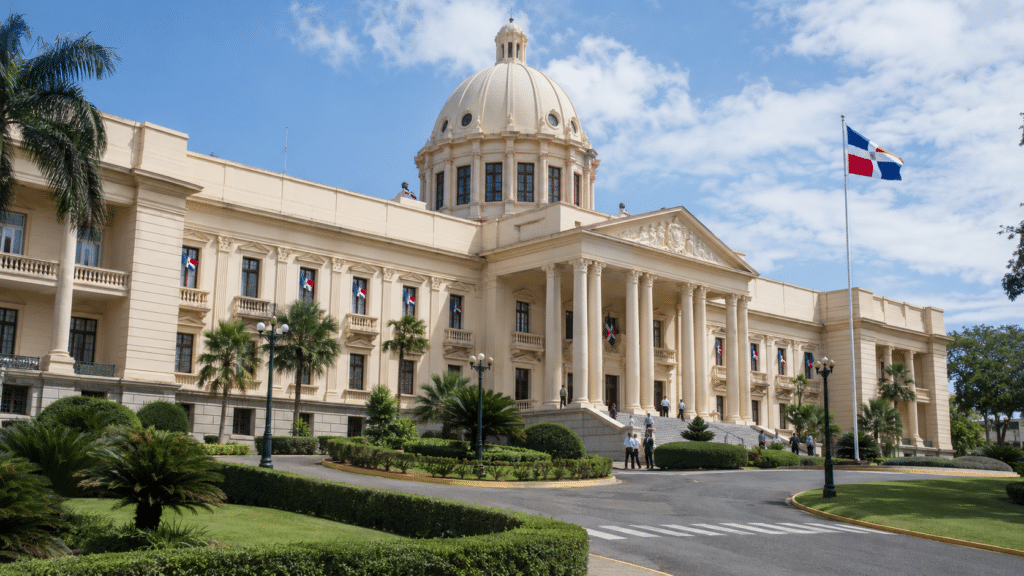
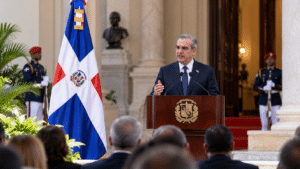
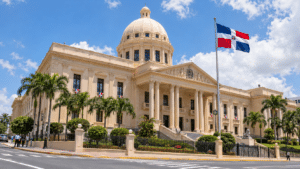
The Dominican Republic is a representative democracy governed under a written Constitution that establishes the structure of the state, the distribution of public authority, and the rules governing relations between institutions. Its government operates through three branches of power, alongside public agencies, autonomous institutions, and local governments that perform different roles within the state.
Understanding this system requires looking beyond the president and the national administration. Public decisions can involve political priorities, legislation, budget allocations, administrative coordination, and implementation by institutions working at national and local levels. The result is a system in which governing the country is a continuous process rather than a single decision made by one office.
How the Dominican Republic’s Government Is Structured
The Constitution establishes three main branches of government: the Executive, the Legislative, and the Judicial. This separation distributes public authority among different institutions rather than concentrating all government functions in one body. Each branch operates within its constitutional responsibilities, while the wider public administration carries out many of the day-to-day activities of the state.
The Executive Branch, headed by the president, directs the national administration and leads the implementation of government policy. The Legislative Branch is represented by the National Congress, which consists of the Senate and the Chamber of Deputies. The Judicial Branch administers justice through the country’s courts. Their respective roles are connected, but they are not interchangeable.
The institutional framework also includes bodies with constitutionally protected autonomy, independent electoral and oversight institutions, and decentralized public entities. These organizations perform specific functions under the Constitution and applicable laws. Their presence means that the government is not simply a hierarchy of ministries reporting directly to the president.
The current constitutional framework was substantially updated by the constitutional revision proclaimed on October 27, 2024. The Constitution remains the central legal reference for understanding how public power is organized and exercised in the Dominican Republic.
Readers can consult the official constitutional and legal documents portal for the country’s constitutional texts and related legal materials.
Who Leads the National Government?
The president of the Dominican Republic is both the head of state and the central figure in the Executive Branch. The president is elected by direct vote for a four-year term and provides the political direction for the national administration. The president’s governing program typically establishes priorities that ministries and other public bodies are expected to translate into plans, projects, and services.
The vice president is also elected as part of the national electoral process and occupies a constitutional position within the executive structure. The president appoints ministers and other officials in accordance with the applicable legal framework. These officials oversee areas of public administration and help translate national priorities into operational decisions.
Presidential leadership does not mean that every public decision is made personally by the president. Government activity is distributed among ministries, specialized agencies, administrative bodies, and other institutions. The precise process depends on the subject, the applicable law, the level of authority involved, and whether a decision requires legislative approval or coordination across several institutions.
How Government Decisions Are Made
Public decisions generally emerge from a combination of political priorities, technical analysis, legal requirements, budget considerations, and institutional coordination. The process varies according to whether the government is developing a new public program, proposing legislation, adjusting an administrative procedure, or responding to an immediate public need.
1. Identifying priorities and public needs
Government priorities may arise from electoral commitments, economic conditions, public service needs, national development objectives, or problems identified by public institutions. Ministries and specialized agencies contribute information from their respective areas, while consultations and other forms of public participation may inform decisions when appropriate or legally required.
Identifying a priority is only the beginning. Officials must determine the problem to be addressed, the intended results, the institutions responsible for acting, and the resources that may be needed. A policy announcement does not, by itself, establish that funding has been allocated or that implementation has begun.
2. Developing proposals and coordinating institutions
Once a priority has been identified, the relevant institutions develop proposals and determine how they could be implemented. This may involve technical assessments, draft regulations, budget planning, legal review, or coordination between ministries. Policies that affect several sectors often require cooperation because one institution may not possess all the authority, expertise, or resources needed to deliver the intended result.
The Council of Ministers provides a forum for strategic coordination within the Executive Branch. Under the framework established by the Organic Law of Public Administration, Law No. 247-12, it supports deliberation on public policies, plans, programs, budgets, and major government initiatives. It also provides a mechanism for coordinating proposals whose implementation involves multiple ministries.
Further information is available through the government’s official information on the Council of Ministers.
3. Choosing the appropriate legal instrument
Not every government decision follows the same approval process. Some initiatives can be pursued through administrative action under existing laws. Others require regulations, formal resolutions, or presidential decrees within the authority established by law. Measures that require new legislation must follow the constitutional legislative process, while public spending must comply with the applicable budgetary and financial rules.
This distinction is important because political agreement and legal authorization are different things. A proposal may receive executive support but still require congressional action, additional regulatory steps, or the completion of administrative procedures before it can take effect.
4. Approving and communicating decisions
Once the necessary approvals have been obtained, decisions are formalized through the appropriate legal or administrative instruments. Depending on their nature, these may be published as laws, decrees, regulations, resolutions, or official announcements. Publication and communication help establish what has been decided, which institutions are involved, and whether the measure includes implementation dates or other conditions.
Official announcements should therefore be distinguished from legally effective measures. A public statement describing a future initiative may communicate government intentions without establishing that every necessary approval, funding allocation, or operational arrangement is already in place.
How Government Policies Are Implemented
Implementing a policy means turning an approved decision into practical action. This stage often requires more than a presidential instruction or a new legal provision. Public institutions must organize staff, allocate responsibilities, establish procedures, manage funds, procure goods or services when necessary, and coordinate the work of the agencies involved.
Ministries typically direct policy within their respective administrative areas, while departments, directorates, institutes, and other public bodies perform specialized tasks. Depending on the initiative, implementation may also involve autonomous institutions, provincial-level representatives of the national administration, municipal authorities, or private organizations operating under public contracts or regulatory frameworks.
For example, a national initiative to improve public services could require central authorities to define objectives and financing, the relevant ministry to establish operational guidelines, and local institutions to help deliver services to residents. The details would depend on the legal responsibilities assigned to each organization and the design of the initiative.
Coordination is particularly important when a policy crosses administrative boundaries. Education, public health, infrastructure, environmental management, and social programs may involve multiple institutions whose activities must be aligned. Delays can arise when funding, staffing, procurement, technical requirements, or responsibilities are not synchronized.
The Role of Ministries and Public Agencies
Ministries are a central part of the Dominican Republic’s public administration. Each ministry operates within a defined area of responsibility and helps formulate, coordinate, and implement public policies. Ministers provide political and administrative leadership, while the organizations beneath them carry out the technical and operational work required to deliver government functions.
The administrative structure extends beyond ministries. General directorates, national directorates, public institutes, and other bodies may perform specialized functions. Some public entities have their own legal personality and administrative, financial, or technical autonomy, as provided by the Constitution and relevant legislation. Their degree of independence and relationship with a supervising ministry depend on their legal status.
The Ministry of Public Administration maintains an official classification of state organizations that helps distinguish administrative bodies from autonomous and decentralized entities. Its Classification of Dominican State Organizations is a useful reference for understanding the institutional landscape.
This structure allows the state to distribute work among organizations with different areas of expertise. It also creates a need for clear mandates, reporting arrangements, and coordination mechanisms so that responsibilities are not duplicated or left unassigned.
How the National Government Works With Local Authorities
The Dominican Republic has a territorial administration that combines national institutions with local governments. The country is organized into provinces and municipalities, alongside the National District, which includes the capital’s central administrative area. These territorial divisions serve different purposes, and provincial boundaries should not be confused with municipal government responsibilities.
Municipal governments are led by elected local authorities and have legal personality and administrative and budgetary autonomy within the limits established by law. Municipal councils and mayors play roles in local administration, while district municipal authorities govern designated local areas under the applicable framework. Their responsibilities are distinct from those of national ministries.
Local governments address matters within their legally assigned responsibilities, including aspects of municipal administration, local planning, land-use regulation, and community services. The national government, meanwhile, is responsible for nationwide policies and institutions operating at the central level. Some public services and development initiatives require cooperation between both levels.
Provincial governors should also be distinguished from elected municipal authorities. Governors represent the national Executive at the provincial level and do not occupy the same constitutional or administrative position as mayors. Understanding this difference helps explain why an issue affecting a town may involve a municipal government, a national ministry, or both.
How the Government Budget Supports Public Policy
Government priorities require financial resources. The national budget translates many policy commitments into planned public revenues and expenditures, establishing the financial framework within which ministries and other state institutions operate. It helps determine how much funding is available for public services, infrastructure, administration, social programs, and other government activities.
Budget preparation and execution involve several institutions and must follow the applicable legal framework. The Executive develops budget proposals through the relevant planning and financial authorities, while the National Congress participates in the approval process as required by the Constitution and law. Once a budget is in force, public bodies must manage expenditure according to authorized purposes and financial procedures.
Budget approval does not guarantee that every planned project will be completed. Actual implementation can depend on revenue collection, procurement, project readiness, staffing, administrative capacity, and other operational conditions. Understanding these factors helps explain why the money allocated to a program and the results ultimately delivered may differ.
Financial oversight and public reporting are therefore important parts of government operations. They help make it possible to assess how public resources are used, whether expenditures follow the applicable rules, and what results are achieved.
Checks, Accountability, and Institutional Oversight
The Dominican Republic’s institutional system includes mechanisms intended to ensure that public authorities act within their legal powers and remain accountable for their decisions. These mechanisms operate through the separation of powers, judicial review where applicable, public financial oversight, administrative controls, transparency requirements, and electoral processes.
The courts apply the law and resolve disputes within their jurisdiction. The Constitutional Court has a distinct role in constitutional matters, while other judicial institutions address cases under the relevant legal framework. Oversight bodies also perform specialized functions, including reviewing aspects of public expenditure, electoral administration, and the conduct of public institutions.
Transparency is another part of this framework. Public institutions publish information about their structure, activities, budgets, procurement, and official decisions through their websites and transparency portals, subject to applicable disclosure rules and legal exceptions. These records allow citizens, journalists, researchers, businesses, and civil society organizations to examine government activity.
Accountability does not depend on a single institution. It involves the interaction of legal rules, independent bodies, administrative procedures, public information, and the ability of citizens to scrutinize decisions. The effectiveness of these mechanisms depends in part on how consistently they are applied and how accessible reliable information is in practice.
How Elections Shape the Government
Elections determine who occupies elected public offices and help establish the political direction of government. Dominican voters elect the president and vice president, members of the National Congress, and local authorities through the electoral system established by the Constitution and election laws.
National elections determine the leadership of the Executive Branch and the composition of Congress. These outcomes can influence the government’s ability to advance legislation, negotiate political agreements, and pursue its program. Local elections, in turn, determine the elected leadership of municipal governments and other local authorities covered by the electoral framework.
Political parties play an important role in selecting candidates, organizing political competition, and developing policy proposals. However, public institutions continue to operate under the Constitution and the law regardless of which party holds elected office. Changes in political leadership may alter priorities, personnel, or programs, but they do not automatically replace the country’s constitutional and administrative framework.
What This Means for Residents, Visitors, and Businesses
Understanding how the government works can help people identify the appropriate institution when dealing with public services, regulations, permits, taxes, or administrative procedures. The institution responsible for an issue depends on the nature of the matter and the legal authority assigned to it.
Residents may interact with municipal offices for local matters, national ministries for sector-specific services, or specialized public agencies for particular procedures. Foreign residents and visitors may also need to deal with immigration authorities, consular services, tax institutions, or other public bodies depending on their circumstances. Businesses must similarly distinguish between national rules and local requirements that apply to their activities.
For practical questions, the most reliable starting point is usually the official website of the institution responsible for the service or regulation. Government portals can provide contact information, procedural requirements, official forms, legal references, and updates. When a matter involves several institutions, it is important to verify which organization has the authority to make the final decision rather than relying solely on informal guidance.
Frequently Asked Questions About the Dominican Republic Government
Is the Dominican Republic a democracy?
Yes. The Dominican Republic is a representative democracy with a written Constitution, elected national and local officials, a legislature, courts, and an electoral system. Its public institutions operate under constitutional and legal rules that define how authority is exercised.
Who makes the main government decisions?
Responsibility depends on the type of decision. The president leads the Executive Branch and sets national administrative priorities, ministers and public agencies develop and implement policies within their mandates, Congress handles legislation and other constitutionally assigned functions, and courts exercise judicial authority. Certain decisions also require coordination, formal approval, or oversight by other institutions.
Do all government decisions require congressional approval?
No. Some actions can be taken administratively under existing laws, while others require regulations, decrees, or resolutions. Measures that require new legislation must follow the applicable legislative process. Public authorities must use the legal instrument and approval procedure appropriate to the decision in question.
What is the Council of Ministers?
The Council of Ministers is a strategic coordination body within the Executive Branch. It provides a forum for considering public policies, plans, budgets, and initiatives involving multiple ministries. It helps align government action, but it does not replace the constitutional responsibilities of other branches of government.

What is the difference between a ministry and an autonomous public institution?
A ministry is part of the central public administration and is led by a minister. An autonomous or decentralized institution has a distinct legal and administrative status established under the applicable framework. Its powers, supervision arrangements, and degree of autonomy depend on the law governing that entity.
Can local governments make their own decisions?
Yes. Municipal governments have legally recognized responsibilities and a degree of administrative and budgetary autonomy. However, they must operate within the Constitution and national law. Matters that fall outside their authority may require action by a national ministry or another competent public institution.
Where can I find official information about government institutions?
The Ministry of Public Administration’s state organization directory is a useful starting point for identifying public bodies. The official legal documents portal provides access to constitutional and legal materials, while individual ministries and agencies publish information about their services, responsibilities, and procedures.
Understanding How the Dominican Republic Is Governed
The Dominican Republic’s government functions through a network of constitutional authorities, ministries, public agencies, oversight bodies, and local governments. The president and Executive Branch provide national political leadership, but turning priorities into results requires coordination, legal authorization, public funding, administrative capacity, and cooperation among institutions.
For international readers, the key distinction is between deciding what the government intends to do and understanding how that decision becomes law, receives funding, and is implemented. Following those stages provides a clearer picture of how public authority operates in the Dominican Republic and why different institutions may be involved in the same policy or administrative issue.