 24°C


Omar Fernández Accuses Government of Imposing Hidden Tax Reform
Dominican Senator Omar Fernández has accused the government of introducing a de facto tax reform through successive increases in taxes, tolls and public service fees, arguing that households are paying more without receiving improvements in government efficiency.


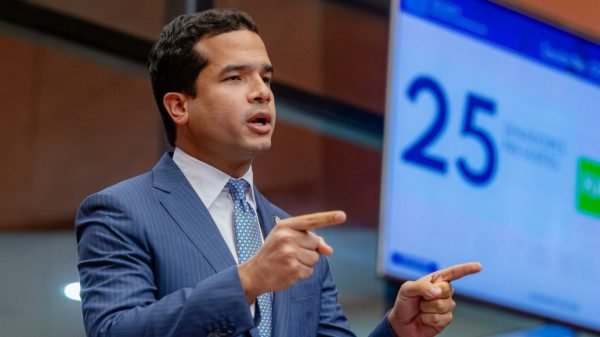
Dominican Senator Omar Fernández has criticized the government’s latest vehicle registration fee increase, describing it as part of what he considers an undeclared tax reform that is gradually increasing the financial burden on households across the country.
The legislator, who represents the National District for the opposition Fuerza del Pueblo party, made the remarks following the announcement of higher vehicle circulation tax rates for the 2026–2027 registration season by the General Directorate of Internal Taxes (DGII).
The new rates represent increases of RD$500 and RD$1,000, depending on the vehicle’s manufacturing year. Fernández argued that the adjustment should not be viewed in isolation, but rather as another example of a broader pattern of rising taxes and service charges.
“How many more tax reforms does this government need? Because, although nobody has formally announced it, they are imposing another tax reform on us in installments, without telling us,” Fernández said.
Omar Fernández questions cumulative cost increases
The senator maintained that the impact of these measures extends beyond vehicle registration, pointing to a series of increases affecting everyday expenses and household purchasing power.
Among the examples he cited were higher toll charges, with some rates reportedly rising from RD$60 to RD$200, as well as increased costs associated with banking transactions.
“Even transferring a little money to your mother now costs more. The problem is that everything goes up here, except government efficiency,” Fernández said.
His criticism centers on what he describes as an imbalance between the growing financial obligations placed on citizens and the quality of public services they receive in return. These rising expenses also highlight the broader cost of owning a car in the Dominican Republic, where drivers must account not only for vehicle registration fees but also for tolls, fuel, insurance and routine maintenance.
DGII confirms higher vehicle registration fees
The controversy follows the DGII’s announcement of revised vehicle circulation tax rates for the 2026–2027 season. Under the new schedule, vehicles manufactured through 2021 will pay RD$2,000, while those manufactured from 2022 onward will pay RD$4,000.
According to the tax authority, the previous rates had remained unchanged since 2016. The institution cited accumulated inflation of 58.1% between September 2016 and September 2026 as the basis for the adjustment.
The DGII estimates that the revised rates will increase vehicle circulation tax revenue from approximately RD$3.525 billion to RD$4.7 billion during the 2026–2027 season, generating an additional RD$1.175 billion.
The agency said the adjustment is intended to support public finances and strengthen the government’s capacity to meet national budgetary priorities. This explanation provides the administration’s stated justification for the increase, while Fernández has focused his criticism on its cumulative effect on taxpayers.
Drivers can consult the DGII’s official vehicle circulation tax information for the applicable rates and registration requirements.
Debate over household purchasing power and public spending
Fernández’s statements raise a broader question about the relationship between tax collection, the cost of public services and government performance in the Dominican Republic.
For households, increases in vehicle registration fees, tolls and banking charges can add to recurring expenses, particularly when several adjustments take effect across different sectors.
The senator argues that citizens are increasingly paying more for services without seeing corresponding improvements in public administration. His characterization of the measures as a hidden tax reform remains a political criticism rather than a formally announced government fiscal reform.
The debate places the economic impact of successive fee increases at the center of the discussion over household finances and the use of public resources in the Dominican Republic.