 25°C


The Ombudsman in the Dominican Republic: Role and Powers
The Ombudsman of the Dominican Republic, known as the Defensor del Pueblo, is an independent constitutional institution that protects fundamental rights when they are affected by actions or omissions of public authorities and public service providers. It can investigate complaints, inspect public offices, request information and recommend corrective measures. However, it does not replace the courts, overturn administrative decisions or impose judicial sentences. Understanding its powers and limitations helps residents, foreign nationals and other affected individuals know when and how to seek its intervention.


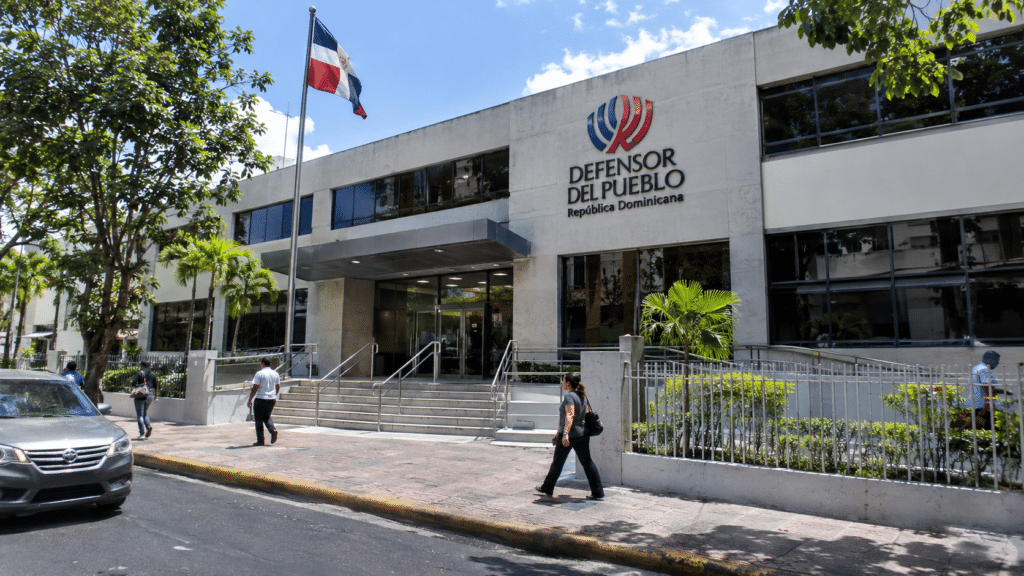
The Ombudsman of the Dominican Republic, officially known as the Defensor del Pueblo, is an independent constitutional institution established to protect fundamental rights and defend collective and diffuse interests when they are affected by public authorities, public officials or providers of public services. It provides a channel through which individuals and communities can report administrative misconduct, unjustified inaction, discrimination and other conduct that may violate their rights.
Unlike a court, the Ombudsman does not exercise judicial power. Its work focuses on receiving complaints, investigating conduct, requesting explanations and promoting corrective action within the limits of its legal mandate. It can also take certain constitutional actions when necessary to protect rights, but it cannot simply replace a judge or annul an administrative decision.
What Is the Defensor del Pueblo?
The Defensor del Pueblo is an autonomous public institution with constitutional status. Its existence and essential functions are established in Articles 190 to 192 of the Dominican Constitution. Its legal framework is primarily set out in Law No. 19-01, which created the institution on February 1, 2001, and Law No. 367-09, which amended provisions concerning its appointment and deputy positions.
Article 190 establishes its independence and administrative and budgetary autonomy. The institution is subject to the Constitution and the laws, rather than being subordinate to the Executive, Legislative or Judicial branches of government.
Article 191 defines its essential mission: contributing to the protection of fundamental rights and the collective and diffuse interests recognized by the Constitution and the laws when they are violated by state officials or institutions, public service providers, or private individuals and entities whose conduct affects collective or diffuse interests.
This mandate makes the Ombudsman an independent mechanism of non-judicial oversight. It monitors the conduct of public administration, helps people understand and defend their rights, and investigates circumstances in which public institutions or service providers may have acted unlawfully or failed to fulfill their obligations.
What Does the Ombudsman Do?
The institution’s central responsibility is to protect people against unlawful, arbitrary or otherwise improper conduct within the scope of its constitutional mandate. Its work covers both actions taken by authorities and situations in which an institution fails to act when it has a legal obligation to do so.
Under Law No. 19-01, the Ombudsman can initiate investigations on its own initiative or in response to a complaint. Its responsibilities include monitoring public administration and private entities that provide public services, investigating alleged violations, requesting documents and explanations, and promoting respect for fundamental rights.
Investigating Public Officials and Institutions
The Ombudsman can examine administrative decisions and conduct that may be contrary to the law, regulations or fundamental rights. This includes arbitrary, unjust, unreasonable, offensive or discriminatory actions by public institutions and officials.
It can also investigate omissions. An omission may occur when a public authority refuses or fails to perform an action that it is legally required to carry out. For example, an unjustified failure to process a matter or respond to a request may warrant examination if it affects a person’s rights and falls within the institution’s jurisdiction.
Inspecting Public Offices and Requesting Documents
The Ombudsman and its deputies may inspect public offices and entities that provide public services, including without prior notice. They can request documents and information needed to investigate a complaint or clarify an alleged irregularity. Under the law, the relevant institutions must provide the requested information without charge.
These powers allow the Ombudsman to examine the circumstances behind a complaint rather than relying exclusively on the account provided by the person who submitted it. The institution can also notify the relevant authority and request a written explanation from the official responsible.
Promoting Corrective Action
When an investigation identifies conduct that may have violated a person’s rights, the Ombudsman can issue admonitions, suggest changes to the criteria used by an institution and request that the responsible authority correct its conduct. It can also address the official’s superior when a public employee fails to cooperate or does not respond appropriately.
These measures are intended to encourage lawful administration and the correction of irregularities. They do not give the Ombudsman the power to impose criminal penalties, issue judicial judgments or independently annul administrative acts.
Protecting Collective and Diffuse Interests
The institution’s mandate is not limited to individual complaints. It also covers collective and diffuse interests, which concern groups of people or the public as a whole rather than only one identifiable individual.
Examples may include concerns involving environmental protection, public health, access to public services or the preservation of cultural and historical assets. The Constitution recognizes collective and diffuse rights, including environmental protection and the preservation of cultural, historical, urban, artistic, architectural and archaeological heritage.
When a matter affects a community or a broader public interest, the Ombudsman may investigate, facilitate mediation and, where legally appropriate, pursue constitutional action to protect the rights involved.
When Can the Ombudsman Intervene?
A complaint may fall within the Ombudsman’s mandate when the conduct being reported involves a public authority, a public official or a provider of public services, and there is a possible violation of fundamental rights or collective and diffuse interests.
The institution’s official guidance explains that actions include administrative decisions that produce legal effects for individuals, while omissions include failures to act when an authority is legally required to do so.
Situations that may justify contacting the Ombudsman include:
- Unlawful administrative conduct: A public institution takes a decision that appears to contradict applicable laws or regulations.
- Unjustified delays or inaction: An authority fails to perform a legally required action or leaves a matter unresolved without adequate justification.
- Discrimination or arbitrary treatment: A public official or public service provider treats an individual or group unfairly in a way that may violate protected rights.
- Problems with public services: A public institution or private provider responsible for a public service acts improperly or fails to meet its obligations.
- Collective or diffuse rights: Conduct by a public authority or private party affects interests shared by a community or the public.
- Possible violations in public administration: An action or omission appears unreasonable, abusive, offensive or incompatible with the legal framework.
The Ombudsman assesses each case individually. A disagreement with an administrative decision does not automatically establish a violation of rights, and not every dispute involving a government institution falls within its jurisdiction.
Who Can File a Complaint?
The right to approach the Defensor del Pueblo is not restricted to Dominican citizens. Article 19 of Law No. 19-01, as reflected in the institution’s official service information, provides that people should not be excluded because of nationality, age, gender, residence, immigration status or condition of detention.
This means that foreign residents, visitors and other individuals may seek assistance when they believe their rights have been affected by conduct within the Ombudsman’s mandate. People who are unable to submit a complaint themselves may also be represented by family members or another person with an interest in the matter, as provided by law.
The institution can also become involved without waiting for an individual complaint. Law No. 19-01 allows it to initiate investigations on its own initiative when circumstances justify intervention.
How to File a Complaint With the Ombudsman
Law No. 19-01 allows complaints and claims to be submitted in writing, verbally or through other means. The complaint should identify the person concerned and explain the events that prompted the request. The law also provides that complaints are free of charge.
The institution’s published service procedure provides practical guidance for submitting a formal claim. It asks applicants to provide official identification and supporting evidence, and describes a procedure involving a completed form, copies of both sides of the identity card and a letter addressed to the Ombudsman.
Information to Prepare
Before submitting a complaint, it is useful to organize the information so the institution can understand what happened and identify the authority or service provider involved. A clear submission should include:
- Personal details: The complainant’s full name and contact information.
- Identification: An official identity document, preferably a Dominican identity card or passport. The law also provides alternatives when a person does not have a Dominican identity card.
- Institution involved: The name of the public authority, office, official or public service provider concerned, if known.
- Description of events: A chronological explanation of what happened, including relevant dates, decisions, delays or omissions.
- Previous communications: Copies of requests, letters, administrative decisions, receipts or other correspondence with the institution involved.
- Supporting evidence: Documents or other material that help establish the circumstances and the possible effect on the person’s rights.
- Requested assistance: A clear explanation of the issue and the action or response being sought.
Providing evidence is important because the Ombudsman must assess whether the reported conduct falls within its jurisdiction and whether an investigation is justified. Applicants should retain copies of everything submitted and, where possible, obtain confirmation that their complaint has been received.
Steps in the Complaint Process
- Prepare the complaint: Explain the events, identify the institution involved and gather relevant documents.
- Submit the request: Use an available institutional channel or submit the complaint in person following the published service procedure.
- Initial assessment: The Ombudsman reviews the matter to determine whether it should be accepted as a formal complaint or handled as a request for guidance.
- Investigation: If accepted, the institution may request information, notify the relevant authority, inspect offices and examine the evidence.
- Response from the authority: Law No. 19-01 establishes a period for the relevant public official to respond to the notification. The law also provides mechanisms for addressing a failure to cooperate.
- Communication of the outcome: The Ombudsman informs the interested parties of the results of its investigation and any measures taken within its competence.
Article 24 of Law No. 19-01 establishes a period of up to 60 business days for the Ombudsman to decide matters submitted to it after receiving the complaint. The institution’s published service information also lists 60 business days as the service completion period. The actual handling of a case depends on its circumstances and the steps required during the investigation.
Official Complaint Channels and Contact Information
The Defensor del Pueblo provides in-person assistance and several official contact channels. Its website also publishes information about the complaint service, institutional responsibilities and the documents needed to submit a claim.
The institution’s published contact details are:
- Telephone: (809) 381-4777.
- General email: info@defensordelpueblo.gob.do.
- Office: Avenida 27 de Febrero No. 526, Renacimiento, Distrito Nacional, Dominican Republic.
- Published office hours: Monday through Friday, 8:00 a.m. to 4:00 p.m.
- Cost: The complaint service is free.
The institution also lists buzon@defensordelpueblo.gob.do for opinions, complaints and suggestions concerning its citizen services. Its contact page provides an online inquiry form and additional channels for reporting unethical conduct within the institution itself. These channels should not be confused with the formal procedure for every type of rights complaint.
For the latest contact information and instructions, consult the official Defensor del Pueblo contact page. The institution’s service page also explains the requirements and procedure for claims involving public institutions and public service providers.
Limits of the Ombudsman’s Authority
Although the Defensor del Pueblo has investigative powers and constitutional responsibilities, it is not a court or a general administrative appeals authority. Its mandate has clear legal limits, which are important for anyone considering submitting a complaint.
It Cannot Annul or Modify Administrative Decisions
Article 14 of Law No. 19-01 expressly establishes that the Ombudsman cannot modify or annul administrative acts. It may suggest changes to the criteria used to create or apply them and promote corrective action, but it cannot replace the competent authority or court responsible for legally reviewing the decision.
For example, if a person disagrees with an administrative resolution, the Ombudsman may examine whether the conduct surrounding that decision violated rights. However, a request to have the resolution formally annulled must be pursued through the appropriate administrative or judicial procedure.
It Does Not Impose Judicial Sentences or Criminal Penalties
The Ombudsman does not convict individuals, impose prison sentences or determine criminal liability. If an investigation reveals facts that may constitute a criminal offense, the law requires the institution to communicate the matter to the Public Prosecutor’s Office (Ministerio Público), which is responsible for the corresponding criminal investigation.
Law No. 19-01 also allows the Ombudsman to admonish an official and request that the official’s superior take appropriate disciplinary action. It may make certain failures to cooperate public. However, the Ombudsman does not itself exercise the general disciplinary or criminal sentencing powers of the competent authorities.
It Does Not Replace Courts or Legal Appeals
The institution’s intervention does not turn it into a judicial tribunal. It cannot issue binding judgments resolving disputes in the same way as a court, and submitting a complaint does not automatically suspend an administrative decision or a judicial deadline.
People who need an urgent court order, compensation, annulment of an administrative act or another judicial remedy must consider the relevant legal procedure. The Ombudsman may provide guidance and, in cases covered by law, pursue constitutional actions or intervene before the courts through its strategic litigation function.
Cases in Which It May Decline to Act
Article 18 of Law No. 19-01 identifies circumstances in which the Ombudsman should abstain from acting. These include:
- When the law provides a sanction specifically intended to repair the harm that gave rise to the complaint.
- When more than one year has passed since the complainant became aware of the irregular act, except where the nature of the case justifies accepting it later.
- When a complaint is submitted in bad faith.
- When the affected person does not demonstrate a genuine interest in the matter.
The one-year period relates to the Ombudsman’s complaint procedure. It should not be confused with limitation periods or filing deadlines that apply to administrative appeals, constitutional actions or court proceedings. Those deadlines are governed by their own legal rules and may continue to run while a complaint is being considered by the Ombudsman.
How the Ombudsman Differs From the Courts
The Defensor del Pueblo and the Dominican judicial system both play roles in protecting rights, but they operate through different mechanisms. The Ombudsman investigates and monitors conduct, while courts resolve legal disputes and issue judicial decisions within their jurisdiction.
- Ombudsman: Receives complaints, investigates possible rights violations, inspects public offices, requests information, issues admonitions and recommends corrective action.
- Administrative authorities: Review or reconsider decisions through the administrative procedures established by law and exercise their own powers to correct or sanction misconduct.
- Courts: Hear cases, review legal disputes and issue binding judgments. They can grant judicial remedies such as annulment or constitutional protection when the relevant legal requirements are met.
- Public Prosecutor’s Office: Investigates and prosecutes suspected criminal conduct in accordance with the law.
The Ombudsman’s strategic litigation department may pursue constitutional actions and participate in proceedings before the courts when the institution’s legal standing and the circumstances of the case allow it. This does not mean that the Ombudsman decides those cases: the competent court remains responsible for issuing the judicial ruling.
How the Institution Is Organized
The constitutional institution is headed by the Defensor del Pueblo and includes deputy ombudsmen. Under Article 192 of the Constitution, the Ombudsman and deputies are appointed by the Senate for a six-year term from candidate lists proposed by the Chamber of Deputies.
The institution’s operational work is coordinated through its administrative structure. The General Secretariat (Secretaría General) is a central part of its rights-protection and complaint-handling functions. It is organized into four departments:
- Citizen Services Department: Receives, reviews and channels requests concerning fundamental rights and collective or diffuse interests.
- Investigation Department: Conducts investigations, inspections and fact-finding activities related to complaints.
- Notifications Department: Handles formal communications with public authorities and other relevant entities during complaint proceedings.
- Strategic Litigation Department: Coordinates constitutional actions and interventions before the courts when judicial protection is appropriate.
This structure separates the initial reception of complaints from investigation, formal notifications and possible court-related action. It allows the institution to handle matters through different stages while remaining within its non-judicial constitutional role.
Frequently Asked Questions
Can a foreigner file a complaint with the Dominican Ombudsman?
Yes. Law No. 19-01 provides that access to the institution should not be denied on the basis of nationality, age, gender, residence or immigration status. A foreign national may submit a complaint when the reported conduct falls within the Ombudsman’s legal mandate.
Can the Ombudsman force a public institution to change a decision?
The Ombudsman can investigate, request explanations, admonish officials and suggest corrective measures. However, Article 14 of Law No. 19-01 states that it cannot modify or annul administrative acts. Formal review or annulment must be pursued through the competent administrative or judicial procedure.
Can I complain about a public service provider?
Yes. The constitutional mandate includes providers of public services. It also covers certain private conduct that affects collective and diffuse interests. Whether an individual complaint can be admitted depends on the nature of the service, the rights involved and the institution’s legal competence.

Is filing a complaint free?
Yes. Law No. 19-01 provides that complaints and claims submitted to the Ombudsman are free of charge. The institution’s published service information also confirms that its complaint service has no fee.
How long does the Ombudsman take to respond?
Article 24 of Law No. 19-01 establishes a period of up to 60 business days for the institution to decide matters submitted to it after receiving a complaint. The time required to investigate a particular case may depend on its complexity and the information that must be obtained.
Does filing a complaint replace going to court?
No. The Ombudsman is not a substitute for judicial proceedings. A complaint does not automatically suspend court deadlines or prevent an individual from needing to pursue a separate legal remedy. Anyone facing a legal deadline or seeking urgent judicial protection should consult the appropriate procedure without assuming that an Ombudsman complaint will preserve that deadline.
Conclusion
The Defensor del Pueblo is an independent constitutional institution designed to protect fundamental rights and collective interests against unlawful or improper conduct by public authorities and public service providers. Its powers to investigate, inspect, request information and promote corrective action provide an additional channel of accountability within the Dominican public administration.
Its authority nevertheless has defined limits. It cannot annul administrative acts, impose criminal sentences or replace the courts. Understanding that distinction helps individuals choose the appropriate channel: the Ombudsman for investigation and rights oversight, administrative authorities for remedies within their jurisdiction, and the courts when a binding judicial decision is required.