 23°C


Central Bank of the Dominican Republic: Role and Responsibilities
The Central Bank of the Dominican Republic (BCRD) is the country's monetary authority and the sole institution authorized to issue Dominican peso banknotes and coins. Its main responsibility is to maintain price stability through monetary policy, while also overseeing payment systems within its legal remit and publishing economic statistics. Understanding its role also means distinguishing it from commercial banks and the authorities responsible for directly supervising financial institutions.


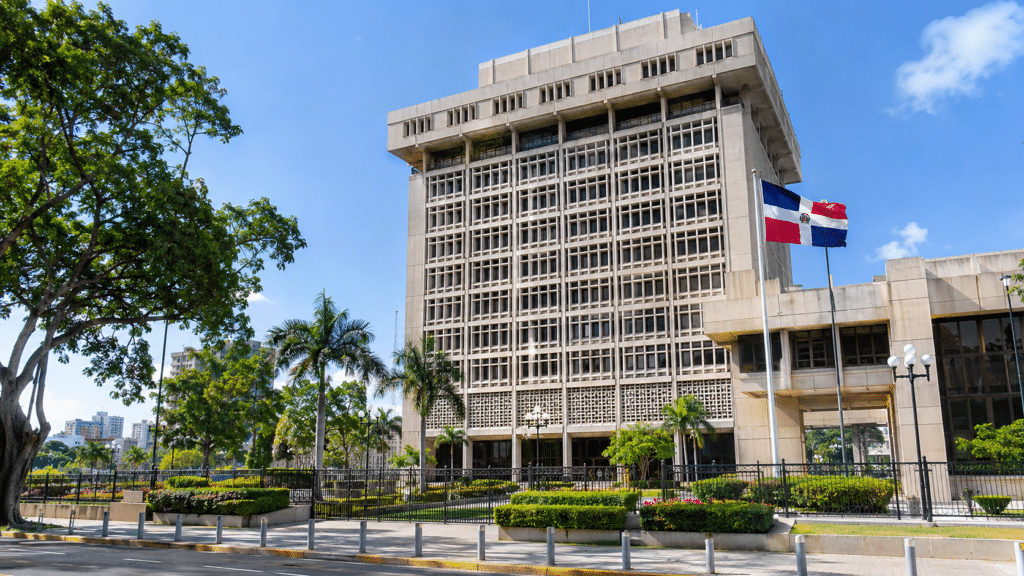
The Central Bank of the Dominican Republic (Banco Central de la República Dominicana, or BCRD) is an autonomous public institution responsible for carrying out the country’s monetary policy and safeguarding price stability. It also issues the national currency, oversees key payment infrastructure and produces economic statistics used by businesses, investors, policymakers and the public.
Although its name includes the word “bank,” the institution does not operate like a commercial bank. Individuals do not use it to open ordinary checking accounts, apply for mortgages or obtain personal loans. Its work takes place at the level of the national economy and the financial system, influencing the conditions under which banks, businesses and consumers operate.
What Is the Central Bank of the Dominican Republic?
Established under Organic Law No. 1529 on October 9, 1947, the Central Bank began operations on October 23 of that year. It was created as a public institution with its own legal personality and institutional autonomy.
Its constitutional status is defined in Article 225 of the Dominican Constitution, which recognizes the Central Bank as a public-law entity with its own assets and functional, budgetary and administrative autonomy. This framework gives it the institutional capacity to carry out its responsibilities within the limits established by law.
The main legal framework governing its activities is Law No. 183-02, the Monetary and Financial Law. Together with the Constitution and the regulations issued under that framework, this legislation defines the responsibilities of the Central Bank and the other authorities that form part of the country’s monetary and financial administration.
The Central Bank’s central mandate is price stability. Its responsibilities also include executing monetary and foreign-exchange policies, issuing currency, managing international reserves, overseeing payment systems and compiling important economic statistics.
Price Stability: The Central Bank’s Main Mandate
Price stability is the primary objective assigned to the Central Bank by the Constitution and the Monetary and Financial Law. In practical terms, this means limiting persistent and excessive changes in the general level of prices so that money can retain its purchasing power more reliably over time.
Inflation occurs when the prices of goods and services rise across the economy. When inflation remains high, households can buy less with the same income, while companies face greater uncertainty when planning costs, investments and future prices. Stable prices help businesses and consumers make financial decisions with greater predictability.
The Central Bank does not set the price of every product or service. Instead, it uses monetary policy to influence the broader economic conditions that affect inflation, including interest rates, credit conditions and liquidity in the financial system.
The Inflation Target
The Dominican Republic has operated under an inflation-targeting framework since 2012. Under this approach, the Central Bank announces an explicit inflation objective and adjusts monetary policy to guide inflation toward that target over a defined period.
The long-term target established in 2015 is an annual inflation rate of 4.0%, with a tolerance range of plus or minus 1 percentage point. The target is measured using the year-over-year variation in the Consumer Price Index (CPI).
This framework does not mean that inflation must remain exactly at 4% every month. Prices can move because of changes in international commodity markets, food and energy costs, supply conditions, domestic demand and other factors. Monetary policy is designed to address inflationary pressures over time rather than eliminate every short-term price fluctuation.
How Monetary Policy Works
Monetary policy consists of the decisions and instruments used by a central bank to influence financial conditions and, ultimately, economic activity and inflation. In the Dominican Republic, the Central Bank’s principal instrument is the Monetary Policy Rate (TPM).
The TPM serves as a reference rate for short-term monetary operations. Changes in this rate influence the interest rates at which financial institutions lend to and borrow from one another. These movements can then affect the rates offered to households and businesses.
How Interest Rate Decisions Affect the Economy
When inflationary pressures are considered too strong, the Central Bank may adopt a tighter monetary policy stance. An increase in the TPM can make short-term funding more expensive and encourage higher lending rates. This may moderate borrowing, consumption and investment, reducing demand-related pressure on prices.
When economic conditions and the inflation outlook allow, the Central Bank may lower the TPM. Lower short-term funding costs can encourage financial institutions to reduce lending rates, making credit more accessible and supporting consumption and investment.
These effects are not immediate or automatic. The transmission of monetary policy depends on the response of banks, businesses and households, as well as on international financial conditions and other domestic economic factors.
Monetary Policy Instruments
To implement its decisions, the Central Bank uses several instruments and facilities, including:
- Monetary Policy Rate: The main reference rate guiding the institution’s short-term monetary operations.
- Repurchase agreements (repos): Operations used to provide liquidity to financial institutions against eligible securities.
- Central Bank securities: Instruments that can be used in monetary operations to absorb liquidity from the financial system.
- Permanent liquidity facilities: Mechanisms that allow eligible financial institutions to obtain short-term liquidity or place excess funds under established conditions.
The Central Bank’s monetary policy decisions are taken by the Governor and members of the Central Bank’s Open Market Committee (COMA). The committee evaluates inflation forecasts, domestic economic indicators, international conditions and market expectations before deciding on the appropriate policy stance.
The institution communicates its decisions through monetary policy announcements and its Monetary Policy Report, which analyzes economic conditions and the outlook for inflation and growth.
How the Central Bank Is Organized Within the Monetary System
The Central Bank operates within the Dominican Republic’s broader monetary and financial administration. It is important to distinguish the institution itself from the Junta Monetaria and the Superintendency of Banks, which have separate responsibilities under the legal framework.
The Junta Monetaria
The Junta Monetaria is the highest authority within the monetary and financial administration. The Constitution assigns it responsibility for directing the country’s monetary, foreign-exchange and financial policies and coordinating the authorities responsible for regulating the financial system.
The Governor of the Central Bank presides over the Junta Monetaria. The distinction is important: the Junta Monetaria establishes the policy and regulatory framework within its legal authority, while the Central Bank executes the monetary and foreign-exchange policies in accordance with the approved Monetary Program and the instruments established by law.
The Central Bank
The BCRD carries out the operational responsibilities assigned to it by law. These include implementing monetary policy, issuing currency, managing international reserves, overseeing payment systems and producing economic statistics.
It also has specific regulatory and supervisory powers in areas such as payment systems and the interbank market. Its authority to issue instructions and apply sanctions is limited to the matters and circumstances established by the legal framework.
The Superintendency of Banks
The Superintendency of Banks (Superintendencia de Bancos) is the authority responsible for directly supervising financial intermediation institutions, including banks and other entities authorized to receive funds from the public and provide financing.
Its work includes monitoring regulatory compliance, assessing risks, requiring corrective measures and applying sanctions within its jurisdiction. This is a different responsibility from the Central Bank’s role in implementing monetary policy and overseeing payment infrastructure.
Consequently, the Central Bank should not be described as the authority that directly supervises every bank, financial company or financial service provider in the country. The Dominican financial system includes different regulatory and supervisory responsibilities, distributed among the relevant authorities according to the type of institution and activity.
The Central Bank’s Role in the Payment System
The Central Bank is also responsible for important functions within the Dominican Republic’s payment infrastructure. The national payment and securities settlement system is known as SIPARD.
Payment systems allow money to move between individuals, companies, banks and other participating institutions. They support everyday transactions, commercial payments and the settlement of financial operations. Their reliability is essential because delays or disruptions can affect businesses, consumers and the wider financial system.
Under Law No. 183-02, the Central Bank is responsible for the supervision and final settlement of payment systems, as well as the interbank market. It also has authority to impose sanctions for breaches of payment-system operating rules within the scope established by law.
Its responsibilities in this area include supporting the safe and efficient functioning of payment arrangements and providing the institutional framework for the final settlement of transactions between participating institutions.
This does not mean that the Central Bank handles every payment made by consumers or manages the day-to-day operations of commercial banks. Banks and payment service providers continue to serve their customers and operate their own channels, while the Central Bank performs the specific oversight and settlement functions assigned to it.
Currency Issuance and International Reserves
The Central Bank is the sole institution authorized to issue banknotes and coins that circulate as legal tender in the Dominican Republic. The national currency is the Dominican peso, identified by the symbol RD$.
Currency issuance is different from simply printing money to finance government spending. The amount of currency in circulation and the broader supply of money are considered within the monetary policy framework, with price stability as the primary objective.
The Central Bank also manages the country’s international reserves. These assets provide an external liquidity buffer and support the country’s capacity to meet international payment obligations. Reserve management takes into account security, liquidity and investment returns, within the institution’s legal mandate.
International reserves are particularly relevant to an economy with significant trade, tourism, remittances and foreign investment. They form part of the country’s external financial position and are monitored by businesses, investors and economic analysts.
Economic Statistics Published by the Central Bank
Another important responsibility of the BCRD is compiling, analyzing and publishing economic statistics. These figures help explain how the Dominican economy is performing and provide information for monetary policy decisions, business planning and investment analysis.
The institution publishes data and reports covering several areas of the economy, including:
- Prices and inflation: Consumer Price Index figures, monthly inflation, accumulated inflation and underlying inflation indicators.
- National accounts: Gross domestic product (GDP), economic growth and other measures of production and economic activity.
- Monetary and financial indicators: Monetary aggregates, interest rates, credit conditions and other financial-sector data.
- External sector: Balance of payments, international reserves, foreign-exchange market information and international transactions.
- Labor market: Employment and other labor-market indicators produced through the institution’s statistical work.
- Tourism: Statistical information on tourism activity and related economic indicators.
- Payment systems: Data and reports concerning payment operations and the national payment infrastructure.
These publications are relevant beyond the public sector. Investors use macroeconomic data to assess the business environment, companies monitor inflation and interest rates when preparing budgets, and financial institutions rely on economic indicators when evaluating lending and investment conditions.
The Central Bank also publishes research, economic reports, forecasts and analysis of domestic and international developments. Its official website provides access to its statistical series, monetary policy announcements and institutional publications.
How the Central Bank Affects Businesses and the Wider Economy
The Central Bank’s decisions influence the economic environment in which Dominican companies operate, even though the institution does not manage private businesses or determine their commercial strategies.
Changes in the Monetary Policy Rate can influence the cost of borrowing for companies seeking working capital, equipment financing or funds for expansion. They can also affect the returns available on deposits and other financial instruments, influencing decisions about saving and investment.
Price stability is equally relevant to business planning. When inflation is more predictable, companies can estimate operating costs, negotiate contracts and prepare investment budgets with greater certainty. Persistent inflation, by contrast, can make it harder to forecast expenses and preserve purchasing power.
International reserves, foreign-exchange conditions and balance-of-payments data also matter to importers, exporters, tourism companies and investors with cross-border operations. Together, these functions make the Central Bank an important institution for understanding the country’s economic and financial environment.
Central Bank vs. Commercial Banks: What Is the Difference?
The Central Bank and commercial banks perform fundamentally different roles. Commercial banks provide financial services directly to individuals and companies. The Central Bank manages monetary functions and performs specific responsibilities within the national financial infrastructure.
- Commercial banks open customer accounts, accept deposits, issue payment cards, provide loans and offer other financial products.
- The Central Bank issues the national currency, implements monetary policy, manages international reserves and oversees payment systems within its legal authority.
- The Superintendency of Banks directly supervises financial intermediation institutions and monitors their compliance with applicable regulations.
- The Junta Monetaria directs monetary, foreign-exchange and financial policies and exercises the regulatory powers assigned to it by law.
The Central Bank therefore does not compete with commercial banks or replace the services they provide. Its role is to help maintain the monetary and institutional conditions under which the financial system and the wider economy operate.
Frequently Asked Questions
Is the Central Bank of the Dominican Republic a government institution?
Yes. It is a public-law entity with its own legal personality and assets. The Constitution grants it functional, budgetary and administrative autonomy so it can carry out its responsibilities within the legal framework.
Who controls the Central Bank of the Dominican Republic?
The Central Bank operates with constitutional and legal autonomy. The Junta Monetaria is the highest authority within the monetary and financial administration, and the Governor of the Central Bank presides over it. The institution’s decisions and operations remain subject to the accountability and oversight mechanisms established by law.
Does the Central Bank supervise commercial banks?
The direct supervision of financial intermediation institutions is principally the responsibility of the Superintendency of Banks. The Central Bank has separate powers, including monetary policy implementation and the supervision and final settlement of payment systems and the interbank market.

Does the Central Bank lend money to individuals?
No. It is not a retail bank and does not provide ordinary personal loans, mortgages or checking accounts. Those services are offered by commercial banks and other authorized financial institutions.
What is the main objective of the Central Bank?
Its main objective is to maintain price stability. It pursues this mandate through monetary policy, using instruments such as the Monetary Policy Rate and short-term liquidity operations to influence financial conditions and inflation over time.
Where can I find official economic statistics for the Dominican Republic?
The Central Bank publishes economic indicators, statistical series, monetary policy reports and other research through its official website. These resources include information on inflation, GDP, interest rates, the external sector, monetary conditions and tourism.
Conclusion
The Central Bank of the Dominican Republic plays a central role in the country’s economic framework. Its responsibilities extend beyond issuing pesos: it implements monetary policy, works to maintain price stability, manages international reserves, oversees payment systems within its legal remit and publishes statistics that help explain the economy.
Understanding its mandate also requires recognizing the distinction between monetary policy, direct financial supervision and commercial banking. The Central Bank, the Junta Monetaria and the Superintendency of Banks have different but related responsibilities within the Dominican Republic’s monetary and financial system.