 24°C
24°C
Dominican Republic Drought Triggers Irrigation Water Rationing
Declining rainfall is prompting the Dominican Republic to ration water for agricultural irrigation, with authorities warning that restrictions could extend into early 2027 if dry conditions persist.


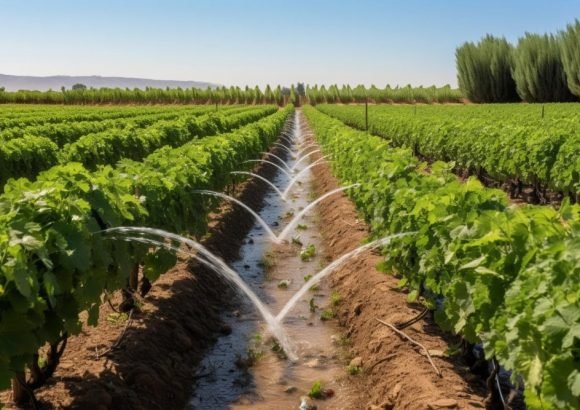
The Dominican Republic is beginning to ration water for agricultural irrigation as reduced rainfall puts additional pressure on water supplies, with the Instituto Nacional de Recursos Hidráulicos (Indrhi) organizing deliveries by turns and considering restrictions on new agricultural areas in some regions.
The measures follow meteorological projections for the next 60 to 90 days and could remain in place until March 2027, according to Juan Carlos Nova, Indrhi’s director of Operations and Maintenance of Irrigation Systems. The agency is coordinating its response with the country’s meteorological authorities as it assesses the potential effects of a prolonged period of below-normal rainfall.
The development is consistent with an earlier warning from the Instituto Dominicano de Meteorología (Indomet), which said in May that the possible development of El Niño could gradually reduce rainfall and increase the risk of meteorological drought during the second half of 2026. Indomet said international climate models at the time gave an 82% probability of El Niño developing between May and July and a 96% probability that related conditions would continue into the 2026-27 winter.
Yaque del Sur Faces Immediate Irrigation Pressure
One of the areas already affected is the lower basin of the Yaque del Sur River, where irrigation water is being distributed on a rotating schedule among farmers in Bahoruco and Barahona. The situation is compounded by saltwater intrusion in the lower part of the basin, increasing pressure on available water for agricultural production.
The Indrhi is also evaluating similar measures in the Lower Yaque del Norte. The irrigation system in that region serves important agricultural areas, and the government has continued investing in the maintenance and rehabilitation of canals. A public project record updated in April 2026, for example, lists ongoing work to clean and rehabilitate irrigation infrastructure serving agricultural areas in Santiago, Valverde and Monte Cristi.
Sabaneta Reservoir Could Limit Rice Production
In San Juan province, authorities are considering preventing another rice-growing cycle if current conditions persist because the Sabaneta Reservoir may not have enough water to meet irrigation demand.
The reservoir is particularly important to agriculture in the San Juan Valley. Earlier Indrhi data have shown how rainfall can materially change its available storage: in November 2024, Sabaneta held 43.04 million cubic meters, equivalent to 76.8% of its maximum capacity.
The current concern illustrates the wider challenge facing agricultural water management: reservoir levels are only one part of the equation, as rainfall, river flows, crop demand and the timing of planting all determine how long available supplies can support irrigation.
Farmers Also Face Reduced Rainfall
The water shortage is affecting farmers who depend directly on rainfall rather than irrigation infrastructure. Producers in the southern region have reported difficulties planting beans and corn, while farmers in Pueblo Viejo, Azua, have seen the effects of high temperatures and limited water availability on crops including plantains.
Azua is also the focus of continued public investment in irrigation infrastructure. In August 2026, the government said the Indrhi was advancing the next stage of the Azua II-Pueblo Viejo Agricultural Development Project, designed to expand water availability for irrigation and improve agricultural productivity in the province.
The projects are part of a broader effort to improve the country’s ability to manage water for agriculture. In July, the Indrhi also described a national program to strengthen irrigation users’ associations through technical training and assistance aimed at improving water management and irrigation efficiency.
Weather Outlook Will Determine How Long Restrictions Last
The duration of the current restrictions will depend heavily on rainfall during the coming months. Indomet’s May outlook warned that the country could transition from wetter conditions toward a rainfall deficit during the second half of 2026, potentially reducing available water reserves and increasing pressure on agriculture, energy production and drinking-water supplies.
For farmers, the immediate priority is therefore to align planting and irrigation decisions with the amount of water that can reliably be supplied. If rainfall remains below expectations, the turn-based distribution system and limits on expanding cultivated areas could become an increasingly important part of water management through the first months of 2027.