 24°C
24°C

What to Pack for a Trip to the Dominican Republic
Packing for the Dominican Republic is mostly about preparing for a warm, tropical climate while matching your luggage to the kind of trip you have planned. The right documents, lightweight clothing, sun and insect protection, medications, electronics and practical beach or excursion gear can make a vacation considerably easier.


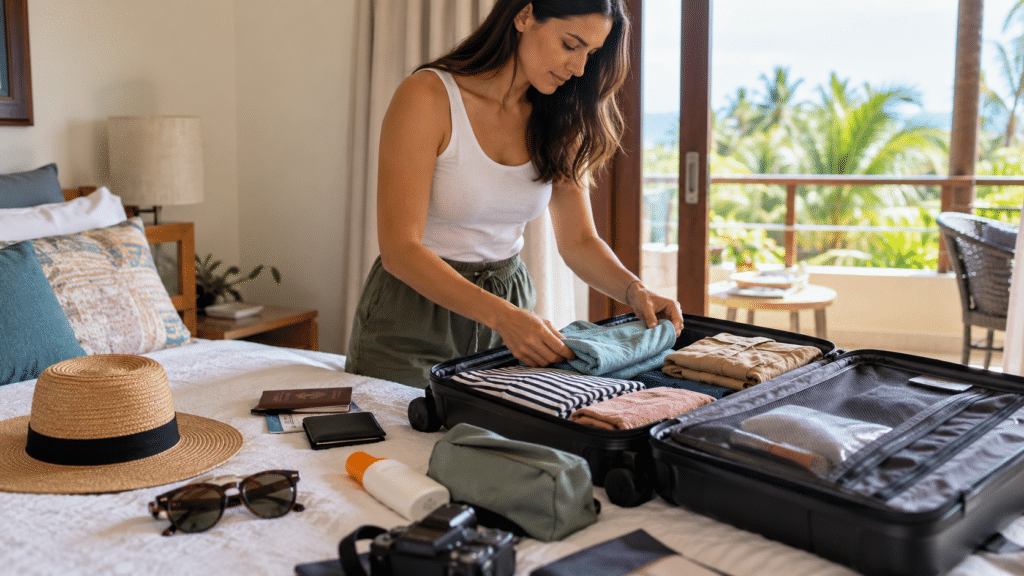
A good Dominican Republic packing list does not need to be complicated. Most travelers need a combination of essential documents, comfortable clothing, reliable sun protection, personal medications and a few items suited to beaches, outdoor activities and the tropical climate.
The ideal luggage also depends on the itinerary. A week at an all-inclusive resort in Punta Cana calls for a different approach from a city break in Santo Domingo, a road trip through several provinces or an excursion-heavy visit involving hiking and time outdoors. Packing according to the trip can prevent both overpacking and the frustration of discovering that an important item was left at home.
Start With Your Passport and Travel Documents
Your passport is the most important item in your luggage, but it should not be the only document you prepare. Before departure, check the entry rules that apply to your nationality, the validity requirements for your passport and any visa or transit requirements associated with your itinerary.
The Dominican Republic’s official tourism authority currently lists passport validity, proof of onward or return travel, accommodation information and evidence of sufficient funds among the requirements for foreign tourists, while noting that specific passport-validity exceptions apply to nationals of several countries through December 31, 2026. Requirements can change, so travelers should verify the current rules before departure rather than relying on an old checklist.
Keep your passport and essential travel documents accessible during the journey. It is also useful to carry digital copies of your passport, travel reservations and insurance information in a secure location. A separate record of emergency contacts can be valuable if your phone is lost or unavailable.
Depending on your trip, your document folder may include:
Passport and entry documents: Check validity and entry requirements before leaving home.
Flight and accommodation details: Keep confirmation numbers and addresses readily available, particularly for your arrival.
Travel insurance information: Save your policy number, emergency assistance telephone number and relevant coverage details.
Copies of important documents: Store secure digital copies separately from the physical originals.
Bring the Right Money and Payment Options
Travelers should avoid depending on a single payment method. Bring at least one primary card and a backup payment option, and notify your bank of international travel when required by its security procedures.
The Dominican peso is the country’s currency, although U.S. dollars are widely used in many tourist environments. Card payments are common at hotels, larger restaurants and established businesses, but travelers should still carry some cash for smaller purchases, transportation, tips or situations where card payments are unavailable.
Keep your cards, cash and identification secure rather than storing everything together. A small amount of accessible cash can be useful during airport transfers, excursions or travel between destinations.
Pack Lightweight Clothing for the Tropical Climate
For most trips, lightweight and breathable clothing will be more useful than heavy layers. Cotton, linen and other breathable fabrics can be comfortable in warm weather, while quick-drying clothing can be particularly practical for beach days, excursions and activities that involve water.
A basic clothing selection might include several lightweight tops, shorts or breathable trousers, underwear, sleepwear and at least one slightly more formal outfit. A light layer can also be useful in heavily air-conditioned airports, buses, restaurants and hotel spaces.
Do not assume that every part of the country feels identical at all times. Weather can vary by location and season, and outdoor plans may expose you to conditions that are different from those experienced inside a resort. Check the forecast for the destinations on your itinerary before deciding how much clothing to bring.
Pack for Restaurants and Evening Plans
If your trip includes upscale restaurants, nightlife or formal resort dining, check the dress expectations of the places you plan to visit. One versatile evening outfit is often enough for a typical vacation unless your itinerary includes several formal events.
For city trips, comfortable clothing that works for walking is generally more useful than a suitcase full of specialized outfits. Travelers planning outdoor excursions should prioritize practical fabrics and clothing that can tolerate heat, dust, water or repeated use.
Do Not Forget Swimwear and Comfortable Shoes
Swimwear is an obvious choice for a Caribbean vacation, but footwear deserves equal attention. A comfortable pair of walking shoes can be more valuable than several additional pairs of casual footwear, particularly if your itinerary includes historic districts, city sightseeing or long days on foot.
Consider packing sandals or another breathable option for everyday use, plus water-friendly footwear if your activities involve rocky shorelines, waterfalls or other environments where ordinary flip-flops may provide limited protection.
For hiking or more demanding outdoor activities, use footwear appropriate to the terrain rather than relying on beach sandals. The right shoes can improve comfort and stability and reduce the likelihood that a minor foot problem will disrupt an excursion.
Make Sun Protection a Packing Essential
Sun protection should be treated as everyday travel equipment rather than something needed only for the beach. Pack sunscreen that suits your skin and intended activities, along with sunglasses and a hat that provides useful shade.
A lightweight long-sleeved shirt can also be useful during prolonged outdoor activities. It provides another layer of protection while avoiding the need to apply sunscreen repeatedly to every exposed area.
Consider bringing enough sunscreen for the trip, particularly if you are traveling to a destination where a specific product or formulation may be harder to find. Reapplication is important when spending extended periods outdoors, especially after swimming or significant sweating.
Pack Insect Repellent
Insect repellent is a small item that can be easy to overlook and inconvenient to replace once you are traveling. Mosquitoes and other insects can occur in cities, resort areas and rural environments, so the need for protection is not limited to jungle or countryside excursions.
The CDC recommends insect repellents containing active ingredients such as DEET, picaridin, oil of lemon eucalyptus or IR3535, among others, and advises travelers to follow product directions. Long sleeves, long pants and screened or air-conditioned accommodation can provide additional protection.
If your itinerary includes hiking, camping or sleeping in locations exposed to the outdoors, your packing list may need to include additional insect protection. The appropriate level of preparation depends on the destination and activities, so travelers should check current health advice before departure.
Build a Practical Toiletry Kit
A compact toiletry bag should cover your everyday needs without filling half the suitcase. Consider bringing toothbrush and toothpaste, deodorant, shampoo and conditioner if you prefer specific products, skincare items, personal hygiene products and any cosmetics you regularly use.
Travel-size containers can reduce luggage volume, particularly for products that are available at your accommodation or can easily be purchased locally. However, travelers with particular skin, hair or hygiene needs may prefer to bring the products they know work for them rather than relying on local availability.
Pack sunscreen and insect repellent separately from your basic toiletries if that makes them easier to find. These are items you may need during the day rather than only when getting ready at your accommodation.
Keep Prescription Medication in Your Carry-On
Prescription medication should generally travel with you rather than being placed exclusively in checked luggage. Bring enough for the planned trip and consider allowing extra for unexpected delays.
Keep medicines in their original packaging when practical and carry relevant prescriptions or documentation. The legal status of some medications can differ between countries, so travelers with controlled or otherwise restricted medicines should verify the rules that apply before departure. The CDC specifically advises travelers to check whether prescription medicines are legal to bring into the Dominican Republic.
It can also be useful to know the active ingredient or generic name of each medication. Brand names vary internationally, and a product that is familiar at home may not be sold under the same name elsewhere.
Add a Small First-Aid and Health Kit
A basic first-aid kit does not need to be large. Its purpose is to handle minor problems without requiring an immediate search for a pharmacy.
Depending on your personal needs and itinerary, useful items can include adhesive bandages, blister protection, antiseptic supplies, basic pain relief, any regularly used over-the-counter medicine and oral rehydration products. Travelers should choose medicines appropriate for their own circumstances and follow the product instructions.
Do not turn a packing list into a portable pharmacy. Many travelers will never use most of these items, and unnecessary medicines add weight and can create confusion. Focus on products you are likely to need and those that may be difficult or inconvenient to replace quickly.
Pack Electronics and Chargers Carefully
A phone is likely to be one of the most useful items on the trip, serving as a camera, map, communication device, boarding pass holder and source of travel information. Bring its charging cable and, if useful for your itinerary, a power bank that complies with your airline’s rules.
A compact charging kit can prevent the common problem of bringing several devices but forgetting the cables. Travelers carrying cameras, smartwatches, tablets or laptops should check that each device has the necessary charging equipment before leaving home.
A travel adapter may be necessary depending on the country where you normally live and the plugs used by your devices. Check your device specifications and the electrical standard at your accommodation before departure rather than assuming that every international destination uses the same outlet configuration.
For a typical resort vacation, there is rarely a need to bring every electronic device you own. A phone, charger and perhaps a camera or other genuinely useful device are often sufficient.
Bring a Reusable Water Bottle
A reusable water bottle is particularly useful for airport transfers, sightseeing, beach days and excursions. It reduces the need to repeatedly buy containers while giving you a convenient way to carry water throughout the day.
Travelers should pay attention to local water-safety advice rather than assuming that a reusable bottle can simply be filled from any tap. Current UK government travel advice says tap water in the Dominican Republic is not drinkable, so visitors should follow local guidance and use a reliable source of drinking water.
An insulated bottle can be useful for travelers who spend long periods outdoors, but it is an optional upgrade rather than an essential purchase.
Prepare for Beaches and Outdoor Excursions
Beach and excursion gear should reflect what you actually intend to do. For a straightforward resort holiday, a small collection of beachwear, sunglasses, a hat and a compact day bag may be enough.
Travelers planning boat trips, snorkeling, hiking or other outdoor activities may want additional practical items such as a dry bag, waterproof phone pouch, quick-drying clothing, water-friendly footwear or a small daypack.
A lightweight bag is particularly useful because it can separate excursion essentials from your main luggage. Depending on the activity, it can carry water, sunscreen, insect repellent, a phone, identification and other necessities without requiring you to take your full suitcase.
Do not buy specialized equipment simply because a packing list recommends it. Many organized excursions and established resorts provide or rent equipment, so check what is included before adding bulky items to your luggage.
Complete a Short Health Preparation Checklist
Health preparation should be part of packing, but it does not need to dominate your luggage planning. Before departure, check that your regular medications are packed, review current travel-health guidance, confirm your insurance coverage and consider whether your itinerary creates any specific health considerations.
Vaccinations are one part of that broader preparation. Travelers should check current recommendations with an appropriate healthcare professional or official health authority well before departure, particularly when traveling with children, during pregnancy, with a chronic medical condition or when visiting less developed or remote areas. For a focused reference on this specific part of preparation, see vaccines for the Dominican Republic.
Health guidance can change according to disease activity, itinerary and individual circumstances. The CDC currently advises travelers to review destination-specific recommendations and consult a healthcare professional before travel, while UK travel guidance recommends checking that appropriate healthcare and travel insurance are available for the trip. Travelers can also follow news in the Dominican Republic to stay informed about developments that may affect their trip before departure.

Keep Travel Insurance Information Accessible
Travel insurance documents are not items you want buried at the bottom of your suitcase. Keep the policy number, emergency assistance contact details and relevant coverage information somewhere accessible, both digitally and offline if practical.
Check that the policy covers the activities you intend to undertake and understand any conditions relating to medical treatment, emergency evacuation or pre-existing conditions. UK travel guidance specifically recommends insurance that covers the itinerary, planned activities and emergency expenses.
If you need medical treatment during the trip, having the insurer’s contact information immediately available can make it easier to understand where to seek assistance and what documentation may be required.
Resort Packing vs. City and Adventure Trips
For a resort vacation: Prioritize swimwear, lightweight clothing, sandals, comfortable shoes, sun protection, insect repellent, personal toiletries, medication and a small day bag. Check the resort’s dress requirements before packing formal clothing.
For a city trip: Put more emphasis on comfortable walking shoes, breathable everyday clothing, secure storage for essential documents and a versatile outfit for restaurants or evening activities. A compact daypack can be useful for sightseeing.
For outdoor excursions: Add practical footwear, insect protection, sun protection, water, quick-drying clothing and a bag suitable for carrying essentials. If you are traveling into remote areas, give more thought to medication supplies and access to services because replacing something you forgot may be less convenient.
The goal is not to create three separate suitcases. Most travelers can start with the same basic packing list and add only the items required by their particular itinerary.
What You Usually Do Not Need to Overpack
Overpacking is easy when preparing for a tropical vacation because it is tempting to bring an outfit for every possible scenario. In practice, versatile clothing is usually more useful than a large wardrobe.
Travelers often do not need multiple pairs of similar shoes, large quantities of toiletries, extensive formalwear or specialized equipment for activities that can be arranged locally. Unless your itinerary requires them, bulky beach accessories and duplicate electronics can also add weight without adding much value.
It is also worth checking what your accommodation provides. Hotels and resorts may supply basic toiletries, towels and other everyday items, while excursion operators may provide equipment. Availability varies, so verify before deciding to leave something essential at home.
A Simple Dominican Republic Packing Checklist
Essential: Passport, required travel documents, payment cards, some cash, phone, chargers, prescription medication, travel insurance information, comfortable clothing, underwear, footwear and basic toiletries.
Highly useful: Sunscreen, sunglasses, hat, insect repellent, reusable water bottle, small day bag, basic first-aid supplies and a light layer for air-conditioned spaces.
Trip-dependent: Water-friendly footwear, dry bag, waterproof phone protection, hiking gear, snorkeling equipment, quick-drying clothing, camera equipment and other specialized outdoor items.
Optional: Insulated bottle, extra electronics, multiple formal outfits and specialized gear that can be rented or supplied locally.
Pack for the Trip You Are Actually Taking
The most useful Dominican Republic packing list is the one built around your itinerary rather than a generic inventory of everything you could possibly need. Start with documents, money, medication and basic clothing, then add the items required by the climate, accommodation and activities you have planned.
For most visitors, a relatively compact suitcase is enough. Once the essentials are covered, thoughtful additions such as sun protection, insect repellent, a reusable water bottle and a practical day bag can make everyday travel easier without turning luggage into another burden. Checking current entry and health guidance shortly before departure provides the final layer of preparation.