 23°C
23°C

Jeep Cherokee Could Be Replaced After Just Three Model Years
Stellantis is reportedly preparing to replace the sixth-generation Jeep Cherokee as early as 2029, just three model years after its return, with a new crossover based on the company’s STLA One architecture.


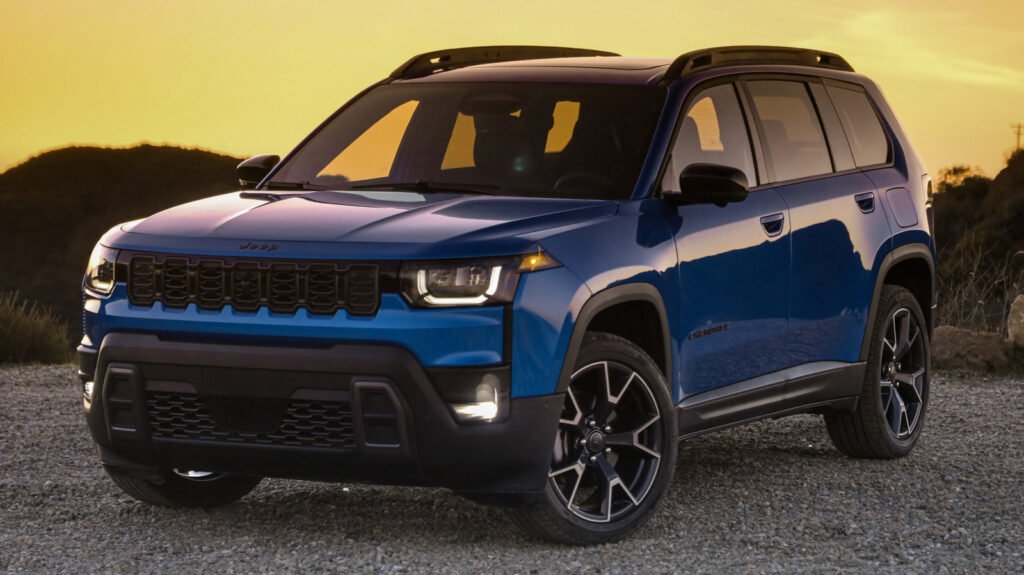
The Jeep Cherokee could have one of the shortest production runs in the nameplate’s history. Stellantis is reportedly preparing a new crossover to replace the sixth-generation Cherokee around 2029, with production expected to take place at the company’s long-idled Belvidere Assembly Plant in Illinois.
The move would come only a few years after Jeep brought the Cherokee back for the 2026 model year following a two-year absence. The replacement is expected to use STLA One, Stellantis’ new modular vehicle architecture designed to accommodate multiple vehicle segments and powertrains.
Stellantis unveiled STLA One in May 2026 as a global platform intended to simplify vehicle development and support more than 30 models over time. The architecture is designed for B-, C- and D-segment vehicles and can accommodate different propulsion systems, giving Jeep greater flexibility as it develops its next generation of crossovers.
Belvidere Is Set To Become A Key Jeep Plant Again
The planned Cherokee transition would also reshape Stellantis’ manufacturing footprint in the United States. The automaker has already committed to reopening Belvidere Assembly in Illinois, where the next-generation Cherokee and Compass are expected to be built for the U.S. market.
Stellantis has previously announced an investment of more than $600 million to reopen the facility. The latest plan reportedly adds another $200 million, taking the overall investment to more than $800 million. Preparatory work is already underway, with projects covering stamping, body construction, paint and general assembly.
Pilot production of the current Cherokee is expected to begin in the first half of 2028, with regular production targeted for the second half of 2029. The Compass is also expected to return to Belvidere, although the timing of its production has not been established.
The plant previously built the Cherokee and Compass before Stellantis moved Compass production to Toluca, Mexico, in 2016. The fifth-generation Cherokee ended production in 2023, leaving Belvidere without a vehicle program.
The Current Cherokee Is Struggling To Gain Momentum
The unusually short life cycle would be difficult to explain without considering the Cherokee’s performance since its return. Jeep sold 10,570 Cherokees in the United States during the first half of 2026, a sharp contrast with the model’s stronger years earlier in the previous decade.
In 2018, Jeep sold nearly 240,000 Cherokees in a single year. The current model is also facing a crowded inventory situation, with more than 11,200 new Cherokees reportedly listed on AutoTrader while Toyota has struggled to keep enough RAV4s available to meet demand in the same broad market.
The Cherokee has also faced five separate recalls during 2026, adding another challenge for a model that Jeep had hoped would strengthen its position in the highly competitive crossover and midsize SUV segments.
For Dominican buyers watching Jeep’s product strategy and the availability of SUVs in the region, the changes are relevant because model cycles and U.S. production decisions can influence the vehicles that eventually reach Caribbean markets. Shoppers can also compare available models through yacarros.com, a vehicle marketplace in the Dominican Republic.
A Major Change For The Cherokee Nameplate
The sixth-generation Cherokee arrived with a hybrid powertrain and a new platform, positioning it as a significant departure from the previous model. Its replacement after such a short period would nevertheless make the KM-generation Cherokee an unusual chapter in Jeep history.
Stellantis has not yet disclosed the design, powertrains or technical specifications of the proposed seventh-generation Cherokee. It is therefore unclear whether the next vehicle will retain any significant mechanical or technological elements from the current model.
What is clearer is the strategic reason for the change. STLA One is intended to reduce development complexity and increase component sharing across Stellantis brands while supporting different types of propulsion. For Jeep, that flexibility could allow the Cherokee nameplate to be repositioned around changing consumer demand without requiring a completely separate architecture.
The shift also comes as the Dominican automotive market continues to evolve, with dealers and industry groups dealing with changes involving vehicle regulation, road safety and the modernization of the country’s vehicle fleet. A recent report on the Dominican automotive sector highlighted some of those broader challenges, including calls for stricter enforcement of mobility regulations and implementation of vehicle inspections.
For now, Stellantis has not revealed the final design or launch details of the next Cherokee. If the reported timeline holds, however, the current generation will have only a brief window to establish itself before giving way to a new Jeep crossover built around the company’s next major vehicle architecture.