 22°C
22°C

How Many Motoconchistas Are in the Dominican Republic?
In the Dominican Republic, a motoconcho is a motorcycle taxi service, while a motoconchista is the driver who carries passengers for a fee. The service is an important part of everyday transportation, particularly for short trips, and its scale is much larger than a visitor might initially expect: the latest available estimate puts the number of motoconchistas at 124,452, while a major sector study estimated that their activity contributed RD$52.8 billion to the Dominican economy in 2023. This article examines how the sector works, how many people depend on it, how much money it generates and why motoconcho has become such an important part of life in the Dominican Republic.


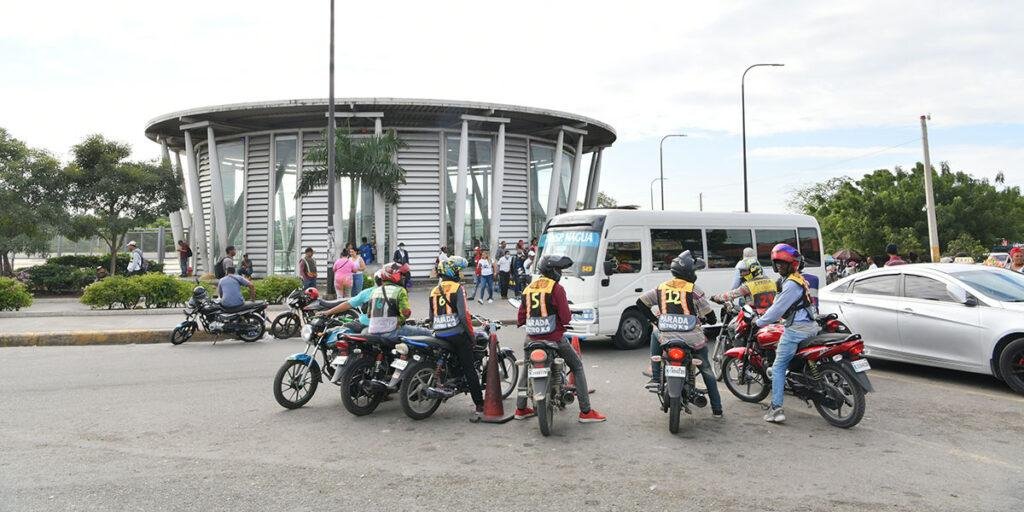
For a foreign visitor, the word motoconchista may be unfamiliar, but the service is difficult to miss once you arrive in the Dominican Republic. Motorcycles wait at street corners, outside markets and near transportation hubs, with drivers offering short passenger trips through neighborhoods and busy urban areas. In practical terms, a motoconchista is a motorcycle taxi driver.
The distinction between the words matters. Motoconcho refers to the motorcycle transportation service itself, while motoconchista refers to the person who provides that service. The terminology is recognized by the Association of Academies of the Spanish Language, whose Dictionary of Americanisms defines motoconcho specifically for the Dominican Republic.
Motoconcho is not primarily a tourist service. It is an everyday form of local transportation used by Dominicans to travel to work, schools, shops, bus terminals and other destinations. Its importance is reflected in the size of the workforce: a 2025 study prepared by Analytica for the Association of Motorcycle Dealers and Manufacturers (AFAMOTO) estimated 111,090 motoconchistas in 2023. A later estimate in the same study, using the Dominican Central Bank’s 2024 Continuous National Labor Force Survey, put the number at 124,452 in 2024.
What Is a Motoconchista?
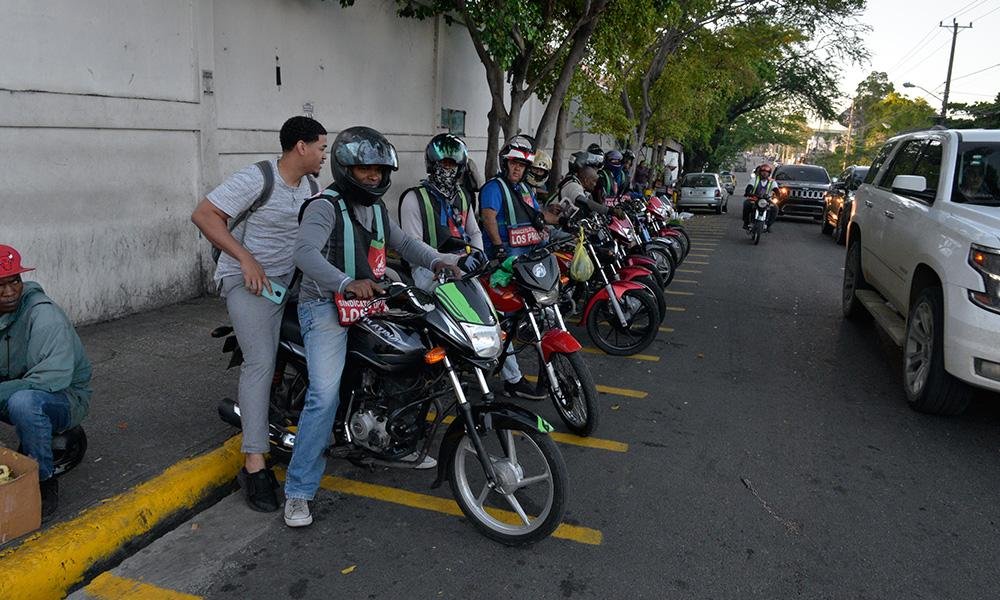
The simplest comparison for an international reader is a motorcycle taxi driver. A motoconchista transports a passenger on the back of a motorcycle in exchange for payment. Unlike a conventional taxi, the vehicle is a motorcycle, and the service is commonly organized through informal or semi-formal stands known as paradas.
The word motor is itself used in Dominican Spanish to mean a motorcycle. The Dictionary of Americanisms records that meaning specifically for the Dominican Republic.
The service is generally designed for short trips. A passenger approaches a driver, agrees on or asks about the fare, gets on the motorcycle and travels to the destination. There is normally no taximeter, and the exact way the service operates varies from one place to another.
For visitors, this can make motoconcho look informal compared with taxi systems in North America or Europe. That informality, however, is not the same as saying that every motoconchista operates illegally. Dominican authorities have been working to identify, register and regulate the sector, including the locations where motorcycle taxis operate.
How Many Motoconchistas Are There in the Dominican Republic?
The latest estimate found in the AFAMOTO study is 124,452 motoconchistas for 2024. The figure is based on the Dominican Republic’s Continuous National Labor Force Survey (ENCFT) and appears in the study’s analysis of the occupation using 2024 data.
The same research estimated 111,090 motoconchistas in 2023. The difference between the two figures does not mean that there is a precise annual registry showing exactly how many motorcycle taxi drivers exist. Rather, these are statistical estimates derived from labor-force data.
This is an important qualification because motoconcho is overwhelmingly informal. The study estimated that 99% of motoconchista employment was informal in 2023, making a conventional administrative count particularly difficult.
| Indicator | Estimate | Year |
|---|---|---|
| Motoconchistas | 124,452 | 2024 |
| Motoconchistas | 111,090 | 2023 |
| Estimated informal share | 99% | 2023 |
| Estimated average monthly remuneration | RD$29,256 | 2023 |
| Estimated motoconchista GDP | RD$52.834 billion | 2023 |
For this reason, the most accurate way to phrase the answer is that more than 120,000 people were estimated to work as motoconchistas in 2024, while the comparable 2023 estimate was just over 111,000.
How Much Money Does the Motoconcho Sector Generate?
This question requires some care because “how much money the sector moves” can mean several different things. Passenger fares, workers’ income, economic output and GDP contribution are not the same measurement.
The strongest published estimate for the economic contribution of motoconchistas comes from the AFAMOTO study. It estimated that the activity generated RD$52.834 billion in nominal GDP in 2023. That represented approximately 0.78% of the Dominican Republic’s total GDP and 10.7% of GDP attributed to transportation.
The study also explains what is behind that number. Approximately 98% of motoconchista GDP consisted of remuneration, while 2% was attributed to payments to capital, including interest and indirect payments associated with motorcycle ownership.
Therefore, RD$52.834 billion should not be presented as the total amount of cash passengers handed to motorcycle taxi drivers. It is an estimate of the sector’s contribution to GDP using national-accounting concepts.
How Much Does a Motoconchista Earn?
The AFAMOTO study estimated the average monthly remuneration of informal motoconchistas at RD$29,256 in 2023. The study shows that this figure had risen from RD$22,693 in 2017, equivalent to average annual growth of approximately 4.3% over that period.
That figure is an average, not a guaranteed salary. Motoconchistas are generally self-employed rather than salaried employees, and their earnings can fluctuate with the number of passengers, working hours, location, weather and operating costs.
The distinction between income and remuneration is especially important in an informal activity. A driver may collect money throughout the day but must also cover costs associated with operating a motorcycle, including fuel, maintenance and other expenses.
The AFAMOTO study’s broader analysis also found that the typical motoconchista had only a 32.2% estimated probability of obtaining formal employment, based on its statistical model using 2024 labor-force data. The study estimated that, conditional on obtaining such employment, the average monthly income would be around RD$24,310.
These figures help explain why the occupation persists even though it involves substantial risks and limited employment protection. For some workers, motoconcho provides a relatively accessible way to earn an income when formal alternatives are limited.
How Many Passengers Use Motoconcho?
AFAMOTO’s study estimates that motorcycle passenger transportation moves approximately 1.6 million passengers per day. About 61% of those passenger movements are concentrated in the metropolitan region, according to figures reported from the study.
The concentration around the metropolitan area is significant because Greater Santo Domingo is the country’s largest urban and economic center. Motorcycle taxis can be particularly useful where traffic congestion makes larger vehicles slower and where passengers need relatively inexpensive short-distance transportation.
The study also reports different operating patterns between regions. Motoconchistas in the metropolitan area were estimated to make around 36 passenger trips per day, while the study reported approximately 12 to 18 trips per day in the interior of the country.
These figures should be interpreted as estimates rather than a national passenger-counting system. The Dominican Republic does not operate a comprehensive real-time registry of every motoconcho journey.
How Much Does a Motoconcho Ride Cost?
There is no single nationwide fare. Prices vary according to distance, location and local practice.
The Dominican Republic’s official tourism website gives a general reference range of RD$25 to RD$75 for in-city motoconcho trips, depending on the distance. The same official source warns that motorcycle taxis can be particularly dangerous in cities and areas with heavy traffic.
That fare range is useful for foreign visitors because it provides context for what they may encounter locally. It should not, however, be treated as a universal price list. A longer journey, a different city or a particular local arrangement can produce a different fare.
Why Is Motoconcho So Popular?
Motorcycle taxis have several characteristics that make them attractive in the Dominican transportation system. A motorcycle occupies little road space, can move through congested streets more easily than a car and can reach smaller residential streets that may be inconvenient for larger vehicles.
The AFAMOTO study found that motoconchistas themselves cited several advantages to the occupation. Among the most frequently reported were the ability to generate money, being their own boss, flexible working hours and the ability to move more easily through traffic.
For passengers, the attraction is different but related: the service is generally inexpensive, fast for short trips and widely available.
The importance of motorcycles extends beyond motoconcho. The AFAMOTO study estimated that 1,416,016 motorcycles were in use in June 2024, based on an analysis of registration data. It also estimated that 37% of Dominican households had access to a motorcycle.
Motoconcho and the Wider Motorcycle Economy
Motoconchistas are only one part of the Dominican Republic’s motorcycle economy. The AFAMOTO study estimated 185,151 people were employed across the wider motorcycle sector in 2023. This included people using motorcycles as a means of transportation as well as workers involved in motorcycle services and commerce.
Within the transportation-related portion of that workforce, the study classified approximately 71% as motoconcho, 19% as delivery workers and 10% as motorcycle messengers in 2023.
The wider industry also includes motorcycle repair shops, parts retailers, dealers and importers. That matters because the economic impact of motorcycles is not limited to the fares collected from passengers.
How Big Is the Motorcycle Market?
The scale of the motorcycle market provides another way to understand why motoconcho has become economically important.
According to the AFAMOTO study, the Dominican Republic imported 293,699 motorcycles in 2024, with an import value of approximately US$174.59 million on an FOB basis. The study calculated that motorcycle imports accounted for 8.4% of total vehicle imports that year.
Motorcycle sales inside the Dominican market were estimated at RD$17.159 billion in 2023, according to the same study. Estimated taxes associated with those sales amounted to RD$5.478 billion.
Import-related taxation was also significant. Analytica estimated approximately US$97 million in taxes related to motorcycle imports in 2024.
| Measure | Estimate | Year |
|---|---|---|
| Motoconchista GDP | RD$52.834 billion | 2023 |
| Motorcycle sales | RD$17.159 billion | 2023 |
| Motorcycle imports | 293,699 units | 2024 |
| Value of motorcycle imports | US$174.59 million FOB | 2024 |
| Taxes related to motorcycle imports | US$97 million | 2024 |
These figures should not be added together. They measure different parts of the economy and, in some cases, different years. Adding them would create a misleading estimate because the figures are not measuring the same type of economic activity.
How Many Motorcycles Are There in the Dominican Republic?
The number of motorcycles in the country is considerably larger than the number of motoconchistas.
The Dominican tax authority, DGII, reported 3,846,694 registered motorcycles at the end of 2025. They represented approximately 57.9% of the country’s 6.64 million registered vehicles.
This is an important distinction. A registered motorcycle is not necessarily a motorcycle taxi. Many are privately owned, while others are used for deliveries, commuting, commercial work or other purposes.
The contrast between the two numbers is nevertheless striking: the country had almost 3.85 million registered motorcycles in 2025, while the latest labor-force estimate identified about 124,000 people working as motoconchistas in 2024.
This helps put the occupation into perspective. Motoconcho is a major use of motorcycles, but it is only one part of a much larger motorcycle-based transportation and employment ecosystem.
Where Are Motoconchistas Found?
Motoconcho operates throughout the Dominican Republic, although the scale varies considerably between locations.
The AFAMOTO study’s 2023 motorcycle distribution data show particularly large concentrations in the National District, which accounted for 23.5% of the motorcycle fleet in its provincial analysis, followed by Santo Domingo province at 12.6%, La Vega at 7.0% and Santiago at 6.0%.
The National District forms the core of Santo Domingo, the Dominican capital and the country’s principal metropolitan area. For an international reader, this concentration helps explain why motoconcho is especially visible in and around the capital.
But the service is by no means restricted to Santo Domingo. In June 2026, the National Institute of Transit and Land Transportation, known as INTRANT, said its national regularization operation had intervened in motoconcho stands in Greater Santo Domingo, Santiago, La Vega, Moca, San Francisco de Macorís, Bonao, Nagua, San Pedro de Macorís, La Romana, Higüey, San Cristóbal, Baní, San Juan, Barahona, Samaná and Las Terrenas.
How Informal Is the Motoconcho Sector?
Informality is one of the most important characteristics of motoconcho.

The AFAMOTO analysis of 2023 labor-force data estimated that 99% of motoconchista employment was informal. That does not automatically mean that every individual activity is illegal. In labor statistics, informal employment refers to work outside the structures and protections associated with formal employment.
The high level of informality also explains why determining the exact number of motoconchistas is difficult. A conventional administrative registry is less likely to capture everyone who works in the occupation, particularly people who enter or leave the activity according to labor-market conditions.
The sector’s informality is also connected to social protection. The AFAMOTO study reported lower social-security affiliation among people connected to the motorcycle sector than in the economy as a whole, highlighting potential risks related to pensions and health coverage.
Why Do People Become Motoconchistas?
The occupation is closely linked to the Dominican labor market.
In the AFAMOTO survey, the most frequently cited reason for becoming a motoconchista was difficulties in the labor market, followed by economic necessity, convenience and the possibility of generating income. The study’s survey data therefore suggest that motoconcho is often an economic response to limited employment alternatives rather than simply a lifestyle choice.
Flexibility is another important factor. A motoconchista can generally determine when to work and where to look for passengers, giving the occupation a degree of independence that conventional employment may not offer.
But that independence comes with uncertainty. The study identified accidents, exposure to weather, lack of a fixed salary, lack of insurance and risks on the streets among the disadvantages reported by respondents.
How Much Does the Sector Contribute to the Economy?
The RD$52.834 billion GDP estimate is the clearest single measure of the economic importance of motoconcho.
According to Analytica’s calculations using data from the Dominican tax authority and the Central Bank, the motoconchista subsector represented 0.78% of national GDP in 2023. Its contribution was equivalent to 10.7% of GDP generated by transportation.
That is substantial for an occupation that is overwhelmingly informal and based on individual motorcycle operators.
The composition of the GDP estimate is also revealing. Because 98% of the calculated value consisted of remuneration, the activity is highly labor-intensive. In other words, the economic value generated by motoconcho is primarily tied to the work performed by drivers rather than to large formal companies or capital-intensive infrastructure.
Why You Should Not Call RD$52.8 Billion “Annual Revenue”
The distinction between GDP contribution and revenue is particularly important when reporting on informal transportation.
If a passenger pays a motoconchista RD$75, that payment is a fare. If thousands of passengers pay fares every day, the combined payments represent gross spending on the service. GDP, however, measures the value added generated by the activity rather than simply adding every transaction.
For that reason, it would be inaccurate to state that motoconcho “has annual revenues of RD$52.8 billion.” The defensible statement is that Analytica estimated the motoconchista subsector’s contribution to Dominican GDP at RD$52.834 billion in 2023.
This may sound like a technical distinction, but it matters when comparing the sector with other industries. It prevents passenger fares, workers’ remuneration and economic value added from being treated as if they were the same measurement.
What Does Motoconcho Mean for Foreign Visitors?
For tourists and other international visitors, motoconcho is useful to understand because it is part of the everyday transportation landscape rather than a service created specifically for tourism.
A visitor may encounter motoconchistas near bus terminals, commercial districts, residential neighborhoods and local transportation stands. In smaller towns, they can be particularly visible because motorcycles can provide convenient connections over short distances.
However, convenience should not be confused with safety. The Dominican Republic’s official tourism authority describes motorcycle taxis as the country’s most dangerous form of travel, particularly in cities and heavy-traffic areas. It also states that helmets are legally required, although many motorcycle taxis do not provide them.
The official tourism authority advises visitors to ask for the local motoconcho hub or obtain a recommendation from their accommodation. It also notes that official motorcycle taxis often wear brightly colored vests, although this is not universal.
Is the Dominican Republic Trying to Regulate Motoconcho?
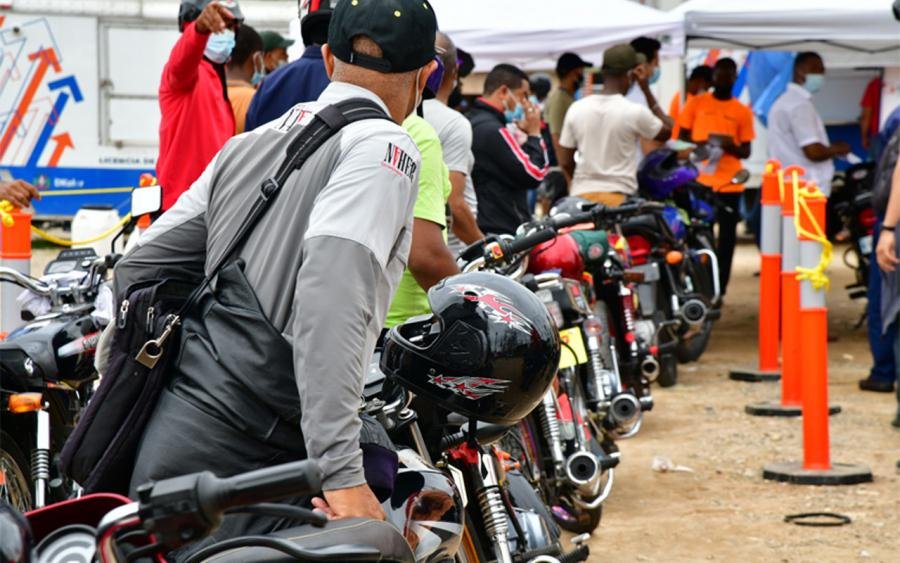
Yes. The Dominican government has been increasing efforts to organize and formalize motorcycle passenger transportation.
In June 2026, INTRANT reported the results of a national regularization operation carried out between June 3 and June 24. Authorities said they intervened in 488 motoconcho stands, registered 2,808 people, conducted 1,570 inspections and retained 599 motorcycles.
INTRANT also reported a sharp increase in new Category 1 motorcycle driving licenses during the regularization period, with new licenses rising from 1,843 in March to 3,824 in June, a reported increase of 107.5%.
The agency’s stated objective is to improve road safety and bring motorcycle transportation into a more organized and regulated framework. In May 2026, INTRANT said that legalized motoconcho stands would require operating and land-use permits, vehicle registration and properly licensed drivers, among other requirements.
The process is significant because the sector is so large that simply eliminating it is not a realistic description of the policy challenge. The government’s approach is instead focused on registration, licensing, stand locations, enforcement and formalization.
How Important Is Motoconcho to Dominican Households?
The economic impact extends beyond the individual driver.
The AFAMOTO study estimated that 27,210 Dominican households were classified as households associated specifically with motoconcho in its 2023 analysis. It also found that the motorcycle-related activity represented a substantial share of household labor income.
For households connected to motoconcho, the motorcycle can therefore be both a transportation asset and a productive asset. The same vehicle that moves the worker around the city is the tool through which income is generated.
This dual role helps explain why motorcycle ownership is particularly important in lower-income parts of the population. The AFAMOTO research found that motorcycles are an important means of transportation for Dominican households and that their penetration varies by income level.
The Numbers at a Glance
| Question | Best documented figure | Year |
|---|---|---|
| How many motoconchistas? | 124,452 | 2024 |
| How many were estimated in the previous year? | 111,090 | 2023 |
| Motoconchista GDP | RD$52.834 billion | 2023 |
| Share of national GDP | 0.78% | 2023 |
| Share of transportation GDP | 10.7% | 2023 |
| Average monthly remuneration | RD$29,256 | 2023 |
| Estimated daily passenger movements | About 1.6 million | Study estimate |
| Registered motorcycles | 3,846,694 | 2025 |
| People employed across the wider motorcycle sector | 185,151 | 2023 |
The figures come from different sources and years, so they should not be treated as a single-year statistical snapshot. The 124,452 figure is the latest motoconchista estimate identified in the AFAMOTO study, while the RD$52.834 billion GDP figure refers specifically to 2023. The motorcycle fleet figure comes from the DGII’s official 2025 vehicle report.
Frequently Asked Questions
What exactly is a motoconchista?
A motoconchista is a person who operates a motorcycle taxi in the Dominican Republic. The service is called motoconcho. The terminology is recognized by the Association of Academies of the Spanish Language.
How many motoconchistas are there in the Dominican Republic?
The latest estimate identified in the AFAMOTO study is 124,452 motoconchistas in 2024. The comparable 2023 estimate was 111,090. Because the occupation is overwhelmingly informal, these figures are statistical estimates rather than a precise administrative census.
How much does the motoconcho sector contribute to the economy?
Analytica estimated that motoconchistas generated RD$52.834 billion in nominal GDP in 2023. That represented 0.78% of national GDP and 10.7% of transportation GDP.
Is RD$52.8 billion the amount passengers spend on motoconcho?
No. It is an estimate of the subsector’s contribution to GDP. It should not be described as gross passenger revenue or total fares collected.
How much does a motoconchista earn per month?
The AFAMOTO study estimated average monthly remuneration at RD$29,256 in 2023. Individual earnings can vary considerably because motoconchistas generally operate as informal or self-employed workers rather than salaried employees.
How much does a motoconcho ride cost?
The official Dominican tourism website gives a general range of RD$25 to RD$75 for in-city trips, depending on distance. Actual fares can vary by location and circumstances.
How many motorcycles are there in the Dominican Republic?
The DGII reported 3,846,694 registered motorcycles at the end of 2025. This figure includes private and other motorcycles and should not be confused with the number used as motorcycle taxis.
Are motoconchistas regulated?
The Dominican authorities are working to regularize the sector. INTRANT reported a national operation in June 2026 that intervened in 488 motoconcho stands and registered 2,808 people. The process includes licensing, documentation, inspections and efforts to organize motorcycle taxi stands.
Is motoconcho safe for tourists?
Safety varies, but the Dominican Republic’s official tourism authority warns that motorcycle taxis can be particularly dangerous in cities and heavy traffic. It also notes that helmets are legally required but are not always provided.
Conclusion
The Dominican Republic’s motoconcho industry is far larger than its informal appearance might suggest. The latest estimate identified in the country’s major motorcycle-sector study puts the number of motoconchistas at 124,452 in 2024, following an estimate of 111,090 in 2023. The same research estimated that the occupation contributed RD$52.834 billion to Dominican GDP in 2023.
For a foreign reader, the key point is that a motoconchista is not simply someone offering tourists a cheap motorcycle ride. Motoconcho is a major component of everyday Dominican mobility and an important source of income for tens of thousands of households. Its scale is also part of a much larger motorcycle economy involving hundreds of thousands of workers, vehicle imports, sales, repairs, financing and fuel.
The sector’s importance also explains the government’s growing focus on regulation. With more than 120,000 people estimated to work as motoconchistas, the challenge is not simply whether motorcycle taxis should exist, but how a deeply established form of transportation can become safer and more organized without removing the accessibility that has made it so important to Dominican mobility.
For visitors, understanding the term itself is therefore the starting point. Motoconcho is not merely a local nickname for a motorcycle ride. It is a significant part of how the Dominican Republic moves, works and generates income.