 27°C
27°C

How to Bid for Government Contracts in the Dominican Republic
Bidding for government contracts in the Dominican Republic requires more than submitting a competitive price: companies must identify suitable opportunities, understand the applicable procurement rules, prepare the required documents, submit their offer correctly through the official electronic system, monitor communications and know how to follow the award process. For most public procurement procedures, the key platform is the Sistema Electrónico de Contrataciones Públicas (SECP), administered within the Dominican Republic’s public procurement system.


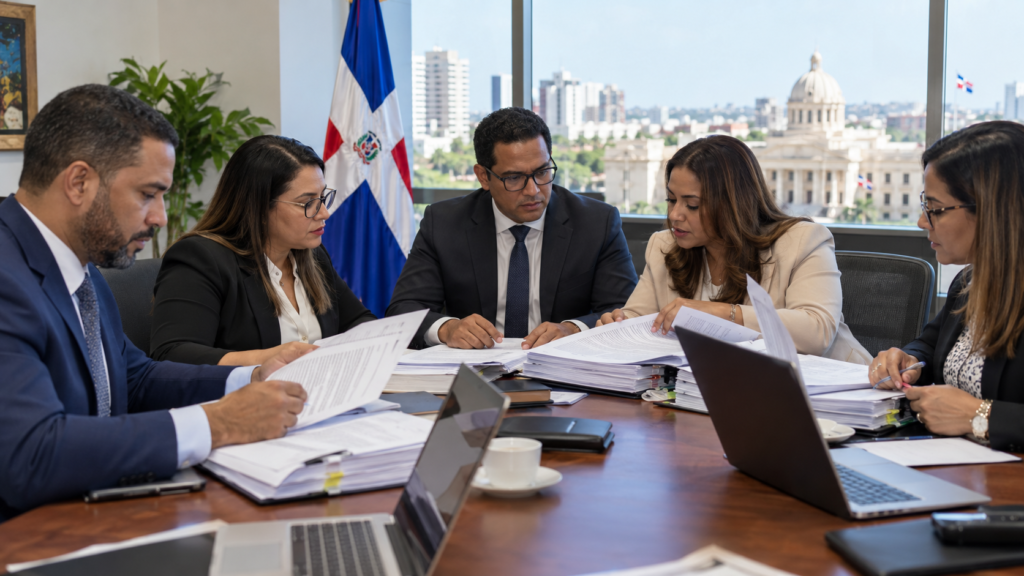
For a company looking to enter the Dominican Republic’s public-sector market, government procurement can provide access to contracts for goods, services and works across public institutions. But the process is formal: eligibility requirements, technical specifications, administrative documents, deadlines and submission procedures all matter. A proposal can be commercially strong and still fail if it does not comply with the tender documents or is submitted incorrectly.
The Dominican Republic’s procurement framework changed with Law No. 47-25 on Public Procurement, which entered into force on January 28, 2026, together with its implementing Regulation No. 52-26. The Dirección General de Contrataciones Públicas (DGCP), the government body responsible for regulating the national public procurement system, has been implementing the new framework progressively through the Sistema Electrónico de Contrataciones Públicas (SECP). Procedures launched before January 29, 2026 remain subject to the rules applicable when they were originally called. The DGCP’s legal framework provides the official versions of the applicable legislation and regulations.
1. Understand How Public Procurement Works
Before looking for a tender, a company should understand the basic structure of Dominican public procurement. The DGCP is the regulatory authority, while individual government institutions act as contracting entities and publish procurement procedures for the goods, services or works they need.
The SECP is the official electronic system used to manage public procurement procedures. The platform is designed to cover the procurement cycle, from planning through contracting and other stages of contract administration. For suppliers, this means that monitoring the electronic system is an essential part of participating in the public market.
The applicable procedure can vary according to the nature and value of the procurement. The tender documents, rather than a generic checklist, should therefore be treated as the controlling source for the specific opportunity. The DGCP publishes manuals and procedural guidance under the current Law No. 47-25 and Regulation No. 52-26.
2. Register as a State Supplier Before You Need to Bid
One of the most useful preparations is to establish the company’s supplier profile before a suitable tender appears. The Registro de Proveedores del Estado (RPE) is the State Supplier Registry administered by the DGCP.
For Dominican companies, registration requirements can include corporate, tax, banking and ownership information. The exact documentation depends on whether the supplier is an individual, a domestic legal entity, a foreign supplier, a nonprofit organization, a cooperative or another type of entity.
The DGCP currently provides online RPE registration through the SECP. Domestic companies should expect to provide documents such as a current commercial registration certificate, relevant corporate records, banking certification and, where applicable, information concerning final beneficiaries. The company’s registered business activities or corporate purpose are also relevant when its activities are classified for procurement purposes. The DGCP’s RPE registration service provides the applicable requirements by supplier category.
The RPE does not simply become irrelevant after registration. The DGCP states that the registry does not expire as such, but its information can become outdated when documents supporting the supplier’s registration reach their expiration or otherwise require updating. Companies should therefore maintain their corporate, banking and other supplier information before beginning a tender.
What Foreign Companies Should Know
Foreign individuals and companies can participate in Dominican public procurement without first obtaining a permanent RPE registration. According to the DGCP, the electronic system can assign a provisional registration for purposes of submitting electronic offers. A foreign supplier that becomes the successful bidder must then obtain the definitive registration before signing the contract, within the applicable period established by the procurement rules. Check the DGCP’s current foreign-supplier requirements before participating.
Consortia
Companies that cannot meet a tender’s capabilities alone may consider a consortium where the procurement documents and applicable rules permit it. The DGCP states that consortia do not need definitive RPE registration merely to participate in a procurement procedure, because the electronic system can provide a provisional registration for submitting electronic offers. The companies forming the consortium must satisfy the applicable supplier-registration requirements.
3. Create and Properly Link Your SECP User
Having an RPE is not the same as having a user who is ready to submit an electronic offer. Suppliers should make sure that the person responsible for procurement has an active account and the appropriate relationship with the company’s supplier record.
The DGCP provides a user-linking service, sometimes referred to as membership, that connects a SECP user with an existing RPE. This linkage allows the user to present offers in procurement procedures and manage supplier information electronically. The DGCP’s user-linking instructions explain the process.
Do not leave this step until the final hours of a tender. A company should test its access, confirm that the correct supplier profile appears and make sure the authorized employee or representative can operate the account well before the submission deadline.
4. Find the Right Government Contract Opportunity
The next step is identifying procurement procedures that match what the company actually sells or can deliver. The SECP is the central place to monitor public procurement opportunities, and suppliers should develop a routine rather than searching only when they urgently need new business.
Start by defining the company’s procurement profile:
- Products: What goods can the company supply?
- Services: Which professional, technical, operational or support services can it perform?
- Works: Does the company have the technical and financial capacity required for construction or infrastructure contracts?
- Geography: Can the company deliver nationwide or only in particular locations?
- Contract size: What contract values can the company realistically finance and execute?
- Eligibility: Which categories and technical classifications correspond to the company’s registered activities?
A useful procurement-monitoring process should capture the contracting institution, procurement reference, object of the contract, estimated value when published, publication date, deadline, required guarantees or documents, questions or clarification periods, opening or evaluation milestones and any subsequent amendments.
The goal is not to bid on every opportunity. A disciplined company should concentrate on procedures where it can demonstrate compliance, capacity and a credible commercial proposition.
5. Read the Tender Documents Before Deciding to Bid
Once a potentially suitable opportunity is identified, download and read the complete set of procurement documents. Do not base the decision on the title or short description of the tender alone.
The pliego de condiciones, or tender document, establishes the conditions under which suppliers compete. Depending on the procedure, supporting documents can include technical specifications, terms of reference, forms, annexes, schedules, drawings, price schedules or other instructions.
Read the documents in a fixed order. First identify what is being purchased. Then establish exactly what the contracting institution expects from the successful supplier. After that, map the eligibility requirements, evaluation method, submission instructions and contractual obligations.
Build a Compliance Matrix
A compliance matrix is one of the simplest ways to prevent avoidable mistakes. Create a working document with one row for every requirement in the tender documents.
| Requirement | What to Check | Evidence or Action |
|---|---|---|
| Legal eligibility | Whether the company satisfies the applicable legal conditions | Required declarations and corporate documents |
| Supplier registration | RPE status and applicable classifications | Verify supplier record before submission |
| Technical requirements | Specifications, experience, personnel and equipment | Prepare supporting evidence |
| Financial requirements | Turnover, financial capacity or other stated criteria | Provide the documents requested by the tender |
| Commercial offer | Required pricing format and conditions | Complete the official price forms or electronic fields |
| Submission | Format, electronic fields, signatures and deadline | Complete and verify the SECP submission |
This matrix should distinguish between requirements that determine eligibility and criteria that affect the evaluation score. That distinction helps management decide whether an opportunity is realistically winnable before the company spends significant resources preparing the bid.
6. Check the Deadlines and Procurement Calendar
Public tenders operate according to formal deadlines. Missing a deadline can eliminate a company regardless of the quality of its proposal.
Record every relevant date as soon as the company decides to study an opportunity. At a minimum, track the date for questions or observations, the deadline for submitting the offer and any dates relating to opening, evaluation, clarification, award or contract execution that are specified in the procurement documents.
Do not treat the final submission date as the company’s internal deadline. Establish an earlier internal deadline that leaves enough time to review documents, correct errors and resolve technical problems with the electronic submission.
This is particularly important when several employees, consultants or foreign offices are contributing documents. A proposal that is technically complete but cannot be uploaded or finalized before the official deadline is not a successful bid.
7. Review the Draft Tender and Ask Questions When Appropriate
Public procurement is not always a process in which suppliers must remain silent until they submit their offers. The Dominican procurement framework provides mechanisms for market participation and observations concerning draft tender documents.
The DGCP’s explanation of the current legal framework notes that the rules maintain provisions allowing potential bidders to review and comment on draft tender documents before they become definitive. This can be particularly important when a technical specification appears unclear, unnecessarily restrictive or inconsistent with the actual requirement.
When raising an observation or question, be precise. Identify the relevant section of the document, explain the practical problem and propose a clear clarification when appropriate. Avoid turning legitimate questions into marketing material for the company.
All communications should be handled through the channels and within the deadlines established for the specific procurement procedure. Keep an internal record of questions submitted, answers received and subsequent amendments to the tender documents.
8. Prepare the Administrative Documentation
Administrative documents demonstrate that the company meets the formal requirements to participate. The exact list varies by procurement procedure, so there is no universal document package that should simply be copied from one tender to another.
A well-prepared company should nevertheless maintain an internal library containing current versions of commonly requested corporate and compliance documents. These may include corporate registration records, powers or authorization documents where applicable, banking information, tax documentation, supplier registration evidence, ownership or beneficial-owner information and signed declarations.
Before uploading anything, check the date, legal name, identification number, signatory, validity and consistency of every document. A common source of problems is inconsistency between the name appearing in the commercial registration, RPE, bank certification, proposal and authorization documents.
Do not assume that a document accepted in a previous tender automatically satisfies a new procurement. The current tender documents control what must be submitted.
9. Prepare the Technical Proposal Around the Actual Requirement
The technical proposal should answer a straightforward question: How will the company satisfy the government’s stated requirement?
Start with the specifications rather than with a generic corporate presentation. Map each important requirement to a specific part of the proposed solution and identify the evidence demonstrating compliance.
For services, this may involve methodology, staffing, qualifications, experience, work plans, deliverables and quality controls. For goods, it may involve technical specifications, models, standards, warranties, delivery conditions and supporting documentation. For works, the tender may require information about personnel, equipment, methodology, experience, scheduling and execution capacity.
Use the terminology of the procurement documents where it is accurate to do so. This makes it easier for evaluators to locate the information they need, while reducing the risk that an important requirement is overlooked.
A technical proposal should not promise capabilities that the company cannot document or deliver. Government contracts can create substantial operational and financial exposure, so the bid should be prepared around the company’s real capacity.
10. Build the Financial Offer Carefully
Price is important, but the lowest possible number is not automatically the best bidding strategy. The company must first understand how the procurement documents define price evaluation and what costs will be incurred if the contract is awarded.
Calculate the full delivery cost before setting the offer price. Depending on the contract, this may include labor, materials, logistics, insurance, financing costs, taxes and other obligations associated with performance.
Check every unit, quantity and calculation. A spreadsheet should be independently reviewed before the final offer is submitted, particularly where prices are entered manually into multiple fields.
The financial offer should also be consistent with the technical proposal. If the technical plan requires resources that are not reflected in the financial calculation, the company may win a contract that is commercially unsustainable.
11. Submit the Offer Through the Required Electronic Channel
For electronic procedures, the supplier should follow the submission method established in the SECP and the tender documents. The DGCP provides supplier training and manuals covering the use of the electronic procurement system and the presentation of offers.
Before final submission, perform a formal bid review:
- Confirm that the correct procurement procedure has been selected.
- Confirm that the supplier account is correctly linked to the RPE where required.
- Verify every mandatory administrative document.
- Verify the technical proposal against the compliance matrix.
- Check every financial figure and required price field.
- Confirm signatures, declarations and authorizations where required.
- Check file names, formats and electronic attachments.
- Review any amendments or clarifications issued by the contracting institution.
- Submit before the official deadline, not at the last possible minute.
- Keep evidence of the completed submission and the information submitted.
The final verification is especially important because procurement systems are designed around formal procedures. A company should not assume that an incomplete draft, an uploaded file or an open browser session constitutes a valid offer. The supplier should verify that the system has accepted the submission in accordance with the applicable procedure.
12. Monitor the Procedure After Submission
Submitting the offer is not the end of the process. Suppliers should continue monitoring the procurement procedure through the official electronic system and the communication mechanisms specified in the tender documents.
Keep track of published clarifications, amendments, evaluation information, requests for clarification and other procedural developments. The SECP contains information about procurement stages and can provide visibility into areas such as evaluations, selection reports and contracts, depending on the procedure and system functionality.
Assign one person in the company to monitor the tender. That person should have authority to alert the legal, technical, financial and management teams if the contracting institution requests information or if an important procedural development occurs.

13. Respond Carefully to Clarification Requests
A contracting institution may seek clarification or additional information when the applicable rules and tender documents permit it. Treat every request as a formal procurement communication.
First identify exactly what has been requested and the deadline for responding. Then determine whether the requested information already exists in the submitted proposal or requires a new document or explanation.
Responses should be precise and limited to what is requested. Do not use a clarification as an opportunity to introduce an entirely different technical solution or materially change the substance of the original offer unless the applicable procedure expressly permits such a modification.
Keep a copy of the request, the company’s response and any supporting documents. A complete procurement file is valuable if questions arise later about what the company submitted or how the process developed.
14. Follow the Evaluation and Award
Once submissions are closed, the contracting institution evaluates the offers according to the rules established for the procedure. The company should avoid assuming that price alone determines the result.
The evaluation methodology depends on the specific procurement. Some procedures may emphasize compliance and price, while others can involve technical criteria, quality, experience or other factors specified in the tender documents.
Monitor the official procurement record for evaluation results and the award decision. The DGCP’s procurement materials describe areas of the electronic system in which evaluation information, selection reports and contracts can be recorded.
If the company wins, immediately review the award notice and the requirements that must be completed before contract signature. Do not assume that winning the evaluation automatically means the contract is already fully executed.
15. What Happens After an Award?
An award can trigger additional obligations before the contract becomes operational. These can include completing supplier-registration requirements, providing guarantees or other documents, signing the contract and satisfying conditions established in the procurement documents.
Foreign suppliers should pay particular attention to the RPE requirements applicable after an award. The DGCP states that foreign individuals and companies that participated using provisional registration must obtain the definitive registration before contract signature within the applicable deadline.
The same principle applies to the rest of the post-award documentation: use the specific award notice, tender documents and applicable regulations as the checklist rather than relying on assumptions from another procurement.
16. If You Do Not Win the Contract
Not winning a tender does not mean that the process was unsuccessful for the company. A disciplined bidder should treat the outcome as information for improving future proposals.
Review the available procurement records and determine whether the company lost because of eligibility, technical evaluation, price, experience, documentation or another factor identified in the procedure. Where the applicable rules provide mechanisms for review, objections or challenges, evaluate the available options and deadlines promptly.
Even when no formal challenge is appropriate, maintain an internal post-bid review. Compare the submitted proposal with the successful result where information is available, identify gaps and update the company’s tender templates and compliance checklist.
17. Common Mistakes to Avoid
Bidding Without Checking Eligibility
A company can spend weeks preparing a proposal only to discover that it does not satisfy a mandatory requirement. Eligibility should be tested before the bid team invests heavily in the submission.
Using an Old Document Package
Corporate and compliance documents can change or become outdated. Maintain a central repository, but verify every document against the requirements of the particular procurement.
Ignoring Amendments
An amendment or clarification can change the information that bidders must address. The bid team should compare every published update with the original tender documents and revise the proposal when required.
Submitting at the Last Minute
Electronic procurement reduces some administrative friction, but it does not eliminate operational risk. Internal deadlines should be earlier than the official deadline so that technical, document or authorization problems can be corrected.
Focusing Only on Price
A low price cannot compensate for failure to meet mandatory technical or administrative requirements. The proposal should be competitive while remaining fully compliant and commercially viable.
Failing to Monitor the Procedure
After submission, important information may still be published. Assigning responsibility for monitoring the procedure prevents the company from missing a clarification request or other procedural communication.
18. A Practical Internal Workflow for Companies
Companies that regularly pursue government contracts benefit from treating procurement as a repeatable business process rather than an occasional administrative task.
| Stage | Internal Responsibility | Key Output |
|---|---|---|
| Opportunity screening | Sales or business development | Bid/no-bid decision |
| Compliance review | Legal and procurement | Requirements matrix |
| Technical preparation | Operations or technical team | Technical proposal |
| Financial preparation | Finance | Verified price offer |
| Final review | Bid manager and authorized representative | Submission-ready package |
| Electronic submission | Authorized SECP user | Completed electronic offer |
| Post-submission monitoring | Procurement or bid manager | Updated procedure file |
| Award and contracting | Legal, finance and operations | Contract-ready documentation |
This structure separates commercial judgment from compliance control. Management decides whether the opportunity makes business sense, while the bid team verifies that the proposal can actually be submitted and evaluated under the stated rules.
19. Official Resources for Government Suppliers
The most reliable source for procedural information is the Dirección General de Contrataciones Públicas. Its website provides access to the legal framework, supplier services, training materials, procurement manuals and information about the SECP.
- Dirección General de Contrataciones Públicas — regulatory authority and central source for procurement guidance.
- Sistema Electrónico de Contrataciones Públicas — official electronic procurement platform.
- Registro de Proveedores del Estado — supplier registration and updating requirements.
- DGCP Supplier Materials — manuals, guides and instructions for suppliers using the electronic system.
- Legal Framework — laws, regulations, resolutions and other procurement rules.
Because Dominican procurement rules and electronic procedures can change, companies should verify the applicable requirements against the official documents for the specific procurement rather than relying on an older checklist or third-party summary.
Frequently Asked Questions
Do I need to be registered as a State supplier to bid?
It depends on the supplier’s legal status and the procedure. Dominican suppliers generally need the appropriate RPE registration, while the DGCP states that foreign suppliers can participate using provisional registration and complete definitive registration when required after an award. Consortia can also receive provisional registration for participation under the applicable rules.
Where can I find government tenders in the Dominican Republic?
The SECP is the official electronic procurement platform and should be a central part of any company’s monitoring process. Companies should also maintain their supplier profile and monitor the specific institutions and categories relevant to their business.
Can a foreign company bid for a Dominican government contract?
Yes. The DGCP provides a mechanism for foreign individuals and companies to participate without first having definitive RPE registration. The supplier should verify the requirements for the specific procurement and the obligations that apply if it is awarded the contract.
Is the cheapest offer always the winner?
No. The applicable evaluation method depends on the procurement documents. A bid must satisfy the requirements and be evaluated according to the criteria established for that particular procedure.
What should I do if a tender requirement is unclear?
Review the applicable question and observation mechanism and submit the clarification through the channel and within the deadline established by the procurement documents. Keep a record of the question and the official response.
Can I change my proposal after submitting it?
Do not assume that a submitted offer can be changed. The possibility of modifying, correcting or withdrawing an offer depends on the applicable procedure, rules and deadlines. The tender documents and SECP instructions should be checked before any action is taken.
What should I do after winning a government tender?
Review the award notice and the tender documents immediately. Identify all requirements that must be completed before contract signature, including any supplier-registration, guarantee, documentation or authorization requirements. The award should be treated as the beginning of the contracting stage, not the end of the procurement process.
Conclusion
Successfully bidding for government contracts in the Dominican Republic is fundamentally a process of disciplined preparation. The strongest approach begins before a tender is published: maintain an accurate supplier profile, organize corporate documentation, establish SECP access and identify the categories in which the company can genuinely compete.
Once an opportunity appears, the company should make a structured bid-or-no-bid decision, read the complete tender documents, build a compliance matrix, prepare the administrative, technical and financial components and submit through the required electronic channel before the deadline. After submission, monitoring remains essential because clarifications, evaluations and award information can continue to affect the process.
The most important practical rule is simple: treat every government tender as its own procurement procedure. Use the official documents and the SECP as the reference point, verify requirements rather than assuming them, and keep a complete record from the initial opportunity through the final award or contract.