 27°C
27°C

Dominican Republic’s New Penal Code Takes Effect While Recent Amendments Await Official Publication
The Dominican Republic officially began enforcing its new Penal Code on Monday, August 3, replacing the criminal legislation that had remained in force since 1884. However, amendments approved by Congress in recent weeks have not yet taken legal effect because they have not been published in the country's Official Gazette.


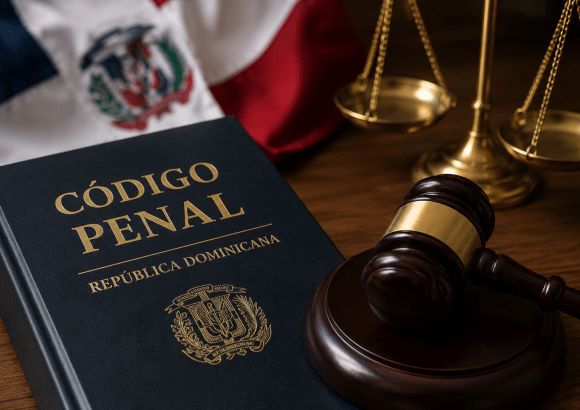
The Dominican Republic’s new Penal Code entered into force on Monday, August 3, marking one of the country’s most significant legal reforms in more than a century. The legislation became effective after the one-year transition period established by Law No. 74-25, which was promulgated by President Luis Abinader on August 3, 2025.
Although the country is now operating under the new criminal code, the most recent amendments approved by the National Congress are not yet legally enforceable. Those changes, which were promulgated by the Executive Branch in late July, must first be published in the Official Gazette (Gaceta Oficial) before they can take effect.
Recent Reforms Still Await Official Publication
The clarification was made by the Executive Branch’s legal adviser, Jorge Subero Isa, who explained that the version of the Penal Code enacted in 2025 is the one currently in force. The amendments approved afterward will only become mandatory once the legal deadlines established in Article 1 of the Dominican Civil Code begin to run following their official publication.
According to Subero Isa, the Official Gazette is still being prepared and will first be released in digital format before a printed edition becomes available.
He also noted that, under Article 1 of the Civil Code, laws are considered known in the National District the day after publication and, two days later, in the rest of the country’s provinces. The official added that the Executive Branch has already submitted legislation to Congress seeking to modernize that provision to reflect today’s digital publication practices.
A Historic Replacement for an 1884 Criminal Code
The new Penal Code replaces the criminal legislation that had governed the Dominican Republic since 1884, ending more than 140 years under a legal framework widely regarded by lawmakers as outdated for addressing modern forms of crime. The reform had been debated unsuccessfully for years before finally receiving congressional approval in 2025.
According to the text of Law No. 74-25, the legislation introduces a modern framework based on principles such as legality, proportionality, culpability, humanity, rehabilitation, and minimum criminal intervention. It also formally establishes criminal liability for legal entities under certain circumstances, an important change in Dominican criminal law.
New Crimes and Tougher Penalties
The new code significantly expands the range of criminal offenses recognized under Dominican law. Among the new crimes incorporated are femicide, contract killings (sicariato), enforced disappearance, cyberbullying, economic abuse, pyramid schemes, unregulated financial intermediation, self-kidnapping, obstruction of justice, false reporting, and crimes against humanity, among others. It also strengthens penalties for several violent and sexual offenses while allowing prison sentences of up to 40 years, or as much as 60 years when multiple serious crimes are committed.
The legislation also introduces post-sentence supervision measures in certain cases and expands the legal tools available to prosecutors and judges to investigate and prosecute organized crime and other complex criminal offenses.
Government Says the Reform Modernizes Criminal Justice
When promulgating Law No. 74-25 in August 2025, President Abinader described the legislation as a major modernization of the Dominican justice system, arguing that it would strengthen public security, improve protection for victims, and provide authorities with legal mechanisms better suited to addressing 21st-century crime.
More recently, after signing the latest congressional amendments, the Executive Branch announced the creation of a commission chaired by former Constitutional Court President Milton Ray Guevara to monitor the implementation of the new code and evaluate possible future reforms.
Despite ongoing public debate over some of its provisions, the government maintained that the original one-year implementation period established by Law 74-25 would not be extended. As a result, the 2025 version of the Penal Code is now fully in force, while the most recently approved amendments will only become applicable after their publication in the Official Gazette and the legal notification periods established by Dominican law have elapsed.