 31°C
31°C

Dominican Republic Gains Ground As Global Investment Flows Decline
Foreign direct investment has become a larger share of the Dominican Republic’s economy even as global capital flows have weakened, with the Central Bank pointing to stability, diversification and resilience as key factors supporting the country’s appeal to investors.


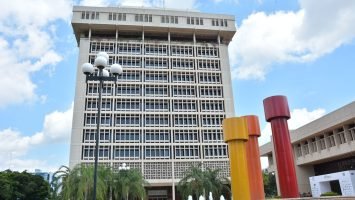
The Dominican Republic increased its ability to attract foreign direct investment (FDI) over the past decade despite a broader decline in international capital flows, according to an analysis by the Central Bank of the Dominican Republic (BCRD).
The study, prepared by Elisa Vilorio de Painter, examines how changes in global trade, investment and supply chains are altering the factors companies consider when deciding where to place capital. In addition to operating costs, the analysis highlights political and social stability, institutional strength, foreign-exchange market depth and economic resilience.
Dominican Republic Moves Against Global FDI Trend
Foreign direct investment has lost weight relative to the global economy in recent years. According to World Bank data cited by the BCRD, FDI fell from the equivalent of 3.6% of global GDP in 2015 to 2.5% in 2021 and 1.26% in 2025.
The decline has taken place as geopolitical tensions, trade fragmentation and greater uncertainty have made companies more cautious about international investment decisions.
The Dominican Republic has followed a different path. FDI as a share of the country’s GDP increased from 3.1% in 2015 to 3.53% in 2021 and 3.86% in 2025.
The BCRD considers this performance significant because it occurred during a period in which international capital flows were losing momentum, suggesting that the country has maintained its attractiveness as an investment destination.
Investment Is Becoming More Diversified
The increase in FDI has also been accompanied by a broader distribution of foreign capital across economic sectors.
Tourism remains one of the Dominican Republic’s largest recipients of foreign investment, accounting for approximately 22.3% of total FDI during 2020-2025 and 20.1% through the first half of 2026.
Energy has gained substantially more weight. Its share of total foreign investment increased from an average of 8% between 2010 and 2019 to 16.34% during 2020-2025, reaching 27.8% in the first half of 2026.
The BCRD identifies this sectoral diversification as an additional source of resilience because it reduces reliance on a single industry and allows foreign capital to respond to different sources of economic growth.
Exchange-Rate Stability Becomes More Important
For international investors, exchange-rate conditions can influence the expected return on an investment. The BCRD analysis notes that factors such as access to foreign currency, market depth, the ability to respond to external shocks and underlying macroeconomic strength are increasingly important alongside the level of the exchange rate itself.
During 2025 and 2026, several Latin American currencies appreciated against the U.S. dollar as financial conditions improved and investor perceptions of regional risk strengthened.
The Dominican peso also appreciated during this period, supported by strong foreign-currency inflows. During the first half of 2026, the country recorded US$8.746 billion in exports, US$6.716 billion in tourism revenues, US$6.219 billion in remittances and US$3.2765 billion in FDI.
Combined, those flows represented approximately US$2.8 billion more than during the same period of 2025, according to the BCRD analysis.
The peso had appreciated 7.6% through the end of August, while the Central Bank purchased US$415 million in the foreign-exchange market to strengthen international reserves and did not sell foreign currency in the spot market during the period described by the analysis.
Trade Tensions Add Pressure
The Dominican Republic’s investment performance is unfolding against a more complicated international trade environment.
Since July, the United States has applied a 12.5% tariff to certain categories of products from the Dominican Republic, citing concerns related to the country’s ability to ensure that specific imported goods are not produced using forced labor.
Textiles and apparel entering the United States under the CAFTA-DR trade agreement are exempt from the measure. The BCRD also notes that the increase is limited because a 10% tariff had already applied to other product categories since April 2025.
Despite these external pressures, exports from the Dominican Republic’s free trade zones increased 3.2% year over year during the first half of 2026.
Stability Is Becoming An Investment Factor
The BCRD analysis argues that the current international environment is changing the traditional geography of investment. Companies evaluating production locations are increasingly considering not only costs, but also whether a country can maintain stable economic and institutional conditions during periods of disruption.
For the Dominican Republic, the combination of social and political stability, institutional strength, foreign-exchange conditions and a more diversified investment base has helped support FDI at a time when its share of the global economy has declined.
The trend also highlights the importance of maintaining multiple sources of foreign capital. Tourism continues to play a major role, while the growing weight of energy and other sectors gives the Dominican economy a broader base for attracting international investment.
As geopolitical tensions and trade barriers continue to reshape global supply chains, the BCRD’s analysis suggests that the ability to remain stable and adapt to changing conditions is becoming an increasingly important part of the Dominican Republic’s investment proposition.