 24°C
24°C

Dominican Cement Exports Strengthen Industrial Trade
Cement is emerging as an increasingly relevant part of the Dominican Republic’s industrial export base, as national exports rose sharply during the first half of 2026 and the country maintained a leading position in regional exports of cement, lime and gypsum.


Dominican Republic cement exports are gaining importance within the country’s industrial trade, highlighting the capacity of local manufacturers to supply domestic demand while competing in international markets.
National exports reached US$3.34 billion between January and June 2026, an increase of 35.1% compared with the same period a year earlier, according to data from the Dominican Republic’s General Directorate of Customs (DGA) cited by the Center for Regional Sustainable Economic Strategies (CREES).
Within that performance, the chemicals and minerals sector generated US$295 million, equivalent to 8.8% of national exports. Cement and copper were among its leading products and together accounted for 4.8% of total national exports.
Cement Expands the Dominican Republic’s Industrial Export Base
The figures place cement among the manufactured products contributing to the Dominican Republic’s ability to generate foreign-exchange earnings beyond its better-known export commodities. For businesses and investors, the performance also illustrates the role of established domestic industries in expanding the country’s productive capacity.
The Dominican Association of Portland Cement Producers (ADOCEM) has pointed to the cement industry as an example of a manufacturing sector capable of operating at scale, meeting local demand and serving overseas markets at the same time.
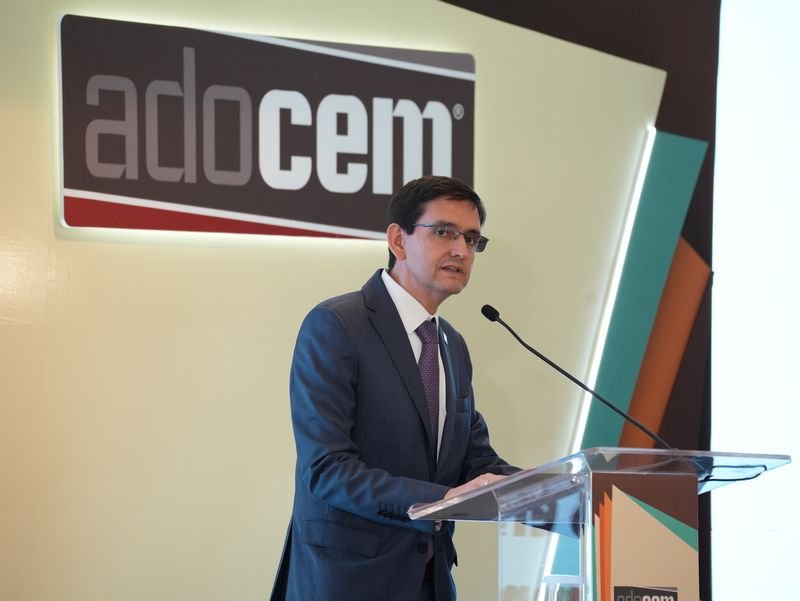
Jorge David Pérez, president of ADOCEM, said the industry’s export activity reflects more than the value of the cement shipped abroad. He linked each exported ton to investment, employment, domestic supply chains and industrial capacity developed within the country.
That combination is particularly relevant for the Dominican Republic as policymakers and businesses seek to broaden the country’s export base. A stronger domestic manufacturing sector can provide companies with an additional channel for international sales while reducing dependence on a relatively narrow group of export products.
Dominican Republic Ranks Among Regional Cement Export Leaders
The cement industry’s position becomes more significant when measured against the wider Latin American and Caribbean market.
A profile of the Dominican cement industry prepared by the Ministry of Industry, Commerce and MSMEs (MICM) indicates that Latin America and the Caribbean exported US$581.3 million in cement, lime and gypsum during 2025. The Dominican Republic accounted for 25.4% of those regional exports, ahead of Mexico and Guatemala, which represented 20.5% and 8.5%, respectively.
The figures place the Dominican Republic as the region’s leading exporter of cement, lime and gypsum, according to the MICM profile. For an economy located in the Caribbean, where access to external markets depends heavily on logistics and maritime trade, the position underscores the scale already reached by the local industry.
Industry Capacity Supports Both Domestic and Foreign Markets
The current export performance has been supported by years of investment aimed at expanding and modernizing production capacity. The MICM’s economic profile of the cement industry identifies manufacturing activity in cement, lime and gypsum as an important contributor to industrial value added, formal employment and investment.
The industry’s dual role is significant because cement is also a basic input for construction and infrastructure. Maintaining sufficient domestic production capacity therefore allows manufacturers to participate in export markets without abandoning their role as suppliers to the local economy.
ADOCEM argues that this experience offers a broader lesson for the Dominican Republic’s export strategy: increasing exports depends not only on finding new foreign markets, but also on strengthening the productive capacity required to manufacture competitive goods locally.
Diversification Remains a Challenge for Dominican Exports
CREES has warned that Dominican exports remain concentrated in a limited number of sectors. Its analysis identifies chemicals and minerals, along with other major export categories, as accounting for most of national export activity, reinforcing the need to expand the range of products and increase value added.
For the cement industry, that challenge is closely connected to maintaining conditions that support investment in technology, efficiency, innovation and sustainability. Greater productive capacity can translate into additional export opportunities when companies are able to compete on cost, quality and access to international markets.
Pérez said the discussion around exports should therefore include the country’s ability to produce domestically and the conditions required for industries to remain competitive. He also called attention to investment, legal certainty, competitiveness and the removal of obstacles that increase production costs.
The cement industry’s performance provides one example of how domestic manufacturing can contribute to export growth while generating economic activity inside the country. As the Dominican Republic seeks to diversify its exports, the sector’s continued expansion will depend on its ability to preserve productive capacity and compete effectively beyond the domestic market.