 22°C
22°C

Dominican Republic Prioritizes New US Tariff Agreement
President Luis Abinader said the Dominican Republic is working to secure a reciprocal tariff agreement with the United States while maintaining free-zone incentives and attracting higher-value investment.


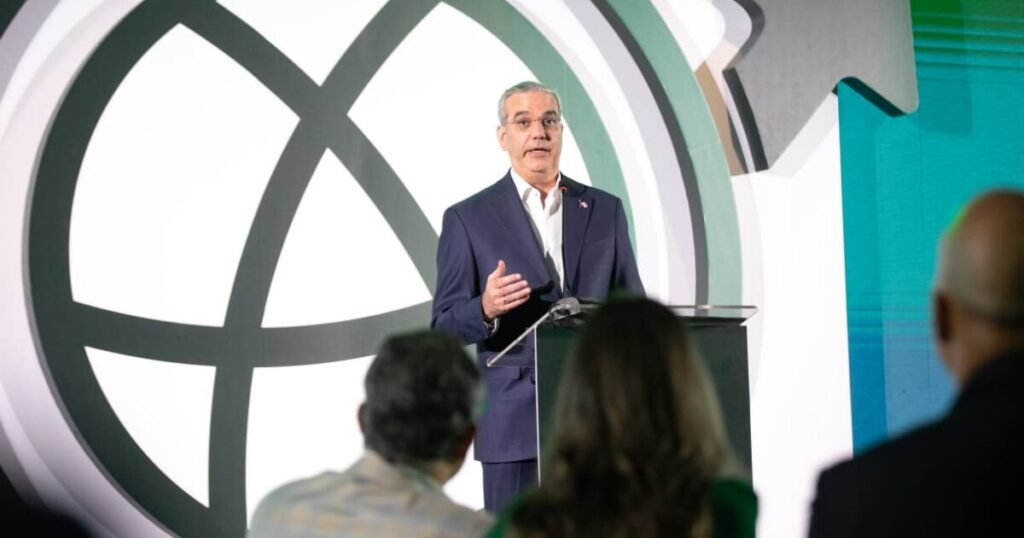
The Dominican Republic is making a potential reciprocal tariff agreement with the United States a government priority as it seeks to protect favorable trade conditions, maintain incentives for free-zone companies and attract new investment.
President Luis Abinader outlined the strategy Wednesday during the Second International Investment and Nearshoring Forum of the Dominican Republic, organized by Banco Promerica. He said negotiations are being led by Foreign Minister Víctor “Ito” Bisonó and should be completed as quickly as possible.
Abinader described his administration as pro-business, pro-free-zone and pro-industry, arguing that stable rules and investment conditions are essential as companies reconsider their global supply chains and manufacturing locations.
Free-Zone Incentives To Remain In Place
Abinader said the government has maintained the existing rules and incentives for free-zone companies and intends to keep them in place in the coming years. The sector is a major platform for export-oriented manufacturing and has become an important part of the country’s strategy to attract companies seeking locations closer to the United States.
The president acknowledged that free-zone operators face both longstanding challenges and new pressures arising from international conflicts and changes in the global economic and trade environment. He called for government, investors and industry to address those challenges jointly.
Government Seeks Faster Investment Approvals
Reducing the time required to establish new investments is another priority. Abinader said his administration is working to cut the number of procedures and the time investors must spend obtaining permits.
He cited an example discussed during the forum in which an investor reported needing 12 days to obtain permits in the Dominican Republic, compared with more than 100 days in Mexico. While the president viewed the Dominican timeline favorably, he said 12 days was still too long and that the government should continue reducing administrative delays.
Faster approvals could become increasingly relevant as the country competes for companies seeking to relocate parts of their supply chains closer to major consumer markets. Nearshoring can give the Dominican Republic an opportunity to attract manufacturers that value proximity, logistics and access to regional markets.
Focus Shifts Toward Higher-Value Manufacturing
The government is also seeking to move beyond traditional manufacturing and attract industries with greater technological and economic value. Abinader highlighted opportunities in technology, medical-device manufacturing and the potential assembly of semiconductors.
Developing those industries would require a larger pool of specialized workers. The president pointed to the expansion of the National Institute for Technical and Professional Training (INFOTEP), which he said has grown from eight schools in 2020 to 64 centers nationwide.
He also highlighted university education, technical high schools and programs related to digital education, cybersecurity and artificial intelligence, including training supported by the Technological Institute of the Americas (ITLA).
Infrastructure And Talent Remain Key To Investment
Infrastructure was another element of the government’s investment strategy. Abinader cited the Santiago monorail, whose route reaches the city’s free-zone area, as an example of infrastructure designed to improve workers’ access to industrial centers.
He also pointed to the completion of Avenida Ecológica and its connection with the Caucedo port, emphasizing the role of transportation infrastructure in strengthening the country’s competitiveness. The government, he said, will continue prioritizing capital investments according to available budgetary resources.
Business executives participating in the forum likewise emphasized the importance of skilled workers and stronger domestic supply chains. Representatives of Eaton, Pacon Manufacturing Corporation, Vantive and Greater Goods discussed opportunities in medical devices and electronics manufacturing, including the possibility of developing local suppliers for components that are currently imported.
Abinader said the government ultimately wants to double the investment currently present in the country by 2036. Achieving that goal will depend on maintaining predictable rules, improving infrastructure, expanding technical training and creating conditions that allow higher-value industries to establish operations in the Dominican Republic.