 27°C
27°C

Free Trade Zone Park Operators in the Dominican Republic: A Complete Guide
Businesses considering manufacturing, logistics, or export-oriented operations in the Dominican Republic often focus on tax incentives and labor availability. Equally important is selecting the right free trade zone park operator. These companies develop, manage, and maintain the industrial parks where free zone businesses operate, providing the infrastructure and services that can significantly influence operational efficiency, expansion opportunities, and long-term investment success.


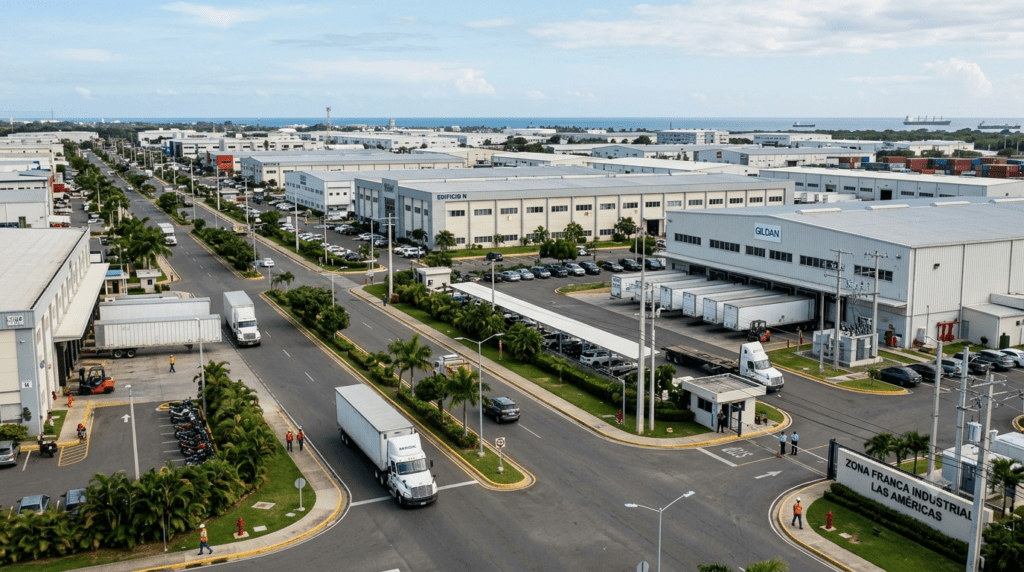
The Dominican Republic has one of the largest and most established free zone ecosystems in the Americas. Operating under Law 8-90, the country’s free trade zone regime supports hundreds of export-oriented companies across industries including medical devices, electronics, tobacco, textiles, business process outsourcing (BPO), and logistics.
While government institutions regulate the sector, most businesses establish their operations inside industrial parks managed by specialized free trade zone park operators. These operators provide the physical infrastructure and day-to-day services that allow manufacturers and service providers to focus on production rather than facility management.
What Is a Free Trade Zone Park Operator?
A free trade zone park operator is the organization responsible for developing, administering, and maintaining an authorized free zone park. Rather than manufacturing products themselves, operators lease industrial buildings, warehouses, office space, or land to companies approved to operate under the Dominican Republic’s free zone regime.
Most operators provide:
- Industrial buildings and build-to-suit facilities
- Land for custom construction
- Utilities and infrastructure
- Internal road networks
- Security services
- Customs coordination
- Property maintenance
- Waste management
- Business support services
The objective is to provide investors with a ready-to-operate industrial environment that minimizes startup time and operational complexity.
How Park Operators Fit Into the Free Zone System
Several organizations play distinct roles within the Dominican free zone ecosystem.
| Organization | Primary Role |
|---|---|
| National Council of Free Export Zones (CNZFE) | Approves parks and free zone companies |
| General Directorate of Customs (DGA) | Administers customs procedures |
| Free Zone Park Operator | Develops and manages industrial parks |
| Tenant Company | Manufactures goods or provides export services |
Park operators do not grant tax incentives or regulatory approvals. Instead, they provide the environment in which approved companies can conduct their operations efficiently.
Private and Public Operators
The majority of Dominican free trade zone parks are privately owned and operated, although public and mixed-ownership parks also exist. Private operators account for roughly three-quarters of industrial parks, reflecting the country’s long-standing model of private investment in export infrastructure. Occupancy rates have remained high in many established parks, making expansion and new developments increasingly important.
Services Commonly Provided
Although services differ between operators, most offer a similar core package.
Industrial Infrastructure
- Factory buildings
- Warehouse space
- Office facilities
- Utility connections
- Road access
- Parking areas
Operational Support
- 24-hour security
- Maintenance
- Waste collection
- Landscaping
- Fire protection systems
- Facility management
Business Services
- Support during project setup
- Coordination with customs authorities
- Recruitment assistance in some parks
- Expansion planning
- Utility management
Major Free Trade Zone Park Operators
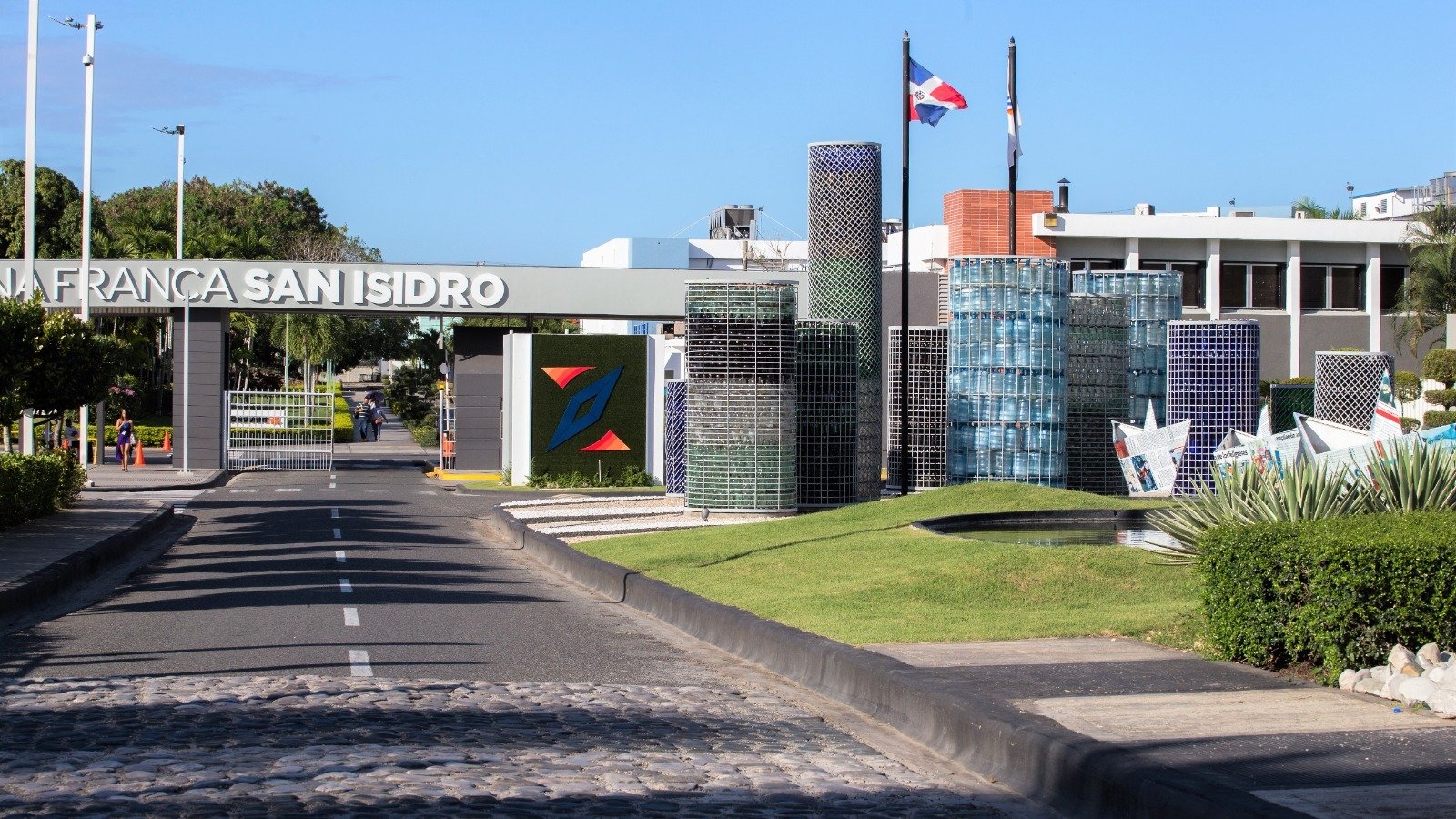
The Dominican Republic has developed one of the largest and most diversified free trade zone (FTZ) ecosystems in Latin America and the Caribbean, making it a preferred destination for export-oriented manufacturing, logistics, medical devices, apparel, tobacco, electronics, and business services. The country’s free zone regime, established under Law 8-90, now includes more than 90 industrial parks and over 800 operating companies, according to recent OECD data.
The sector is dominated by a mix of private, nonprofit, and public operators. Below are the country’s most influential free trade zone park operators.
Zona Franca Romana (ZFR)
Founded in 1969, Zona Franca Romana is the oldest free trade zone in the Dominican Republic and remains one of its largest private operators. Located in La Romana, it hosts multinational manufacturers in sectors including medical devices, tobacco, consumer goods, and business services. Its strategic proximity to ports and international airports has made it a benchmark for industrial park development throughout the country.
Santiago Free Zone Corporation (Corporación Zona Franca Santiago)
The Santiago Industrial Free Zone is widely recognized as the country’s largest industrial park by employment. Operated by the nonprofit Corporación Zona Franca Santiago, it accommodates hundreds of companies specializing in electronics, tobacco products, footwear, textiles, and increasingly advanced manufacturing. The park has played a central role in the economic growth of the Cibao region for more than four decades.
Zona Franca San Isidro (ZFSI)
Located near Santo Domingo, Zona Franca San Isidro is one of the Dominican Republic’s most diversified industrial parks. Since its establishment in 1986, it has attracted manufacturers, aerospace suppliers, medical device companies, logistics firms, and service providers thanks to its proximity to Las Américas International Airport and major seaports.
Zona Franca Las Américas (ZFLA)
Las Américas Free Zone is another major private operator serving manufacturers and export-oriented businesses. Situated close to Caucedo Port and Las Américas International Airport, the park focuses on industrial manufacturing, logistics, and value-added services, benefiting from one of the country’s strongest transportation networks.
PIISA Industrial Park
PIISA has become one of the Dominican Republic’s leading industrial parks for multinational companies, particularly in medical devices, electronics, and advanced manufacturing. Located near the Port of Haina, the park is home to several global manufacturers and offers high-quality industrial infrastructure designed for export operations.
Caribbean Industrial Park (CIP)
Based in Santiago de los Caballeros, Caribbean Industrial Park has positioned itself as a modern industrial platform focused on manufacturing, technology, and service companies. Its location provides access to a skilled labor force and efficient logistics connections across the northern region of the country.
Punta Cana Free Trade Zone
Although newer than the country’s traditional manufacturing parks, Punta Cana Free Trade Zone has emerged as an attractive destination for logistics, business services, light manufacturing, and companies seeking proximity to Punta Cana International Airport and the region’s expanding tourism economy.
How Companies Choose a Park Operator
Selecting a park involves more than comparing rental costs. Investors typically evaluate factors such as:
- Distance to ports and airports
- Availability of skilled labor
- Existing industry clusters
- Utility reliability
- Expansion capacity
- Building availability
- Transportation infrastructure
- Security standards
- Environmental services
- Operator experience
Medical device manufacturers, for example, often prioritize parks with an established healthcare manufacturing ecosystem, while logistics companies may place greater emphasis on proximity to seaports and airports.
Location Matters
Industrial parks are distributed across much of the country, with significant concentrations around:
- Santo Domingo
- Santiago
- San Pedro de Macorís
- La Romana
- Puerto Plata
- La Vega
- San Cristóbal
Different regions offer varying combinations of labor availability, transportation infrastructure, supplier networks, and proximity to export gateways.
Industry Specialization
Although most parks accept multiple industries, many have developed expertise in particular sectors over time.
| Industry | Common Park Focus |
|---|---|
| Medical devices | Clean manufacturing facilities |
| Electronics | Advanced assembly operations |
| Textiles and apparel | Large-scale manufacturing |
| Tobacco products | Cigar manufacturing clusters |
| BPO and shared services | Office infrastructure |
| Logistics | Warehouse and distribution facilities |
Questions Investors Should Ask
Before signing a lease or development agreement, companies should clarify:
- What industrial space is currently available?
- Can facilities be customized?
- What utilities are included?
- What are the expansion options?
- How quickly can operations begin?
- Which industries already operate in the park?
- What security and maintenance services are provided?
- How are customs procedures supported?
The Role of Park Operators in Nearshoring
As global manufacturers increasingly diversify supply chains closer to North American markets, Dominican free trade zone operators have become important facilitators of nearshoring. Modern industrial parks combine export incentives with ready-built infrastructure, helping companies shorten implementation timelines and reduce capital requirements compared with developing standalone industrial facilities.
Final Considerations
Free trade zone park operators are central to the Dominican Republic’s export manufacturing ecosystem. While tax incentives and legal frameworks attract investment, the quality of industrial infrastructure, operational support, and strategic location provided by park operators often determines how efficiently a company can establish and expand its operations. Careful evaluation of an operator’s experience, facilities, and long-term development plans is therefore an essential part of any investment decision.