 25°C
25°C

Dominican Republic Foreign Investment Trends in 2026: Where Capital Is Flowing
Foreign investment in the Dominican Republic has entered a period of sustained expansion and increasing diversification. Annual foreign direct investment (FDI) reached a record US$5.03 billion in 2025, up 11.3% from the previous year, while preliminary inflows reached US$3.28 billion in the first half of 2026. The latest figures show that tourism remains important, but energy, real estate, mining, manufacturing and emerging technology-related activities are becoming increasingly significant, pointing toward an investment environment shaped by infrastructure needs, nearshoring, energy transition and economic diversification.


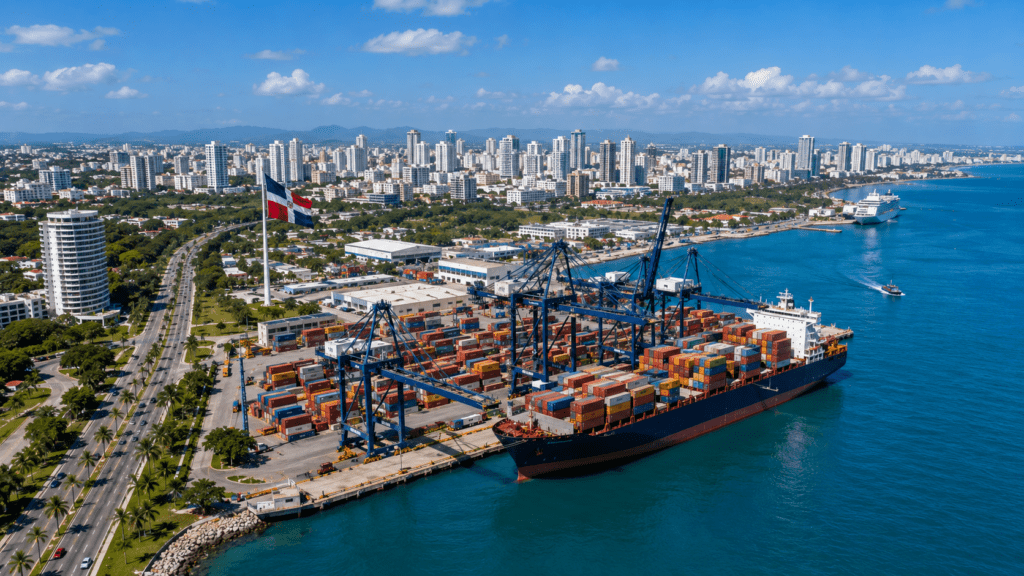
The Dominican Republic’s foreign investment story has changed substantially since the pandemic-era decline in global capital flows. After receiving approximately US$2.56 billion in foreign direct investment in 2020, the country moved above US$4 billion annually from 2022 onward and reached a record US$5.03 billion in 2025. Preliminary data for the first half of 2026 show that investment momentum has continued rather than reversing after the 2025 record.
The more important change, however, is not only the amount of capital entering the country. The sectors receiving investment, the types of projects being promoted and the strategic priorities identified by investment authorities indicate a gradual shift toward a broader economic model. Tourism remains a major destination, but energy, mining, manufacturing, logistics, technology, semiconductors, biomedicine and other higher-value activities are increasingly part of the country’s investment strategy.
FDI Has Reached a New High
The Dominican Republic’s FDI inflows have followed a clear upward trajectory during the first half of the 2020s. Annual inflows rose from US$2.56 billion in 2020 to US$3.20 billion in 2021, US$4.10 billion in 2022, US$4.39 billion in 2023 and US$4.52 billion in 2024. In 2025, the total increased to US$5.03 billion, an 11.3% year-over-year increase.
| Year | FDI inflows | Trend |
|---|---|---|
| 2020 | US$2.56 billion | Lowest point in the recent period |
| 2021 | US$3.20 billion | Strong recovery |
| 2022 | US$4.10 billion | First year above US$4 billion |
| 2023 | US$4.39 billion | Further increase |
| 2024 | US$4.52 billion | Third consecutive annual record |
| 2025 | US$5.03 billion | New record, +11.3% |
The progression indicates that the increase is not simply a post-pandemic rebound. The Dominican Republic has continued attracting higher levels of foreign capital after the initial recovery period, suggesting that investors are responding to longer-term economic and structural factors.
ProDominicana reports that the country had more than 700 companies with foreign investment installed by 2025 and an FDI stock exceeding US$60 billion. This accumulated stock is important because it demonstrates that the country’s investment ecosystem is increasingly based on an established international business presence rather than a succession of isolated projects.
2026 Is Extending the Upward Trend
Preliminary Central Bank data show that FDI reached US$3.28 billion during January-June 2026, an increase of US$233.4 million, or 7.7%, compared with the same period in 2025. Approximately US$2.19 billion consisted of new capital contributions, representing roughly two-thirds of the six-month total.
The quarterly distribution also indicates continued momentum. FDI reached US$1.60 billion during April-June alone. Based on the available data, the Central Bank expects total FDI for 2026 to exceed US$5.3 billion, although that figure remains a projection rather than a completed annual result.
The broader external sector has also strengthened. During the first half of 2026, tourism revenues reached US$6.72 billion, total exports reached US$8.75 billion and free-zone exports reached US$4.36 billion. The combination of FDI, tourism earnings, remittances and exports generated more than US$26.5 billion in foreign-exchange inflows during the period, supporting external and exchange-rate stability.
Energy Is Challenging Tourism for the Top Investment Position
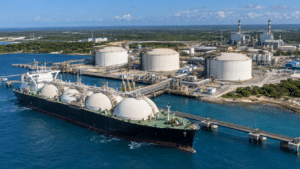
One of the clearest changes in the investment profile is the growing importance of energy. During the first half of 2026, energy accounted for 27.8% of FDI inflows, making it the largest destination. Tourism followed with 20.1%, while real estate and mining each represented 12.4%.
This is significant because tourism has traditionally dominated the international investment narrative surrounding the Dominican Republic. Energy’s rise indicates that infrastructure requirements and the transformation of the electricity system are becoming major investment drivers in their own right.
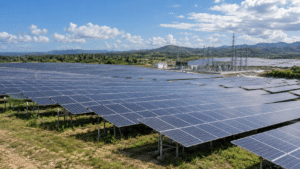
ProDominicana identifies solar, wind, hydropower, biomass, clean technologies and infrastructure for electricity generation and distribution as investment opportunities. The trend therefore encompasses both conventional energy infrastructure and the broader transition toward a more diversified energy matrix.
For the Dominican economy, energy investment has implications beyond the energy sector. Reliable and scalable electricity infrastructure supports manufacturing, tourism, logistics, commercial activity and urban development. As a result, energy investment can reinforce growth across several other investment categories.
Tourism Remains a Core Investment Engine
The rise of energy does not mean that tourism is losing its strategic importance. Tourism remained the second-largest destination for FDI during the first half of 2026, while visitor arrivals and tourism revenues continued to grow strongly.
The Central Bank reported more than 6.5 million visitors during the first half of 2026, while tourism revenues increased 15.3% year over year to US$6.72 billion. The continued expansion of visitor demand supports investment in hotels, resorts, residential tourism, transportation, entertainment, food services and related infrastructure.
The nature of tourism investment is also evolving. ProDominicana promotes opportunities in hotels and resorts as well as ecotourism, adventure tourism, cultural tourism and health tourism. This suggests that future investment is likely to include more specialized tourism products alongside the country’s established resort model.
Real Estate Remains Closely Linked to Tourism
Real estate represented 12.4% of FDI during the first half of 2026. Its importance reflects the relationship between international tourism, construction, residential development and commercial activity.
Tourism growth can create demand for hotels and resorts, but it can also stimulate investment in residential properties, mixed-use developments, commercial facilities and supporting infrastructure. This makes real estate an important secondary beneficiary of the country’s tourism expansion.
The sector’s future trajectory will nevertheless depend on the balance between genuine underlying demand and new supply. The strongest investment opportunities are likely to be those supported by population growth, tourism activity, infrastructure and commercial demand rather than property speculation alone.
Mining Is Becoming More Important Again
Mining accounted for 12.4% of FDI in the first half of 2026, placing it alongside real estagold exportste among the country’s largest investment destinations. The Central Bank attributed the sector’s performance partly to increased production and favorable international prices.
The broader economic data reinforce this trend. Gold exports reached US$1.59 billion during the first half of 2026, an increase of 68.8% compared with the same period of 2025. Higher production and international gold prices contributed to the increase.
Mining is therefore an example of how FDI trends can be influenced by both domestic investment conditions and global commodity markets. The sector can attract substantial capital when production opportunities coincide with favorable international prices, but it also carries greater exposure to commodity cycles than sectors such as tourism or technology.
Manufacturing and Free Zones Are Strengthening the Export Base
Another important trend is the continuing development of the Dominican Republic as an export-manufacturing platform. Free-zone exports reached US$4.36 billion in the first half of 2026, up 3.2% from the same period of 2025.
The composition of free-zone exports is particularly revealing. Medical and pharmaceutical products, tobacco and derivatives, and electrical and electronic products were among the leading categories during the period. This indicates that the country’s manufacturing base extends beyond traditional low-cost production into more specialized industries.
The trend is closely connected with nearshoring. Companies seeking to reduce supply-chain distances or diversify production away from highly concentrated manufacturing locations can consider the Dominican Republic because of its geographic position, existing free-zone infrastructure and access to major markets.
Manufacturing also creates opportunities for supporting sectors such as logistics, packaging, warehousing, transportation, industrial real estate, business services and technology. The result is an investment ecosystem rather than a single isolated manufacturing opportunity.
The Investor Base Remains Internationally Diversified
The Dominican Republic’s foreign investment has historically drawn significant capital from the United States, Spain, Canada, Mexico and other European and Latin American economies. The United States has been a particularly important source of investment, while Spain has also played a major role, especially in tourism and related activities.
The geographic distribution matters because it shows that the country is not dependent on one source of international capital. Investors from North America, Europe and Latin America participate in different parts of the economy, creating a broad network of commercial relationships.
The underlying trend is more important than annual changes in the ranking of individual countries. Large projects or corporate transactions can cause significant fluctuations in a country’s yearly contribution, so sustained participation across multiple years provides a more useful indication of an established investment relationship.
New Investment Is Moving Toward Strategic Industries
One of the most important future trends is the effort to attract investment into sectors that can broaden the productive base. ProDominicana currently identifies technology, manufacturing, semiconductors, agriculture, biomedicine, renewable energy, tourism and real estate among its investment sectors.
Several of these areas represent a step beyond the Dominican Republic’s traditional investment profile. Technology can expand digital services and higher-value business operations. Semiconductors could connect the country with strategic global electronics supply chains. Biomedicine builds on existing medical-device and pharmaceutical manufacturing capabilities, while modern agriculture can increase the value generated by the country’s agricultural base.
These sectors should not all be treated as equally mature. Tourism, real estate and conventional manufacturing already have substantial investment ecosystems, while semiconductors and some advanced technology activities are emerging opportunities. Their importance lies partly in the possibility of attracting a different type of investment over the longer term.
Semiconductors Signal a New Investment Ambition
Semiconductors are particularly notable because they represent an attempt to position the Dominican Republic within a strategically important global industry. ProDominicana is promoting opportunities in chip assembly, integrated-circuit design, semiconductor materials and research and development.
The opportunity is still emerging and should not be confused with the scale of established semiconductor hubs in Asia, North America or Europe. Nevertheless, the sector indicates a shift in investment policy toward activities that can potentially generate higher technological content and greater integration into global supply chains.
The success of this strategy will depend on factors such as specialized skills, reliable electricity, infrastructure, international partnerships and the country’s ability to develop supporting industrial capabilities.
Technology and Biomedicine Could Raise the Value of Future FDI
Technology is another area in which the investment story is shifting from traditional services toward potentially higher-value activities. ProDominicana identifies software, mobile applications, data centers, artificial intelligence and fintech as opportunities.
Biomedicine is supported by a more established industrial base. Dominican free zones already produce and export medical and pharmaceutical products, making the sector a useful bridge between existing manufacturing capabilities and more sophisticated healthcare-related activities.
These sectors are strategically important because their economic contribution can extend beyond the capital invested. Technology and advanced manufacturing can increase skills, productivity, intellectual property and export capabilities if the necessary domestic capabilities develop alongside foreign investment.
Investment Projects Are Becoming More Numerous and More Diverse
The number of projects supported by ProDominicana provides another indication of the changing investment environment. During 2025, the agency reported that it helped attract 83 new investment projects and facilitated the expansion of another 64 foreign-investment projects.
That distinction is important. Attracting new investors expands the country’s international business base, while helping existing foreign companies expand can produce additional capital expenditure without requiring a completely new investor to enter the market.
ProDominicana also reported 1,472 investor and potential-investor assistance activities during 2025, reflecting an increasingly active investment-promotion effort. These activities included technical assistance, investment missions, participation in international events and support for the installation and expansion of projects.
Nearshoring Could Shape the Next Investment Cycle
Nearshoring is likely to remain one of the most important structural themes for Dominican investment. The country is geographically close to the United States, has an established export-manufacturing sector and participates in trade arrangements that provide preferential access to major markets.
ProDominicana emphasizes the country’s location between North America, Europe and Latin America and highlights access to more than 1.2 billion consumers through its trade agreements. This geographic and commercial position gives the Dominican Republic an opportunity to capture investment from companies reassessing where they manufacture, store and distribute products.
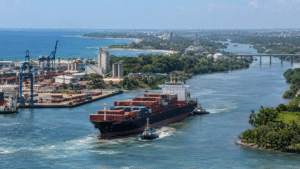
The opportunity extends beyond factories. Nearshoring can increase demand for industrial parks, logistics centers, ports, warehouses, transportation services, professional services and technology. As manufacturing supply chains become more complex, the supporting investment ecosystem can become almost as important as the manufacturing projects themselves.
Energy, Infrastructure and Logistics Are Becoming Investment Enablers
A common feature of the emerging investment trends is that infrastructure is increasingly becoming an investment opportunity and an investment prerequisite at the same time.
Energy projects can directly attract foreign capital, but reliable electricity also determines whether manufacturing, data centers, hotels and other capital-intensive businesses can expand. Similarly, logistics investment can generate returns directly while improving the competitiveness of exporters and manufacturers.
This creates a reinforcing cycle. New factories increase demand for logistics and energy, while better infrastructure makes the country more attractive to additional foreign investors. The long-term investment trend will therefore depend partly on whether infrastructure capacity expands quickly enough to support the next wave of private investment.
The Investment Environment Is Becoming More Competitive
The Dominican Republic is attracting record amounts of FDI, but the international environment is becoming more competitive. The Central Bank has emphasized that global investment flows are recovering unevenly while countries compete more aggressively for strategic projects.
Investors are increasingly evaluating destinations not only by labor costs or market size but also by supply-chain resilience, geopolitical exposure, infrastructure, energy security, access to major markets and the availability of specialized workers.
This shift can benefit the Dominican Republic because several of its structural advantages align with these criteria. Its location, tourism infrastructure, export manufacturing base and access to the United States create a foundation for additional investment. At the same time, maintaining competitiveness will require continued improvements in infrastructure, productivity, skills and the investment environment.
What Could Define the Next Stage of Foreign Investment?
Several trends are likely to determine the direction of FDI over the coming years.

- Continued tourism expansion: tourism is likely to remain one of the country’s largest investment engines, particularly as the market diversifies into new destinations and specialized experiences.
- Energy transformation: electricity generation, renewable energy and infrastructure are likely to remain major destinations for capital.
- Nearshoring: export manufacturing and logistics can benefit if companies continue diversifying production and supply chains closer to the U.S. market.
- Higher-value manufacturing: medical devices, pharmaceuticals, electronics and other specialized products can gradually increase the technological content of the country’s export base.
- Digital investment: technology, artificial intelligence, fintech, data infrastructure and digital services can create new channels for foreign capital.
- Economic diversification: semiconductors, biomedicine and modern agroindustry could broaden the investment base if supporting skills and infrastructure develop.
These trends are interconnected. Tourism creates demand for energy and real estate; manufacturing creates demand for logistics; technology can improve manufacturing productivity; and energy infrastructure supports almost every other sector.
From Attracting Capital to Attracting Higher-Value Capital
The Dominican Republic’s investment challenge is gradually changing. The key question is no longer simply whether the country can attract foreign capital. The record FDI figures suggest that it can. The more important question is what type of capital will define the next phase of investment.
Tourism, real estate and mining can continue generating substantial inflows, but technology-intensive manufacturing, renewable energy, logistics, digital services and advanced industries could have a different long-term impact on productivity and economic diversification.
The country’s recent investment strategy reflects this transition. ProDominicana is actively promoting both established sectors and emerging industries, while the growth of free-zone exports demonstrates that the existing industrial base can support increasingly specialized production.
The future investment landscape is therefore likely to be broader than the one that dominated the Dominican Republic’s international image a decade ago. Tourism will remain important, but it increasingly forms part of a wider ecosystem involving energy, infrastructure, manufacturing, logistics, technology and export-oriented services.
Frequently Asked Questions
Is foreign investment increasing in the Dominican Republic?
Yes. FDI reached a record US$5.03 billion in 2025, up 11.3% from 2024. Preliminary data show another 7.7% increase during the first half of 2026 compared with the same period of 2025.
Which sectors are attracting the most foreign investment?
Energy and tourism are currently among the largest destinations. During the first half of 2026, energy accounted for 27.8% of FDI, tourism 20.1%, and real estate and mining 12.4% each.
Are new investment sectors emerging?
Yes. ProDominicana is promoting technology, semiconductors, biomedicine, renewable energy, modern agriculture and advanced manufacturing alongside established sectors such as tourism and real estate.
Why is manufacturing becoming more important?
The Dominican Republic has an established free-zone manufacturing base and strong links to international markets. Nearshoring and supply-chain diversification are creating additional opportunities, particularly in medical devices, pharmaceuticals, electronics and other specialized products.
Will tourism remain important to foreign investment?
Tourism is likely to remain a major investment sector. Visitor arrivals and tourism revenues continued to grow strongly in the first half of 2026, supporting continued demand for hotels, real estate, infrastructure and related services.
What is the outlook for FDI in 2026?
The Central Bank expects FDI to exceed US$5.3 billion in 2026. This is a forecast rather than a final result, but the first-half data already show that investment inflows remain above the comparable 2025 level.