 25°C
25°C

Free Trade Zones vs Outside the Free Zone in the Dominican Republic
Choosing between operating inside a Dominican Republic free trade zone and establishing a business under the regular domestic regime is fundamentally a question of business model, not simply tax rates. Free zones can provide extensive tax and customs exemptions, export-oriented infrastructure, and a specialized regulatory framework, while companies operating outside the regime generally have greater flexibility to serve the Dominican market directly and avoid the additional authorization and customs controls associated with free-zone status. The right structure depends on where customers are located, how heavily the business relies on imported inputs, how much of its output will be exported, and whether the value of the incentives outweighs the additional compliance requirements.


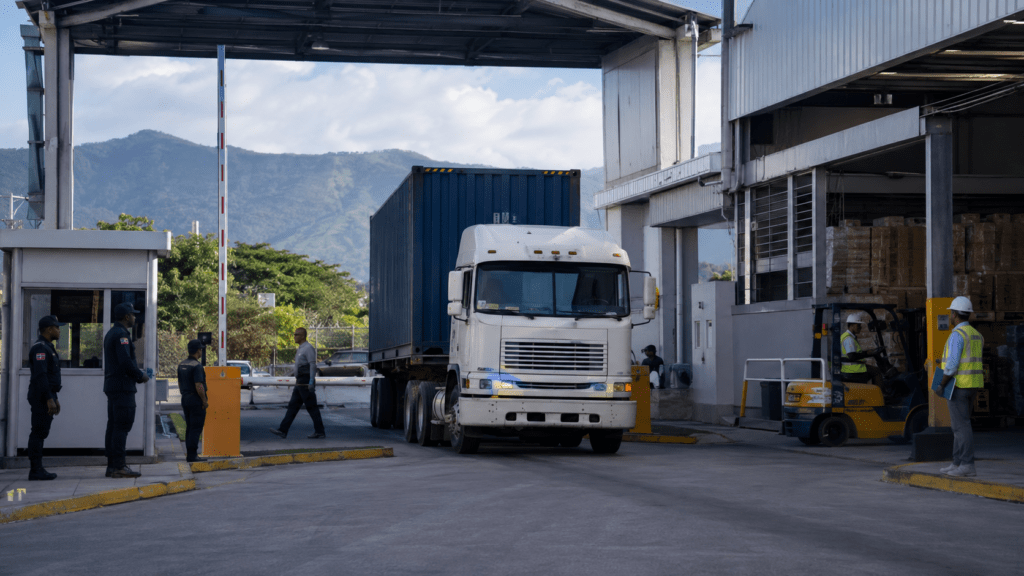
For an international company evaluating the Dominican Republic as a manufacturing, logistics, technology, services, or export base, one of the most important structural decisions is whether to operate under the free-zone regime or under the country’s ordinary commercial and tax rules. The distinction can materially affect taxation, customs treatment, operating costs, access to incentives, infrastructure, and the way goods and services can move between the company and the Dominican domestic market.
Dominican free zones are governed principally by Law 8-90 on the Promotion of Free Zones. The regime is designed for companies whose production or services are oriented toward external markets and places qualifying operations under special customs and fiscal controls. The ordinary regime, by contrast, is the standard framework for companies conducting business in the Dominican customs territory without the specific benefits and restrictions of free-zone status.
The choice should therefore not be reduced to a simple comparison between a tax-exempt company and a taxable company. A free-zone operation can be highly attractive when exports and imported inputs represent a large part of the business model, but a domestic company may be more practical when most customers are in the Dominican Republic, when the business needs unrestricted access to the local market, or when the administrative requirements of the special regime would provide little economic benefit.
Free Zone vs. Regular Operation: The Main Difference
| Factor | Free-Zone Operation | Operation Outside the Free Zone |
|---|---|---|
| Tax framework | Broad exemptions are available under Law 8-90 for qualifying activities. | Subject generally to the ordinary Dominican tax system. |
| Corporate income tax | Qualifying free-zone companies benefit from the statutory income-tax exemption. | Corporate income tax generally applies to taxable net income. |
| Imported inputs | Qualifying raw materials, equipment and other inputs can benefit from customs and import-tax exemptions. | Ordinary customs and tax rules generally apply, subject to other available regimes or exemptions. |
| ITBIS | Qualifying free-zone operations have access to ITBIS exemptions under the special regime, subject to the applicable procedures. | The ordinary ITBIS system applies to taxable transactions. |
| Exports | Designed specifically for export-oriented production and services, with special customs treatment. | Exports remain possible, but the company does not automatically receive the full free-zone package of incentives. |
| Domestic-market sales | Possible under specific rules and authorizations, generally with the corresponding taxes and duties. | Direct access to the Dominican market is normally unrestricted by free-zone authorization rules. |
| Approval | Requires authorization under the free-zone regime, including CNZFE procedures. | Requires ordinary business, tax, labor, environmental and sector-specific registrations and permits, as applicable. |
| Customs control | Enhanced customs controls apply to the free-zone area and its merchandise. | Ordinary customs controls apply to imports and exports. |
| Infrastructure | Companies can operate in specialized public or private free-zone parks with shared infrastructure and services. | The company normally selects and develops its own premises or uses ordinary commercial or industrial facilities. |
The distinction is particularly important because the Dominican customs framework treats merchandise entering a free zone differently from merchandise entering the ordinary customs territory. Under the General Customs Law, merchandise introduced into a free zone is treated, for import duties and taxes, as though it were outside the customs territory while it remains under the regime. The same legislation provides for customs control over the boundaries, movement of merchandise, and use of goods benefiting from the regime.
How the Free-Zone Tax Advantage Works
The principal economic attraction of the free-zone regime is the breadth of its statutory exemptions. The National Council of Free Export Zones, known as the CNZFE, and the Dominican Tax Administration, known as the DGII, identify Law 8-90 as providing qualifying free-zone companies with exemptions covering income tax and a range of customs, consumption, municipal and other taxes associated with qualifying operations.
Among the principal benefits are exemption from corporate income tax, import duties and related charges on qualifying raw materials, machinery, equipment and construction materials, as well as exemptions associated with ITBIS and certain taxes on assets, municipal taxes and corporate formation or capital increases. The precise application depends on the transaction and the company’s status within the regime, so the exemption should not be treated as a blanket waiver of every tax a company might encounter.
This distinction matters in practice. A company may have a highly favorable tax position for its qualifying free-zone activity while still having reporting requirements and tax obligations associated with particular transactions. Domestic-market sales, for example, receive different treatment from exports and can trigger duties and taxes.
Outside the free-zone regime, a Dominican company generally falls under the ordinary tax system. The standard corporate income-tax rate is 27% for legal entities, although tax legislation can create special rules for particular taxpayers or periods. In addition, the ordinary system includes ITBIS and other taxes depending on the company’s activities, transactions and assets.
For companies with substantial taxable profits, the difference between a special free-zone tax structure and ordinary corporate taxation can be economically significant. For a company with modest margins, however, the tax benefit may be less decisive, particularly if the business does not make extensive use of duty-free imported inputs or does not generate significant export revenue.
Customs and Imported Inputs
Customs treatment is one of the strongest reasons manufacturers and export-oriented companies consider free zones. Under Law 8-90, qualifying free-zone operations can import raw materials, equipment, construction materials and other authorized items without the import duties and related charges that would otherwise apply.
This can materially change the economics of a manufacturing project. Consider a hypothetical company that imports specialized components, performs assembly in the Dominican Republic and exports the finished products. If the company operates under the qualifying free-zone regime, the customs treatment of those imported inputs can reduce the amount of capital tied up in duties and taxes and improve the predictability of the production cost.
An ordinary company can also import machinery and inputs, but it generally has to work within the normal customs and tax framework unless another specific incentive or customs regime applies. Its costs therefore depend more directly on the applicable tariff classification, taxes, exemptions and trade arrangements associated with each import.
The free-zone advantage comes with greater control requirements. Dominican customs legislation provides for customs oversight of free-zone boundaries, the use and destination of merchandise, and inspections based on risk-management methods. Free-zone companies therefore need accurate inventories, documentation and internal controls capable of demonstrating what enters, remains within, and leaves the regime.
Exporting From a Free Zone vs. Exporting From a Domestic Company
A company does not have to be located in a free zone to export from the Dominican Republic. The key difference is that a free-zone company receives a package of incentives specifically designed around export-oriented activity, whereas an ordinary company exports under the general customs and tax framework unless it qualifies for another special regime.
For an export manufacturer, the free-zone structure can therefore align the tax and customs treatment with the company’s commercial model. The regime is especially relevant when a large percentage of production is destined for customers outside the Dominican Republic and imported materials represent a meaningful share of the cost base.
The distinction becomes more important when the company wants to sell locally. Under Law 8-90, a movement of goods from a free zone into the Dominican customs territory is treated as an import into the domestic territory. The free-zone company must obtain the required authorization and pay the applicable duties and taxes. The CNZFE states that domestic-market sales by free-zone companies are subject to the corresponding customs duties, ITBIS, selective consumption tax where applicable, and other applicable charges.
This does not mean free-zone companies are prohibited from selling locally. It means that the free-zone regime is structured around a different economic relationship with the domestic market. Companies whose principal commercial activity consists of unrestricted domestic sales should examine carefully whether the export-oriented structure provides enough value to justify that limitation.
What Happens When a Free-Zone Company Sells to the Dominican Market?
The domestic-market question is one of the most important issues in choosing between the two structures. A regular Dominican company is established within the domestic customs territory and can generally sell its goods or services to local customers as part of its normal commercial activity, subject to the applicable tax, regulatory and sector-specific requirements.
A free-zone company must treat a sale from the zone into the domestic territory as a regulated movement from the special customs regime into the ordinary customs territory. Authorization from the CNZFE may be required, and the applicable taxes and duties must be settled.
There are also specific statutory and sectoral rules that can create different treatment for certain industries. ProDominicana’s investment guide, for example, identifies special provisions for certain textile, apparel, footwear and leather-related products, as well as particular rules affecting logistics and commercialization activities. Companies in these sectors should therefore analyze the precise legal treatment of their products rather than assuming that the general rule applies without exception.
Requirements for Entering the Free-Zone Regime
One of the disadvantages of a free zone is that the company cannot simply decide to apply the tax exemptions on its own. It must qualify for and obtain authorization under the applicable regime.
The CNZFE is the government body responsible for administering and promoting the free-zone sector. Its current procedure for companies seeking installation in a free-zone park requires, among other items, an application addressed to the CNZFE, the relevant installation-permit form, a lease agreement or letter of intent from the park, corporate documents identifying shareholders and contributions, proof of payment, information about the proposed product where applicable, and documentation identifying the investors.
Service companies can face somewhat different documentation requirements. The CNZFE identifies a technical-economic feasibility study, corporate documentation, proof of ownership or a lease of the premises for a minimum period, information about the principal executives, the application and other supporting documents among the requirements for a free-zone services installation permit.
The application process means that the free-zone option involves an additional layer of institutional approval compared with establishing a normal company that simply operates under the ordinary commercial regime. That does not necessarily make it impractical, but it should be incorporated into the project’s launch schedule.
Operating Costs: Where the Difference Really Matters
Free-zone status can reduce certain costs, but it does not automatically make every aspect of a business cheaper. The correct comparison should distinguish between tax and customs savings and the broader cost of operating within a specialized regime.
Potential savings can include reduced import costs, exemption from qualifying income taxes and ITBIS, and lower exposure to certain municipal or asset-related taxes. A company that imports substantial quantities of equipment and raw materials can capture significant value from these benefits.
At the same time, a company in a free-zone park may incur rent, service charges and other park-related costs. It also has to maintain the documentation and controls required by the free-zone and customs authorities. These costs should be compared against the cost of acquiring or leasing a conventional industrial facility and managing the corresponding infrastructure independently.
Infrastructure can favor the free-zone model. Dominican free zones include public, private and mixed parks, and many provide an industrial environment designed specifically for manufacturing and export activity. A company may therefore gain access to established industrial facilities, utilities, security, logistics services and proximity to other manufacturers without having to build every element from scratch.
For a large company planning a purpose-built industrial facility, the calculation can be different. Owning or controlling a site outside a free zone may provide greater freedom over expansion, facility design, location and operating arrangements, particularly when the company does not need the customs advantages of the special regime.
Infrastructure and Location
Location should be evaluated according to the company’s logistics rather than simply according to whether a site carries free-zone status. A free-zone park can provide an important operational advantage when the business depends on efficient movement of imported components and exported finished goods.
The Dominican Republic has developed free-zone activity around manufacturing and services, including sectors such as medical devices, electrical and electronic products, textiles, tobacco, call centers and other export-oriented activities. The CNZFE reported that the sector continued expanding its occupied industrial space and export activity during 2025, illustrating the scale of the existing ecosystem.
A conventional industrial or commercial site may nevertheless be better for a business whose principal customers, suppliers or employees are concentrated in the domestic market. It can also be preferable when the company needs a specific location that is not available within a suitable free-zone park.
The infrastructure decision should therefore consider proximity to ports and airports, suppliers, labor, customers, utilities, roads, warehouses and future expansion needs. The tax benefit should be treated as one variable in the location analysis rather than as the only criterion.
Compliance and Administrative Obligations
The free-zone regime does not eliminate compliance. Instead, it changes the nature of some obligations. Companies must maintain their status under the regime, comply with customs controls and complete the tax and administrative filings that remain applicable.
The DGII identifies specific obligations for free-zone companies, including the monthly filing of the RZF-01 return for sales made into the local market. Free-zone companies that provide services to the local market may also have ITBIS filing and payment obligations in connection with those transactions.
Free-zone companies must also manage their exemption documentation. For example, the DGII states that the ITBIS exemption card for free-zone companies operating under Law 8-90 is processed through the Ministry of Finance and must be renewed annually. Companies therefore need an internal compliance process that keeps permits, exemption documents, customs records and tax filings current.
Ordinary companies have their own compliance burden, including corporate income-tax filings, ITBIS obligations where applicable, customs declarations for imports and exports, payroll and labor requirements, accounting records, and any sector-specific permits. The important difference is that the free-zone company adds a specialized regulatory layer rather than replacing ordinary corporate compliance altogether.
Can a Company Combine Free-Zone and Domestic Activities?
This is an area where corporate structuring requires particular care. A company should not assume that it can operate part of its business as a free-zone enterprise and simultaneously conduct unrelated domestic activities while retaining the same special status.
The CNZFE specifically states in connection with transfers of free-zone benefits that companies whose only activity is related to free zones cannot operate simultaneously under different incentive regimes, such as being both a free-zone company and a domestic-market company, even where the activities are different.
Where a business genuinely needs both export-oriented and domestic-market operations, the appropriate structure may require separate entities or another legally recognized arrangement. The feasibility of that structure depends on the activities, ownership, contracts, transfer-pricing considerations, customs flows and applicable legislation, so it should be reviewed before the business begins operations.
Which Structure Is Usually Better for an Export Manufacturer?
A free-zone structure is generally worth serious consideration when the business has a strong export orientation, relies heavily on imported raw materials or machinery, and can operate effectively within the geographic and customs framework of a free-zone park.
For example, a hypothetical manufacturer that imports components, assembles products in the Dominican Republic and exports nearly all finished goods may derive value from several free-zone benefits at the same time: customs exemptions on qualifying inputs, income-tax treatment, specialized infrastructure and an established export ecosystem.
By contrast, a manufacturer producing mainly for Dominican consumers may find that the free-zone model provides less practical value. If most finished goods must ultimately enter the domestic customs territory, the company may face additional procedures and taxes when transferring those goods into the local market. An ordinary domestic structure can therefore be simpler and more commercially aligned.
Which Structure Is Better for a Service Company?
Service companies require a more specific analysis because the economic value of free-zone status depends heavily on the nature and destination of the services. The Dominican Republic recognizes free-zone services operations, and the CNZFE maintains a specific authorization process for them.
An international services company serving customers abroad may find the free-zone framework attractive, particularly where the activity qualifies for the regime and the company can benefit from the associated tax and regulatory treatment. A business whose customers and revenue are predominantly domestic may have less reason to enter an export-oriented special regime.
The analysis should consider where the service is performed, where customers are located, how contracts are structured, where employees are based, whether local-market services are involved, and what sector-specific regulations apply. A simple comparison of tax rates is not sufficient.
Advantages of Operating Inside a Free Zone
The strongest arguments for the free-zone structure are concentrated around international trade and production economics.
- Broad tax incentives: qualifying companies benefit from substantial exemptions under Law 8-90.
- Customs advantages: qualifying imported raw materials, machinery and equipment can enter under the special customs treatment.
- Export orientation: the regime is designed around companies producing goods or providing services for external markets.
- Industrial infrastructure: free-zone parks can provide facilities and services specifically suited to export manufacturing and services.
- Established ecosystem: companies can operate alongside suppliers, manufacturers, logistics providers and other export-oriented businesses.
- Potential cost predictability: removing qualifying import duties and certain taxes can make international production models easier to cost.
Disadvantages of Operating Inside a Free Zone
The benefits are accompanied by restrictions and administrative requirements that may be material for some companies.
- Authorization is required: the company must qualify for the regime and obtain the appropriate approval.
- Customs controls are stronger: merchandise and movements are subject to the special customs framework.
- Domestic sales are less straightforward: transfers into the Dominican customs territory can require authorization and payment of applicable duties and taxes.
- Additional documentation: exemptions, customs movements and free-zone status require disciplined recordkeeping.
- Location flexibility can be narrower: a company may need to locate within an approved free-zone park or qualify under another recognized free-zone category.
- Mixed activities require careful structuring: the company cannot simply assume that free-zone and ordinary domestic activities can coexist within the same entity without consequences.
Advantages of Operating Outside the Free Zone
The regular regime is not merely the absence of incentives. For some businesses, it provides a valuable form of operational flexibility.
- Direct access to the domestic market: companies can structure their commercial activity around Dominican customers without the free-zone domestic-sale mechanism.
- Location flexibility: the company can select ordinary commercial or industrial premises according to its business requirements.
- Simpler regime selection: there is no need to qualify for free-zone status merely to conduct ordinary domestic business.
- Greater flexibility for domestic operations: companies whose revenue comes primarily from Dominican customers may avoid a structure designed principally for exports.
- Potential access to other incentives: companies outside free zones may qualify for other sector-specific or geographic incentive regimes where the legal requirements are met.
Disadvantages of Operating Outside the Free Zone
The main disadvantage for an export-oriented company is that ordinary taxation and customs costs can become a larger part of the cost structure. A domestic company generally does not receive the broad package of Law 8-90 exemptions simply because it exports.

Import-intensive manufacturers should therefore calculate the landed cost of their inputs under the ordinary regime and compare it with the cost under a qualifying free-zone structure. The comparison should include not only tariffs but also ITBIS, other import charges, financing effects and administrative costs.
A Practical Decision Framework
A company can make the initial decision by answering six questions before choosing its legal and operational structure.
- Where are the customers? If most revenue will come from foreign markets, free-zone status deserves close consideration. If most revenue will come from Dominican customers, the regular regime may be more practical.
- How important are imported inputs? The more significant qualifying imported machinery, raw materials and components are to the business, the greater the potential value of free-zone customs benefits.
- How profitable will the operation be? A large difference in taxable income can make income-tax exemptions economically significant, while a low-margin startup may derive less immediate value.
- How much local-market activity is required? Frequent sales into the Dominican customs territory can reduce the practical simplicity of the free-zone model.
- Does the business need specialized industrial infrastructure? If yes, an established free-zone park may offer advantages over developing an independent facility.
- Can the company manage additional compliance? Businesses with sophisticated finance, customs and logistics teams may find the regime easier to manage than smaller companies without dedicated compliance resources.
Illustrative Examples
Example 1: Export Manufacturing
A hypothetical medical-device manufacturer imports specialized components, performs production and quality-control operations in the Dominican Republic, and exports almost all finished products to customers abroad. Its business model is strongly aligned with the purpose of the free-zone regime. The company could potentially benefit simultaneously from customs exemptions on qualifying inputs, the income-tax exemption and specialized industrial infrastructure.
Example 2: Domestic Consumer Products
A hypothetical company imports finished consumer products and sells most of them through Dominican retailers. Because the commercial objective is primarily domestic, the company would need to examine carefully whether free-zone status actually improves its economics. The requirement to move goods from the free zone into the domestic customs territory and settle the applicable taxes could substantially reduce the advantage of the special regime.
Example 3: International Services
A hypothetical business provides software-support and back-office services to customers located outside the Dominican Republic. The company may consider a free-zone services structure if its activity qualifies and the associated incentives justify the additional regulatory requirements. If the same company primarily serves Dominican customers, the ordinary regime may offer greater operational simplicity.
Common Mistakes When Choosing Between the Two Regimes
The most common mistake is to compare only the headline tax benefit. A proper feasibility model should calculate the full economic effect of the chosen structure.
- Assuming every free-zone tax is zero: specific transactions can remain subject to taxes, especially when goods or services enter the local market.
- Ignoring customs administration: the value of import exemptions comes with documentation and control requirements.
- Overestimating the benefit of exports: exporting alone does not automatically make a company a free-zone company.
- Ignoring domestic sales: a business with substantial local revenue needs to model the tax and customs consequences of those transactions.
- Choosing the location before modeling logistics: a tax advantage can be outweighed by transportation, labor, infrastructure or supply-chain costs.
- Assuming activities can be mixed freely: free-zone and domestic activities require careful legal and corporate structuring.
- Underestimating compliance: exemption documentation, customs records and periodic filings need dedicated controls.
What a Financial Comparison Should Include
Before making the decision, the company should prepare two financial models: one for the free-zone structure and one for the ordinary regime. Both models should use the same production volumes, selling prices, labor costs, logistics assumptions and financing assumptions.
The free-zone model should then incorporate the applicable tax exemptions, customs savings, park rent and service costs, compliance expenses, transportation and any expected taxes associated with domestic-market sales. The ordinary model should incorporate corporate taxation, ITBIS where applicable, import duties and taxes, facility costs, and any other relevant operating charges.
The comparison should also be made over several years rather than on the first year’s results alone. A project with substantial capital expenditure and high initial losses may have a very different economic profile from a mature operation with high taxable profits. Similarly, a business that begins as export-oriented may later develop a significant Dominican customer base, making the original structure less attractive.
Free Zone or Outside the Free Zone: Which Is More Suitable?
There is no universal winner. Free zones are generally more compelling for export-oriented businesses with significant imported inputs, meaningful taxable profits and a need for specialized industrial or export infrastructure. The combination of tax exemptions, customs treatment and established export facilities can materially improve the economics of those operations.
The ordinary regime can be more suitable for businesses focused primarily on the Dominican market, companies that need unrestricted domestic operations, or activities for which the free-zone incentives do not compensate for the additional administrative and customs framework.
The decision can also change over the life of a company. A business that starts with 90% of its sales abroad may benefit strongly from free-zone status, while a company that later shifts toward domestic distribution may need to reconsider how its operations are structured. For that reason, the choice should be treated as a business-model decision rather than simply a tax-planning exercise.