 22°C
22°C

How to Establish a Business in a Free Trade Zone in the Dominican Republic
Establishing a business in a free trade zone in the Dominican Republic involves more than renting industrial space: the project must be structured, approved under the free-zone regime, registered with the relevant authorities, and prepared to comply with customs, tax, labor and operational requirements. The central authorization is issued by the Consejo Nacional de Zonas Francas de Exportación (CNZFE), the government body responsible for administering the export free-zone regime. Depending on the business model, the process normally runs from project planning and park selection through the CNZFE installation permit, corporate and tax registration, customs and labor arrangements, facility preparation and the final transition into production or service operations.


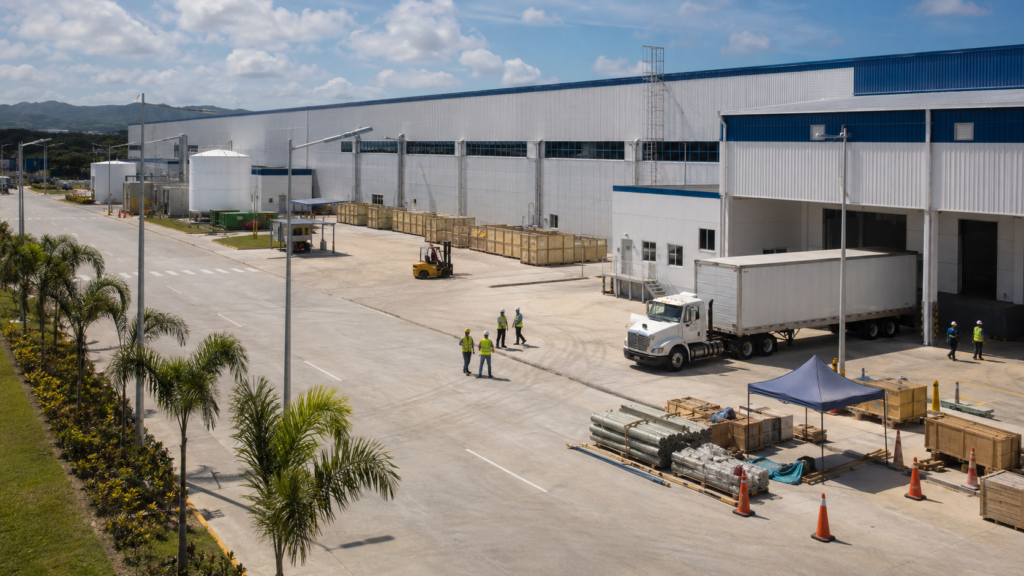
For an international investor, the Dominican Republic’s free-zone regime can provide a structured framework for manufacturing, assembly, processing and certain service activities aimed primarily at international markets. The legal framework is based principally on Law 8-90 on the Promotion of Free Trade Zones, while the CNZFE coordinates the classification and authorization of companies operating under the regime. The process is therefore best approached as a sequence of connected decisions rather than as a single registration.
Start With the Business Model
The first step is to determine exactly what the company intends to do in the Dominican Republic. Before approaching a park or preparing an application, the investor should define the products or services, target markets, expected production or service capacity, required machinery, raw materials, staffing needs, logistics model, investment budget and projected start date.
This matters because the free-zone application is not simply an application for warehouse space. The CNZFE asks applicants for information about the proposed operation and, where applicable, a sample of the product to be manufactured. The authority also requires information about the company’s shareholders and their contributions, together with evidence identifying the investors.
The project should also establish whether it will operate as an industrial or service company within an existing free-zone park, or whether a different category of free-zone authorization is appropriate. A company intending to develop and operate an entire industrial park follows a different approval process from a company seeking permission to establish itself inside an existing park.
Understand the Role of the CNZFE
The Consejo Nacional de Zonas Francas de Exportación is the key government institution for the free-zone regime. For a company establishing itself in an existing park, the relevant procedure is the Permit for Installation of Companies in Free-Zone Parks. The authorization is granted by the CNZFE’s governing council after the application and supporting documentation have been reviewed.
The CNZFE currently provides the application through the government services platform and its own virtual system. Its published procedure calls for the applicant to register on the government portal, complete the application, attach the required documentation, submit the request and make the corresponding payment.
The CNZFE states that applications requiring approval by its governing council are reviewed by the appropriate department before being placed before the council. Once the application has been considered, the applicant is notified of the decision in writing, with the published service information indicating a response period of up to 30 business days when the required conditions have been met.
Choose the Right Free-Zone Park
Selecting the park is one of the most consequential decisions in the process because the location affects rent, logistics, labor availability, utilities, access to ports and airports, expansion options and the practical cost of operating the business.
The Dominican Republic has public, private and mixed free-zone parks. The CNZFE explains that public parks are managed by the Centro de Desarrollo y Competitividad Industrial (ProIndustria), private parks are managed by private companies or groups, and mixed parks are managed by nonprofit organizations.
A company should compare parks using its own operating requirements rather than choosing solely on rental price. A suitable assessment should consider:
- Location: proximity to ports, airports, highways, suppliers and target labor markets.
- Building specifications: floor area, ceiling height, loading areas, power capacity, water supply and suitability for the intended machinery.
- Logistics: container access, trucking arrangements, customs processes and distance to major transport corridors.
- Labor: availability of workers with the technical skills required by the operation.
- Expansion: availability of additional space if production increases.
- Park services: security, maintenance, utilities and administrative support.
- Commercial terms: rent, deposits, common charges, utility costs and contractual obligations.
The choice should be made before the CNZFE application because the published requirements include a lease agreement and/or letter of intent from the park where the company will be installed. In other words, the park relationship forms part of the authorization file rather than being a decision that can always be postponed until after approval.
Prepare the Investment and Feasibility File
A serious project should be supported by a feasibility package before the formal application is submitted. Although the exact documentation depends on the type of free-zone authorization, the purpose is to demonstrate that the proposed operation is identifiable, financially credible and capable of being established at the proposed location.
For companies applying to operate in an existing free-zone park, the CNZFE’s published requirements include corporate documents showing the shareholders, their nationalities and contributions, as well as a document establishing the financial standing or identity of the investors. Where applicable, the authority also requests a sample of the product to be manufactured.
For a service free-zone project, the CNZFE separately lists a technical-economic feasibility study, corporate documents, evidence of ownership or a lease for the building, business and academic histories of principal executives, and other supporting documents. The published requirement for service companies also specifies that the lease of the building should cover a minimum period of five years.
For planning purposes, the feasibility file should normally cover the proposed activity, production or service process, markets, customers, investment, financing, equipment, raw materials, staffing, utilities, logistics, projected exports and implementation schedule. These elements help the investor identify weaknesses before the formal application is filed.
Decide How the Business Will Be Structured
A foreign investor does not necessarily have to incorporate a new Dominican company solely to establish an operation in a free-zone park. The CNZFE states in its FAQ that a company does not have to constitute a company in the Dominican Republic in order to operate inside a free-zone park. Nevertheless, the appropriate corporate and tax structure should be determined before filing because the company’s legal form affects registration documents, tax administration, banking and other aspects of the operation.
For investors using a Dominican legal entity, the ordinary corporate formalization sequence includes the commercial name where applicable, incorporation documentation, registration in the Commercial Registry and registration with the Dirección General de Impuestos Internos (DGII), the Dominican tax authority. The DGII identifies the Commercial Registry and the RNC as core elements of the corporate registration process.
Foreign companies using a different structure should establish in advance which documents must be registered or legalized and how the entity will be represented locally. The precise requirements depend on the structure selected, so this is an area where corporate and tax advice can prevent unnecessary rework.
Prepare the CNZFE Installation Application
The central application for a company entering an existing park is the Application for an Installation Permit for an Industrial and Service Free-Zone. The CNZFE’s published checklist includes several core documents:
- A letter requesting authorization to operate under Law 8-90.
- The CNZFE installation-permit application form.
- A lease agreement and/or letter of intent from the selected free-zone park.
- Preliminary or definitive corporate documents identifying shareholders, their nationalities and their contributions.
- Proof of payment.
- A product sample when applicable.
- A solvency letter or another document identifying the investors.
- Information identifying the person filing the application and the person who can provide information about the project.
The CNZFE also states that documentation must be submitted in Spanish or accompanied by a Spanish translation. This is particularly important for foreign investors because corporate, financial and technical documents prepared abroad may need to be translated before submission.
Submit the Application Through the CNZFE Process
The CNZFE’s current process begins by registering on the government services portal or signing in if the applicant already has an account. The applicant then completes the relevant form, uploads the required documents, submits the request and completes the payment process. The CNZFE also provides a virtual application tutorial showing the selection of the installation-permit service for national and foreign companies.
Once submitted, the application should be treated as an active regulatory file. The company should therefore keep copies of every document, payment receipt and submitted version of the application and designate a person who can respond quickly if the CNZFE requests clarification.
The published CNZFE service information states that applications requiring governing-council approval must first be validated by the relevant department. The authority also notes that its stated processing period can be affected when additional information is required and the designated company contact cannot be reached.
Obtain the CNZFE Authorization Before Treating the Project as Operational
Approval of the installation permit is the key regulatory milestone for entering the free-zone regime. It should not be confused with merely signing a lease or registering a company. The free-zone authorization establishes the company’s eligibility to operate under the regime administered by the CNZFE.
For companies classified to operate within a free-zone park, the CNZFE states that the authorization period is 15 years under Law 8-90. The law provides a 20-year period for free zones located in the country’s border region and a 15-year period for free zones elsewhere, counted from the first full year of operations, subject to the legal framework governing the regime.
The authorization is therefore a long-term operating framework, but the company must still maintain its other legal, tax, customs and labor obligations throughout its activity.
Complete the RNC Registration
The Registro Nacional de Contribuyentes (RNC) is the tax identification system administered by the DGII. The DGII states that persons and entities with tax responsibilities in the Dominican Republic must be registered, and that the RNC number is the permanent identification number assigned to the taxpayer.
For free-zone companies, the DGII has a specific registration procedure. Its published requirements include the RC-02 Declaration for Registration and Updating of Corporate Data, a copy of the CNZFE resolution, copies of the shareholders’ identity documents, a copy of the Commercial Registry and, where applicable, a copy of the ONAPI commercial-name certificate.
This makes the CNZFE authorization particularly important in the registration sequence: the DGII’s free-zone procedure specifically calls for the CNZFE resolution as part of the RNC file.
The RNC should then be used consistently in the company’s tax documentation and other required communications with the DGII. The tax authority states that the RNC must appear clearly on invoices, purchase orders, orders and other documents of tax significance.
Complete the Commercial and Corporate Registrations
Where the business operates through a Dominican company, the investor should ensure that the company’s corporate documents, Commercial Registry and tax registration are consistent with the free-zone application. The DGII’s general corporate-registration guidance identifies registration of the commercial name with ONAPI, incorporation formalities and Commercial Registry registration as steps that normally precede the RNC application for a Dominican legal entity.
Free-zone companies are subject to specific treatment within the tax system. The DGII’s free-zone guidance requires the CNZFE resolution for RNC registration, while its general guidance recognizes that companies benefiting from special tax regimes must provide the resolution issued by the competent authority.
The practical objective is to ensure that the corporate identity, commercial name, registered address, shareholders, economic activity and free-zone authorization all correspond across the company’s official records.
Establish the Customs Operating Framework
Free-zone operations are closely connected to customs administration because raw materials, machinery, equipment and other goods can enter and leave the free-zone facilities under the customs regime and exemptions established by Law 8-90. The law provides that free-zone operators and companies may introduce or remove machinery, equipment, furniture, raw materials and other merchandise related to their industrial activity, subject to the applicable customs regulations and exemptions.
The Dirección General de Aduanas (DGA), the Dominican customs authority, maintains control mechanisms for goods entering and leaving free zones. Law 8-90 provides for a DGA customs office or collection point in each export free zone to carry out the necessary verification and control functions.
For a new company, customs readiness should therefore be addressed before the first shipment. The logistics team should establish how imports of machinery and raw materials will be documented, how exports will be processed, who will prepare customs filings, and how inventory will be reconciled with customs records.
The DGA also provides procedures through the Ventanilla Única de Comercio Exterior (VUCE), including a dedicated guide for Law 8-90 free-zone exports.
Prepare the Facility and Production Infrastructure
Once the regulatory and contractual framework is in place, the company can move into the physical implementation phase. This normally includes taking possession of the leased space, installing machinery, configuring production or service areas, establishing storage and quality-control areas, connecting utilities and preparing offices and employee facilities.
The facility should be designed around the approved business activity rather than simply around available square footage. Manufacturing companies may need specialized electrical capacity, ventilation, compressed air, water treatment, production lines, waste-management systems or other technical infrastructure. Service companies may instead require telecommunications capacity, secure workspaces, redundancy and specialized information-technology infrastructure.
Any construction, environmental, health, fire-safety, sector-specific or municipal authorization that applies to the particular project should be identified separately. Free-zone status does not eliminate every regulation applicable to a business or its physical activities. ProDominicana notes that investment formalization remains subject to sector-specific licenses, registrations and permits where applicable.
Set Up Labor and Employment Compliance
A free-zone company is still an employer in the Dominican Republic and must organize its labor relations in accordance with the applicable labor framework. Before hiring at scale, the company should establish employment contracts and policies, payroll procedures, working-time controls, occupational health and safety processes and the registrations and reporting obligations applicable to its workforce.
The Ministerio de Trabajo maintains dedicated systems and services for employment, labor certifications and occupational health and safety. Its certification platform includes services administered by the Directorate General of Employment, the Directorate General of Hygiene and Safety, and the Directorate General of Labor.
The ministry also publishes services specifically associated with free-zone employers. For example, its requirements for a no-objection certification to the CNZFE identify the National Taxpayer Registry number and the National Labor Registry number among the company’s information, demonstrating the interaction between free-zone administration and labor compliance.
For a new project, labor compliance should be designed before recruitment begins. This reduces the risk of opening a facility without the internal systems needed to manage a large workforce.
Organize Tax Compliance Under the Free-Zone Regime
The free-zone regime provides substantial tax and customs exemptions, but exemption does not mean the company has no compliance obligations. The DGII identifies specific tax obligations for free-zone companies, including reporting requirements for sales to the Dominican market and certain obligations associated with services supplied locally.
The DGII also states that free-zone operators and companies established within the regime receive 100% exemptions from a range of taxes and duties covered by the applicable legal framework, including income tax and certain import duties on materials, equipment and other goods intended to construct, equip or operate within the free zone. The precise application depends on the transaction and the governing provisions.
Companies should therefore distinguish between exempt transactions and transactions that remain subject to reporting or taxation. Accounting and tax systems should be configured accordingly from the beginning rather than attempting to separate exempt and taxable transactions after operations have started.
Understand the Rules for Sales to the Dominican Market
The free-zone regime is designed around an export-oriented model, so selling goods or services into the Dominican customs territory requires particular attention. The CNZFE provides a specific authorization procedure for free-zone companies wishing to sell into the local market under the applicable provisions of Law 8-90.
According to the CNZFE, these local-market sales are subject to the applicable taxes, including customs duties, selective consumption tax, ITBIS and the foreign-exchange commission, according to the transaction and governing rules. The company must also obtain the required authorization before making sales under the procedure described by the CNZFE.
This distinction should be incorporated into the business plan. A company whose commercial model depends substantially on Dominican domestic sales should verify the applicable rules before assuming that all of its transactions will receive the same treatment as exports.

Prepare the First Import and Export
The first shipment should be treated as an operational test of the entire system. Before importing production equipment or raw materials, the company should confirm that its corporate, tax, CNZFE and customs records are aligned and that the responsible logistics personnel understand the relevant filing process.
The same principle applies to the first export. The company should establish its commercial invoice procedures, packing documentation, transport arrangements, customs declarations, product classification and internal inventory records before the shipment is dispatched.
The DGA’s VUCE system is part of the country’s electronic trade-facilitation framework, and the DGA publishes specific instructions for free-zone transactions.
A controlled first shipment can reveal documentation, inventory or logistics problems before the company reaches full production volume.
Build an Internal Compliance Calendar
Once the company begins operating, regulatory work becomes recurring rather than one-time. The management team should maintain a calendar covering tax filings, customs documentation, labor obligations, corporate renewals, free-zone reporting and any sector-specific permits.
The DGII, for example, specifies monthly reporting requirements for certain sales made by free-zone companies into the local market. The exact filing obligations depend on the nature of the company’s transactions.
The company should also monitor the validity of its free-zone authorization. The CNZFE states that companies operating within a free-zone park receive a 15-year operating period under the relevant provision of Law 8-90, with a renewal process available when the company wishes to continue receiving the regime’s benefits.
Keep the CNZFE Informed About Material Changes
Free-zone authorization is tied to the approved operation, so significant changes should not automatically be treated as ordinary business decisions. Changes involving the activity, location, facilities, machinery or other aspects of the approved operation may require communication with or authorization from the relevant authorities.
The CNZFE maintains specific procedures for matters such as changes of activity, renewal of operating permits, modifications involving parks and other free-zone authorizations. Its published services also include a certification process for companies operating under conditional permits when documents or other matters remain outstanding.
The safest approach is to check with the CNZFE before implementing a material change rather than assuming that the original approval automatically covers a substantially different operation.
A Practical Sequence From Planning to Operation
Although individual projects vary, a company can use the following sequence as a practical roadmap:
- Define the business model. Establish the activity, products or services, markets, investment, equipment, workforce and logistics requirements.
- Identify suitable parks. Compare locations, facilities, costs, utilities, labor availability, logistics and expansion capacity.
- Engage the selected park. Negotiate the lease or obtain a letter of intent suitable for inclusion in the CNZFE application.
- Prepare the project file. Assemble corporate, shareholder, investor, technical and financial information and any required product samples.
- Choose the legal structure. Determine whether the operation will use a Dominican entity or another legally appropriate structure.
- Submit the CNZFE installation application. Complete the relevant form, upload the required documents and pay the applicable fee.
- Respond to CNZFE requests. Keep a designated contact available to resolve questions or supply missing information.
- Obtain the CNZFE resolution. Treat the approval as the central authorization for the free-zone installation.
- Complete tax and corporate registration. Obtain or update the RNC and ensure the Commercial Registry and other corporate records are consistent with the approved operation.
- Prepare customs procedures. Organize import and export documentation, VUCE processes, inventory controls and the company’s customs responsibilities.
- Prepare the facility. Install machinery, utilities, safety systems, information technology and production or service infrastructure.
- Set up employment compliance. Establish hiring, payroll, labor and occupational health and safety systems.
- Test the operating system. Validate procurement, production, inventory, customs, accounting and logistics workflows before full-scale operations.
- Begin commercial operations. Start production or services once the applicable regulatory and operational requirements have been satisfied.
Common Mistakes to Avoid
Choosing a Park Before Defining the Operation
A building that appears inexpensive may be unsuitable because of electrical capacity, logistics, workforce availability or expansion limitations. The facility should be selected after the operating requirements are defined.
Submitting an Incomplete CNZFE File
The CNZFE requires multiple supporting documents, including park documentation and corporate information. Missing documents can delay the review or result in additional requests. A document checklist should therefore be completed before submission.
Assuming Free-Zone Status Eliminates All Taxes
The regime provides important exemptions, but specific transactions can remain subject to tax or reporting requirements. Local-market sales are an important example. The accounting system should distinguish transactions according to their applicable treatment.
Leaving Customs Planning Until the First Shipment
Importing machinery and raw materials and exporting finished products require coordination with customs procedures. Customs documentation should be designed before the first shipment rather than during it.
Ignoring Labor Compliance During the Construction Phase
A company that concentrates exclusively on production equipment can reach the opening date without adequate payroll, employment and occupational-safety systems. Labor compliance should be built into the implementation schedule.
Changing the Business Activity Without Checking the Authorization
A material change to the approved operation may require a separate CNZFE procedure. The authority maintains a specific process for changes of activity, so companies should verify the requirement before implementing a significant change.
What Documents Should the Investor Have Ready?
The exact document package depends on the type of operation and its legal structure, but a well-prepared investor should expect to organize the following categories before submitting the project:
- Corporate documents: incorporation or organizational documents and shareholder information.
- Tax documentation: RNC information and the documents required for the relevant tax registration stage.
- Park documentation: lease agreement or letter of intent.
- Investor documentation: evidence identifying the investors and, where required, evidence of financial standing.
- Project information: description of the activity, products or services, equipment and operating model.
- Product information: samples when required by the CNZFE application.
- Translations: Spanish versions of foreign-language documents where required.
- Customs documentation: information needed to organize the import and export process.
- Labor documentation: records and registrations required once employees are hired.
- Sector permits: any additional authorization applicable to the specific activity.
The CNZFE’s official installation-permit requirements should be treated as the definitive checklist for the application because documentation can vary according to the nature of the project.
How Long Does the Process Take?
There is no single end-to-end timetable that applies to every project because the overall duration includes several independent stages: site selection, lease negotiations, corporate structuring, preparation of the application, CNZFE review, tax registration, facility preparation, customs setup and any sector-specific approvals.
For the CNZFE installation service itself, the authority states that once a complete application requiring governing-council approval has been validated and considered, the decision is communicated in writing and the service is delivered within no more than 30 business days when the established conditions have been met. The authority also notes that additional information requests can affect the stated processing period.
Investors should therefore avoid planning a production launch solely around the statutory or published processing period for one authorization. The realistic project schedule should allow time for facility preparation, equipment installation, staffing and all other dependencies.
What Are the Main Advantages of the Free-Zone Regime?
The principal attraction is the combination of customs and tax treatment established by Law 8-90. The DGII describes a 100% exemption framework covering, among other items, income tax and certain import duties and related charges on materials, equipment and other goods destined for the construction, equipping or operation of free-zone activities.
The regime also provides a dedicated customs framework for companies operating in free zones, which can be particularly relevant to businesses that import raw materials and equipment and export finished products.
For an international company, the regime can therefore be particularly relevant when the business model is strongly export-oriented and depends on predictable access to imported inputs.
What Are the Main Limitations?
The benefits come with an administrative framework that must be managed carefully. A free-zone company is not simply a conventional business that happens to be located behind a physical boundary. It operates under a specialized regulatory, customs and tax regime and must maintain the documentation and controls associated with that status.
Another limitation is that domestic sales do not automatically receive the same treatment as exports. Companies intending to serve the Dominican market must examine the applicable authorization and tax consequences before building domestic sales into their operating model.
Finally, the choice of park can create long-term operational consequences. A poor decision regarding location, infrastructure or expansion capacity can be more expensive to correct than the initial savings from choosing the cheapest available facility.