 25°C
25°C

Startup Ecosystem in Latin America and the Caribbean
The startup ecosystem in Latin America and the Caribbean has evolved from a relatively fragmented network of entrepreneurs and small technology companies into a more connected market supported by venture capital, accelerators, corporate investors, development institutions, and increasingly sophisticated digital businesses. The region still faces significant barriers to scaling, including limited early-stage financing, uneven infrastructure, regulatory complexity, and shortages of specialized talent, but the emergence of larger technology companies and stronger cross-border investment networks is creating new opportunities for entrepreneurs.


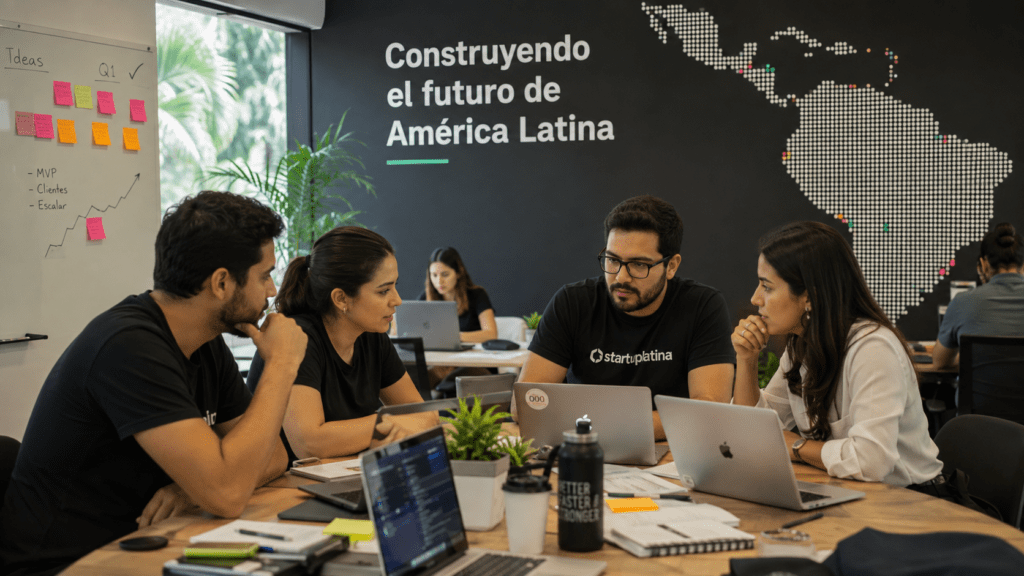
The startup ecosystem in Latin America and the Caribbean is no longer defined only by small technology companies serving local markets. Over the past two decades, entrepreneurs have built businesses capable of attracting international capital, expanding across borders, and competing in sectors ranging from financial services and e-commerce to logistics, health technology, education, agriculture, and enterprise software.
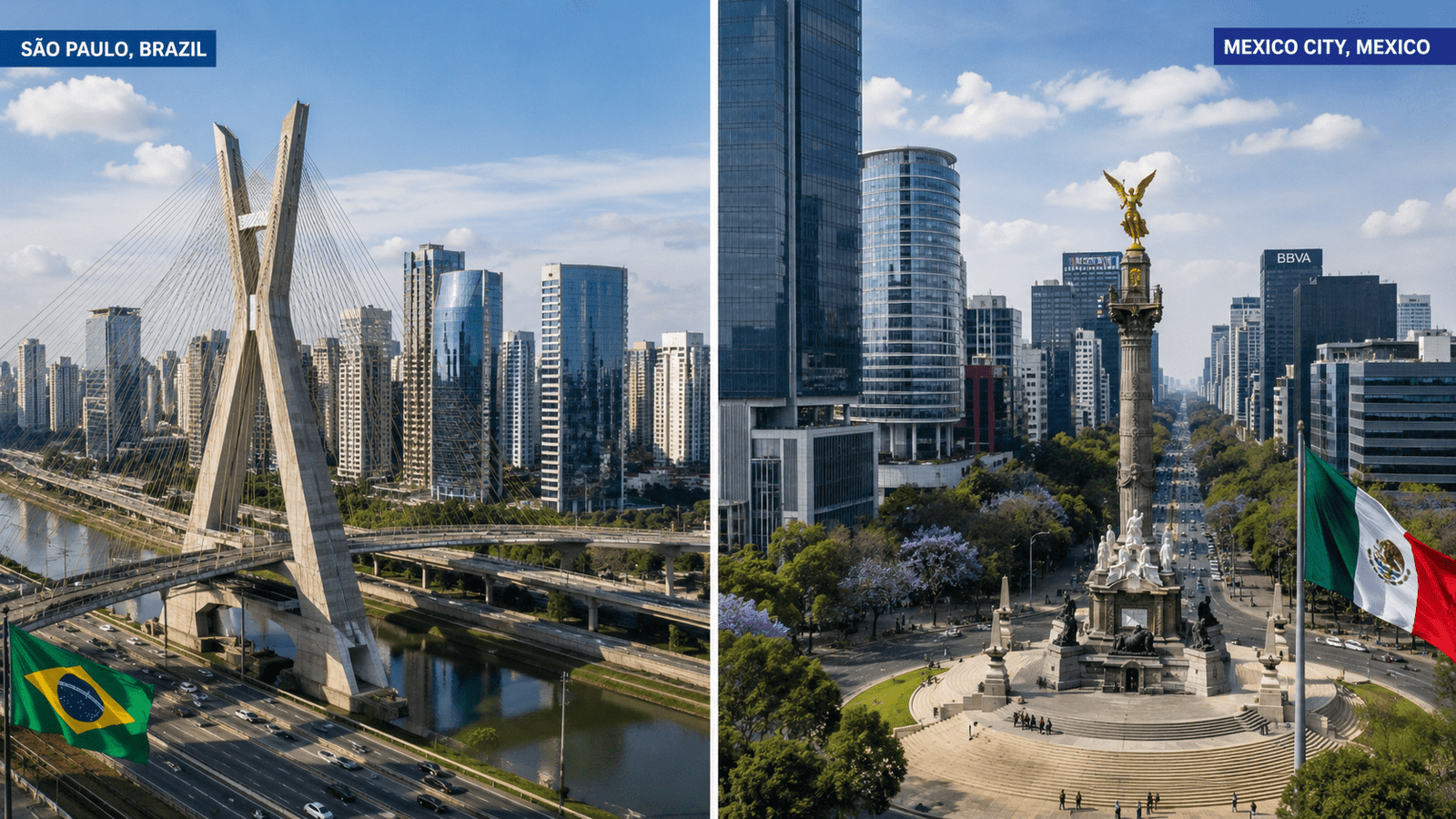
The ecosystem remains highly uneven. Brazil and Mexico have developed some of the region’s deepest pools of venture capital and startup talent, while Colombia, Chile, Argentina, Uruguay, Central America, the Dominican Republic, and Caribbean markets have developed their own specialized strengths. The result is not one unified startup market but a network of ecosystems at different stages of maturity.
Understanding that structure is important for entrepreneurs, investors, corporations, policymakers, and international businesses seeking opportunities in the region.
What Is the Startup Ecosystem in Latin America and the Caribbean?
The startup ecosystem is the network of people, organizations, institutions, and sources of capital that help new businesses emerge, develop, finance, and scale.
In Latin America and the Caribbean, this network includes startups, founders, angel investors, venture capital funds, accelerators, incubators, universities, corporations, governments, development banks, technology providers, and professional service firms.
These participants perform different functions. Founders create and operate companies. Investors provide capital and strategic support. Accelerators and incubators help entrepreneurs develop products and business models. Universities contribute research and talent. Corporations can become customers, partners, investors, or acquirers. Governments influence the environment through regulation, infrastructure, tax policy, education, and innovation programs.
The strength of an ecosystem depends not simply on the number of startups but on how effectively these different participants interact. A country may have thousands of entrepreneurs but still struggle to produce companies capable of reaching regional or global scale if financing, talent, infrastructure, or exit opportunities are limited.
How the Regional Startup Ecosystem Developed
Latin America’s technology entrepreneurship movement developed gradually. Early startups often focused on local versions of business models that had already emerged in North America, Europe, or Asia. As internet access expanded and local digital markets matured, entrepreneurs began developing products specifically adapted to regional problems.
Financial services became an especially important area of innovation because large populations had historically been underserved by traditional banking systems. E-commerce, logistics, digital payments, online education, healthcare technology, and software for small businesses also developed as entrepreneurs addressed gaps in existing services.
The emergence of larger technology companies created an additional effect. Successful founders and employees generated experience, capital, and professional networks that could later be reinvested into younger companies. This helped create a cycle in which successful startups became sources of talent and capital for the next generation.
The Inter-American Development Bank’s Tecnolatinas research documented this transition, identifying more than 1,000 technology companies born in the region that had raised more than $1 million. The study described the development of a new generation of technology companies with the potential to operate at regional and international scale.
Where Are the Main Startup Hubs?
Startup activity is concentrated in several major markets, although important ecosystems also exist outside the largest countries.
Brazil
Brazil has one of the deepest startup ecosystems in Latin America. Its large domestic market provides entrepreneurs with the opportunity to build significant businesses without immediately expanding internationally.
The country has developed strong capabilities in fintech, e-commerce, software, logistics, health technology, agriculture technology, and other sectors. It also has a substantial network of venture capital funds, corporate investors, accelerators, technology companies, and experienced founders.
Brazil’s scale is both an advantage and a limitation. A startup can reach millions of potential customers inside the country, but expanding into other Latin American markets may require significant adaptation because neighboring countries have different regulations, currencies, consumer behavior, and business environments.
Mexico
Mexico has become another major regional startup hub, supported by its large consumer market, proximity to the United States, manufacturing base, and growing technology sector.
Fintech, e-commerce, enterprise software, logistics, and financial infrastructure have attracted significant entrepreneurial and investment activity. Mexico can also serve as a bridge between Latin American markets and North American business networks.
Recent venture capital data from LAVCA show that Mexico has narrowed the funding gap with Brazil. According to LAVCA’s 2026 technology trends report, Mexico-based startups raised 21% more capital year over year in 2025 and trailed Brazil-based companies by only 14% in total funding.
Colombia
Colombia has developed an increasingly visible technology ecosystem centered particularly on fintech, commerce, logistics, and business software.
Bogotá and Medellín have become important centers for entrepreneurship, supported by universities, accelerators, investors, corporations, and public-sector initiatives. Colombia’s position between South and Central America also gives companies opportunities to build regional strategies.
Chile
Chile has developed one of the region’s best-known public-supported entrepreneurship environments. The country has used institutions and programs focused on innovation and entrepreneurship to attract founders and international startups.
Chile’s relatively sophisticated financial system, strong institutional framework, and international orientation have helped it become an important testing ground for technology companies seeking access to Latin American markets.
Argentina
Argentina has produced a disproportionate number of internationally recognized technology companies relative to the size of its economy. Its technology ecosystem benefits from strong technical talent, entrepreneurial experience, and a history of building companies for international markets.
Economic volatility has also encouraged founders to design businesses capable of operating beyond the domestic market. That experience can be valuable when startups seek regional or global expansion.
Central America
Central American ecosystems are generally smaller and less mature than those of Brazil and Mexico, but they are developing around sectors such as fintech, logistics, software, tourism technology, and services for small and medium-sized businesses.
Regional integration can be particularly important for these markets because individual domestic economies may not provide enough scale for every technology business. Cross-border platforms and regional investment funds can therefore play an important role.
The Caribbean
Caribbean startup ecosystems face a different set of conditions. Many markets are small, geographically dispersed, and highly dependent on tourism, services, imports, or remittances. These characteristics can make scaling more difficult but can also create opportunities for technology companies addressing tourism, financial services, climate resilience, logistics, digital government, and cross-border services.
A 2025 Inter-American Development Bank study covering Barbados, The Bahamas, Jamaica, Suriname, and Trinidad and Tobago classified the Caribbean venture capital ecosystem as generally nascent or emerging, depending on the dimension examined. The study identified gaps in funding, deal flow, talent, exit mechanisms, investment networks, regulation, research, and professional services.
Why Fintech Is So Important
Financial technology has become one of the clearest examples of how Latin American entrepreneurs can use technology to address structural market gaps.
The Inter-American Development Bank and Finnovista identified 3,069 fintech companies across 26 countries in Latin America and the Caribbean in 2023, compared with 703 companies across 18 countries in 2017. Brazil accounted for 24% of the regional total, followed by Mexico with 20%, Colombia with 13%, and Argentina and Chile with 10% each.
The growth reflects several forces: increasing smartphone use, demand for digital payments, underserved consumers and businesses, improved financial infrastructure, and the willingness of entrepreneurs to build products around specific weaknesses in traditional financial systems.
Emerging markets have also become more important. Peru, Ecuador, the Dominican Republic, Uruguay, Costa Rica, and Guatemala together increased their share of the regional fintech ecosystem from about 7% in 2017 to almost 15% in 2023.
The fintech example illustrates an important characteristic of the regional startup ecosystem: innovation is often driven by practical market problems rather than technology for its own sake.
How Venture Capital Supports Startups
Venture capital provides equity financing to companies with the potential for rapid growth. Unlike traditional bank lending, venture capital investors normally receive an ownership stake rather than requiring conventional collateral.
This model is particularly important for startups because young companies may have limited assets, uncertain cash flow, and substantial growth potential. A bank may be unable to lend on conventional terms even when the business has a promising product.
Venture capital can also provide expertise, networks, recruitment support, and introductions to potential customers or investors.
However, venture capital is not appropriate for every business. A company that can grow steadily through revenue may not need to give up equity in exchange for rapid expansion. Venture capital investors generally seek businesses capable of generating substantial returns within a defined investment horizon.
The Evolution of Regional Venture Capital
The regional financing market has become more sophisticated, but capital remains concentrated.
LAVCA reported that venture capital funds invested $2.2 billion in early-stage rounds across Latin America in 2025, representing 52% of total venture investment and the largest annual amount of early-stage capital since 2022.
The distribution of capital remains uneven. Brazil and Mexico attract a large share of investment, while emerging ecosystems continue to face shortages of early-stage financing.
This difference explains why regional funds are important. A fund that invests across several countries can identify opportunities in smaller ecosystems while helping entrepreneurs access capital and networks beyond their home market.
IDB Lab has explicitly identified nascent and emerging ecosystems in Central America, the Caribbean, and selected South American countries as areas where venture capital can help close financing gaps. Its investment programs also support regional funds designed to transfer knowledge and capital from more mature ecosystems to developing ones.
What Investors Look For in Latin American Startups
Investors evaluate startups using many of the same fundamental criteria used elsewhere, but regional conditions add specific considerations.
Large or expanding markets
A startup needs a market large enough to support its growth ambitions. In Latin America, investors often assess not only the domestic market but also the company’s ability to expand across multiple countries.
Strong unit economics
Growth alone is not sufficient. Investors increasingly examine customer acquisition costs, retention, gross margins, recurring revenue, and the relationship between spending and sustainable growth.
Regional scalability
A business model that works in one country may not automatically work elsewhere. Startups that have designed products and infrastructure for cross-border expansion can have an advantage.
Experienced founders
Execution matters heavily in young companies. Founders with experience building products, managing teams, understanding regulated industries, or expanding internationally can reduce some of the risks associated with early-stage investment.
Technology and defensibility
Investors also look at whether a company has technology, data, intellectual property, distribution, network effects, or another advantage that competitors cannot easily reproduce.
The Role of Accelerators and Incubators
Accelerators and incubators help fill gaps between an idea and a scalable company.

Incubators generally provide longer-term support, while accelerators tend to operate through more structured programs with defined cohorts, mentoring, networking, and sometimes investment.
These organizations can help founders refine their business models, develop products, prepare for fundraising, and establish relationships with customers and investors.
They also strengthen ecosystems by creating communities in which entrepreneurs can exchange knowledge. This network effect is important in smaller markets where experienced founders and specialized investors may be relatively scarce.
Universities and Research Institutions
Universities contribute to startup ecosystems through technical talent, research, laboratories, entrepreneurship programs, and technology transfer.
However, the relationship between academic research and commercial entrepreneurship remains uneven across the region. Stronger links between universities, companies, investors, and public institutions can help transform research into products and businesses.
This is particularly relevant for sectors such as biotechnology, agricultural technology, climate technology, advanced manufacturing, and artificial intelligence, where startups may depend on specialized research and highly trained personnel.
The Growing Role of Corporations
Large companies increasingly participate in startup ecosystems as customers, investors, partners, and acquirers.
Corporate involvement can provide startups with something that venture capital alone cannot: access to established distribution networks and real-world customers.
Corporations can also establish venture capital funds, startup accelerators, innovation programs, or strategic partnerships. For established businesses, these relationships provide access to emerging technologies and new business models.
The relationship works best when the corporation has a clear business objective rather than treating startup engagement as a public-relations exercise.
The Biggest Challenges Facing the Ecosystem
Access to finance
Early-stage capital remains one of the most significant constraints, particularly outside the largest startup hubs. This is especially important in the Caribbean and smaller Latin American markets, where investors may have fewer opportunities to diversify across a large number of startups.
Talent shortages
Technology startups require software engineers, data specialists, product managers, sales professionals, and experienced executives. Competition for these skills can be intense.
Remote work has expanded the potential talent pool, but it has also allowed highly skilled professionals to work for companies outside their home countries, increasing competition for local employers.
Regulatory complexity
Latin America and the Caribbean contain many different legal and regulatory systems. A startup expanding from one country to another may need to adapt its corporate structure, tax arrangements, data practices, financial licenses, employment policies, and payment systems.
For regulated industries such as fintech and health technology, these differences can significantly affect the speed and cost of expansion.
Infrastructure
Digital connectivity, electricity reliability, logistics, payment infrastructure, and cloud access all influence the ability of startups to operate efficiently.
Infrastructure challenges are particularly important in smaller Caribbean markets and in areas outside major metropolitan centers.
Limited exit opportunities
Investors ultimately need ways to realize returns. Those mechanisms can include acquisitions, secondary transactions, or public listings.
Where exit markets are limited, investors may be less willing to commit capital to early-stage companies. This creates a cycle in which fewer exits can contribute to less available venture capital.
Why Scaling Across Countries Is Difficult
One of the most attractive features of the Latin American market is its combined population and economic potential. But the region should not be treated as a single homogeneous market.
Countries differ in language, regulation, purchasing power, currencies, tax systems, payment methods, logistics, consumer behavior, and competitive structures.
A startup therefore needs to distinguish between regional demand and regional scalability. A product may address a common problem across several countries while still requiring substantial local adaptation.
Successful expansion often depends on partnerships with local businesses, careful regulatory analysis, localized sales teams, and an understanding of customer behavior in each market.
Artificial Intelligence and the Next Stage of the Ecosystem
Artificial intelligence is becoming a major theme across the regional startup market. LAVCA’s 2026 technology trends research found that venture-backed AI startups in Latin America are primarily focused on enterprise applications, reflecting demand for tools that can improve business operations rather than only consumer-facing applications.
AI can lower the cost of building certain technology products and allow startups to automate functions that previously required larger teams. It can also create new opportunities in customer service, financial analysis, software development, logistics, healthcare, education, agriculture, and business administration.
At the same time, AI does not eliminate the region’s underlying ecosystem challenges. Startups still need customers, capital, skilled employees, infrastructure, regulation, and distribution. Technology can improve productivity, but it cannot substitute for a viable business model.
The Dominican Republic’s Position in the Regional Ecosystem
The Dominican Republic is smaller than the region’s largest startup markets, but its ecosystem is developing in areas connected to financial technology, tourism, commerce, services, and entrepreneurship.
The country’s position is particularly relevant when considering the Caribbean as part of the broader Latin American innovation network. Smaller ecosystems can benefit from regional funds, cross-border accelerators, international partnerships, and technology platforms that reduce the importance of domestic market size.
The country’s fintech sector illustrates this potential. The IDB and Finnovista’s 2023 regional mapping included the Dominican Republic among emerging fintech markets that recorded notable growth between 2017 and 2023.
For the Dominican Republic, continued ecosystem development will depend on factors such as access to early-stage capital, specialized talent, digital infrastructure, connections with larger markets, and the ability of startups to build products that can scale beyond the domestic economy.
How Governments Can Strengthen Startup Ecosystems
Governments influence startup ecosystems less by trying to select individual winners and more by creating conditions in which entrepreneurs and investors can operate effectively.
The World Bank’s recent work on transformational entrepreneurship in Latin America and the Caribbean emphasizes three broad areas: developing human capital, improving the business and regulatory environment, and expanding access to finance.
These priorities are closely connected. Better education increases the supply of skilled founders and employees. Efficient regulation reduces the cost of creating and expanding companies. Deeper financial markets give promising businesses more opportunities to obtain capital.
Governments can also support digital infrastructure, research and development, bankruptcy systems, intellectual property protection, public procurement, and links between universities and businesses.
What Makes a Startup Ecosystem Mature?
A mature ecosystem is not defined by a single number of startups or by the presence of a famous technology company. It is characterized by a network that can repeatedly produce, finance, grow, and recycle successful businesses.
Important characteristics include:
- Multiple sources of capital across pre-seed, seed, growth, and later stages.
- Experienced founders and executives who can build companies at scale.
- Strong professional services in law, accounting, finance, recruitment, and technology.
- International connections that allow companies and investors to access foreign markets.
- Successful exits that return capital and experience to the ecosystem.
- Research and talent institutions capable of supplying specialized skills.
- Supportive regulation that protects consumers without unnecessarily restricting innovation.
- Corporate participation that creates customers, partnerships, investment, and acquisition opportunities.
The 2025 IDB study of five Caribbean countries used a maturity model built around 12 dimensions, including deal flow, entrepreneurial culture, funding sources, venture capital and private equity activity, exit mechanisms, talent, professional services, international connections, investment networks, support organizations, regulation, and research and development.
What the Future Holds for Latin American and Caribbean Startups
The regional ecosystem is likely to become more interconnected even though individual national markets will remain distinct.
Capital is increasingly able to move across borders, while founders can build distributed teams and sell software internationally from relatively early stages. International investors and technology companies are also showing greater interest in Latin America as a growth market.
LAVCA has reported increasing interest from Asian technology companies and startups in Latin America, with mergers, acquisitions, and strategic partnerships becoming potential routes into regional markets.
At the same time, the next phase of ecosystem development is likely to depend increasingly on companies outside the largest hubs. Emerging ecosystems can benefit from knowledge transfer, regional investment funds, corporate partnerships, and digital infrastructure that allows startups to reach customers beyond their domestic markets.
The central question is therefore no longer whether Latin America and the Caribbean can produce successful startups. The region has already demonstrated that it can. The larger challenge is whether more countries can build the financial, institutional, technological, and human-capital foundations required to produce successful companies repeatedly.
Frequently Asked Questions
What is a startup ecosystem?
A startup ecosystem is the network of entrepreneurs, investors, companies, universities, governments, accelerators, service providers, and other institutions that help startups form, finance, operate, and scale.
Which country has the largest startup ecosystem in Latin America?
Brazil is generally regarded as the region’s largest startup market by scale, supported by its large domestic economy, extensive investor network, and broad technology sector. Mexico is another major hub and has been rapidly narrowing the funding gap with Brazil.
Why is fintech so strong in Latin America?
Fintech has benefited from strong demand for digital financial services, gaps in traditional banking, widespread mobile technology, and opportunities to improve payments, credit, and financial access.
Is the Caribbean part of the Latin American startup ecosystem?
Yes. The Caribbean is part of the broader Latin America and Caribbean innovation landscape, although its startup markets have different characteristics. Smaller domestic markets, geographic dispersion, infrastructure constraints, and limited venture capital can make scaling more difficult.
What are the biggest barriers for startups in the region?
Common barriers include limited access to early-stage finance, shortages of specialized talent, regulatory complexity, uneven infrastructure, relatively small domestic markets in some countries, and limited exit opportunities.
Can startups easily expand from one Latin American country to another?
No. Regional expansion can be attractive, but countries have different regulations, currencies, tax systems, consumer behavior, payment infrastructure, and competitive environments. A scalable product still requires local adaptation.
What sectors have strong startup potential?
Fintech remains a major sector, while enterprise software, artificial intelligence, health technology, logistics, e-commerce, agricultural technology, climate technology, education technology, and digital infrastructure also offer significant opportunities.