 28°C
28°C

Dominican Republic Launches Pilot Project for Sustainable Refrigeration
The Dominican Republic's Ministry of Environment, with support from the United Nations Industrial Development Organization (UNIDO) and the United Nations Environment Programme (UNEP), has launched a pilot initiative to improve energy efficiency, reduce climate-warming refrigerants, and strengthen technical capacity in the refrigeration and air conditioning sector.


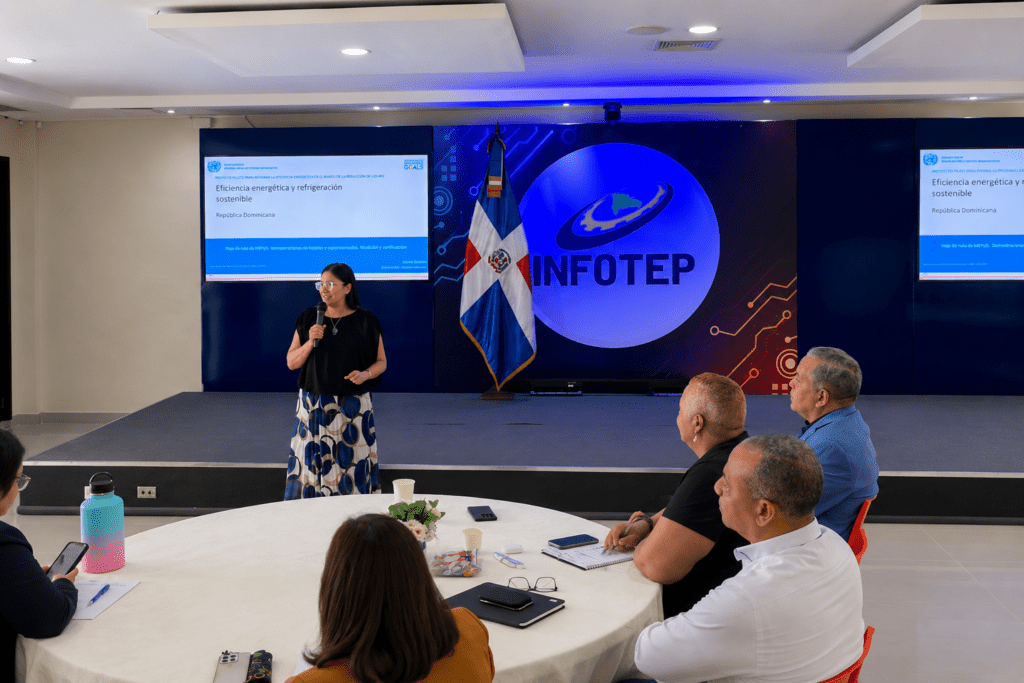
The Ministry of Environment and Natural Resources, through its National Ozone Program (PRONAOZ), is implementing a pilot project aimed at improving energy efficiency and accelerating the adoption of environmentally sustainable cooling technologies across the Dominican Republic. The initiative is being carried out with technical and financial support from the United Nations Industrial Development Organization (UNIDO) and the United Nations Environment Programme (UNEP).
The project focuses on the refrigeration and air conditioning sector, where cooling systems account for an estimated 20% to 55% of electricity consumption in hotels and supermarkets. According to the Ministry, more than 90% of the equipment currently in operation relies on hydrofluorocarbons (HFCs), refrigerants with a high global warming potential that countries are gradually phasing down under the Kigali Amendment to the Montreal Protocol.
Supporting Climate Commitments and Energy Savings
The Dominican Republic has committed to reducing HFC consumption by 10% by 2029 and introduced an HFC import quota system in January 2024. The pilot project is expected to generate technical data that will help strengthen national regulations while encouraging investments in more energy-efficient and environmentally friendly cooling systems.
From July 27 to 31, 2026, an international technical mission coordinated by UNIDO worked alongside the Ministry of Environment and PRONAOZ to launch the project’s initial phase. The delegation met with the National Institute for Technical and Vocational Training (INFOTEP) and representatives of the Dominican Association of Refrigeration Technicians to expand cooperation on technical training and professional certification for sustainable refrigeration technologies.
The mission also conducted preliminary assessments at several hotels, evaluating air conditioning systems, identifying opportunities for energy savings, and selecting facilities that could participate in demonstration projects designed to showcase best practices for the tourism sector.
Five Strategic Components
The initiative is structured around five main components intended to modernize refrigeration and cooling systems across the country.
The first, led by UNEP, will develop a national energy consumption assessment and a regulatory roadmap for Minimum Energy Performance Standards (MEPS) covering non-ducted split air conditioners with capacities of up to 18 kilowatts and household refrigerators of up to 850 liters.
Under the second component, UNIDO will replace 30 aging R-410A air conditioning units with high-efficiency inverter systems using R-290 (propane) refrigerant in three hotels. The Ministry estimates the upgrades could reduce electricity consumption by between 25% and 30%, with investment payback periods ranging from three to five years.
A third component will support two pilot supermarkets through operational improvements such as multi-zone controls, air curtains, and preventive maintenance programs aimed at reducing refrigerant leakage and improving system efficiency.
The project also includes strengthening INFOTEP’s national Measurement and Verification (M&V) center by supplying specialized equipment and training 30 technicians and engineers under the international ISO 50015 standard for measuring and verifying energy performance.
Finally, UNEP will coordinate knowledge-sharing activities, including technical guidance documents and the dissemination of successful case studies to encourage wider adoption of sustainable refrigeration technologies throughout the Dominican Republic.
By combining regulatory development, technical training, pilot demonstrations, and private-sector collaboration, the initiative seeks to improve energy efficiency while supporting the country’s commitments to protect the ozone layer and reduce greenhouse gas emissions. The demonstration projects are also expected to provide scalable models that can be replicated across the tourism and commercial sectors.