 29°C
29°C

Dominican Republic Snakes: What To Know About Bites
The Dominican Republic is home to around 25 species of snakes, but a veterinarian specializing in wildlife says none is considered medically significant to humans. Some species can still bite when threatened, making basic first aid and medical evaluation important after an encounter.


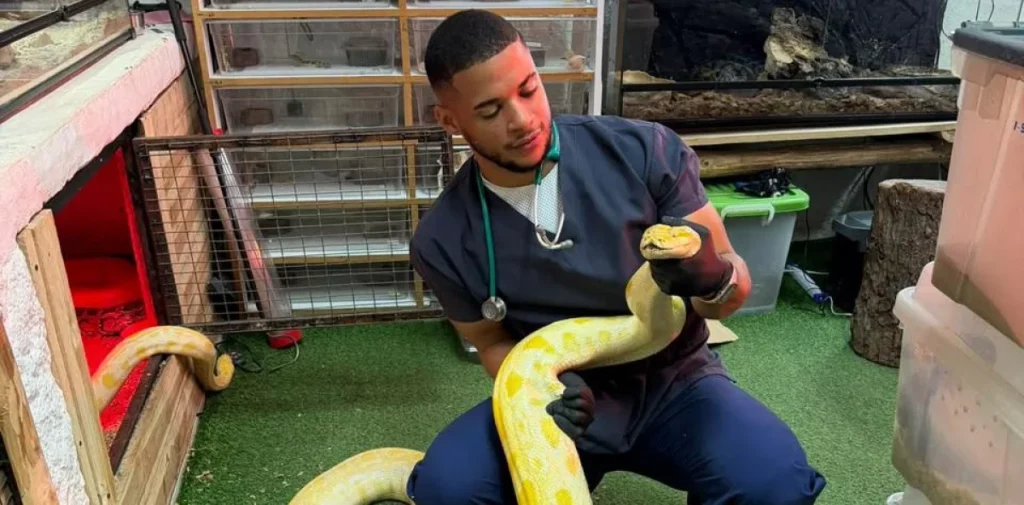
Snake encounters can be alarming, particularly for people unfamiliar with the wildlife of the Caribbean. In the Dominican Republic, however, the country’s native snakes do not include the medically significant vipers, rattlesnakes or coral snakes found in other parts of the Americas, according to veterinarian Miguel Smith Cardona, a specialist in wild animals.
The clarification comes around International Snakebite Awareness Day on September 19, an annual observance focused on the risks associated with snakebite worldwide. The World Health Organization says snakebite envenoming remains a major public health problem globally, although the situation varies considerably from one country to another.
Which Snakes Live In The Dominican Republic?
The absence of medically significant venomous snakes does not mean the Dominican Republic is without snakes. Smith Cardona estimates that roughly 25 species inhabit the country, including boas, racers, vine snakes, dwarf boas and small blind snakes.
Among the species found on Hispaniola are the Hispaniolan boa (Chilabothrus striatus), Ford’s boa (Chilabothrus fordii), the graceful boa (Chilabothrus gracilis), several Uromacer vine snakes, the Hispaniolan racer (Haitiophis anomalus), the Hispaniolan dwarf boa (Tropidophis haetianus) and blind snakes of the genus Typhlops.
The Hispaniolan boa and related boa species are constrictors and do not use venom to subdue prey. Their bites can nevertheless cause puncture wounds, bleeding, pain and localized inflammation.
Can Dominican Snakes Bite People?
Yes. The absence of medically significant venom does not make every snake harmless to handle. Snakes may bite when they are restrained, cornered or otherwise threatened, with the type and severity of the reaction depending on the species.
Smith Cardona said some Uromacer species have rear fangs and secretions used to immobilize small prey. In humans, he described the expected effects as generally mild local reactions, such as burning, numbness or swelling, rather than the severe envenoming associated with medically important snakes.
Racers, including Haitiophis and several Hypsirhynchus species, generally attempt to escape when confronted but may bite if captured or cornered. Dwarf boas are small and inconspicuous, while blind snakes spend much of their time underground.
What To Do After A Snake Bite
A snake bite in the Dominican Republic should still be taken seriously even when life-threatening envenoming is not expected. The immediate concern can be the wound itself, including bleeding, pain, inflammation and the possibility of contamination or infection.
The basic recommendation given by Smith Cardona is to wash the affected area thoroughly and seek medical evaluation. A healthcare professional can assess the wound and determine whether further treatment is necessary.
Anyone bitten should avoid trying to handle or capture the snake again. Identifying the species can be useful when it can be done safely, but approaching a frightened or cornered animal creates an unnecessary risk of another bite.
Snakes Usually Avoid People
For residents and visitors, the behavior of the animals is also relevant. Smith Cardona said snakes generally do not pursue or attack people. Their predominant response to human contact is to flee or defend themselves when they feel threatened.
That means encounters are more likely to end without injury when people give the animal space rather than attempting to touch, restrain or kill it. The Dominican Republic’s snake fauna includes species with different habitats and behaviors, but none of the country’s snakes is identified by the specialist as a medically important source of human envenoming.
For anyone living in or visiting the Dominican Republic, the practical distinction is therefore between a snake that can bite and a snake capable of causing medically significant poisoning. While the latter is not considered a feature of the country’s native snake fauna, bites can still require appropriate wound care and medical attention.