 23°C
23°C

New Study Suggests Earth’s Plants Could Survive Nearly 1.9 Billion More Years
A new climate study indicates that Earth's vegetation may persist for almost 1.9 billion more years, significantly extending previous estimates and offering fresh insights into the long-term evolution of planetary habitability.


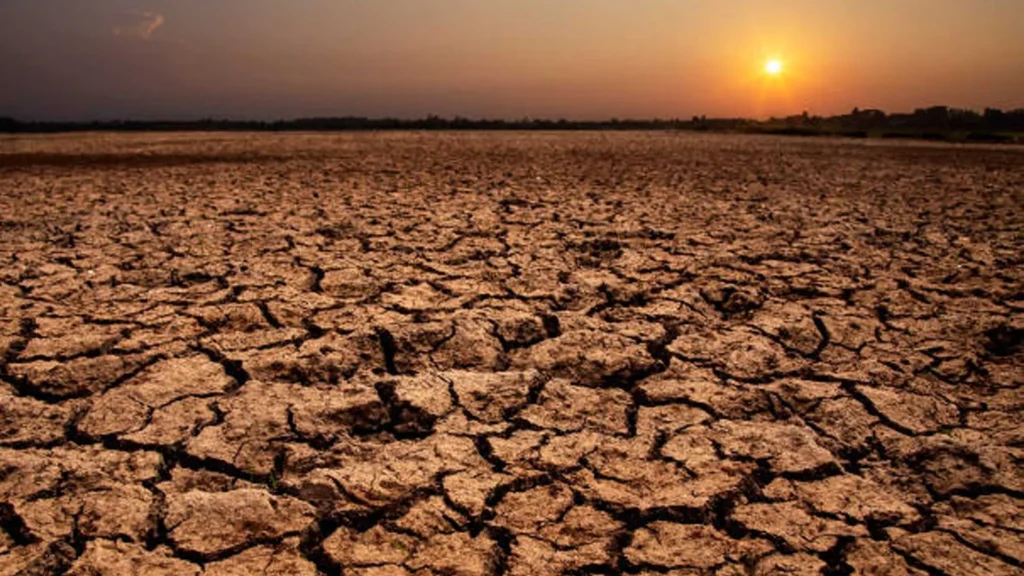
Earth’s green landscapes may endure far longer than scientists once believed. According to new research by Jacob Haqq-Misra and Eric Wolf, the planet’s vegetation could continue to survive for nearly 1.9 billion years before changing solar conditions and declining atmospheric carbon dioxide eventually make photosynthesis unsustainable.
The findings, published in the Journal of Geophysical Research: Atmospheres, use a three-dimensional climate model to examine how Earth’s environment will evolve over geological timescales. Rather than focusing on modern climate change, the research explores how increasing solar brightness and long-term carbon cycling will shape the distant future of life on the planet.
A Longer Lifespan for Earth’s Biosphere
Estimating how long a planet can sustain plant life is an important question in climatology, geology, and astrobiology. Beyond understanding Earth’s future, such studies also help scientists evaluate whether distant exoplanets could remain habitable over billions of years.
The new simulations suggest Earth’s vegetation could survive for approximately 1.84 to 1.87 billion years, depending on how atmospheric carbon dioxide evolves. These estimates are considerably longer than those proposed by several earlier models, which predicted a much earlier collapse of the terrestrial biosphere.
The Sun Will Eventually Become the Main Challenge
While today’s environmental concerns center on human-driven climate change, the new study looks far beyond any human timescale. As the Sun ages, it gradually becomes more luminous. Although the increase is imperceptible over a human lifetime, it will steadily warm Earth over hundreds of millions of years.
Under a scenario described as weak weathering, atmospheric carbon dioxide remains relatively abundant, making rising temperatures the primary threat. The researchers estimate that most terrestrial plants would no longer tolerate the heat after roughly 1.68 billion years, while all land plants could disappear around 1.87 billion years in the future.
Carbon Dioxide Remains Essential
Heat is only part of the equation. Plants depend on carbon dioxide to perform photosynthesis, the biological process that converts sunlight into energy and supports much of Earth’s food web.
Over geological timescales, a natural process known as silicate weathering gradually removes carbon dioxide from the atmosphere as rocks react with rainwater. Volcanic activity later returns some of that carbon, creating a long-term planetary cycle.
In a strong weathering scenario, temperatures remain more moderate, but atmospheric carbon dioxide falls to levels that increasingly limit photosynthesis. The study estimates that the traditional carbon dioxide threshold for C4 plants would be reached in roughly 1.35 billion years. Using a lower survival threshold of one part per million, vegetation could persist until approximately 1.84 billion years.
Not All Plants Will Disappear at the Same Time
Different plant groups respond differently to environmental stress. Most modern species use the C3 photosynthetic pathway and require relatively higher concentrations of carbon dioxide. C4 plants tolerate lower CO₂ levels more effectively, while CAM plants—including many succulents and orchids—are adapted to even harsher conditions.
As a result, Earth’s vegetation would not vanish in a single global event. Complex forests would likely disappear first, followed by increasingly resilient species. Some aquatic plants could survive even longer by using dissolved bicarbonate as an alternative carbon source, creating isolated ecological refuges as the planet becomes progressively less hospitable.
Evolution Could Still Rewrite the Story
The researchers acknowledge that significant uncertainty remains. Predicting biological evolution hundreds of millions of years into the future is impossible, and life has repeatedly demonstrated its ability to adapt to changing environments.
As Haqq-Misra noted in comments reported by Phys.org, “Life on Earth is incredibly adaptive.” Future plant lineages could evolve greater tolerance to heat or lower carbon dioxide concentrations. The study also mentions that an advanced technological civilization might theoretically influence planetary climate, although such possibilities remain speculative.
Life Would Likely Continue Beyond Plants
The disappearance of terrestrial vegetation would represent a profound transformation rather than the absolute end of life. Ecosystems dependent on photosynthesis would collapse, but microbial organisms could continue inhabiting Earth’s subsurface.
Many microorganisms already survive deep underground by obtaining energy from chemical reactions involving minerals and water instead of sunlight. According to reports by New Atlas, these deep biospheres could remain active long after forests, grasslands, and agricultural ecosystems disappear, extending the lifespan of Earth’s living systems well beyond the end of its green landscapes.
Implications for the Search for Life Beyond Earth
The research also provides valuable insight for scientists studying potentially habitable exoplanets. A planet’s ability to support life depends on far more than its distance from its star. Atmospheric composition, geological activity, carbon cycling, and stellar evolution all influence how long a biosphere can survive.
Rather than viewing habitability as a fixed condition, the study highlights it as a dynamic process that changes over billions of years. By that measure, Earth may still have many chapters of its biological history left before its last green leaf finally disappears.