 24°C
24°C

Coldest Places in the Dominican Republic: Where Temperatures Drop the Most
The coldest places in the Dominican Republic are found in the country’s highest mountain areas, particularly around Valle Nuevo, Constanza and the Central Mountain Range. While most of the country has a warm tropical climate, temperatures in these high-altitude areas can fall close to or below freezing during winter nights.


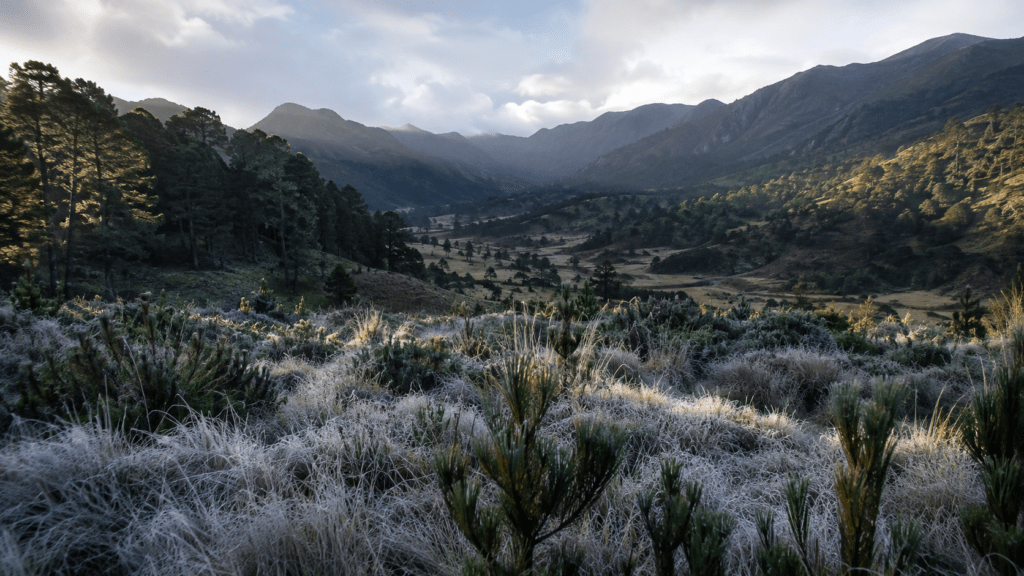
Valle Nuevo is generally considered the coldest place in the Dominican Republic, with the country’s lowest officially documented temperature reaching −3.5°C (25.7°F) on March 2, 1959. The contrast with the country’s tropical beaches is explained by elevation: the Dominican Republic has distinct mountain microclimates, and temperatures can fall dramatically in its highest areas.
For travelers searching for cold weather in the Dominican Republic, the main areas to consider are Valle Nuevo, Constanza, the high valleys of the Central Mountain Range and Jarabacoa. Conditions vary significantly with altitude, season and location, so the coldest mountain areas are not necessarily the easiest places to visit.
Coldest Places in the Dominican Republic at a Glance
| Mountain area | Approximate elevation | Temperature information | What makes it notable |
|---|---|---|---|
| Valle Nuevo | 2,200+ m | −3.5°C historical national record | Coldest officially documented temperature |
| Las Pirámides / La Nevera | ~2,300 m | Can fall below 0°C | Frost and occasional ice |
| Constanza | ~1,200 m | 5°C–20°C typical range cited by tourism authorities | Accessible mountain destination |
| High Central Mountain Range valleys | Varies; often above 2,000 m | Freezing conditions possible | Remote high-altitude landscapes |
| Jarabacoa | ~500 m | 16°C–25°C | Cooler climate with easier access and tourism infrastructure |
Sources: Dominican Republic Ministry of Environment and Natural Resources; Instituto Dominicano de Meteorología (INDOMET); Dominican Republic Ministry of Tourism.
The table illustrates an important point: there is no single temperature that describes the Dominican Republic’s mountain climate. Altitude creates strong local differences, with the highest valleys experiencing conditions that are very different from those found along the coast.
Why Is the Dominican Republic Cold in the Mountains?
The Dominican Republic is a tropical Caribbean country, but tropical does not necessarily mean hot everywhere.
Elevation is one of the most important factors. As air rises through the atmosphere, it generally becomes cooler, which means temperatures in the country’s highest mountain ranges can be substantially lower than those at sea level.
This effect is particularly pronounced in the Cordillera Central, which contains some of the highest elevations in the Caribbean.
The country’s mountain environments also have different vegetation, terrain and weather patterns from the coastal plains. Pine forests, high valleys and exposed mountain landscapes contribute to conditions that can feel remarkably cold, especially before sunrise during the winter months.
The Dominican Republic’s official tourism authority notes that mountain destinations such as Constanza and Jarabacoa can experience substantially lower temperatures than other parts of the country, with some nights in the highest areas falling below freezing.
Valle Nuevo: The Coldest Place in the Dominican Republic
Valle Nuevo, in the mountains south of Constanza, is the most important destination when discussing the country’s lowest temperatures.
The national park rises to more than 2,200 meters (7,200 feet) above sea level and contains highland plains, pine forests and mountain ecosystems that are unlike the tropical landscapes found along much of the Dominican coast.
According to the Dominican Republic Ministry of Environment and Natural Resources, the lowest temperature recorded in the country’s historical climate record was −3.5°C (25.7°F) in Valle Nuevo on March 2, 1959.
The area around La Nevera and Las Pirámides is particularly well known for its cold conditions. The official tourism authority says that temperatures there can fall below freezing in December, with frost and even ice occurring on some occasions.
This makes Valle Nuevo one of the most unusual climate environments in the Caribbean: a high-elevation landscape where visitors can encounter frost and freezing temperatures despite being on a tropical island.
Constanza: The Best-Known Cold Mountain Destination
Constanza is the most accessible and widely known destination for travelers who want to experience cool weather in the Dominican Republic.
Located in La Vega province at roughly 1,200 meters above sea level, the town sits in a high mountain valley surrounded by the Cordillera Central.
The Dominican Republic’s official tourism website gives Constanza a cool mountain climate of approximately 5°C to 20°C (41°F–68°F). It also identifies November through February as the coldest period.
Recent meteorological observations demonstrate how cold conditions can become. In February 2026, INDOMET reported a minimum temperature of 7.9°C in Constanza on February 5, describing the persistence of cold conditions in mountain areas during the season.
Constanza is also considerably easier to visit than the most remote high-altitude areas. The valley has hotels, restaurants, agricultural attractions and access to destinations including Valle Nuevo and the Ébano Verde Scientific Reserve.
That combination makes Constanza particularly useful for travelers who want cooler temperatures without undertaking a demanding high-mountain expedition.
Las Pirámides and La Nevera
Within Valle Nuevo National Park, the area around Las Pirámides is one of the places most closely associated with freezing temperatures in the Dominican Republic.
The monument stands at approximately 2,300 meters (7,500 feet) above sea level in an area known as La Nevera.
According to the Dominican Republic’s official tourism authority, early-morning temperatures in this area are known to fall below freezing point.
The name La Nevera itself reflects the area’s reputation for unusually cold conditions. Frost can appear during the coldest periods, creating a landscape that looks very different from the beaches, palms and warm coastal environments most international visitors associate with the country.
Other High Valleys in the Central Mountain Range
The coldest conditions are not limited to Valle Nuevo.
The highest parts of the Central Mountain Range contain several remote valleys and high-altitude landscapes where temperatures can fall well below those found in the country’s populated lowlands.
Areas associated with Valle del Tetero, Valle de Bao and other high mountain valleys are located within or around the country’s major protected mountain landscapes, including Armando Bermúdez National Park and José del Carmen Ramírez National Park.
Official publications from the Dominican Republic Ministry of Environment describe extremely low temperatures in several high-altitude areas of the Cordillera Central and surrounding mountain systems, including freezing conditions in high valleys.
These areas should not, however, be treated as conventional tourism destinations. Many require hiking, logistical planning and knowledge of mountain conditions.
For visitors primarily interested in experiencing cold weather, Constanza and Valle Nuevo are generally more practical starting points than the most remote high valleys.
Jarabacoa: A Cooler Alternative to the Coast
Jarabacoa is another important mountain destination, although it is generally warmer than Valle Nuevo and the highest areas of the Cordillera Central.
Located in La Vega province, Jarabacoa is known as the “City of Eternal Spring” and has a mild mountain climate. The official tourism authority places its typical temperature range at approximately 16°C to 25°C (61°F–77°F).
The town is located at a substantially lower elevation than Valle Nuevo, which explains much of the difference in temperature.
Jarabacoa nevertheless offers a noticeably cooler environment than many coastal destinations. Its rivers, waterfalls, pine-covered mountains and outdoor activities have made it one of the Dominican Republic’s best-known destinations for mountain tourism.
For travelers who want cooler weather, restaurants, hotels and outdoor activities, Jarabacoa can therefore be a more convenient alternative to the country’s highest and coldest mountain areas.
When Is the Dominican Republic Coldest?
The coldest period in the Dominican Republic generally occurs during the Northern Hemisphere winter, particularly from December through February.
The country’s official tourism authority describes December through early March as a period of especially pleasant weather and notes that temperatures can fall much further in mountainous areas such as Constanza and Jarabacoa.
At high elevations, however, cold conditions can occur outside this period as well.
For example, INDOMET records show that Valle Nuevo and other high-elevation stations can register very low overnight temperatures, demonstrating that mountain conditions can differ considerably from those in nearby lowlands.
If you are planning a trip to the Dominican Republic, the season matters not only for temperature but also for rainfall, humidity and outdoor conditions. Our guide to the best time to visit the Dominican Republic provides a broader look at seasonal conditions.
What to Pack for the Coldest Places in the Dominican Republic
Travelers heading into the highlands should not assume that the country’s tropical reputation means warm clothing is unnecessary.
For Valle Nuevo, Constanza and other high-altitude areas, especially between December and February, consider bringing:
- A warm jacket or fleece
- Long trousers
- Warm socks
- Closed shoes suitable for mountain terrain
- Layers that can be added or removed as temperatures change
- Extra warm clothing for nighttime and early morning
Conditions can be particularly cold around sunrise, when temperatures are often at or near their daily minimum.
Visitors heading into remote mountain areas should also check current weather conditions before traveling. INDOMET publishes forecasts and temperature information for locations across the Dominican Republic.
Which Is the Coldest Place in the Dominican Republic?
Valle Nuevo is the clearest answer when referring to the country’s lowest officially documented temperature. The −3.5°C reading recorded there on March 2, 1959 remains the key historical reference for extreme cold in the Dominican Republic.
For travelers, however, the answer depends on what they mean by “coldest.”
Valle Nuevo and La Nevera offer the greatest possibility of frost and freezing conditions. Constanza provides a much more accessible high-altitude climate, while Jarabacoa offers cooler mountain weather combined with a larger tourism infrastructure.
The broader lesson is that the Dominican Republic is not climatically uniform. Its beaches and coastal cities may remain warm while temperatures in the country’s highest mountains fall close to or below freezing.
That contrast is one of the most distinctive features of the Dominican Republic’s geography—and one of the reasons its mountain regions offer a very different travel experience from the country’s famous Caribbean coast.
For more unusual destinations, see our guide to hidden places in the Dominican Republic.