 22°C
22°C

UDC Leader Calls For Lower Food Prices In Dominican Republic
Union Demócrata Cristiana (UDC) president Luis Acosta Moreta is calling for lower prices on staple foods in the Dominican Republic, arguing that stronger measures are needed to ease pressure on low-income households.


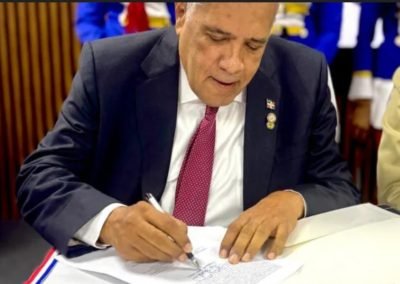
Luis Acosta Moreta, president of the Union Demócrata Cristiana (UDC), a Dominican political party, has proposed reducing the prices of essential food products as part of a broader effort to ease the cost of living for low-income families.
His proposal comes as the new school year highlights the role of social assistance programs in household budgets. Acosta Moreta pointed to school meal programs that provide breakfast, lunch and snacks to thousands of students, saying they help reduce the daily food burden faced by vulnerable families.
The UDC leader also credited President Luis Abinader’s administration with expanding school food programs, arguing that ensuring children receive meals during the school day provides direct support to families struggling to cover basic expenses.
Proposal Focuses On Staple Foods
Acosta Moreta called for a broader social policy focused on bringing down the cost of everyday food. His proposal includes products such as rice, beans, cooking oil, chicken, cornmeal, eggs, sardines and salami, among other staples commonly purchased by Dominican households.
He argued that food prices should first be stabilized and then reduced, making the cost of basic nutrition a national priority. The proposal would place particular emphasis on products consumed regularly by lower-income households, for which changes in food prices can have a direct effect on household budgets.
Acosta Moreta also renewed his call for what he has previously described as the “Macuto Económico Popular”, an initiative intended to make basic food products available in neighborhoods at reduced prices.
Call For Greater Consumer Protection
The UDC president warned against what he described as excessive price increases and practices by merchants, wholesalers, retailers, supermarkets and warehouse operators that he believes can further strain consumers.
His comments add to a recurring political focus on the affordability of basic food in the Dominican Republic. In previous proposals, Acosta Moreta has also called for controlled-price food packages and measures aimed at making staple products more accessible to poorer households.
The issue has particular relevance for families whose budgets are heavily concentrated on food and other essential expenses. Lower food prices, if implemented, would directly affect household purchasing power, while expanded school meal programs can reduce some of the costs associated with feeding children during the school day.
School Meals Remain Part Of The Social Policy Debate
The start of the academic year has brought renewed attention to school-based assistance because meals provided at public schools can represent a significant form of support for families with children.
Acosta Moreta’s proposal therefore combines two approaches: maintaining social programs that provide direct assistance and pursuing measures intended to lower the underlying cost of basic food. He argued that both are necessary to improve living conditions among the country’s most vulnerable households.
No specific timetable, price targets or implementation mechanism for the proposed food reductions was outlined in the remarks. The proposal remains a political call for stronger measures to protect consumers and reduce the cost of essential goods.