 22°C
22°C

Dominican Republic Begins 2026-2027 School Year With 2.69 Million Students
The Dominican Republic opened its 2026-2027 school year on August 24, with a projected 2,686,971 students entering the pre-university education system as schools across the country resumed classes.


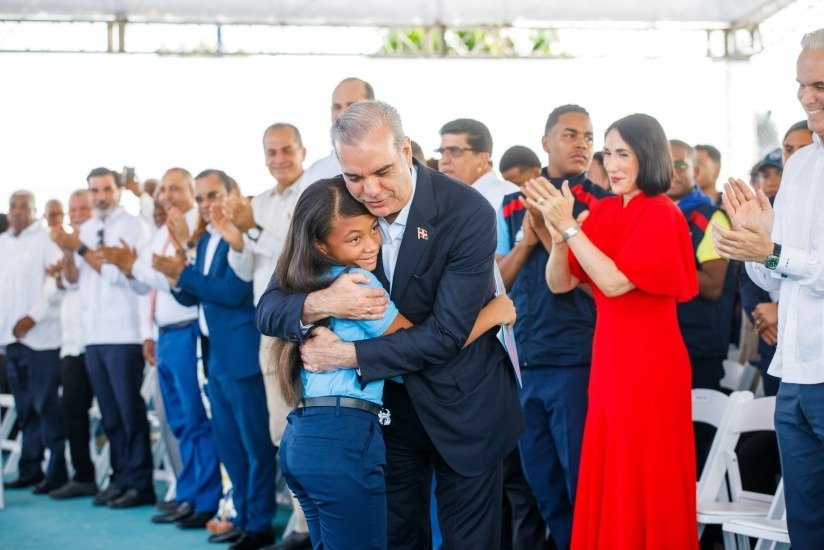
The Dominican Republic’s 2026-2027 school year began Monday with nearly 2.7 million students expected to attend schools nationwide, underscoring the scale of the country’s public education system and its importance to families across the country.
The Ministry of Education of the Dominican Republic (MINERD), the government agency responsible for the pre-university education system, reported a projected enrollment of 2,686,971 students for the new academic year. More than 120,000 teachers will support instruction across schools throughout the country.
Public Schools Account for Most Enrollment
Public education remains the largest part of the system. MINERD projects that 2,084,202 students will attend public schools, representing approximately 76.6% of total enrollment.
Private schools are expected to serve 602,769 students, or about 22.4% of the national total, while the semi-official sector will account for 25,802 students, approximately 1% of enrollment.
The projected student population includes 422,518 children in early education, 1,197,014 in primary school and 869,750 in secondary education. Another 197,689 students are enrolled in the subsystem serving young people and adults.
School Year Opens Across the Country
The central opening ceremony took place at La Milagrosa School in La Ureña, a community in Santo Domingo Este, where President Luis Abinader, Education Minister Luis Miguel De Camps and First Lady Raquel Arbaje marked the start of the academic year.
A second official ceremony was held simultaneously in Santiago de los Caballeros, the Dominican Republic’s second-largest city, under the leadership of Vice President Raquel Peña at Nuestra Señora de las Mercedes Polytechnic Institute.
The start of classes was also observed across the country’s 18 education regions and 122 districts, bringing students, teachers, parents and school staff together for the beginning of the new academic period.
Officials Emphasize Learning and Participation
Abinader urged students to approach the new school year with enthusiasm and responsibility, encouraging them to prioritize learning and make full use of their time in the classroom. He also highlighted education’s role in creating opportunities for families and contributing to the country’s broader development.
De Camps called on students to remain engaged in their education and develop the knowledge, skills and competencies needed in today’s world. He also urged teachers, families and communities to support students throughout the school year and help create environments conducive to learning and personal development.
The education minister emphasized that students will encounter both easier and more demanding subjects during the year, while encouraging them to remain curious, ask questions and persist when academic work becomes challenging.
Infrastructure and Preparation
The new school year follows preparations by the education authorities that included teacher training and improvements to school infrastructure. MINERD reported earlier in August that more than 1,200 new classrooms had been incorporated into the national system, with a target of reaching 1,500 classrooms for the new academic year.
The ministry also reported that more than 90,000 teachers were scheduled to participate in a national training program before classes began. Those measures were intended to strengthen teaching practices while improving the physical and educational conditions available to students.
With the academic year now underway, the size of the projected enrollment means that the performance of the education system will have a direct effect on millions of Dominican families, while the distribution of students between public and private institutions remains a defining feature of education in the country.