 22°C
22°C

Dominican Republic Aging Population to Outnumber Children by 2044
The Dominican Republic is entering a major demographic transition, with the number of people aged 60 and older projected to exceed the population under 15 by 2044, according to new population projections from the National Statistics Office (ONE).


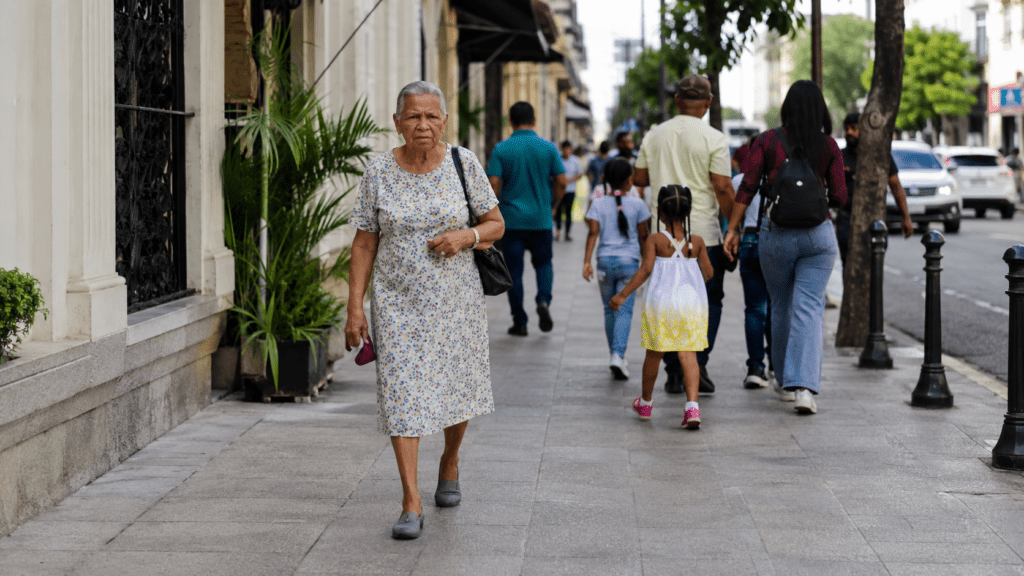
The Dominican Republic is moving toward a significantly older population, a shift that is expected to reshape healthcare, pensions, employment and family life over the coming decades. New projections from the National Statistics Office (ONE), the government agency responsible for official statistics, show that people aged 60 and older will outnumber those under 15 for the first time in 2044.
The change reflects two long-term trends: Dominican women are having fewer children while people are living longer. In 2026, the country is projected to have 11.09 million residents, with a median age of 32.65 years and roughly 51 people aged 60 or older for every 100 children under 15.
That aging ratio is projected to rise to 87 older adults per 100 children in 2040, 96.84 in 2043 and 100.38 in 2044. By 2050, the ratio could reach 123, rising to 237 in 2075 and 329 by 2100.
Fewer Births and Longer Lives
The demographic shift is being driven in large part by declining fertility, alongside broader changes in reproductive patterns, including the country’s persistent rate of teenage pregnancy. The total fertility rate has fallen from 7.57 children per woman in 1950 to 2.13 in 2020 and an estimated 1.97 in 2026. The ONE projects that the rate will decline further to 1.70 children per woman by 2050.
At the same time, life expectancy continues to increase. It is estimated at 75.76 years in 2026 and is projected to reach 81.63 years in 2050 and 87.06 years in 2075. The combination of longer lives and fewer births is gradually changing the age structure of the population.
The country’s population will not begin shrinking immediately. It is projected to continue growing until reaching approximately 13.48 million people in 2073. After that point, deaths are expected to exceed births, with the population declining gradually toward the end of the century.
More Pressure on Workers, Pensions and Public Finances
The demographic transition will increase the number of people who depend on a comparatively smaller working-age population. Economist Alejandro Grisanty said the trend could create additional fiscal pressure, particularly through higher healthcare needs and a potential reduction in available labor.
For the economy, the shift means productivity will become increasingly important. With fewer young people entering the workforce, each worker may need to generate more economic output to offset the decline in the relative size of the labor force. Grisanty argued that structural reforms and stronger tax revenues will become increasingly important as the population ages.
Pensions will face a similar challenge. Economist and pension specialist Arismendi Díaz noted that longer life expectancy means retirement benefits may have to be paid for more years. He pointed to the experience of European countries, where retirement periods have lengthened substantially as people live longer.
Díaz also emphasized the need for higher worker productivity and continued education. As technology and artificial intelligence change the skills required in the workplace, professional training may need to become a permanent part of working life rather than something concentrated at the beginning of a career.
Healthcare Will Need to Adapt
An older population is also likely to change the demands placed on the Dominican healthcare system. Geriatrician Mister E. Encarnación Pérez said the country will need stronger preventive care and specialized services for older adults, including hospitals focused on geriatric medicine and greater access to home-based care for people with functional limitations.
Without adequate preparation, growing demand from older patients could put additional strain on hospitals and other health services. Preventive care and specialized treatment could become increasingly important as chronic conditions and age-related health needs represent a larger share of healthcare demand.
The demographic transition therefore extends beyond the number of hospital beds or medical specialists. It also raises questions about long-term care, family support and how healthcare resources are distributed as the balance between younger and older generations changes.
Families and Society Will Change Too
The effects are expected to reach into family structures and social life. Sociologist Celedonio Jiménez said the changing age composition could produce a less dynamic social structure as the proportion of children and young adults declines and the share of retirees and pensioners increases.
He also expects family patterns to evolve as the traditional extended family becomes less common and households increasingly consist of couples. A smaller younger population could also reduce the availability of young workers, potentially increasing pressure to retain older employees or reconsider retirement-age policies.
Countries with older populations have often had to address labor shortages through higher participation among older workers, greater productivity and, in some cases, immigration. For the Dominican Republic, the scale and timing of those adjustments will depend on how fertility, migration, employment and economic growth develop over the coming decades.
A Demographic Shift Already Underway
The ONE’s projections place the Dominican Republic in a transition that is already visible rather than a distant demographic possibility. The country’s median age is expected to rise from 32.65 years in 2026 to more than 51 years by 2100, while the proportion of older residents continues to grow.
The country’s demographic outlook was developed through the ONE’s updated national population estimates and projections for 1950-2100, prepared with technical support from the Latin American and Caribbean Demographic Centre (CELADE) of the Economic Commission for Latin America and the Caribbean (ECLAC). The projections provide a framework for planning healthcare, pensions, education, employment and other public services around a population that will look very different from today’s.
For the Dominican Republic, the coming decades will therefore involve more than managing population growth. The country will have to adapt institutions, workplaces, healthcare services and families to a society in which older adults eventually outnumber children.