 22°C
22°C
Dominican Pediatric Society Defends Childhood Vaccine Schedule
The Dominican Pediatric Society has reaffirmed its support for the country’s childhood vaccination schedule, saying the program is based on scientific evidence and the Dominican Republic’s epidemiological needs amid growing attention to the U.S. Make America Healthy Again agenda.



The Dominican Pediatric Society has reaffirmed its support for the Dominican Republic’s national childhood vaccination program, drawing a clear distinction between the country’s immunization policy and proposals being promoted through the U.S. Make America Healthy Again (MAHA) agenda.
The medical organization said Wednesday that it respects the decisions other countries make regarding vaccination schedules but considers the Dominican program appropriate for the country’s own epidemiological conditions and public health needs. The statement comes after the U.S. Embassy in Santo Domingo expressed support for expanding the MAHA agenda in the Dominican Republic.
Pediatricians Defend The National Vaccination Framework
The society said vaccination recommendations in the Dominican Republic are based on scientific evidence evaluated by international and local expert committees. It emphasized that national immunization policies are not necessarily identical from one country to another because disease patterns, public health priorities and population needs can differ.
The organization urged healthcare professionals to provide parents and guardians with clear and timely information about vaccines, emphasizing their safety, effectiveness and preventive value. Its position reinforces the role of the national vaccination schedule as a public health tool for protecting children against preventable diseases.
The Dominican Ministry of Public Health oversees the national immunization program through its Directorate of Vaccine-Preventable Diseases, known as the DIV. The program has been developed using epidemiological surveillance and recommendations from international health organizations, including the Pan American Health Organization and the World Health Organization.
U.S. Health Agenda Raises Questions About Vaccines
The Dominican pediatricians’ statement follows U.S. efforts to promote aspects of the MAHA agenda in the Dominican Republic. The initiative has included proposals to review childhood vaccination recommendations and investigate possible connections between exposure to certain chemicals and autism.
Those proposals have generated debate because they touch on established vaccination policies and broader questions about how public health recommendations should be evaluated. In the Dominican Republic, the pediatric society said decisions about immunization should continue to be guided by evidence and by the country’s own epidemiological circumstances.
The issue has also emerged within a broader expansion of health cooperation between the Dominican Republic and the United States. Recent discussions between officials from both countries have included prevention, public health and the MAHA initiative.
Vaccination Schedule Continues To Evolve
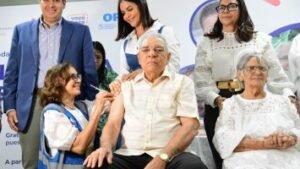
The Dominican vaccination program has undergone changes in recent years. Among them is the inclusion of boys ages 9 to 14 in the public vaccination program against human papillomavirus, or HPV, after the program had previously focused on girls in that age group.
The pediatric society maintains vaccination resources for families covering childhood and adolescent immunization. The national program has also continued to be updated as health authorities assess epidemiological conditions and available vaccines.
In 2025, the Ministry of Public Health announced that children ages 9 to 14 would be included in HPV vaccination, while the country also incorporated a broader pneumococcal vaccine into its national program. These changes illustrate how the schedule can be adjusted as health authorities evaluate disease risks and immunization needs.
For Dominican families, the pediatric society’s message is that vaccination decisions should be based on the national program and guidance from qualified healthcare professionals. Its latest statement leaves the country’s existing immunization framework unchanged while acknowledging that other governments may adopt different approaches.