 23°C
23°C

Dominican Rights Advocate Accuses Government of “Human Hunt” Against Haitians
Haitian rights advocate Roudy Joseph has accused the Dominican government of systematically targeting Haitian migrants, as deportation operations continue at a scale that has made migration policy one of the country’s most contentious issues.


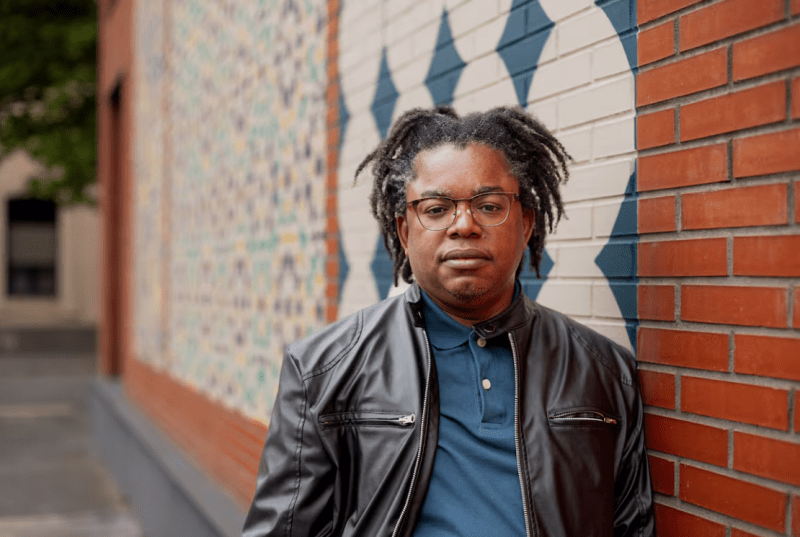
Roudy Joseph, a Haitian human rights advocate and spokesperson for the HaitianosRD collective, has accused the Dominican government of using immigration enforcement to target Haitian migrants and people of Haitian descent. His allegations come as the Dominican Republic continues large-scale deportation operations under President Luis Abinader, with official figures showing more than 126,000 irregular migrants deported during the first four months of 2026.
Joseph, who is currently participating in Amnesty International Spain’s protection program for human rights defenders, made the allegations in an interview published in June. He argues that the government’s migration policy has created a system of racial profiling and what he describes as a de facto state of exception for people of Haitian origin.
The Dominican government presents the campaign differently. The General Directorate of Migration (DGM), the agency responsible for immigration control, says its operations target foreigners in irregular immigration status and are conducted under existing migration laws and procedures. The agency has repeatedly stated that detainees’ human rights are protected throughout the process.
Deportations Have Reached a Historic Scale
The scale of enforcement has expanded sharply since late 2024. In October that year, the National Defense and Security Council, chaired by Abinader, ordered an operation aimed at repatriating up to 10,000 migrants per week. Government officials said the measure was intended to address irregular migration while maintaining respect for human rights.
Official DGM figures show that the policy has remained in effect. The agency reported 126,790 deportations between January and April 2026, with operations involving immigration agents, the military and the National Police. Earlier figures showed that 99,250 of the 99,268 people deported during the first three months of the year were Haitian nationals.
Those figures provide a measurable indication of the scale of the policy, but they do not by themselves establish the allegations made by Joseph regarding racial profiling or unlawful treatment. The government maintains that the people being deported are migrants who lack legal authorization to remain in the country.
Joseph Says Haitian Migrants Face Systematic Pressure
Joseph argues that the enforcement campaign goes beyond immigration control. He says Haitian migrants face repeated arrests, searches of homes, collective deportations and limited access to legal defenses, creating what he characterizes as a permanent state of insecurity.
One of the central claims in the report coordinated by Joseph, “Mass Deportations and State of Exception in the Dominican Republic (2021–2025)”, is that deportation statistics can include repeated returns of the same individuals. According to the collective, people who have jobs, families and established lives in the Dominican Republic may return after being expelled, creating a cycle of detention, deportation and re-entry.
The collective has also documented alleged deaths and abuses connected to immigration enforcement. In September 2025, HaitianosRD said its investigation identified 54 deaths of people of Haitian origin between 2021 and mid-2025 that it linked to the deportation campaign. Those claims remain allegations by the organization and are not equivalent to an independent finding of government responsibility in every case.
Nationality and Race Remain Central to the Dispute
The debate extends beyond undocumented migrants. Joseph also points to the situation of Dominicans of Haitian descent, particularly people affected by the nationality crisis that followed the Dominican Constitutional Court’s 2013 ruling on citizenship. He argues that the resulting cases of statelessness and documentation problems have disproportionately affected people of Haitian ancestry.
Migration policy has become especially sensitive because the Dominican Republic shares the island of Hispaniola with Haiti, where political instability, economic hardship and escalating gang violence have driven continued migration pressure. The Dominican government has framed stronger border and immigration controls as matters of national sovereignty and security.
In October 2024, the government also continued construction of a border wall designed to reinforce control along the 392-kilometer frontier. Officials have described the broader strategy as necessary to protect the country from the consequences of irregular migration and instability in neighboring Haiti.
Human Rights Groups Challenge the Government’s Approach
Joseph says the consequences are felt beyond immigration detention centers. He describes a climate in which Haitian workers may fear traveling to work or moving through public spaces because of the possibility of immigration checks. He also accuses authorities of failing to adequately protect human rights defenders who criticize the deportation campaign.
HaitianosRD has separately alleged threats and attacks against activists, including incidents involving organizations that defend Haitian migrants and Dominicans of Haitian descent. These allegations have become part of a broader dispute over how immigration enforcement is conducted and whether existing safeguards are sufficient.
The Dominican authorities, meanwhile, continue to emphasize that immigration enforcement is carried out under the country’s General Migration Law 285-04 and with established procedures. The DGM has said its operations are intended to identify people without legal status and return them to their countries of origin while respecting their rights.
The competing accounts illustrate the central tension surrounding the Dominican Republic’s migration policy: the government is pursuing one of the Caribbean’s most extensive immigration enforcement campaigns while rights organizations argue that the methods used disproportionately affect Haiti’s population and people of Haitian descent.
With deportations continuing through 2026, the dispute is likely to remain a major issue in the Dominican Republic’s domestic politics and relations with Haiti. The scale of enforcement has already transformed migration control into a sustained national policy, while the allegations of racial profiling and rights violations continue to generate scrutiny from human rights organizations.