 25°C
25°C

Dominican Republic Begins New Border Security Projects
The Dominican government has begun construction of three projects along the northern border with Haiti, combining new commercial infrastructure, road improvements and border-control facilities under its “Frontera Fuerte” strategy.


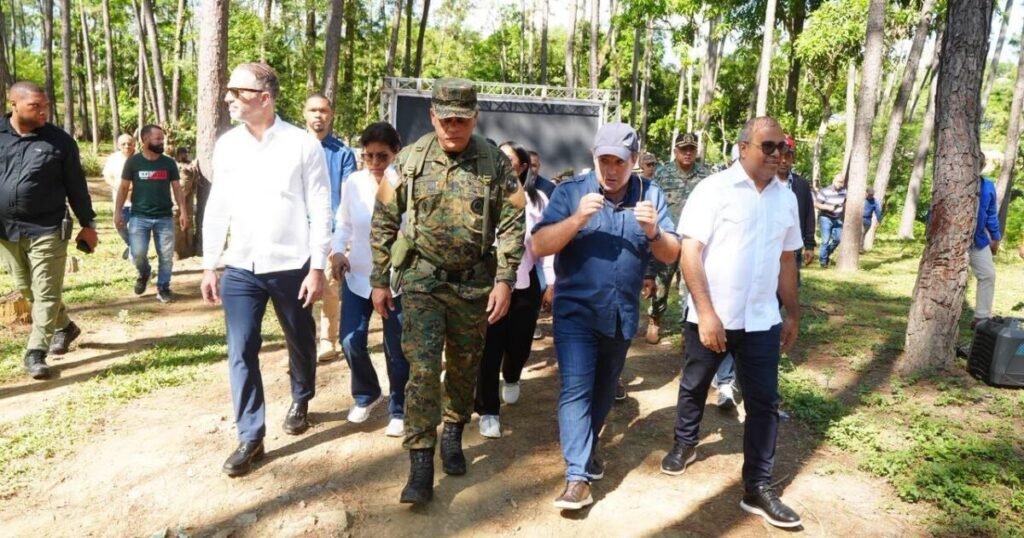
The Dominican Republic has begun construction of three strategic projects along its northern border with Haiti as part of an effort to strengthen state presence, improve transportation links and support economic activity in communities near the frontier.
The initiative includes the National Market of Tilory, reconstruction of the Guayajayuco crossing and the construction of new access-control facilities and border-control posts along the International Highway. The projects are part of the government’s broader “Frontera Fuerte” strategy, which combines security, infrastructure and economic development.
The first groundbreaking ceremony was led by Presidential Minister José Ignacio Paliza and Defense Minister Lt. Gen. Carlos Antonio Fernández Onofre, together with local authorities and officials from the Dominican Army, the General Directorate of Migration and the Directorate of Border Development.
New Market Aims to Organize Border Trade
The National Market of Tilory is intended to modernize a commercial area where cross-border trade has operated informally for decades. The project is expected to provide dedicated facilities for producers and merchants while improving sanitary conditions, security and oversight of commercial activities.
Tilory is located along the International Highway near the municipality of Restauración in Dajabón province, close to the Dominican-Haitian border. The location gives the market a practical role in efforts to organize commercial exchanges while strengthening institutional oversight in a strategically sensitive area.
Authorities have presented the market as part of a broader approach that links border security with economic activity. By providing formal infrastructure for commerce, the government expects to create more orderly conditions for producers and traders operating in the area.
Road Project Targets Connectivity and Flood Risks
The second project involves reconstruction of the Guayajayuco crossing, which will be complemented by a bridge being built by the Ministry of Public Works and Communications over the Artibonito River.
The combined infrastructure is expected to improve year-round road access for the surrounding community and reduce its vulnerability when the river rises. Better connectivity is also intended to facilitate access to essential services and improve the ability of government agencies to respond to emergencies in the area.
For communities along the northern frontier, reliable road connections are particularly important because geography and weather conditions can complicate transportation. The government has therefore included connectivity alongside security and economic development as one of the main components of its border strategy.
New Facilities Planned for International Highway
The third component consists of new access-control facilities and border-control posts along the International Highway. These installations are designed to increase surveillance capabilities and improve the monitoring of people and goods moving through the area.
The facilities will also support the work of the armed forces and other government agencies responsible for border management. The project reflects the government’s objective of expanding institutional capacity along the Dominican-Haitian frontier while improving infrastructure used for transportation and commercial activity.
The “Frontera Fuerte” strategy was developed around the idea of combining border security, connectivity and economic development. Government planning documents describe the initiative as a coordinated effort to strengthen surveillance, expand strategic infrastructure and promote productive activity in border provinces.
The new projects represent the latest implementation of that approach, extending the government’s focus beyond physical security measures to include roads, commercial facilities and public infrastructure. For communities along the border, the outcome will depend on how effectively these investments improve access, trade and the state’s ability to provide services while maintaining tighter control of the frontier.