 23°C
23°C

Haitian Influence on Dominican Spanish Vocabulary
The influence of Haiti on Dominican Spanish is real, but it is more complex than a simple list of “Haitian words.” Centuries of contact between the two sides of Hispaniola have produced linguistic exchange through migration, trade, border communities, agriculture, religion, and bilingualism. Academic research identifies Haitian Creole as one of the most important non-Spanish linguistic influences on Dominican Spanish, while also showing that the strongest effects are often regional and that individual words must be attributed carefully rather than assumed to be Haitian in origin.


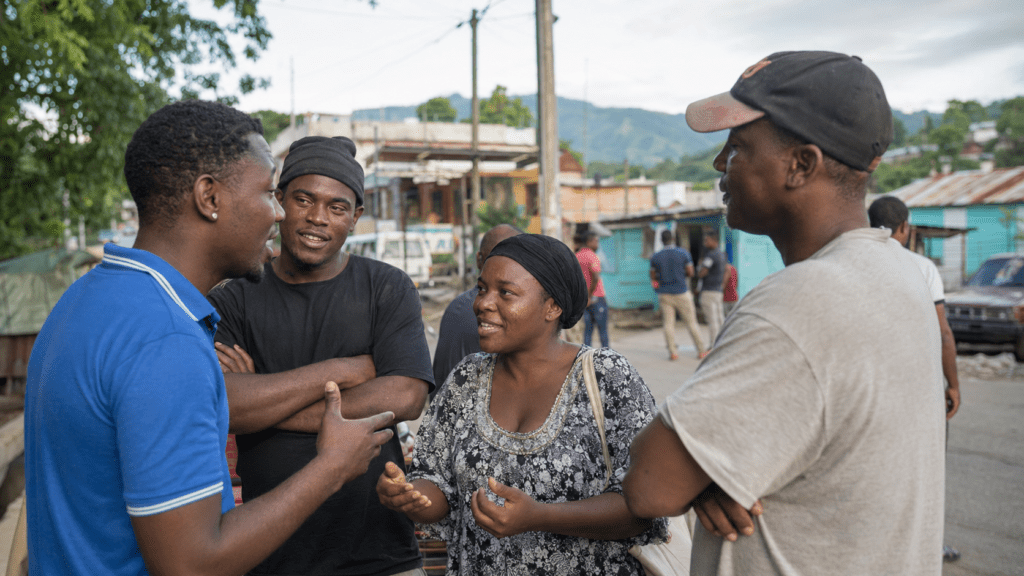
The Spanish spoken in the Dominican Republic developed from the Spanish introduced during the colonial period, but it has never evolved in isolation. The island of Hispaniola has been divided politically between Haiti and the Dominican Republic for centuries, while its inhabitants have maintained economic, social and cultural contact across the border. That history has left traces in language. Haitian Creole, or Kreyòl ayisyen, has contributed to the linguistic environment of the Dominican Republic and has influenced some varieties of Dominican Spanish, particularly in communities with sustained contact with Haitian Creole speakers.
Why Haitian Creole Has Influenced Dominican Spanish
The linguistic relationship between Haiti and the Dominican Republic is rooted in the geography and history of Hispaniola. The two countries occupy the same Caribbean island and share a land border. Population movements, agricultural labor, commerce and family networks have created repeated opportunities for speakers of Spanish and Haitian Creole to interact.
Linguist John M. Lipski argued that Haitian Creole became the most significant non-Hispanic linguistic influence on Dominican Spanish, with contact beginning centuries ago and continuing through later migration and cross-border interaction. His research also places this influence in a broader history of Afro-Dominican Spanish rather than treating Haitian contact as an isolated modern phenomenon.
Research published in the Handbook of Hispanic Sociolinguistics likewise treats Dominican Spanish and Haitian Creole as a significant language-contact relationship. Studies of communities along the Dominican-Haitian border have examined not only vocabulary but also pronunciation, grammar and the way bilingual speakers acquire and use Spanish.
This distinction matters because linguistic influence does not necessarily mean that an entire language adopts large numbers of foreign words. Contact can affect pronunciation, grammar, patterns of discourse and specialized vocabulary without changing the fundamental identity of the language. Dominican Spanish remains a variety of Spanish, while Haitian Creole is a separate language with its own grammatical system.
Haitian Creole and the Dominican Lexicon
The clearest way to understand Haitian influence on Dominican vocabulary is to look at lexical borrowing and cultural terminology. Some words associated with Haitian culture, religious practices, music and border communities have entered Dominican usage or are understood within Dominican Spanish-speaking communities.
However, identifying a word as Haitian requires more than finding a similar form in Haitian Creole. Caribbean languages have experienced centuries of contact with Spanish, French, African languages, English and indigenous languages. Some words that are sometimes described casually as “Haitian” have older or different origins. For that reason, reliable linguistic analysis distinguishes between documented Haitianisms, words shared across the Caribbean and expressions whose etymology remains uncertain.
The Academia Dominicana de la Lengua has explicitly recognized the presence of Haitianisms in Dominican vocabulary. Its discussion of guedé, for example, explains that the term comes from Haitian religious terminology associated with the Gede spirits. The same source emphasizes that linguistic exchange has been reciprocal: Dominican Spanish has influenced Haitian speech as well as Haitian Creole contributing vocabulary to Dominican Spanish.
Guedé: A Clear Example of Haitian Cultural Vocabulary
Guedé is one of the more useful examples for understanding how Haitian influence can enter Dominican vocabulary through culture rather than ordinary everyday conversation. In Haitian religious traditions, the Gede are associated with spirits connected with death and the ancestral world. The term appears in Dominican contexts, particularly where Haitian cultural and religious traditions have been present.
The importance of guedé is not simply that a Haitian word exists in Dominican Spanish. It illustrates a broader mechanism of linguistic borrowing: when communities interact, vocabulary connected with practices, beliefs or institutions for which one community has specialized terminology can cross linguistic boundaries.
This kind of borrowing is particularly visible in areas where Haitian cultural practices have had a sustained presence. It does not mean that every Dominican Spanish speaker uses the word or that it has the same frequency throughout the country.
Gagá and Vocabulary Associated With Haitian-Dominican Culture
Another important area of contact is the vocabulary associated with gagá, the Dominican name commonly associated with Haitian-influenced ceremonial music and processions. The term is especially relevant in communities connected to sugar plantations and bateyes, where Haitian migrants and their descendants have historically maintained cultural traditions.
The linguistic significance of this vocabulary lies in its social context. Words connected with music, ritual, festivals and community organization can circulate between languages even when the wider population does not speak both languages fluently.
For international readers, this is an important distinction. A cultural word can have a visible presence in Dominican Spanish without becoming part of the basic vocabulary used in every conversation. Linguistic influence should therefore be measured not only by how many words exist, but also by where those words are used, by whom, and in which social contexts.
The Role of the Bateyes
The Dominican bateyes provide one of the clearest settings for studying Spanish-Creole contact. Historically associated with the sugar industry, these communities became home to large populations of Haitian migrant workers and their descendants. As a result, Spanish and Haitian Creole have existed side by side for generations in many bateyes.
Sociolinguistic research on Dominican bateyes has found that Haitian Creole remains present but that language shift toward Spanish can occur across generations. Silke Jansen’s research describes communities in which younger generations born in the Dominican Republic increasingly move toward Spanish, while Haitian Creole remains especially important through continuing migration and bilingual networks.
This situation helps explain why Haitian influence on Dominican Spanish cannot be understood simply as a process in which Haitian words permanently replace Spanish words. In many communities, the relationship is better described as language contact, with different degrees of bilingualism and language maintenance depending on generation, social network and community.
Influence Beyond Vocabulary
Haitian influence is not restricted to individual words. Researchers have also examined the effects of Spanish-Creole contact on grammar and pronunciation, particularly among bilingual speakers and people who acquired Spanish as a second language.
A study by Pedro Guijarro-Fuente and Luis A. Ortiz López examined the acquisition of Spanish clitic pronouns by Haitian Creole speakers and bilingual communities along the Dominican-Haitian border. Their research demonstrates that sustained contact can produce linguistic patterns that cannot be explained simply by counting borrowed vocabulary.
This is important because some features sometimes attributed to Haitian Creole influence in popular discussions are actually difficult to establish historically. A similarity between Dominican Spanish and Haitian Creole does not automatically prove that one language borrowed the feature from the other. Linguists must consider chronology, geographic distribution, bilingualism and alternative explanations.
Why Some “Haitian Words” Are Difficult to Verify
One of the most common mistakes in discussions of Dominican Spanish is to assign Haitian origins to words merely because they sound unfamiliar to speakers from other Spanish-speaking countries. Dominican Spanish contains vocabulary from several historical sources, including Taíno languages, African languages, English, French and other varieties of Spanish.
The Academia Dominicana de la Lengua, for example, has documented the importance of Taíno heritage in Dominican vocabulary, with words such as canoa, huracán, bohío and yuca. It has also emphasized that Dominican Spanish develops its own semantic meanings and lexical formations.
That broader linguistic history means that a word should not be classified as Haitian simply because it is strongly associated with the Dominican Republic or the Caribbean. Its etymology has to be established separately.
| Type of influence | How it appears | Why attribution matters |
|---|---|---|
| Haitian cultural vocabulary | Terms associated with religion, music and community practices | These words may be strongly connected with Haitian cultural traditions without being widespread across all Dominican Spanish. |
| Everyday lexical borrowing | Words adopted through sustained bilingual contact | The origin must be established through linguistic and historical evidence. |
| Pronunciation | Contact-related patterns among bilingual or second-language speakers | A similar pronunciation does not by itself demonstrate Haitian influence. |
| Grammar | Patterns appearing in Spanish spoken by bilingual communities | Researchers must distinguish contact effects from features that developed independently in Spanish. |
The Border Is Especially Important
The influence of Haitian Creole is not distributed evenly across the Dominican Republic. Language contact is particularly significant in communities near the international border and in places with substantial Haitian-origin populations.
This geographic pattern is typical of contact linguistics. When speakers of two languages interact frequently, the opportunities for borrowing and structural influence increase. When contact becomes less frequent, the influence may remain concentrated in particular cultural or social domains.
Studies of the Dominican-Haitian border have therefore been especially important to researchers. They provide an opportunity to observe bilingualism, second-language acquisition, language maintenance and language shift in communities where Spanish and Haitian Creole coexist.
Haitian Influence Is Part of a Larger Dominican Linguistic History
It would be misleading to describe Dominican Spanish as primarily the product of Haitian influence. Spanish provides its fundamental linguistic structure, while Dominican speech reflects a much broader history of contact.
Taíno vocabulary survived from the island’s Indigenous population. African languages contributed to Caribbean vocabulary and culture through the history of the Atlantic slave trade. Spanish varieties brought by settlers from Spain evolved locally. Later contact with English and other Caribbean languages added further layers.
Haitian Creole represents one particularly important component of that history because of the geographical proximity of Haiti, the political history of Hispaniola and the long-standing movement of people between the two countries.
Understanding the Dominican lexicon therefore requires a layered approach. A Dominican word can be locally distinctive without being Haitian, and a Haitian-derived term can become part of Dominican cultural vocabulary without transforming the underlying language into something other than Spanish.
Language Contact and Dominican Identity
Language is also connected to identity, which makes discussions of Haitian influence particularly sensitive. The relationship between Haiti and the Dominican Republic has involved cooperation and exchange as well as political conflict, migration disputes and periods of strong anti-Haitian sentiment.
For linguists, however, language contact is a descriptive phenomenon. The existence of Haitian influence on Dominican Spanish does not imply that Dominican identity is Haitian, nor does recognizing Haitian contributions diminish the Spanish, Taíno, African or other elements that form part of Dominican cultural history.
Recent sociolinguistic research in Dominican bateyes has also shown that speakers actively negotiate how they describe their linguistic identities. Research conducted among bilingual residents has examined terms such as patuá and the ways speakers distinguish between Haitian Creole, Spanish and local varieties of speech.
This perspective is important because languages do not exist independently of the people who use them. Vocabulary travels through social relationships, and the meanings attached to words can change as communities adopt, adapt or reject particular forms.
What Can Be Safely Said About Haitian Influence?
The strongest conclusion supported by linguistic research is that Haitian Creole has had a documented influence on Dominican Spanish, especially in areas and communities characterized by sustained Haitian-Dominican contact. The influence includes vocabulary as well as other aspects of language contact.
At the same time, it would be inaccurate to claim that a large proportion of ordinary Dominican Spanish vocabulary comes from Haitian Creole. The available research does not support such a sweeping conclusion. Nor should every unusual Dominican word be labeled Haitian without reliable etymological evidence.
The most accurate description is therefore one of long-term, multidimensional language contact. Haitian Creole is one of several languages and cultural traditions that have contributed to the development of the Dominican linguistic landscape.
Frequently Asked Questions
Does Haitian Creole influence Dominican Spanish?
Yes. Academic research has documented contact between Haitian Creole and Dominican Spanish, particularly along the Dominican-Haitian border and in communities with substantial Haitian-origin populations. The influence includes lexical, grammatical and phonological phenomena, although its intensity varies by community and speaker.
Are there Haitian words in Dominican Spanish?
Yes. Haitianisms occur in Dominican vocabulary, especially in areas connected with Haitian culture and long-term bilingual contact. Guedé, associated with Haitian religious terminology, is one example explicitly discussed by the Academia Dominicana de la Lengua. Other proposed examples should be evaluated individually because similar-looking Caribbean words can have different origins.
Is Dominican Spanish a mixture of Spanish and Haitian Creole?
No. Dominican Spanish is a variety of Spanish. Haitian Creole is a separate language. Contact between the two has produced linguistic influence, but that does not mean that Dominican Spanish is itself a Creole language.
Where is Haitian linguistic influence strongest in the Dominican Republic?
It is particularly visible in communities with sustained contact between Spanish and Haitian Creole speakers, including parts of the Dominican-Haitian border and some bateyes. The influence is not uniform throughout the country.
Did Haitian Creole influence Dominican pronunciation?
Language-contact research has documented pronunciation and other linguistic phenomena among bilingual and second-language speakers in border communities. However, not every characteristic of Dominican pronunciation should be attributed to Haitian Creole. Dominican Spanish has its own Caribbean history of phonological development.
Why is it difficult to identify Haitianisms?
Because Dominican Spanish has multiple historical sources. A word may be Indigenous, African, Spanish, French, English or Haitian Creole in origin, and some forms have uncertain or disputed etymologies. Reliable attribution requires linguistic and historical evidence rather than similarity in sound alone.
Research and Further Reading
Readers interested in the subject can consult the University of New Mexico repository for John M. Lipski’s study on the Haitian contribution to Afro-Dominican Spanish, which provides an important historical and linguistic framework for understanding Haitian influence.
For research specifically addressing Spanish and Haitian Creole contact, the Wiley chapter “Spanish in Contact with Haitian Creole” by Luis A. Ortiz López provides an academic overview of the relationship. A separate study by Pedro Guijarro-Fuente and Luis A. Ortiz López examines Creole-Spanish contact and the acquisition of Spanish clitics in communities along the Dominican-Haitian border.
The SAGE publication of that border study is particularly useful for understanding why linguistic contact cannot be reduced to vocabulary alone.
Research on language use in Dominican bateyes provides another perspective. Silke Jansen’s study, indexed by Dialnet, examines language maintenance and language shift among communities with Dominican and Haitian linguistic backgrounds.