 22°C
22°C

Global Earthquake Activity Intensifies After Indonesia Quake
A powerful earthquake sequence has drawn international attention after a magnitude 7.7 earthquake struck Indonesia, while Colombia continues to face a severe humanitarian and infrastructure crisis following its own major earthquake.


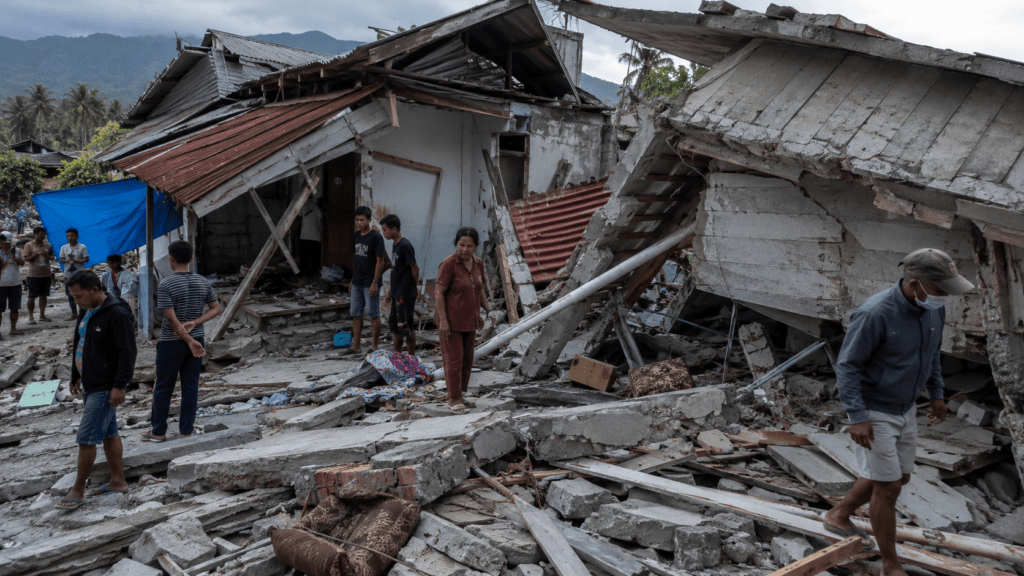
Global earthquake activity has drawn renewed attention after a magnitude 7.7 earthquake struck off Flores, Indonesia, killing at least 47 people and leaving hundreds injured. The shallow quake triggered tsunami warnings and a series of strong aftershocks, adding to a week of significant seismic events in several parts of the world.
The Indonesian earthquake occurred early Saturday near Flores, an island in East Nusa Tenggara province. The United States Geological Survey recorded the event at a depth of about 10 kilometers, a factor that can increase the intensity of ground shaking and the potential for damage near the epicenter.
Indonesia Faces Destruction and Continued Aftershocks
Buildings and public infrastructure were damaged across affected communities, while emergency teams faced difficult conditions as authorities assessed the full extent of the destruction. The initial tsunami warning was later lifted, but residents remained on alert as strong aftershocks continued to affect the region.
The earthquake also underscored Indonesia’s exposure to seismic hazards. The country lies along the Pacific Ring of Fire, a highly active zone where several tectonic plates interact and where earthquakes and volcanic activity are frequent. Communities in the region therefore rely heavily on emergency preparedness, resilient construction and early-warning systems to reduce the consequences of major earthquakes.
Other significant earthquakes were also reported during the same period. Vanuatu recorded a magnitude 6.1 event in the South Pacific, while a magnitude 5.0 earthquake was reported in Granada, southern Spain. The Spanish earthquake was felt locally and caused some minor material damage and anxiety among residents.
Colombia’s Earthquake Death Toll Reaches 294
The seismic emergency has been compounded by the continuing aftermath of a magnitude 7.4 earthquake in Colombia earlier in the month. The country’s National Unit for Disaster Risk Management reported that the death toll had risen to 294, while 320 people remained missing.
The disaster has affected 115,461 people from 54,008 families across 448 municipalities in 15 departments. Authorities reported 3,935 injuries and said 353 people had been rescued as emergency and recovery operations continued.
Housing losses have also increased significantly. The number of destroyed homes reached 14,493, while another 81,506 sustained damage. Sixty-six buildings collapsed, with particularly serious impacts reported in Cali and Pereira, the capitals of Valle del Cauca and Risaralda respectively.
The damage extends well beyond residential areas. Authorities reported impacts on 241 health centers, 2,612 educational facilities and 3,621 community centers, as well as 298 roads, 59 water-supply systems, 44 vehicle bridges, five pedestrian bridges and five airports.
Seismic Preparedness Remains a Priority
The succession of major earthquakes does not by itself demonstrate that the planet has entered an abnormal period of tectonic activity. Earthquakes occur continuously around the world, and clusters of moderate and strong events can fall within the broad statistical patterns of global seismicity.
For countries exposed to earthquake hazards, however, each major disaster reinforces the importance of preparedness. Experts in the Dominican Republic are also calling for stronger earthquake preparedness measures as authorities and communities assess how to reduce the impact of future seismic events. Building standards designed to withstand strong shaking, reliable emergency communications, evacuation planning and effective early-warning systems can reduce casualties and help communities recover more quickly after a major event.
The recent disasters in Indonesia and Colombia also demonstrate how the consequences of an earthquake extend beyond the initial shaking. Damaged roads, bridges, hospitals, schools and communications infrastructure can complicate rescue operations and leave affected communities vulnerable long after the main earthquake has passed.