 22°C
22°C

Tropical Storm Cristobal Forms in Atlantic With No Caribbean Threat
Tropical Storm Cristobal has become the third named storm of the 2026 Atlantic hurricane season, but the system remains far from populated areas and is not currently threatening the Caribbean, including the Dominican Republic.


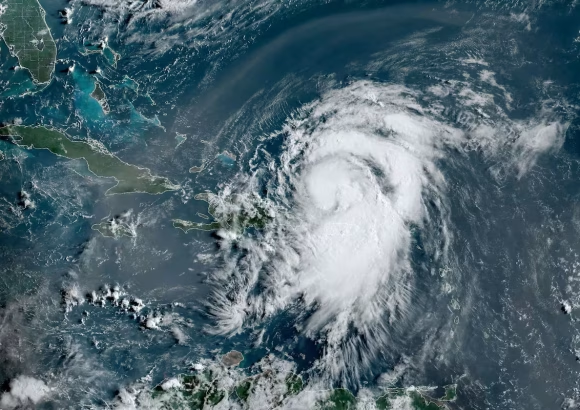
Tropical Storm Cristobal formed in the central Atlantic on Wednesday, becoming the third named storm of the 2026 Atlantic hurricane season, while remaining far from land and posing no immediate threat to the Caribbean.
The system developed over open waters and was moving rapidly eastward. Forecasts indicate that Cristobal will weaken as it encounters cooler ocean temperatures, with the National Hurricane Center monitoring its evolution as the storm moves across the Atlantic.
Cristobal Expected to Weaken
Cristobal developed with maximum sustained winds of about 72 kilometers per hour. At formation, its center was approximately 1,417 kilometers west of the Azores, placing the storm well away from the Caribbean, the United States and other populated areas.
The storm’s eastward movement is expected to take it into increasingly cooler waters, an environment that is unfavorable for tropical cyclone development. Forecasters therefore expect weakening over the following 24 to 48 hours as the system moves farther across the Atlantic.
There are currently no indications that Cristobal will move toward the Dominican Republic or other Caribbean islands. The storm also poses no direct threat to the Azores or the Iberian Peninsula based on its current track.
Two Other Atlantic Disturbances Under Watch
While Cristobal is expected to weaken, forecasters are also monitoring two other areas of disturbed weather in the Atlantic as seasonal activity begins to increase.
One tropical wave has an 80% chance of developing into a tropical system over the next 48 hours. Its projected movement could bring it closer to the Lesser Antilles in the coming days, making it the system of greater interest for the Caribbean at this stage.
A second disturbance remains under observation but has a low probability of becoming a tropical cyclone in the near term.
Atlantic Hurricane Season Enters a More Active Period
The developments come as the Atlantic enters the part of the hurricane season when tropical activity typically increases. August and September are particularly important months for monitoring disturbances emerging from the tropical Atlantic and surrounding regions.
The climatological peak of the Atlantic hurricane season occurs around September 10, meaning that additional systems can develop in the weeks ahead even when current storms pose no direct threat to the Caribbean.
For the Dominican Republic and other vulnerable Caribbean countries, the absence of an immediate threat from Cristobal does not remove the need for continued monitoring. Tropical systems can change strength and direction as atmospheric and oceanic conditions evolve, making official forecasts the most reliable source for determining whether preparations are necessary.
For now, Cristobal remains an open-Atlantic system with no direct impact expected across the Caribbean, while attention is shifting toward the tropical wave with the higher probability of development.