 22°C
22°C

The Dominican Peso: When Was It Born, And Why Is It Called “Peso”?
The Dominican peso has roots that reach back to the birth of the Dominican Republic, but its history is more complicated than a single founding date. Dominican coins appeared shortly after independence in 1844, while the modern national monetary system took shape much later, with the creation of the peso as the country’s national currency in the 1930s and the establishment of the Banco Central de la República Dominicana in 1947. The word peso itself is much older, originating in Spanish as a term connected with weight and eventually becoming the name of important currencies across the Spanish-speaking world.


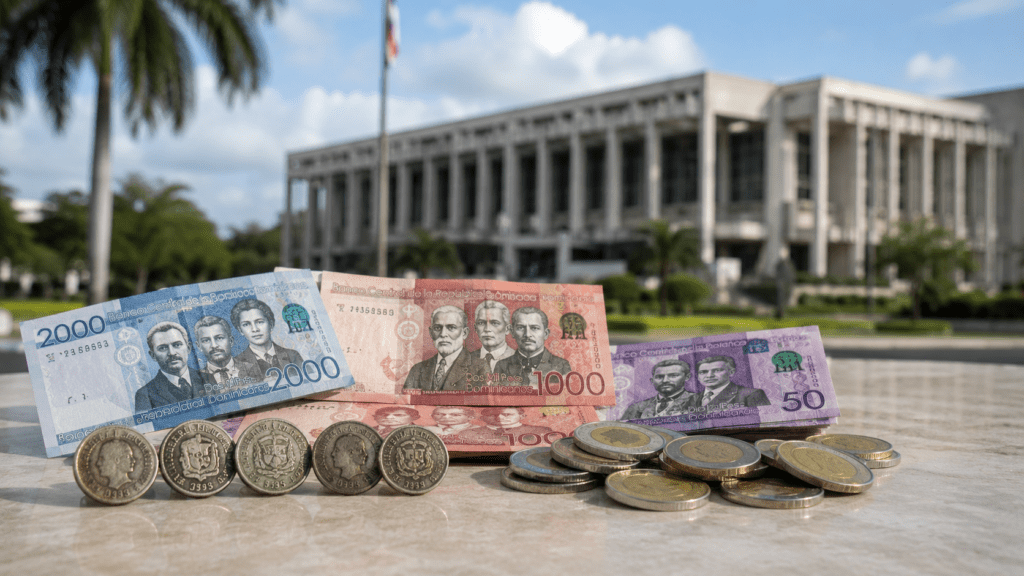
The Dominican peso is one of the symbols of the country’s sovereignty, but asking exactly when it was “born” produces more than one answer. The first Dominican coins appeared in 1844, the year of independence, yet the monetary system associated with the modern peso developed over several decades. The decisive institutional changes came in the 1930s and 1940s, culminating in the creation of the Banco Central de la República Dominicana in 1947.
When Did the Dominican Peso First Appear?
If by “peso” we mean the first Dominican money bearing that denomination, the story reaches back to the earliest years of the republic. According to the Banco Central de la República Dominicana’s historical account of Dominican coins, the first Dominican coins appeared after the declaration of independence in 1844.
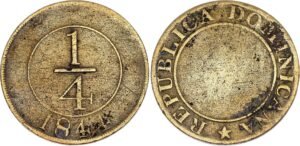
Those first coins were not the modern coins that Dominicans use today. They were one-quarter-real pieces, popularly known as cuartillos, produced by the Scoville Manufacturing Company in the United States.
The distinction is important. The appearance of Dominican coinage in 1844 shows that the new republic began developing its own monetary instruments almost immediately after independence. It does not mean that the modern Dominican peso, as the country’s fully established national currency, already existed in its present form.
1844: The Beginning of Dominican Coinage
The creation of a national currency was a difficult process for the newly independent republic. In the years following independence, Dominican monetary circulation included a mixture of local issues, foreign coins, paper money and other forms of payment.
In 1848, for example, the government authorized the circulation of United States coins of 5, 10 and 25 cents, assigning them local equivalents in reales and pesos. At the same time, banknotes in denominations of 1, 2 and 20 pesos were circulating.
This early monetary history explains why it is misleading to search for one precise day on which the modern peso suddenly appeared. The peso was already a monetary denomination in the nineteenth-century Dominican Republic, but the country’s monetary system evolved gradually rather than being established in a single act immediately after independence.
So When Was the Modern Dominican Currency Created?
A much more significant milestone came in 1937. The Banco Central’s historical record identifies Law No. 1259, promulgated on February 21, 1937, as the legislation that created the national currency framework and established rules for the minting of Dominican coins.
The law specified that Dominican coins should be produced under standards comparable to United States currency in areas such as fineness, weight, form, dimensions and monetary scale. The first coinage under this system amounted to RD$600,000 and consisted of denominations from one centavo to 50 centavos.
Interestingly, the first series did not include a one-peso coin. The reason was practical: the American one-dollar note corresponding to that denomination was expected to continue circulating for a considerable period.
This episode illustrates an important feature of Dominican monetary history. The creation of a national currency did not immediately eliminate foreign money from circulation. The transition was gradual and occurred within a monetary system that had already developed strong ties with the United States.
1947: The Peso Becomes Part of a Modern Central Banking System
The next major turning point came ten years later. The Banco Central de la República Dominicana was created on October 9, 1947, under the country’s monetary legislation and began operations on October 23 of that year.
The establishment of the central bank transformed the country’s monetary system. From that point forward, the Banco Central became the institution responsible for issuing Dominican banknotes and coins.
The bank’s own historical records identify 1947 as the year of the first national banknote issue. The initial notes were for 1, 5 and 10 pesos and were produced by the American Bank Note Company.
This is why 1947 is often more useful than 1844 when explaining the origins of the modern Dominican monetary system. The republic had been using the word peso and issuing money for much longer, but 1947 marked the creation of the institution that would control the country’s national currency and the beginning of a clearly defined modern banknote system.
Why Is It Called “Peso”?
The name peso predates the Dominican Republic by several centuries. It comes from the Spanish word peso, meaning “weight,” and its use as a monetary term is connected with the historical relationship between precious-metal coins and their weight.
The word ultimately goes back to Latin pensum, related to the verb pendere, meaning “to weigh” or “to hang.” The monetary meaning developed because the value of many historical coins was closely connected to the amount and purity of the precious metal they contained.
In other words, the name was not originally chosen because the Dominican currency had a particular “weight.” Peso became a monetary name because money and weight were historically closely connected.
The Peso Was Not Originally Unique to the Dominican Republic
The Dominican Republic was not the first Spanish-speaking country to use the word peso for money. The term had already been associated with Spanish monetary history and with currencies used throughout the Spanish Empire.
This historical background helps explain why the name appears in several Latin American currencies. Mexico, Argentina, Chile, Colombia, Uruguay and other countries have used or continue to use the name peso in different monetary systems.
The shared name does not mean that all pesos are historically identical. Each country’s currency developed within its own political, monetary and economic history. What they share is a linguistic and monetary heritage connected to the Spanish use of peso.
What Was the “Peso Oro”?
The Dominican currency later became known as the peso oro, a name that belongs to an important period in the country’s monetary history.
Following the monetary reforms associated with the establishment of the central banking system, the peso was defined in relation to gold and the United States dollar. The term “oro” therefore reflected the monetary framework in which the currency was established rather than meaning that ordinary Dominican banknotes were made of gold.
The use of peso oro remained part of Dominican monetary terminology for decades. Older banknotes and coins therefore often carry inscriptions that differ from the terminology used today.
Why Did the Name Change to “Peso Dominicano”?
The modern legal name of the currency is peso dominicano. The country’s Constitution identifies the peso dominicano as the national monetary unit.
The Banco Central explains that Article 229 of the Constitution establishes the Peso Dominicano as the national monetary unit. The Constitution was promulgated in 2010, creating the legal basis for the terminology used today.
The change was also reflected physically on circulating coins. According to the Banco Central, beginning in 2017 the inscriptions on several circulating coin denominations were changed from “PESOS” to “PESOS DOMINICANOS” in compliance with the constitutional provision.
This means that the name found on modern Dominican currency is not simply a new nickname. “Peso Dominicano” is the constitutional designation of the country’s national monetary unit.
Why Does the Dominican Peso Use the Symbol RD$?
The currency is commonly identified by the symbol RD$. The letters distinguish the Dominican peso from other currencies that are also called pesos and from the United States dollar, which uses the same dollar sign.
The distinction is especially useful in international financial contexts. The Dominican peso also has the ISO 4217 currency code DOP, which provides a standardized identifier for financial and banking systems.
A Currency That Evolved Alongside the Republic
The history of the Dominican peso reflects the country’s broader political and economic development. In 1844, the newly independent republic began issuing its own coins. During the nineteenth century, foreign currencies and different forms of local money continued to circulate. In 1937, legislation established a more systematic framework for national coinage. Ten years later, the creation of the Banco Central provided the institutional structure for a modern national currency.
That sequence matters because it prevents a common historical simplification: 1844 marks the beginning of Dominican national coinage, but it is not the date on which the modern Dominican peso suddenly appeared in its current form.
The Difference Between 1844, 1937 and 1947
| Year | What happened | Why it matters |
|---|---|---|
| 1844 | First Dominican coins appeared after independence. | Marks the beginning of Dominican national coinage. |
| 1848 | U.S. coins were authorized to circulate alongside Dominican monetary issues. | Shows the mixed monetary environment of the early republic. |
| 1937 | Law No. 1259 established rules for the national coinage system. | Represents a major step toward a modern national currency. |
| 1947 | The Banco Central was created and began issuing national banknotes. | Marks the institutional foundation of the modern Dominican monetary system. |
| 2010 | The Constitution identified the Peso Dominicano as the national monetary unit. | Established the modern constitutional name. |
| 2017 onward | Several circulating coins began carrying the inscription “PESOS DOMINICANOS.” | Put the constitutional name onto circulating coinage. |
Why the Story of the Peso Is More Complicated Than It Looks
The question “When was the Dominican peso born?” therefore has three historically defensible answers, depending on what is meant by “born.” If the question refers to the first Dominican coins, the answer is 1844. If it refers to the legislation that established a modern national coinage framework, 1937 is the key date. If the question concerns the modern monetary institution and national banknote system, 1947 is the decisive milestone.
The word itself is even older. Peso was already a monetary term in the Spanish world centuries before Dominican independence. Its connection with the idea of weight explains why a word originally describing a physical measurement became the name of a unit of money.
That combination of old terminology and changing institutions is what makes the Dominican currency’s history particularly interesting. The name survived political transformations, monetary reforms and changes in the country’s relationship with foreign currencies, while its legal definition and institutional framework evolved over time.
Frequently Asked Questions
When was the Dominican peso created?
There is no single date that answers every definition of “created.” Dominican coins first appeared in 1844. Law No. 1259 established a national coinage framework in 1937, and the modern central banking and national banknote system began in 1947.
Was there a Dominican peso in 1844?
The peso was already used as a monetary denomination in the early republic, while the first Dominican coins issued after independence were quarter-real pieces known as cuartillos. The modern Dominican currency developed progressively rather than appearing in its current form in 1844.
Why is the currency called peso?
The word comes from Spanish peso, meaning “weight.” Its monetary use is historically associated with coins whose value was connected to the weight and purity of precious metals. The word ultimately traces back to Latin pensum, related to pendere, “to weigh.”
When was the Banco Central de la República Dominicana created?
The Banco Central was created on October 9, 1947, and began operations on October 23 of the same year. It became the institution responsible for issuing the country’s national banknotes and coins.
Was the Dominican peso always called “peso dominicano”?
No. The currency was historically known as the peso oro during an important part of the twentieth century. The Constitution promulgated in 2010 identifies the national monetary unit as the Peso Dominicano, and the new terminology subsequently appeared on circulating coins.
What is the difference between RD$ and DOP?
RD$ is the commonly used symbol for the Dominican peso, while DOP is its international ISO 4217 currency code. Both identify the same national currency.