 25°C


Dominican Republic Poverty Rate Falls to 14.58% in Early 2026
Dominican Vice President Raquel Peña has highlighted the country's reported decline in monetary poverty, while calling for stronger social policies, better access to education and quality jobs to expand opportunities for vulnerable families.


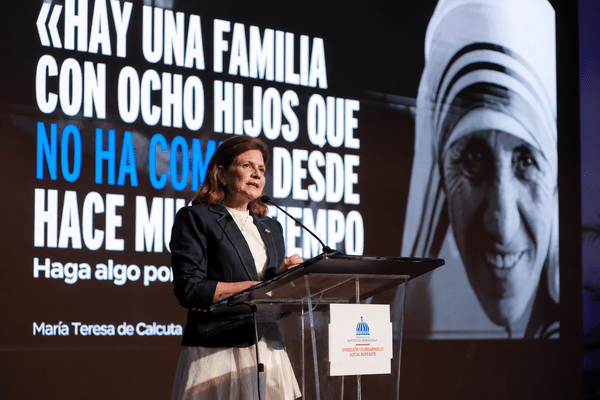
Dominican Republic Vice President Raquel Peña has called for stronger social protection measures and greater economic opportunities for vulnerable households, following a reported decline in the country’s monetary poverty rate to an average of 14.58% during the first half of 2026.
Peña presented the figures during an event organized by the Supérate social development program to mark the International Day for the Eradication of Poverty. According to the data cited at the gathering, monetary poverty fell from 30.7% in 2021 to 17.3% in 2025, before declining further in the preliminary results for the first six months of this year. The Presidency’s report on the announcement also emphasized the need to sustain progress through policies that improve household well-being.
Monetary poverty declines, but challenges remain
Peña attributed the reported reduction to public policies implemented under President Luis Abinader’s administration. She stressed, however, that lowering poverty requires more than short-term financial assistance, pointing to the importance of quality employment, access to education and essential services.
Monetary poverty measures whether household income is sufficient to meet a defined basic-needs threshold. Although the reported figures indicate an improvement in income conditions, the overall rate does not capture every dimension of hardship, including differences in access to services and opportunities across communities.
The preliminary first-half 2026 average of 14.58% represents a decline of 16.12 percentage points compared with the 30.7% reported for 2021. The figures were presented as evidence of progress, while the vice president called for continued action to ensure that vulnerable families can improve their living conditions.
Social assistance reaches approximately 1.4 million households
Peña highlighted the role of government assistance programs, including Aliméntate and Bono Gas, which together benefit approximately 1.4 million households, according to the figures presented at the event.
Aliméntate provides food assistance, while Bono Gas helps eligible households cover cooking-fuel costs. These programs form part of the government’s social protection efforts aimed at easing basic household expenses.
The vice president also cited a reduction in extreme poverty from 8.7% in 2015 to 2.2%. Extreme poverty represents a more severe level of deprivation than general monetary poverty, making changes in this indicator particularly relevant to assessments of the conditions facing the most vulnerable households.
Food security gains highlighted
Food security was another focus of the event. Peña said the prevalence of undernourishment had fallen below 2.5%, allowing the Dominican Republic to leave the Food and Agriculture Organization of the United Nations’ Hunger Map category associated with higher levels of undernourishment.
The FAO uses the prevalence of undernourishment to estimate the share of a population whose habitual food consumption is insufficient to meet dietary energy requirements. The indicator provides an important measure of chronic hunger, although it does not capture every form of food insecurity.
Reducing undernourishment is a significant social objective, but maintaining progress also depends on households’ ability to obtain sufficient and nutritious food consistently.
Supérate emphasizes training and family support
Supérate Director General Mayra Jiménez outlined initiatives combining cash transfers, family support and productive training. The approach seeks to address immediate financial needs while helping vulnerable households improve their capacity to generate income.
The event also featured panel discussions on the results of social policies and testimonies from program beneficiaries. Government officials, representatives of international organizations and participating families attended the gathering.
The figures presented point to a substantial decline in monetary poverty over the period examined. The next challenge identified by Peña is to sustain that trend by expanding access to stable employment, education and essential services, alongside assistance for households that remain economically vulnerable.