 25°C
25°C

Dominican Republic Food Security Faces Interconnected Risks
A Columbia University assessment prepared for the International Fund for Agricultural Development (IFAD) finds that the Dominican Republic's food-security challenge cannot be separated from the condition of its farms, soils, water resources, rural economy and gender inequalities. The study, developed to inform IFAD's 2026-2031 country strategy, reports that 52.1% of the population experienced moderate or severe food insecurity in the reference period used by the assessment, while agriculture accounted for 7.8% of GDP and 14.2% of employment. It also identifies climate change, land degradation, limited access to productive resources and persistent rural poverty as overlapping pressures that could make food systems more vulnerable if they are not addressed together.


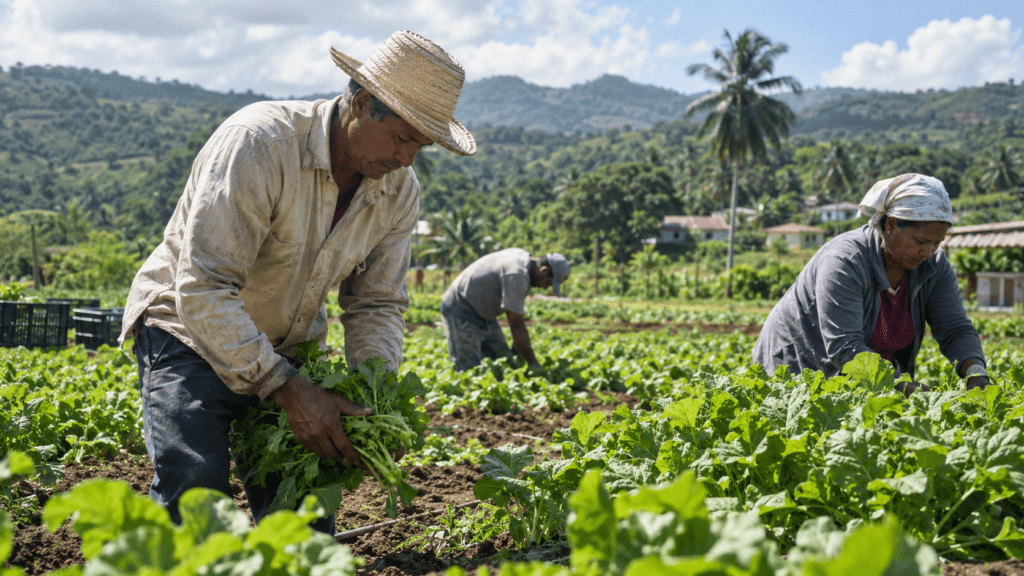
The Dominican Republic has made substantial economic progress, but a new assessment prepared for the International Fund for Agricultural Development (IFAD) argues that economic growth alone has not removed the structural pressures facing rural communities and the country’s food system. The assessment was produced by Columbia University’s School of International and Public Affairs (SIPA) as a Social, Environmental and Climate Assessment Procedures (SECAP) background study for IFAD’s Country Strategic Opportunity Programme for 2026-2031.
Its central message is that food security, agricultural productivity, poverty, environmental degradation and climate resilience are closely connected. Weakness in one area can increase pressure in another: degraded land can reduce agricultural productivity; climate shocks can damage crops and incomes; low rural incomes can restrict farmers’ ability to invest in adaptation; and unequal access to land, credit and other resources can leave some groups more exposed than others.
What the Columbia SIPA-IFAD Assessment Examined
The assessment was not a single agricultural experiment or household survey. It was a country-level diagnostic designed to help shape IFAD’s rural-development strategy. According to Columbia SIPA and IFAD, the work combined a review of national policies and strategies, consultations with government partners and local stakeholders, and analysis of previous sector studies, IFAD projects and country-program evaluations.
The research therefore takes a broad view of rural development. Rather than treating agriculture as an isolated economic activity, it examines the conditions under which rural households produce food, earn income and respond to environmental and economic shocks. The assessment covers socioeconomic conditions, agriculture, natural-resource management, climate risks, institutions and gender-related inequalities.
That approach matters because food security is not simply a question of whether enough food is produced. The Food and Agriculture Organization’s Food Insecurity Experience Scale, or FIES, measures people’s experiences of constrained access to food, including uncertainty about obtaining food, reductions in food quality and reductions in food quantity.
What the 52.1% Food-Insecurity Figure Actually Means
One of the assessment’s most striking figures is that 52.1% of the Dominican population experienced moderate or severe food insecurity in the period referenced by the assessment. The figure is important, but it requires careful interpretation.
It does not mean that 52.1% of Dominicans were suffering from severe hunger. The FIES combines moderate and severe food insecurity. FAO defines moderate food insecurity as a situation in which people may reduce the quality or quantity of food they consume, while severe food insecurity includes experiences such as being hungry but not eating or going an entire day without eating because of a lack of money or other resources.
The distinction is fundamental. A person classified as moderately food insecure and a person experiencing severe food insecurity are not necessarily living through the same circumstances. The combined indicator is useful because it measures the population experiencing meaningful difficulty accessing food, but it should never be presented as a direct measure of severe hunger.
The Dominican Republic’s figure also needs to be read alongside other indicators. FAO’s global food-security framework treats food access as one dimension of food security alongside availability, utilization and stability. The FIES specifically measures the access dimension rather than food consumption, malnutrition or dietary quality.
For the Dominican Republic, that means the 52.1% figure should be understood as evidence of widespread difficulty accessing adequate food, not as a claim that more than half the population regularly goes without eating.
Food Security and Agriculture Are Closely Linked
Agriculture remains strategically important even though the Dominican economy has become increasingly dominated by services, manufacturing and tourism. The Columbia SIPA assessment puts agriculture’s contribution at 7.8% of GDP and 14.2% of employment, while IFAD describes agriculture as a major component of rural livelihoods.
The sector’s economic role extends beyond its direct contribution to national output. Farms supply domestic markets, generate rural employment and support value chains involving transportation, processing, commerce and food distribution. Agricultural performance therefore affects both producers and consumers.
Official agricultural data also show that production has remained substantial. The Dominican Ministry of Agriculture reported that the agricultural sector performed positively in 2024, with agricultural output increasing 4.1% and the broader agricultural, livestock, forestry and fisheries sector growing 4.9%. Production of several important domestic crops, including rice, plantains, avocados, pineapple and tomatoes, also increased.
These results illustrate an important point in the SIPA-IFAD assessment: food insecurity exists alongside a productive agricultural sector. The two facts are not contradictory. A country can produce significant quantities of food while some households struggle to afford or reliably access an adequate diet.
Low Rural Incomes Remain a Structural Problem
The assessment identifies agricultural productivity and rural incomes as important weaknesses. IFAD’s accompanying country analysis reports that agricultural wages are significantly below the national average, reinforcing the difficulty of turning participation in farming into a stable pathway out of poverty.
This is particularly important for small-scale producers. Farmers with limited access to finance, technology, infrastructure and extension services have fewer options for increasing productivity or protecting their businesses against droughts, floods, pests and other shocks.
The relationship can become self-reinforcing. A household with limited income may be less able to purchase improved inputs, irrigation equipment or other technologies. Lower investment can constrain productivity, while a weak harvest can further reduce the resources available for the following production cycle. The assessment does not suggest that any single factor mechanically causes rural poverty; rather, it identifies a combination of constraints that can reinforce vulnerability.
The country’s recent poverty figures provide important context. According to the National Statistics Office (ONE), national monetary poverty fell from 23.0% in 2023 to 19.0% in 2024. Extreme monetary poverty declined from 3.2% to 2.4% over the same period. These figures show real progress, but they measure household income relative to national poverty lines and should not be treated as interchangeable with food-insecurity statistics.
Soil Degradation Is a Food-Security Issue
The assessment gives considerable attention to land degradation because the condition of soil directly affects the productive base on which agriculture depends.
One figure requires especially careful definition. Columbia SIPA reports that 69.7% of the Dominican Republic’s territory is affected by land degradation. The underlying environmental evidence uses a more specific formulation: 69.7% of the country’s territory is classified as arid, semi-arid or dry sub-humid and is therefore considered at risk of desertification. That is not the same as saying that 69.7% of the national territory is already degraded.
The distinction is significant. The Ministry of Environment’s environmental assessments identify a much smaller area as critically affected by land-degradation processes. A national baseline cited by the ministry estimates that about 11% of the country’s territory, or roughly 496,000 hectares, was critically affected by land degradation in 2010. The same body of evidence identifies soil erosion, salinization, compaction, waterlogging and soil pollution among the forms of degradation affecting agricultural and upland areas.
In other words, the 69.7% figure describes risk of desertification, not the share of the country that has already lost its productive capacity. That distinction prevents a potentially misleading interpretation of one of the assessment’s headline statistics.
Soil erosion is nevertheless a serious agricultural concern. IFAD’s background study reports that parts of the country experience high or very high levels of hydric erosion, while Dominican environmental assessments identify agricultural expansion, deforestation, overgrazing, unsuitable land use and other pressures as contributors to land degradation.
For food security, the implication is straightforward: soil is an agricultural asset. When topsoil and nutrients are lost, water retention and productive capacity can decline. Protecting watersheds, improving land management and reducing erosion are therefore not merely environmental objectives; they can also support the long-term reliability of food production.
Climate Change Could Intensify Existing Pressures
The Dominican Republic is highly exposed to climate-related hazards because of its Caribbean location, varied terrain, long coastline and dependence on climate-sensitive sectors. The SIPA-IFAD assessment identifies projected temperature increases of roughly 1°C to 3°C and reductions in precipitation of up to 15% by 2050 under the scenarios it references.
These projections do not mean that every part of the country will experience the same changes or that agricultural production will automatically decline by a specific amount. Climate effects vary by location, crop, water availability, farming system and the ability of producers to adapt.
The World Bank’s Dominican Republic Climate and Development Report provides complementary evidence. It finds that climate change could affect agricultural yields, labor productivity, health, infrastructure and ecosystems, with some crop yields potentially falling by as much as 30% by 2050 in scenarios without sufficient adaptation.
That does not mean a 30% decline should be expected across Dominican agriculture. It is a modeled risk under particular climate conditions. The broader message is that adaptation can influence the severity of future losses.
Water Management Is Part of the Agricultural Challenge
Climate risk becomes more consequential when combined with existing water-management problems. Irrigation allows farmers to reduce dependence on rainfall, but inefficient water use can limit the benefits of irrigation while increasing pressure on rivers, aquifers and watersheds.
Dominican environmental assessments have identified substantial inefficiencies across irrigation systems, including differences in distribution and application efficiency. The SIPA-IFAD assessment similarly identifies water management as an important constraint for climate resilience.
This makes water policy relevant to food security in two directions. Farmers need reliable access to water to maintain production during dry periods, but the agricultural sector must also use water efficiently enough to preserve the resource for households, ecosystems and other economic activities.
The challenge is particularly important in a country with sharply contrasting climatic conditions. Some areas receive abundant rainfall while others are significantly drier. National averages can therefore hide major differences between watersheds and farming communities.
Women Face a Major Resource Gap in Agriculture
Gender inequality is one of the most consequential findings in the assessment. IFAD reports that rural women account for 43% of the agricultural workforce but have access to only 1% of available credit and subsidies and own approximately 2% of the land.
The numbers point to a gap between participation and control over productive resources. Women can contribute substantially to agricultural work without having equivalent access to the land, finance, technology or decision-making opportunities that determine how productive that work can be.
The assessment links these inequalities to structural factors, including the disproportionate burden of unpaid care work and weaknesses in gender mainstreaming across the agricultural sector. It also notes that limited coordination among institutions can leave initiatives for rural women fragmented rather than integrated into broader agricultural policy.
Additional regional evidence reinforces the concern. A 2024 gender-indicator report produced by the Economic Commission for Latin America and the Caribbean (ECLAC), in cooperation with UN Women, found that 49.5% of Dominican women aged 15 and older experienced food insecurity between 2021 and 2023, 6.8 percentage points higher than the corresponding figure for men.
That statistic does not establish that gender inequality causes food insecurity in every case. It does, however, show a measurable gender gap in food access and helps explain why agricultural and food-security policies that treat households as economically uniform units can miss important differences within them.
Why Poverty, Food Security and Gender Cannot Be Treated Separately
The assessment’s broader significance lies in how these issues overlap. Poverty affects a household’s ability to purchase food, invest in farming and absorb economic shocks. Climate events can damage crops, livestock, infrastructure and income. Soil degradation can reduce the productivity of agricultural land. Gender inequalities can restrict access to the resources needed to adapt.
These pressures can affect rural households differently. A farmer with secure land rights, access to credit, irrigation and technical assistance may have more options after a climate shock than a producer without those resources. Similarly, women who contribute labor to a family farm but have little control over land or finance may have fewer opportunities to invest in productive activities.
This is why the assessment emphasizes an integrated approach rather than a single intervention. Improving agricultural production without addressing access to markets, finance, land, water and climate-resilient technologies would leave important constraints unresolved.
What the Study Recommends for the Dominican Republic
The assessment identifies 13 strategic interventions organized around IFAD’s three strategic objectives: increasing the productive capacities of poor rural people, increasing their benefits from participation in markets, and strengthening the environmental sustainability and climate resilience of their economic activities.
Among the priorities identified in the broader IFAD strategy are improved access to productive resources, climate-adapted farming practices, more efficient irrigation, stronger rural organizations, better market access and measures designed to expand women’s access to land, finance and other assets.
The recommendations are significant because they move beyond the idea that food security can be solved simply by producing more food. Productivity matters, but so do household incomes, market participation, resilience, resource rights and the environmental condition of the land and water on which production depends.
The assessment also points to the importance of existing Dominican institutions and policies. Its conclusion is not that the country lacks an institutional foundation. Rather, it identifies opportunities to improve coordination and ensure that existing frameworks translate into practical benefits for small producers, rural women and other vulnerable groups.
What the Findings Mean for the Dominican Economy
For an international audience, the most important point is that the Dominican Republic’s food-security challenge exists within an economy that has experienced strong long-term growth. The country is not facing a simple shortage-of-food scenario.
Instead, the assessment describes a more complicated problem involving access, affordability, productivity and resilience. The country can have growing agricultural output and falling monetary poverty while still facing substantial food insecurity among parts of the population.
That distinction is especially important for understanding development in the Dominican Republic. Tourism, manufacturing and services have transformed the national economy, but rural communities remain exposed to agricultural and environmental risks. A resilient food system therefore has implications beyond farming: it affects household welfare, rural employment, consumer prices, water resources and the country’s capacity to withstand climate shocks.
Why the Findings Matter Beyond Rural Communities
Food security is sometimes treated as a rural issue because farming takes place primarily outside major cities. The assessment shows why that view is incomplete.
Urban consumers depend on agricultural supply chains for food. Rural households depend on markets and infrastructure to sell their production. Water resources connect farms with cities and ecosystems. Climate events can disrupt transportation, prices and employment far beyond the communities directly affected by a storm or drought.
For the Dominican Republic, the resilience of the food system is therefore part of a broader national-development question. Protecting agricultural land, improving water efficiency, strengthening rural incomes and reducing inequalities can simultaneously support environmental sustainability and economic stability.

Frequently Asked Questions
Does 52.1% food insecurity mean that 52.1% of Dominicans are starving?
No. The 52.1% figure refers to moderate or severe food insecurity, measured through the Food Insecurity Experience Scale. Moderate food insecurity can involve reduced food quality or quantity and uncertainty about obtaining food. Severe food insecurity represents much more serious experiences, including going without food for an entire day because of insufficient resources.
What did Columbia SIPA and IFAD actually study?
The assessment examined the Dominican Republic’s social, environmental and climate conditions in order to inform IFAD’s 2026-2031 country strategy. It used a desk review, stakeholder consultations and analysis of previous studies, IFAD projects and country-program evaluations rather than relying on a single new field experiment.
Is 69.7% of the Dominican Republic’s land already degraded?
No. The 69.7% figure refers to territory classified as arid, semi-arid or dry sub-humid and therefore considered at risk of desertification. A separate national baseline estimated that about 11% of the territory was critically affected by land-degradation processes in 2010.
How important is agriculture to the Dominican economy?
The Columbia SIPA assessment reports that agriculture contributed 7.8% of GDP and 14.2% of employment in the measure it used. The sector is also important because it supports food supply chains and rural livelihoods, even as services, manufacturing and tourism account for much of the wider economy.
Why does gender matter for food security?
Women participate substantially in agricultural work but can face unequal access to land, credit, subsidies and other productive resources. The IFAD assessment reports that rural women represent 43% of the agricultural workforce while receiving 1% of available credit and subsidies and owning about 2% of land. Separate ECLAC data show a higher prevalence of food insecurity among women than men in the 2021-2023 period.
Does climate change guarantee lower agricultural production?
No. Climate projections describe risks rather than predetermined outcomes. Crop impacts depend on factors including temperature, rainfall, water availability, crop choice, farming practices and adaptation. The evidence indicates that without adequate adaptation, climate change could create significant agricultural losses, while better resilience measures can reduce vulnerability.
The Larger Picture
The Columbia SIPA-IFAD assessment presents the Dominican Republic’s food-security challenge as a development problem with several connected dimensions. The country has a productive agricultural sector, substantial economic growth and improving monetary-poverty indicators, yet many households continue to experience difficulty accessing adequate food.
The evidence also shows why environmental and social policies cannot be separated from agricultural policy. Soil degradation threatens productive capacity; climate change increases exposure to heat, drought, floods and other hazards; low rural incomes can limit investment in resilience; and unequal access to land and finance can leave women with fewer tools to respond.
The most durable response is therefore unlikely to come from a single program or sector. The assessment points toward a combination of stronger rural livelihoods, better market access, climate-resilient production, sustainable land and water management, and more equitable access to productive resources.
For the Dominican Republic, the stakes extend well beyond the farm. The country’s ability to maintain reliable food access while protecting its natural resources and expanding economic opportunity will help determine how resilient its rural communities—and the wider economy—are in the face of future shocks.
Follow news from the Dominican Republic for broader coverage of the economy, environment, agriculture, public policy and the issues shaping life across the country.
Sources: Columbia University SIPA; International Fund for Agricultural Development; FAO; Dominican Republic National Statistics Office (ONE); Dominican Ministry of Agriculture; World Bank; ECLAC.