 23°C
23°C

How Much Money Does the Dominican Baseball Industry Generate?
The Dominican baseball industry does not have a single official annual revenue figure, but available government and industry data indicate that it represents an economic activity worth hundreds of millions of dollars. The clearest recent estimate comes from the Dominican government, which said investment by Major League Baseball organizations in the country had risen to nearly $500 million, while the sport also generates employment, player signing bonuses and substantial economic activity around academies and professional leagues.


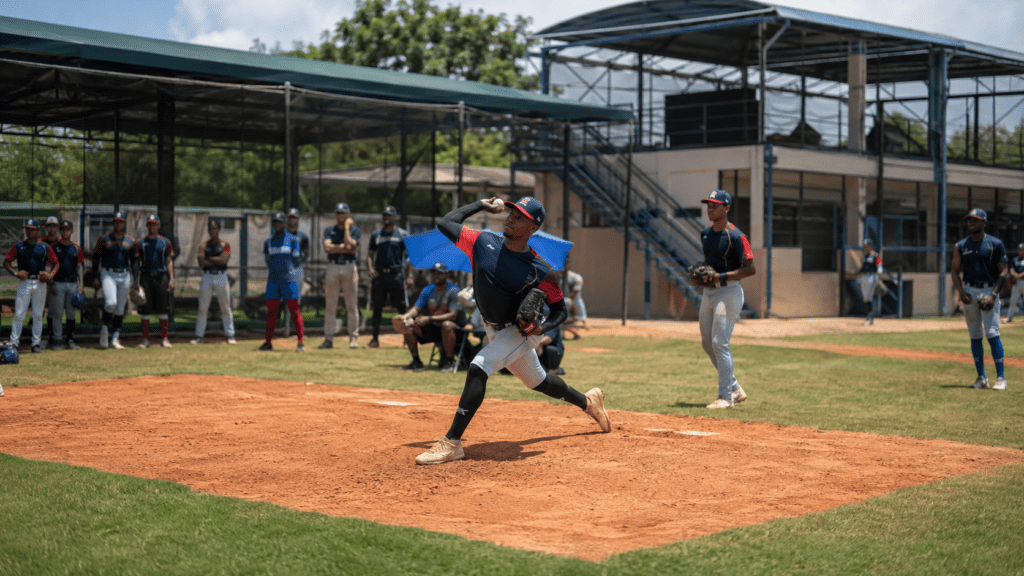
The Dominican Republic is one of the most important talent-producing countries in professional baseball. Every year, Major League Baseball (MLB) organizations spend money in the country on player development, scouting, academies, salaries, training, facilities and international signing bonuses. The domestic professional game adds another layer through the Dominican Professional Baseball League, known as LIDOM.
There is, however, an important distinction between the money invested in Dominican baseball and the industry’s total economic impact. No publicly available official study provides a single figure for all revenues generated by baseball in the Dominican Republic. The available evidence instead points to an industry whose economic footprint is measured in hundreds of millions of dollars.
MLB Investment in the Dominican Republic
The strongest recent figure comes from the Dominican government’s General Directorate of the Commissioner of Baseball. In a statement discussing the growth of the sport, the agency said MLB investment in the country had increased from approximately $300 million four years earlier to nearly $500 million.
The figure refers to investment associated with Major League organizations in the Dominican Republic rather than the total annual revenue of every baseball-related business. It therefore should not be interpreted as saying that Dominican baseball generates exactly $500 million each year. It is better understood as an indication of the scale of MLB’s economic presence in the country.
The government also said that approximately 500 Dominican players are signed each year and highlighted the construction of new academies and the employment generated by the 30 MLB organizations operating facilities in the country.
Dominican baseball authorities have therefore described baseball as a significant economic industry rather than simply a professional sport.
Where Does the Money Come From?
The economic footprint of Dominican baseball is spread across several activities. MLB academies are among the most visible. These facilities employ coaches, scouts, medical personnel, administrative workers, cooks, maintenance staff and other employees. They also require spending on food, transportation, equipment, construction and local services.
Player development is another major component. Dominican prospects receive international signing bonuses when they sign with MLB organizations. The amounts vary enormously: some players sign for relatively modest sums, while elite prospects can receive bonuses worth millions of dollars.
For example, MLB’s published records for the 2025 international signing period include Dominican players receiving bonuses of $1 million or more, while many other Dominican signees received several hundred thousand dollars. These payments represent direct income entering the Dominican economy, although a signing bonus should not be confused with the total economic value generated by a player.
The scale of Dominican talent is also evident in the major leagues. MLB reported that 100 players born in the Dominican Republic appeared on 2025 Opening Day rosters, the highest number for any country or territory outside the United States. In 2026, the Dominican Republic again led the international field, with 93 players on Opening Day rosters.
The Local Baseball Economy Is Larger Than MLB Academies
The economic impact extends beyond the facilities operated by MLB teams. Dominican baseball has created an ecosystem of independent trainers, scouts, academies, agents, transportation providers, sports facilities and other businesses connected to the development of young players.
A study of Dominican baseball academies cited research estimating that academy-related spending in the country reached about $35 million in 2005, excluding construction costs. That historical figure illustrates how the local multiplier effect can extend well beyond the money paid directly to players.
Since then, MLB investment in the Dominican Republic has grown considerably, making the older estimate useful primarily as historical context rather than as a measure of today’s industry.
What About LIDOM?
The Dominican Professional Baseball League adds another economic layer. LIDOM operates the country’s winter professional championship, involving six established franchises and attracting large audiences during the baseball season.
Its economic activity includes ticket sales, broadcasting rights, sponsorships, advertising, merchandise, food and beverage sales, stadium employment and spending associated with games. However, reliable public data do not currently provide a consolidated figure for LIDOM’s annual economic impact that can be confidently added to the MLB investment estimate.
For that reason, claims that Dominican baseball as a whole generates a precise amount such as $500 million, $1 billion or another specific annual total should be treated cautiously unless they clearly explain what is being measured.
So, How Much Money Does Dominican Baseball Move?
The most defensible answer is that Dominican baseball represents an economic activity worth hundreds of millions of dollars, but there is no verified single annual turnover figure covering the entire industry.
The Dominican government has placed MLB investment in the country at nearly $500 million, while the sport also produces additional economic activity through player bonuses, professional leagues, employment, local businesses and the broader baseball-development ecosystem.
That distinction matters. The $500 million figure is an investment estimate, not a national baseball GDP calculation. The actual economic footprint of the sport is broader, but determining its exact annual value would require a comprehensive study covering MLB academies, player payments, LIDOM, stadium operations, sponsorships, broadcasting, merchandise, trainers and related businesses.
Why the Dominican Republic Matters So Much to MLB
The scale of investment is closely connected to the Dominican Republic’s extraordinary production of professional players. The country has led all nations outside the United States in MLB Opening Day representation since MLB began publishing its international player data in 1995.
That concentration of talent creates a self-reinforcing economic system: teams invest in scouting and development because the country produces elite players, while the presence of 30 MLB organizations creates infrastructure, employment and opportunities for another generation of prospects.
For the Dominican Republic, baseball is therefore more than a national passion. It is an international talent-development industry with a substantial flow of foreign investment and income into the country.