 25°C
25°C

Dominican Republic Proposes New Telecommunications Law
The Dominican Republic is moving to update its telecommunications framework with a proposed law covering digital infrastructure, connectivity, network deployment, spectrum management, consumer protection and sector-specific cybersecurity.


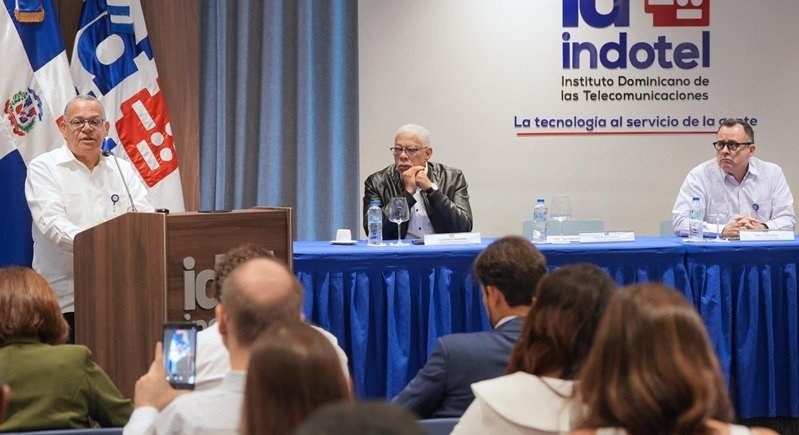
The Dominican Institute of Telecommunications (Indotel) has presented a proposed General Law on Telecommunications, Digital Infrastructure and Connectivity aimed at replacing the country’s current legal framework with rules designed for a rapidly evolving technology sector.
The initiative builds on the advances made under Law 153-98 while addressing technologies and infrastructure that have become increasingly important to the country’s digital economy, including fiber-optic networks, newer mobile generations, satellite communications, submarine cables and data centers.
New Framework Would Focus on Telecom Infrastructure
According to Indotel, the proposed legislation would define the regulator’s authority around telecommunications networks, services, infrastructure and resources that are functionally connected to the sector. It would not regulate content, electronic commerce or digital platforms that are not functionally linked to telecommunications.
The proposed distinction is intended to establish clearer boundaries for telecommunications regulation while preserving room for innovation in other areas of the digital economy.
Among the initiative’s main objectives are a simplified authorization system based on a single concession, an electronic one-stop window for infrastructure deployment, greater network sharing and stronger competition. The proposal also seeks to improve the management of the radio-frequency spectrum.
Consumer Protection and Cybersecurity Included
The proposed law would also expand protections for telecommunications users. Its provisions include requirements related to service quality and continuity, clear information, transparent billing and number portability, as well as accessibility for people with disabilities and mechanisms for filing complaints.
Cybersecurity would receive a specific sectoral framework focused on the integrity, continuity and resilience of telecommunications networks and the digital infrastructure directly required for their operation.
For the Dominican Republic, the proposed approach would place core digital infrastructure within a regulatory framework designed to reflect technologies that were not central to the sector when Law 153-98 was adopted.
Indotel Plans Consultation Before Congress
Fausto Rosario Adames, a member of Indotel’s Board of Directors, presented the proposal on behalf of board president Guido Gómez Mazara. He said the draft has been submitted to the Legal Consultancy of the Executive Branch and that Indotel will work with the office before sending the proposal to the National Congress.
The next stage is expected to include discussions with telecommunications operators, users, academic institutions, experts, entrepreneurs and civil society organizations. The objective is to incorporate feedback before the proposal reaches lawmakers.
“We want to reach the National Congress with a mature proposal, enriched by dialogue and capable of responding to the technological challenges of the coming decades,” Rosario Adames said.
Representatives of major companies and organizations in the telecommunications sector attended the presentation, including Claro, Altice, Trilogy, OneMax, Wind Telecom, Columbus, ADORA and COMTEC. Lawyers Nassef Perdomo and José Luis Taveras, who drafted the proposed legislation, also participated.
The proposal remains at the consultation stage described by Indotel. Its eventual submission to Congress would begin the legislative process required for the Dominican Republic to adopt a new telecommunications framework.