 24°C


Best Museums in Santo Domingo: History, Art and Dominican Culture
Santo Domingo’s museums offer a way to understand the Dominican Republic beyond its beaches and colonial streets. Visitors can explore the former residence of a Spanish viceroy, examine archaeological objects from the island’s Taíno communities, discover the country’s maritime history and see works by Dominican artists. The main museums are concentrated in two areas: the Colonial City and the Plaza de la Cultura, making it possible to combine several visits in one day.


Where to Find the Best Museums in Santo Domingo
The city’s main museums are spread across two cultural districts. The Colonial City, the historic center recognized as a UNESCO World Heritage Site, is home to museums focused on the Spanish colonial period, maritime archaeology and religious heritage. The Plaza de la Cultura Juan Pablo Duarte, in the Gazcue area, brings together institutions dedicated to Dominican art, anthropology, history and natural science.
These two areas offer different but complementary perspectives. The Colonial City is particularly suitable for visitors interested in architecture and the early colonial period, while Plaza de la Cultura provides a broader introduction to the country’s cultural identity and historical development.
1. Alcázar de Colón: The Best Museum for Colonial Architecture and History
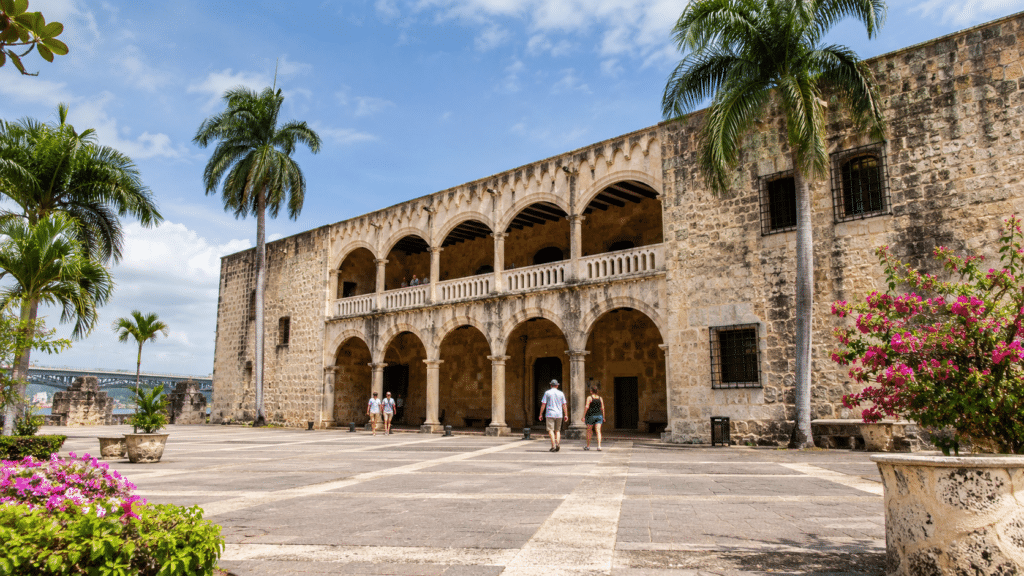
The Alcázar de Colón is one of Santo Domingo’s most recognizable historic buildings. Located on Plaza de España, it was constructed in the early 16th century as the residence of Diego Columbus, son of Christopher Columbus and governor of the colony.
The palace is closely associated with the early Spanish administration of the Americas. Its architecture, courtyards and rooms provide a sense of how the colonial elite lived and how political authority was organized in Santo Domingo during the first decades of Spanish rule.
Inside, visitors can see a collection of historical furniture, decorative objects, tapestries, sculptures and European art associated with the viceregal period. The displays help explain the domestic and ceremonial environment of the colonial residence. Some furnishings are reproductions, so the museum is best understood as a combination of historic architecture and period collections rather than a completely preserved original interior.
Best for: Visitors interested in colonial history, European architecture, historical interiors and the early Spanish presence in the Americas.
Why it is worth visiting: The building itself is a major part of the experience. Its location beside Plaza de España also makes it easy to combine the visit with a walk along Calle Las Damas and the surrounding historic streets.
2. Museo de las Casas Reales: Understanding the Spanish Colonial Administration
The Museo de las Casas Reales is one of the most important museums for understanding how Spanish colonial rule operated in the Caribbean. Located on Calle Las Damas, it occupies a historic complex that housed important administrative and judicial institutions during the colonial period.
The buildings were associated with the Royal Audiencia of Santo Domingo, a high court that exercised judicial and administrative functions in Spain’s American territories. The museum uses this setting to explain the political, social and economic organization of the colony.
Its collections include archaeological objects, historical documents, weapons, furniture and items connected with everyday life during the colonial era. Exhibitions cover the development of Santo Domingo and the institutions that shaped the Spanish presence on the island.
Unlike the Alcázar de Colón, which focuses heavily on a viceregal residence and its domestic environment, the Museo de las Casas Reales offers a more institutional perspective. It is particularly useful for visitors who want to understand the structures of government, law and colonial society.
Best for: History enthusiasts, students and travelers who want a deeper understanding of Spanish colonial institutions and the early development of Santo Domingo.
Why it is worth visiting: It provides historical context that complements the Alcázar de Colón. Visiting both museums gives a more complete picture of how the colonial city functioned.
3. Museo de las Atarazanas Reales: The Maritime History of the Caribbean
The Museo de las Atarazanas Reales, commonly known as the MAR, explores the maritime and underwater archaeological heritage of the Dominican Republic. It is located in the Colonial City, in a historic building associated with the Royal Warehouses and the maritime activities of the Spanish colonial period.
The museum focuses on objects recovered from underwater archaeological sites, including material connected with shipwrecks and maritime activity between the 16th and 19th centuries. These finds help illustrate the importance of the sea routes that linked the Caribbean with Europe and other parts of the Americas.
Its subject is different from that of the city’s colonial history museums. Rather than concentrating primarily on government, architecture or domestic life, the MAR uses archaeological evidence to explore navigation, trade, shipwrecks and the movement of goods across the region.
Best for: Visitors interested in ships, maritime history, archaeology, underwater discoveries and the commercial networks of the colonial Caribbean.
Why it is worth visiting: It adds a perspective often missing from traditional accounts of colonial history: the role of the sea, maritime commerce and the archaeological remains of ships and their cargoes.
4. Centro Cultural Taíno Casa del Cordón: Discovering the Island’s Indigenous Heritage
The Centro Cultural Taíno Casa del Cordón combines an important archaeological collection with one of the historic houses of the Colonial City. The Casa del Cordón dates from the early 16th century and is considered one of the earliest European-style houses built in the Americas.
Its permanent exhibition, Nuestros primeros pobladores (Our First Settlers), presents more than 350 original archaeological objects from the collection of the García Arévalo Foundation. The pieces document the cultures of the Indigenous peoples who inhabited Hispaniola before the arrival of Europeans, with particular attention to Taíno society.
The collection includes objects made from stone, wood, ceramic and shell. Visitors can learn about the material culture, beliefs, daily activities and artistic traditions of the island’s early inhabitants. Interactive resources help explain the significance of the objects and place them within a broader cultural context.
The Taíno were among the Indigenous peoples of the Caribbean who inhabited Hispaniola before European colonization. Their history is essential to understanding the Dominican Republic’s cultural foundations, although the island’s later identity was also shaped by African and European influences.
Best for: Visitors interested in archaeology, Indigenous Caribbean history, Taíno culture and the origins of Dominican identity.
Why it is worth visiting: It offers a focused introduction to the island’s pre-Columbian past, while the historic house adds an architectural dimension to the experience.
5. Museo de la Catedral: Religious Art and the History of Santo Domingo’s Cathedral
The Museo de la Catedral is dedicated to the religious, artistic and cultural heritage associated with the Catedral Primada de América, located in the heart of the Colonial City.
The museum explores more than five centuries of cathedral history through religious artworks, historical objects, architectural elements and material connected with Catholic traditions in Santo Domingo. Its exhibition rooms address subjects such as the evangelization of the Americas, the construction and evolution of the cathedral, religious brotherhoods and the building’s artistic heritage.
The cathedral itself is a major historical monument, but the museum provides a more focused look at the objects, people and traditions connected with its history. It is particularly relevant for visitors interested in colonial religious art and the role of the Catholic Church in the development of the city.
Best for: Visitors interested in religious history, sacred art, architecture and the cultural heritage of the Catholic Church in the Caribbean.
Why it is worth visiting: It adds historical and artistic context to a visit to the cathedral and offers a different perspective from the city’s archaeological and political history museums.
6. Museums at Plaza de la Cultura: Art, Anthropology and National History
The Plaza de la Cultura Juan Pablo Duarte is Santo Domingo’s main museum and cultural complex. Located outside the Colonial City, it brings together several institutions in a landscaped area that also contains major cultural facilities, including the Teatro Nacional Eduardo Brito and the Biblioteca Nacional Pedro Henríquez Ureña.
For visitors who want to explore Dominican culture beyond the colonial period, the Plaza is one of the most useful places to spend several hours. Its museums cover different subjects, from the country’s Indigenous and social history to modern art, biodiversity and national historical events.
Museo del Hombre Dominicano: Anthropology and Dominican Cultural Identity
The Museo del Hombre Dominicano is one of the country’s principal institutions dedicated to anthropology, archaeology and ethnography. Established in 1973, it preserves and exhibits archaeological and cultural material that helps explain the history of the Dominican population.
Its collections include objects associated with the Indigenous communities that inhabited Hispaniola before European arrival, as well as material related to later periods of Dominican history. The museum’s broader purpose is to explore the cultural diversity that has shaped the country, including Indigenous, African and European influences.
Visitors interested in Taíno history can use the museum to explore archaeological objects and cultural practices in a wider anthropological context. Its subject matter also extends beyond the pre-Columbian period to aspects of Dominican society and cultural traditions.
Best for: Visitors who want to understand the country’s cultural roots, Indigenous heritage, anthropology and the development of Dominican identity.
Museo de Arte Moderno: Dominican and Caribbean Visual Arts
The Museo de Arte Moderno is the country’s principal public institution dedicated to the preservation and exhibition of modern and contemporary Dominican art, alongside works from other countries.
Located in Plaza de la Cultura, the museum opened in 1976 as the Galería de Arte Moderno and later adopted its current name. Its exhibitions introduce visitors to the development of modern visual arts in the Dominican Republic and provide opportunities to see painting, sculpture and other artistic forms.
Permanent and temporary exhibitions may feature different artists, periods and approaches, so the experience can vary depending on the program during a visit. For travelers who want to understand the country’s artistic production rather than focus exclusively on its colonial past, this museum is an important stop.
Best for: Art enthusiasts, students and visitors interested in modern Dominican artists and contemporary visual culture.
Museo Nacional de Historia y Geografía: The Country’s Historical Timeline
The Museo Nacional de Historia y Geografía presents the historical and geographical development of the Dominican Republic, helping visitors follow the events and processes that shaped the nation.
Its renewed exhibition spaces include displays on national history and political figures, the Trujillo dictatorship, the April 1965 War and the guerrilla movement led by Francisco Alberto Caamaño. The museum also presents historical objects and temporary exhibitions that place important periods and events within a wider national context.
The museum reopened on April 28, 2026, following a major renovation and restoration project. Its updated exhibition proposal includes restored heritage objects and new galleries, making it a particularly relevant destination for visitors interested in the country’s modern history.
Best for: Visitors interested in Dominican independence, political history, the 20th century and the events that shaped the modern republic.
Museo Nacional de Historia Natural: Biodiversity and the Natural World
The Museo Nacional de Historia Natural Prof. Eugenio de Jesús Marcano offers a different perspective on the Dominican Republic. Rather than focusing on human history, it explores the biodiversity, geology and natural heritage of Hispaniola and the wider Caribbean.
The museum has scientific collections covering areas such as zoology, geology and paleobiology, as well as public exhibition galleries distributed across several floors. Its displays introduce visitors to the island’s ecosystems, animal life, geological history and the broader development of life on Earth.
One of its notable exhibition areas, the Sala Historia de la Vida, traces the story of the universe and life through fossils, models, audiovisual material and interactive displays. The museum also offers educational activities that can make the visit especially appealing to younger visitors.
Best for: Families, children, nature enthusiasts and anyone interested in wildlife, biodiversity, fossils and the natural environment of the Caribbean.
Which Museums in Santo Domingo Are Most Worth Visiting?
The best choice depends on the subjects that interest you. Some museums are especially valuable for understanding the colonial city, while others provide a broader picture of Dominican society, art and natural history.
- For colonial history: The Alcázar de Colón and Museo de las Casas Reales are the strongest combination. The first explores a viceregal residence, while the second focuses on colonial government and institutions.
- For Taíno heritage: Centro Cultural Taíno Casa del Cordón is a particularly focused introduction to pre-Columbian archaeology. Museo del Hombre Dominicano offers a broader anthropological perspective.
- For maritime archaeology: Museo de las Atarazanas Reales is the most specialized option, with its focus on underwater heritage and historical shipwrecks.
- For religious art and architecture: Museo de la Catedral is the natural choice, especially when combined with a visit to the cathedral itself.
- For Dominican art: Museo de Arte Moderno is the main public institution to consider.
- For modern national history: Museo Nacional de Historia y Geografía offers exhibitions on key political and historical periods.
- For nature and family visits: Museo Nacional de Historia Natural is the most suitable option, particularly for visitors traveling with children.
If time is limited, the Alcázar de Colón, Museo de las Casas Reales and Centro Cultural Taíno Casa del Cordón provide a strong introduction to the city’s historical and cultural heritage. Travelers with an additional half-day can visit Plaza de la Cultura to explore Dominican art, anthropology or natural history.
How to Plan a Museum Visit in Santo Domingo
Combine Museums in the Colonial City
The Alcázar de Colón, Museo de las Casas Reales, Museo de las Atarazanas Reales, Centro Cultural Taíno Casa del Cordón and Museo de la Catedral are all located in or close to the Colonial City. Their proximity makes it practical to combine two or three visits with a walk through the historic streets.

A useful route is to start at the Alcázar de Colón and Plaza de España, continue toward Calle Las Damas and the Museo de las Casas Reales, and then visit the other museums according to opening times and personal interests. The cathedral area can be included as part of the same walk.
Allow Time for Plaza de la Cultura
The museums at Plaza de la Cultura are grouped together, but each covers a different subject. Trying to visit all of them in detail may take considerably longer than expected. It is better to choose two or three according to your interests rather than rush through every exhibition.
For example, Museo del Hombre Dominicano and Museo Nacional de Historia y Geografía work well together for visitors interested in the country’s human and political history. Museo de Arte Moderno and Museo Nacional de Historia Natural offer a more varied combination of art and science.
Check Opening Hours and Admission Before You Go
Museum schedules, admission prices and access arrangements can change. Some institutions also organize temporary exhibitions, guided visits and cultural activities that may affect the visitor experience. Check the official museum website or contact the institution before setting out, particularly if you are planning to visit several museums on the same day.
It is also worth checking whether a museum requires advance reservations for groups or school visits. Comfortable walking shoes are useful in the Colonial City, where visits often involve cobbled streets and several historic sites.
Frequently Asked Questions About Museums in Santo Domingo
What is the best museum in Santo Domingo?
There is no single best museum for every visitor. The Alcázar de Colón is a strong choice for colonial architecture and history, Centro Cultural Taíno Casa del Cordón is particularly useful for learning about Indigenous heritage, and Museo de Arte Moderno is the main destination for modern Dominican art.
Are Santo Domingo’s main museums located in the Colonial City?
No. Several important museums are located in the Colonial City, including the Alcázar de Colón, Museo de las Casas Reales, Museo de las Atarazanas Reales, Centro Cultural Taíno Casa del Cordón and Museo de la Catedral. Other major institutions, including Museo del Hombre Dominicano, Museo de Arte Moderno, Museo Nacional de Historia y Geografía and Museo Nacional de Historia Natural, are located at Plaza de la Cultura.
Which museum is best for learning about the Taíno people?
Centro Cultural Taíno Casa del Cordón is an excellent choice because its permanent exhibition is dedicated to the Indigenous peoples of Hispaniola and includes more than 350 original archaeological objects. Museo del Hombre Dominicano also explores Taíno heritage as part of a wider presentation of Dominican anthropology and cultural history.
Can you visit several museums in Santo Domingo in one day?
Yes. The museums in the Colonial City are close enough to combine in a walking route. Plaza de la Cultura also contains several museums in one complex. However, visiting both areas and exploring every museum in depth in a single day would be difficult. Choosing a few institutions based on your interests is a more practical approach.
Are there museums in Santo Domingo suitable for children?
Museo Nacional de Historia Natural is a particularly suitable option for families because its exhibitions cover animals, fossils, biodiversity and the history of life, with educational and interactive elements. Centro Cultural Taíno Casa del Cordón also offers resources that can help younger visitors understand archaeology and Indigenous culture.
Are Santo Domingo’s museums free?
Admission policies vary by institution. Some museums charge an entrance fee, while prices and concessions may differ for children, students, older visitors and organized groups. Check each museum’s official information before visiting rather than assuming that admission is free.
Discovering Santo Domingo Through Its Museums
Santo Domingo’s museums reveal different layers of the Dominican Republic’s history and identity. The Colonial City introduces visitors to the architecture, institutions and maritime connections of the Spanish colonial period, while Plaza de la Cultura expands the picture through anthropology, modern art, national history and natural science.
For a first visit, combining the Alcázar de Colón, Museo de las Casas Reales and Centro Cultural Taíno Casa del Cordón provides a particularly useful historical introduction. Those with more time can explore the museums at Plaza de la Cultura to understand the country’s cultural development beyond its colonial origins. Together, these institutions make Santo Domingo one of the Caribbean’s most rewarding cities for visitors interested in history, art and culture.
Travelers planning a wider city itinerary can also explore this guide to things to do in Santo Domingo, which includes other historic landmarks and attractions across the capital.