 27°C

Dominican Voter Dissatisfaction Rises as 13.7% Say They Would Not Vote
The share of Dominicans who say they would not vote if presidential elections were held today rose to 13.7% in October, up from 10% in August, as negative assessments of the country’s situation increased, according to ACD Media’s latest polls.


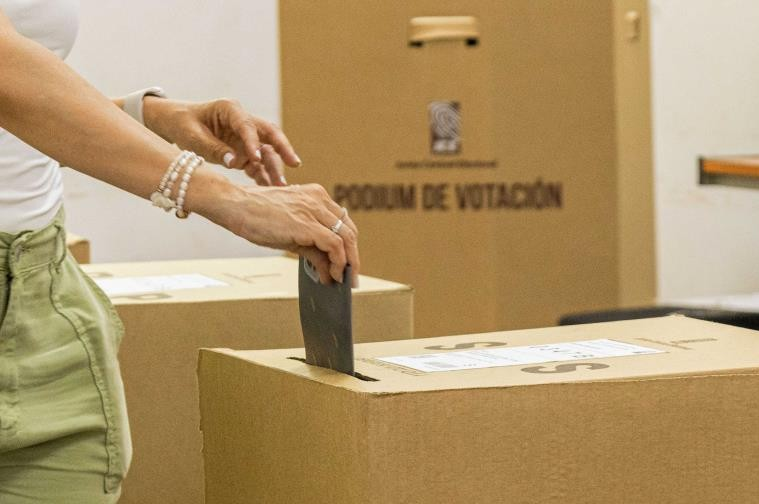
Dominican voter dissatisfaction increased between August and October, with a growing share of respondents saying they would not vote if presidential elections were held today and a majority expressing negative views about the country’s situation, according to two surveys conducted by ACD Media.
The proportion who said they would not vote rose from 10% in August to 13.7% in October, an increase of 3.7 percentage points. Respondents who ruled out voting, combined with those who did not know or declined to answer, accounted for 25% of those surveyed in October, compared with 22.5% in August.
The findings reflect respondents’ stated intentions at the time of each survey. They are not a forecast of voter turnout in the Dominican Republic’s 2028 presidential election.
Most Respondents Report No Party Affiliation
Political parties continue to face a substantial challenge in attracting public identification. In October, 59.9% of respondents said they did not sympathize with any political party, slightly below the 60.6% recorded in August.
The ruling Modern Revolutionary Party (PRM) led among the parties, with 29.7% support, up from 29.1% in August. The People’s Force (Fuerza del Pueblo) followed with 21.7%, compared with 20.5% previously, while the Dominican Liberation Party (PLD) registered 17.2%, down from 18.5%.
The changes widened the gap between Fuerza del Pueblo and the PLD to 4.5 percentage points, compared with two points in August. Meanwhile, the PRM’s lead over Fuerza del Pueblo narrowed slightly, from 8.6 to eight percentage points.
Although the movements were relatively modest, the results show a political landscape in which the PRM maintains its lead among party preferences while a large majority of respondents continue to report no party affiliation.
Negative Views of the Country Increase
Assessments of the national situation shifted more decisively in a negative direction. The share of respondents expressing unfavorable views increased from 49.5% in August to 57% in October. Positive assessments fell from 48.7% to 40.6% over the same period.
The change turned a nearly even balance between positive and negative opinions in August into a 16.4-percentage-point gap favoring negative assessments in October.
The figures indicate worsening public sentiment during the period covered by the surveys, although the polling results alone do not establish which issues or events caused the shift.
David Collado Leads Among PRM Figures but Loses Ground
Tourism Minister David Collado remained the leading figure among members of the PRM in the survey, but his support declined from 59.9% in August to 49.9% in October.
Santo Domingo Mayor Carolina Mejía increased her share from 20.5% to 24.6%, while Vice President Raquel Peña rose from 6.5% to 9.5%. Collado’s advantage over Mejía among party members consequently narrowed from 39.4 percentage points to 25.3.
Among the general population, however, Collado and Mejía showed relatively stable results. Collado registered 39.4%, while Mejía received 18.3%, according to the October findings.
Interest in Political Outsiders Also Declines
The surveys also found a decline in respondents’ willingness to vote for figures emerging from digital media who are outside the traditional party system. That share fell from 48.6% in August to 35.8% in October.
ACD Media’s questions on this subject differed slightly in wording between the two surveys, a limitation that should be considered when interpreting the size of the decline.
Survey Dates and Methodology
Both ACD Media surveys included 1,200 respondents and reported a 95% confidence level. Fieldwork for the August poll took place from August 8 to 11, while the October survey was conducted from October 9 to 11, 2026.
The findings offer a snapshot of political preferences and public sentiment ahead of the next presidential election cycle. They point to increased dissatisfaction with the country’s direction and a persistently high level of distance from political parties, but they should not be interpreted as a direct prediction of the 2028 election outcome.