 26°C


Santo Domingo Completes RD$61.5 Million Street Rehabilitation in Colonial City
The Dominican Republic’s Ministry of Tourism has completed a new phase of street rehabilitation in Santo Domingo’s Colonial City, investing RD$61.5 million in improvements designed to enhance mobility, upgrade public spaces and protect the historic district’s heritage.


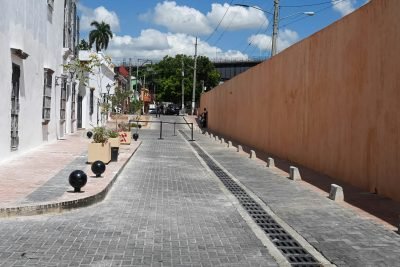
The works cover Colón Street and the northern and southern sections of Hostos Street, marking the completion of the road interventions planned for this phase of the Colonial City Rehabilitation Program. Tourism Minister David Collado handed over the renovated streets on Monday, October 19, 2026.
The project included new pavements and sidewalks, improvements to stormwater drainage, upgraded lighting and signage, and the installation of urban furniture. The objective is to improve pedestrian and vehicle circulation while preserving the architectural and historical character of one of the Dominican Republic’s most important cultural destinations.
Colón Street receives new paving and drainage improvements
On Colón Street, between Vicente Celestino Duarte Street and Fuerte del Ángulo, crews installed high-traffic pavers in red and dark gray, alongside asphalt and concrete sidewalks.
The work also included rehabilitation of the stormwater drainage system, restoration of street drains and installation of benches, bollards and planters. These upgrades are intended to improve the street’s usability while creating a more orderly public space for residents and visitors.
Hostos Street upgrades sidewalks and urban infrastructure
On the southern section of Hostos Street, between Padre Billini and José Gabriel García, workers renewed the pavement with red concrete slabs and black pavers in selected areas. Drainage improvements were also completed, along with provisions for future electrical and communications networks.
The northern section received replacement pavement and red sidewalk slabs. Ceramic bricks were installed along part of Emiliano Tejera Street, while the project also included conduits for public lighting and repairs to metal railings.
The combination of surface improvements and infrastructure work is intended to support the area’s daily use while accommodating the needs of a historic urban environment.
Final rehabilitation phase expected in December
Collado said the remaining interventions under the program’s final phase are expected to be completed in December. The second phase is financed with support from the Inter-American Development Bank (IDB).
According to the minister, completing the outstanding work will allow streets affected by construction-related closures to reopen, improving access for residents, businesses and visitors to the Colonial City.
Investment extends beyond streets and sidewalks
The Ministry of Tourism has also invested in the restoration of monuments, churches and museums in the historic district. Additional initiatives include repairs to more than 100 homes and the painting of building façades in surrounding neighborhoods.
These projects form part of a broader effort to improve the Colonial City’s public spaces and preserve its historic character. The district is a major cultural attraction in Santo Domingo, and the condition of its streets, buildings and pedestrian areas plays an important role in the visitor experience.
By completing this phase of street rehabilitation, the government aims to make movement through the historic center more convenient while supporting the conservation of its built heritage. The expected December completion of the remaining work will be an important next step in reducing construction disruptions and restoring full access to the affected streets.
For official information on tourism initiatives and projects in the Dominican Republic, visit the Ministry of Tourism.