 27°C


The Malecón of Santo Domingo: What to See and Do Along the Caribbean Waterfront
Stretching along the Caribbean coast, the Malecón of Santo Domingo is one of the Dominican capital's most recognizable public spaces. Officially known as Avenida George Washington, this waterfront boulevard combines sea views, historic monuments, recreational parks, restaurants, hotels and nightlife. From the family attractions and lively atmosphere of Plaza Juan Barón to the outdoor facilities at Güibia and the recently developed Malecón Deportivo, the seafront offers a variety of ways to experience the city beyond its historic Colonial Zone.


What Is the Malecón of Santo Domingo?
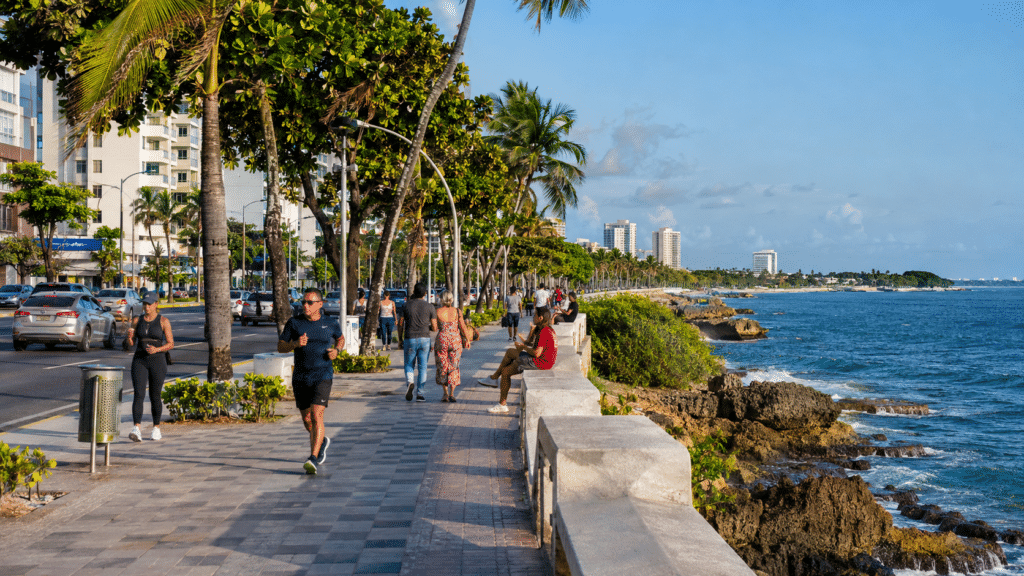
The Malecón of Santo Domingo is the city’s principal waterfront boulevard, officially known as Avenida George Washington. It runs along the southern edge of the Dominican capital, following the Caribbean coastline and connecting several of the city’s most recognizable monuments, public spaces, hotels and entertainment areas.
The word malecón is commonly used in the Caribbean and other Spanish-speaking countries to describe a waterfront promenade or coastal avenue. In Santo Domingo, it refers not to a single pedestrian walkway but to a long urban seafront corridor where road traffic, public recreation areas, commercial establishments and coastal views come together.
The avenue extends for approximately 14 kilometers along the southern part of the city, although the precise distance depends on the section being considered. It is one of the capital’s most important public spaces, serving as a meeting point for residents as well as a destination for visitors.
For tourists, the Malecón offers a different perspective on Santo Domingo. While the Colonial Zone showcases the city’s historic architecture and early colonial heritage, the waterfront reflects its modern urban life, social traditions and relationship with the Caribbean Sea. Visitors can also discover what to do in Santo Domingo, from enjoying the city’s waterfront and recreational spaces to exploring its cultural attractions, historic landmarks and entertainment options.
Why Is the Malecón Important to Santo Domingo?
The Malecón has a role that extends beyond tourism. It is a public gathering place where residents exercise, meet friends, spend time with their families and participate in cultural celebrations. Its open spaces and sea views make it one of the city’s most recognizable settings for outdoor recreation.
The boulevard is also an important part of Santo Domingo’s urban identity. Hotels, restaurants, casinos and entertainment venues line sections of the avenue, while public parks and monuments provide spaces for activities that are accessible to a broader part of the population.
Its importance is particularly visible during major celebrations. The Malecón has hosted national and municipal events, including Carnival parades, concerts, cultural festivals and public celebrations associated with Dominican national holidays. The National Carnival Parade and the Carnival of the National District have used sections of George Washington Avenue as their main route.
The waterfront also reflects the city’s efforts to improve public access to the coast. Renovation projects have introduced or upgraded pedestrian areas, recreational facilities, bicycle routes, lighting, seating and sports infrastructure. These improvements are gradually transforming sections of the avenue into a more connected recreational corridor.
Plaza Juan Barón: Family Entertainment and Waterfront Nightlife
Plaza Juan Barón is one of the best-known recreational spaces on the Malecón. Located directly beside the Caribbean Sea, it is a popular meeting point for families, groups of friends and visitors looking for food, entertainment and an outdoor atmosphere.
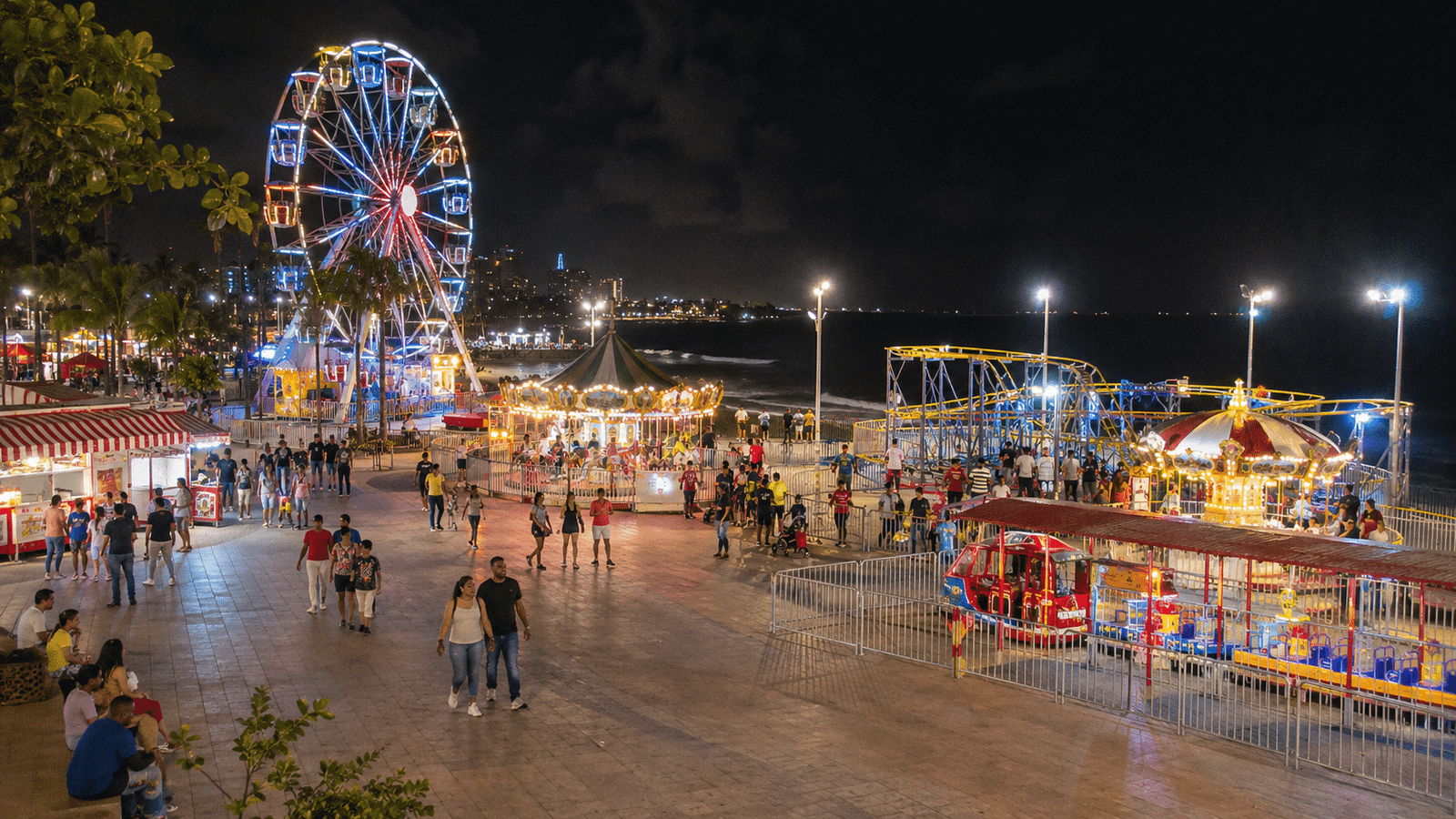
The plaza is particularly active during the late afternoon and evening, when the temperature becomes more comfortable and people begin gathering along the waterfront. Its combination of open spaces, commercial establishments and family attractions makes it one of the most recognizable stops along George Washington Avenue.
Children’s Attractions and Family Activities
One of Plaza Juan Barón’s main attractions is its range of family-oriented entertainment. Depending on the facilities operating at the time of the visit, children can find amusement rides, mechanical attractions, small racing activities and recreational games.
These attractions make the plaza particularly popular with Dominican families during weekends and school holidays. Parents can spend time enjoying the sea views or having something to eat while children use the recreational facilities.
The availability and operation of individual attractions can change, and some activities require separate payment. Visitors should check prices and operating conditions directly at the plaza rather than assume that every attraction is open throughout the day.
Food Stalls, Bars and Karaoke
Plaza Juan Barón also has a commercial area with food and drink options. Visitors can find casual meals, snacks, refreshments and places to sit while enjoying the atmosphere of the waterfront.
The entertainment offer extends beyond food. Bars and other commercial establishments contribute to the evening atmosphere, and karaoke is among the forms of entertainment associated with the plaza. Music, informal gatherings and outdoor socializing are part of its appeal, particularly when the area becomes busier later in the day.
Individual businesses may change their opening hours, entertainment schedules and services. A particular karaoke activity or music event should therefore be treated as an occasional offering rather than a guaranteed daily attraction.
Why Visit Plaza Juan Barón on the Weekend?
Weekends are generally among the liveliest times at Plaza Juan Barón. Families arrive with children, groups of friends meet for food and drinks, and visitors come to enjoy the sea breeze and the open views of the Caribbean.
The atmosphere is usually more animated from the late afternoon onward. As evening approaches, the commercial areas become busier and the plaza takes on a more social character, with people walking, eating, listening to music and spending time outdoors.
The plaza is also used for public celebrations and special events. Depending on the calendar, visitors may encounter cultural activities, family entertainment and seasonal festivities. It is particularly associated with New Year’s Eve gatherings, when residents come to the waterfront to celebrate and watch fireworks over the sea.
For visitors who want to experience a popular local meeting place rather than a conventional tourist attraction, Plaza Juan Barón offers a useful glimpse of everyday social life in Santo Domingo.
Parque Eugenio María de Hostos: A Green Space Facing the Sea
Located on Avenida George Washington, directly across from Plaza Juan Barón, Parque Eugenio María de Hostos is another important public space along the Malecón.
The park offers a more traditional urban recreation environment, with green areas, paths and facilities designed for families and outdoor activities. Its position opposite Plaza Juan Barón makes it easy to combine both locations during the same visit.
The park has undergone improvements that include children’s play facilities and upgraded lighting. It is used by residents who want to walk, spend time outdoors or bring children to play in a public space close to the waterfront.
Its location also makes it a convenient place to take a break from the more commercial atmosphere of the plaza. Visitors can move between the two spaces without having to travel to another part of the city.
Activities and Events at the Park
Parque Eugenio María de Hostos is used for family recreation and occasional public activities. Municipal programs have included traditional games, children’s events and cultural celebrations, while the wider Malecón area hosts concerts and other large gatherings.
During major celebrations, the park can become part of the event area, particularly when activities take place along the waterfront or near the nearby obelisks. Its facilities and open spaces make it a useful location for visitors who want to enjoy the Malecón with children.
Plaza Güibia: Sports, Recreation and Sea Views
Plaza Güibia is another major recreational area along the Malecón. Located near the intersection of Avenida George Washington and Avenida Máximo Gómez, it is known for its open spaces, outdoor exercise facilities and proximity to the Caribbean Sea.
Unlike Plaza Juan Barón, which has a stronger commercial and family-entertainment atmosphere, Güibia has traditionally placed greater emphasis on outdoor recreation and physical activity.
Outdoor Exercise and Sports
Güibia has been developed as a public space where residents can exercise and enjoy the waterfront. Its facilities have included outdoor gym equipment, pedestrian areas, recreational spaces and areas for beach volleyball.
The plaza is used by people who want to exercise without joining a private gym, as well as by families and groups who meet outdoors. Its open layout and coastal setting make it particularly suitable for activities during the cooler parts of the day.
Children’s Play Areas and Family Recreation
The plaza has also offered recreational areas for children, making it an option for families visiting the Malecón. Public activities organized by the city have included traditional games, family entertainment and seasonal events.
Its spacious layout allows visitors to walk, sit and enjoy the surroundings, although the availability of individual facilities can vary according to maintenance and municipal programming.
Can You Swim at Güibia Beach?
Although Güibia is associated with a sandy coastal area, visitors should not automatically consider it a conventional swimming beach. The urban coastline of Santo Domingo has environmental and water-quality considerations that can affect whether entering the sea is appropriate.
Historical reports have documented restrictions on swimming in this area, and coastal bathing conditions should not be assumed to be safe simply because people are visiting the waterfront. Before entering the water, check current notices from the relevant Dominican authorities and follow any restrictions or warnings.
For most visitors, the safer approach is to enjoy Güibia as a recreational waterfront space for walking, exercise, sports and sea views unless official guidance confirms that swimming is permitted under the conditions prevailing on the day.
Malecón Deportivo: A New Sports and Recreation Area
One of the most significant additions to the waterfront is Malecón Deportivo, a sports and recreation development designed to expand public access to outdoor activities along the coast.
Inaugurated in April 2026, the complex occupies a section of almost two kilometers of the Malecón and forms part of the broader effort to improve the city’s relationship with its waterfront. Its facilities are intended for residents, amateur athletes, families and visitors interested in outdoor sports.
Sports Facilities
The development includes several sports facilities and recreational areas, such as:
- Skate park: A dedicated area for skateboarding and related disciplines.
- Beach volleyball courts: Facilities for playing volleyball in a coastal setting.
- Basketball courts: Spaces designed for small-format basketball competitions and recreational games.
- Soccer field: A field for football activities.
- Pádel courts: Facilities for one of the sports that has expanded its presence in the Dominican Republic.
- Outdoor gym: Equipment and spaces for physical exercise.
- Children’s play areas: Recreational facilities for younger visitors.
The complex also includes pedestrian areas, seating, landscaping, lighting and commercial facilities. Some of its infrastructure is connected to the sporting events scheduled for the 2026 Central American and Caribbean Games in Santo Domingo.
Who Should Visit Malecón Deportivo?
The area is particularly relevant for visitors who enjoy active outdoor experiences. It provides opportunities to watch sports, use recreational facilities where permitted, walk along the waterfront or spend time with family in a more activity-oriented environment.
It also expands the range of attractions available along the Malecón beyond the traditional combination of restaurants, hotels and public parks. Visitors should check access conditions and any restrictions affecting individual sports facilities, particularly when organized competitions or training sessions are taking place.
Other Places of Interest Along the Malecón
Plaza Juan Barón, Parque Eugenio María de Hostos, Güibia and Malecón Deportivo are among the main recreational areas, but the avenue also contains monuments and other places worth including in a waterfront visit.
1. The Monument to Fray Antonio de Montesinos
The Monument to Fray Antonio de Montesinos is one of the most recognizable landmarks along the Malecón. It commemorates the Spanish Dominican friar who delivered a historic sermon in 1511 condemning the mistreatment of Indigenous people in the early colonial period.
The monument’s large sculptural structure faces the Caribbean Sea and serves as a reminder of an important episode in the history of the island. Its location also makes it a useful stop for photographs and coastal views.
2. The Male and Female Obelisks
The Malecón is also associated with two prominent obelisk-shaped monuments known as the Obelisco Macho and the Obelisco Hembra.
These structures are connected to the political history of the Dominican Republic during the dictatorship of Rafael Leónidas Trujillo. The Female Obelisk, in particular, has become associated with the memory of the Mirabal sisters, who opposed the regime and were murdered in 1960.
Today, the obelisks are familiar reference points along the avenue and are frequently used as meeting points during public events, parades and celebrations.
3. Plaza Santo Domingo
Plaza Santo Domingo is another public space created as part of the improvement of the waterfront. Its design includes a pedestrian promenade, green areas, benches, sea-facing viewpoints and a distinctive large red heart sculpture that has become a popular photographic feature.
The plaza also includes a multipurpose pergola and an outdoor amphitheater for public activities and ceremonies. Its open layout and views make it a useful stop for visitors exploring the Malecón by car or on foot.

4. Hotels, Restaurants and Casinos
Several well-known hotels and entertainment establishments are located along the Malecón. The waterfront has traditionally been one of Santo Domingo’s main hotel corridors, with properties offering restaurants, bars, event facilities and views of the Caribbean.
Restaurants range from casual dining options to hotel-based establishments. Visitors can find places to eat, have a drink or enjoy an evening out without leaving the coastal area.
Some hotels also operate casinos and nightlife venues. These establishments form part of the avenue’s entertainment offer, although access, opening hours and entry requirements vary from one venue to another.
Nightlife Along the Malecón
The Malecón is one of Santo Domingo’s recognized nightlife areas. Its combination of hotel bars, restaurants, outdoor terraces and entertainment venues makes it a place where visitors can continue their evening after watching the sunset.
Plaza Juan Barón and Güibia have bars and commercial areas where people can meet for drinks and informal entertainment. Karaoke and music are also part of the entertainment options associated with some establishments along the waterfront.
Further along the avenue, hotel bars and nightclubs offer different atmospheres, from relaxed outdoor terraces to venues focused on dancing and live music. Merengue and bachata are part of the broader musical identity of the Dominican capital, and visitors may encounter these rhythms at entertainment venues and special events.
The nightlife atmosphere is not identical along the entire avenue. Some sections are more oriented toward restaurants and hotels, while others are associated with public parks and informal gatherings. It is worth deciding what type of evening you want before choosing where to stop.
What Happens on the Malecón During Weekends?
Weekends are an important part of the Malecón’s identity. The avenue and its recreational spaces become meeting points for residents who want to enjoy the sea, exercise, eat outdoors or spend time with family and friends.
In the late afternoon, people begin arriving at public spaces such as Plaza Juan Barón, Güibia and Parque Eugenio María de Hostos. Families bring children to play, groups gather around food and drink establishments, and people walk along the waterfront to enjoy the breeze.
As evening approaches, the atmosphere becomes more active. Music, social gatherings and nightlife contribute to the movement around the main recreational areas. Plaza Juan Barón is particularly associated with family entertainment and informal evening activity.
Weekends can also bring organized sporting events, concerts, cultural performances and community activities. These events are scheduled separately, so visitors should not assume that a major show or festival takes place every Saturday or Sunday.
The Malecón is also a traditional setting for some of the city’s largest public celebrations. Carnival, national commemorations and New Year’s Eve festivities can attract large crowds and involve road closures or changes to normal traffic patterns.
Things to Do Along the Malecón
Visitors can experience the waterfront in several ways, depending on their interests and the amount of time available.
Walk Along the Caribbean Waterfront
A walk along the Malecón is one of the simplest ways to experience this part of Santo Domingo. Visitors can enjoy the coastal views, observe the city’s architecture and stop at public spaces along the avenue.
Some sections have pedestrian promenades and seating areas, while other stretches are more directly associated with the main road. Choose an appropriate pedestrian route and avoid walking along areas not designed for public access.
Watch the Sunset
The late afternoon is one of the most attractive times to visit. The changing light over the Caribbean Sea provides opportunities for photography, while the sea breeze makes outdoor activities more comfortable than during the hottest part of the day.
Plaza Juan Barón, Güibia and the areas around the monuments are convenient places to pause and enjoy the coastal setting.
Go for a Run, Walk or Bike Ride
The Malecón has sections with pedestrian and cycling infrastructure, making it useful for people who want to exercise outdoors. Residents regularly use the waterfront for walking, jogging, cycling and other recreational activities.
Check the markings and designated lanes before using a bicycle or skates, and remain aware of pedestrians and traffic at intersections.
Enjoy Local Food and Drinks
Food stalls, casual restaurants, bars and hotel establishments provide different options for eating along the waterfront. Plaza Juan Barón is a convenient place to find informal food and refreshments, while the hotel corridor offers additional dining choices.
Visitors interested in local flavors can look for Dominican snacks and casual dishes, although the exact offer depends on the businesses operating when they visit.
Watch a Public Event or Cultural Celebration
The Malecón regularly serves as a venue for public events. These can include Carnival parades, concerts, sports activities, festivals and national celebrations.
For visitors who want to experience Dominican culture in a public setting, attending one of these events can provide a different perspective from visiting museums or historic monuments. Check municipal announcements and event schedules before planning a trip around a specific celebration.
How to Visit the Malecón of Santo Domingo
The Malecón is a long coastal avenue rather than a single attraction with one entrance. Visitors can access different sections depending on which park, monument or establishment they want to see.
How to Get There
The waterfront is close to the Colonial Zone and several central neighborhoods. Taxis and ride-hailing services are convenient ways to reach Plaza Juan Barón, Güibia or other specific points along the avenue.
If you are driving, the main access routes include several streets connecting the city’s central districts with Avenida George Washington. Traffic can become heavier during rush hours, weekends and major public events.
Public transportation is available in the wider urban area, but routes and stops vary along the length of the Malecón. Visitors unfamiliar with Santo Domingo may find it easier to use a taxi or ride-hailing service for trips between separate attractions.
How Much Time Should You Allow?
The time needed depends on how much of the waterfront you want to explore.
- One hour: Enough for a short walk, a few photographs and a stop at one nearby attraction.
- Two to three hours: Suitable for visiting Plaza Juan Barón, Parque Eugenio María de Hostos and part of the waterfront.
- Half a day: Allows time to explore several recreational areas, visit Güibia or Malecón Deportivo, stop for food and enjoy the atmosphere.
- An evening: A good option for visitors interested in sunset views, dinner, bars and nightlife.
These are suggested planning estimates rather than official tour durations. Distances between attractions and traffic conditions can affect the time required.
Best Time to Visit the Malecón
The Malecón can be visited throughout the year, but the most comfortable time for outdoor activities is generally the late afternoon and early evening.
During the middle of the day, the combination of tropical heat, humidity and direct sunlight can make walking along exposed sections uncomfortable. Visiting later allows you to enjoy the sea views while temperatures begin to fall.
Weekends are particularly suitable for visitors who want to experience the local atmosphere at Plaza Juan Barón and other public spaces. However, they can also be busier, with more traffic and larger crowds.
Weekdays may offer a quieter experience for those who prefer walking, taking photographs or visiting monuments without the busiest weekend activity.
Practical Tips for Visitors
A few precautions and simple planning decisions can make a visit to the Malecón more enjoyable.
- Visit in the late afternoon: This is generally a more comfortable time for walking and enjoying the waterfront.
- Choose specific stops: The avenue is long, so identify the parks and monuments you want to visit before setting out.
- Wear comfortable shoes: Some sections involve considerable walking between attractions.
- Use sun protection: Bring sunscreen, sunglasses and a hat if visiting during daylight hours.
- Stay hydrated: The tropical climate can make outdoor activities tiring, particularly during warmer months.
- Check event announcements: Concerts, parades and major celebrations may affect traffic and access.
- Confirm commercial activities: The opening hours of food stalls, bars, karaoke venues and children’s attractions can vary.
- Be careful near traffic: George Washington Avenue is an active urban road. Use designated crossings and pedestrian areas.
- Do not assume swimming is permitted: Check official guidance before entering the sea at Güibia or other urban coastal locations.
- Take care of personal belongings: As in any busy urban area, keep valuables secure and remain aware of your surroundings, particularly at night.
Is the Malecón Worth Visiting?
The Malecón is worth including in a visit to Santo Domingo, especially for travelers who want to understand the city’s contemporary character. It offers a combination of coastal scenery, recreational spaces, local gathering places, restaurants and cultural landmarks that is different from the experience of the Colonial Zone.
Plaza Juan Barón is particularly suitable for families and visitors interested in food, children’s attractions and evening entertainment. Parque Eugenio María de Hostos provides a nearby green space, while Güibia offers an environment more focused on outdoor recreation. Malecón Deportivo adds a wider range of sports facilities to the waterfront.
The experience is also strongly influenced by the time of day. A quiet afternoon walk, a busy weekend evening and a major public celebration can make the same stretch of coastline feel like three different destinations.
Frequently Asked Questions About the Malecón of Santo Domingo
What is the official name of the Malecón?
The waterfront boulevard is officially called Avenida George Washington. The name Malecón is the commonly used term for the coastal avenue and its surrounding public spaces.
Is the Malecón free to visit?
Walking along the public waterfront and entering public recreational spaces is generally free. However, some activities, amusement rides, food and drinks, sports facilities or special events may involve separate charges.
What is the best part of the Malecón to visit?
Plaza Juan Barón is a popular choice for family entertainment, food and evening activity. Güibia is associated with outdoor recreation and exercise, while Malecón Deportivo offers sports facilities. The best section depends on the visitor’s interests.
Is Plaza Juan Barón suitable for children?
Yes. The plaza is known for family-oriented entertainment, including children’s attractions and amusement activities. The facilities available can change, and some rides or games require separate payment.
What can you do at Plaza Güibia?
Güibia is used for walking, outdoor exercise, sports and family recreation. Its facilities have included exercise equipment, recreational areas and beach volleyball courts. Visitors should check current conditions before planning specific activities.
Can you swim in the sea at Güibia?
Do not assume that swimming is permitted or safe. Güibia is an urban coastal area with environmental considerations, and restrictions or water-quality conditions may change. Check current official guidance before entering the water.
Is the Malecón busy on weekends?
Yes. Weekends are generally among the busiest periods, particularly during the late afternoon and evening. Families, groups of friends and visitors gather at Plaza Juan Barón, Güibia and other recreational areas to enjoy the waterfront.
Does the Malecón have nightlife?
Yes. The waterfront has bars, restaurants, hotel entertainment venues and other nightlife options. Plaza Juan Barón is associated with casual evening entertainment, including karaoke at some establishments, while the hotel corridor offers additional bars and venues.
How far is the Malecón from the Colonial Zone?
The Malecón is close to the Colonial Zone, although the distance depends on the specific destination along the avenue. Some sections can be reached with a relatively short drive, while walking is practical only for certain nearby points.
What events take place on the Malecón?
The avenue hosts public celebrations and cultural activities, including Carnival parades, concerts, sporting events and national commemorations. The schedule varies throughout the year, so visitors should check municipal announcements for confirmed dates.
Experiencing Santo Domingo From Its Caribbean Waterfront
The Malecón is more than a scenic avenue beside the sea. It is one of the places where Santo Domingo’s urban life, recreational traditions and cultural celebrations come together. Its parks, monuments, sports facilities, restaurants and entertainment areas offer visitors several ways to experience the capital outside its historic center.
Whether spending an evening at Plaza Juan Barón, walking through Parque Eugenio María de Hostos, exercising at Güibia or exploring the newer Malecón Deportivo, visitors can discover a different side of the Dominican capital along Avenida George Washington. Allowing enough time to explore more than one section is the best way to appreciate the variety of experiences offered by this Caribbean waterfront.